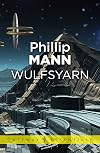
Wulfsyarn: A Mosaic
by Phillip Mann
On This Page
Description
The Nightingale was the most advanced craft in the entire fleet of Mercy ships belonging to the Gentle Order of St Francis Dionysos. On its maiden voyage, its life bays packed with refugees, the Nightingale disappeared. Despite strenuous efforts no trace of it could be found. Then, a year later, a distress signal was heard and the Nightingale reappeared. It was damaged in ways that meant its survival in space was a miracle. But of its previous cargo of life-forms there was no sign. Only one show more creature remained alive within the ship, and that was its captain, Jon Wilberfoss. Wulfsyarn is the story of the Nightingale, and of Jon Wilberfoss. It is told by Wulf, an autoscribe who has the task of observing Wilberfoss in the aftermath of his return. For the captain of the Nightingale is a condemned man: condemned by the Gentle Order, and self-condemned by a burden of guilt so intense his mind refuses to acknowledge it. Over the long period of Wilberfoss' tortured convalescence in a peaceful monastery garden on the planet Tallin, Wulf watches and waits, recording the mosaic of Wilberfoss' life: his childhood and adolescence, his entry into the Gentle Order, his marriage (to a native Tallin woman), and the great moment when he was chosen as captain of the Nightingale. But can Wulf bring Wilberfoss to finally face the truth of what happened on the Nightingale's fatal first and last journey? show lessTags
Recommendations













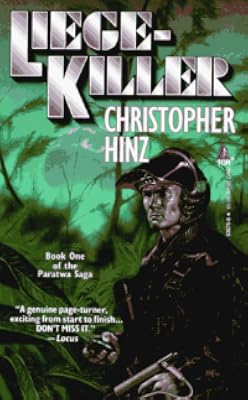


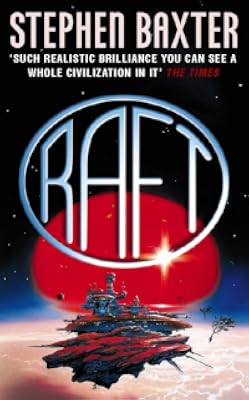


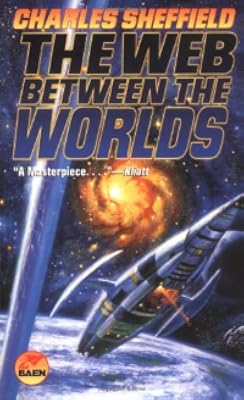


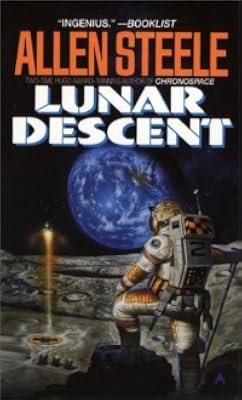



Member Recommendations
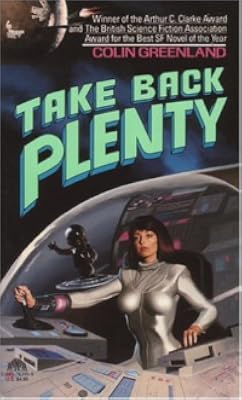
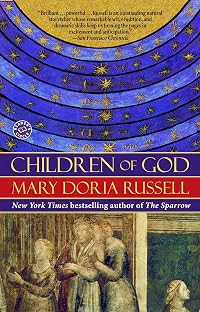
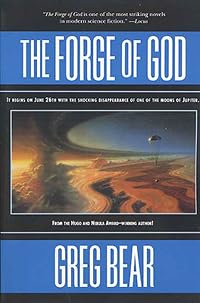
AlanPoulter Both feature an unusual mix of alien contact and religion
Member Reviews
This is indeed 'Wulfs yarn' as it is narrated by an 'autoscribe' known as Wulf. He was designed as a translation tool, but being stranded for many centuries on a plant nuked during the War of Ignorance gave him the chance to learn on his own, until rescued and upgraded. But the novel is not about Wulf but the life of one Jon Wilberfoss.
In a galaxy teeming with life in many forms, the Gentle Order of St Francis runs contact missions and picks Jon Wilberfoss to captain a new contact ship, the Nightingale, able to accommodate all kinds of alien. Wulf tells us that something terrible happens to Wilberfoss and the Nightingale, but reveals things slowly, as we learn of Jon's history. Along with Wulf, the other main character is Lily, an show more autonurse, another relic of past space warfare. Less voluble than Wulf, her calm devotion to healing is a foil to the sometimes extravagant soul-searching and philosophising that Wulf enjoys.
It is difficult to find any faults with this novel. It has aged well, the technologies used capture a realistic flavour of the future. Yet religion is part of the mix and and does not sit oddly. Jon grows up on a poor agricultural world with a poisonous atmosphere. A complex network of clear plastic tunnels connect all the human habitats, large and small. Jon returns to this world after serving a prison sentence and decides to run home through this global tunnel network. A blowout that nearly kills him gives him the religious vision that inspires his choice of career.
The imagination of alien life is unparalleled. Jon's wife is a Talline, whose culture revolves around 'pectaniles', statues representing the male/female lifeforce. Tallines have a relaxed 'beachcomber' culture and exemplify a loosely anarchist lifestyle. While out with the Nightingale, Jon meets an alien the size of a mountain but controls his fear and learns to communicate with it. And there are many more aliens in the book...
This is not gung-ho space opera. Wulf's narration is discursive, to say the least, but ideas and emotional encounters pour forth, making this novel a minor classic. show less
In a galaxy teeming with life in many forms, the Gentle Order of St Francis runs contact missions and picks Jon Wilberfoss to captain a new contact ship, the Nightingale, able to accommodate all kinds of alien. Wulf tells us that something terrible happens to Wilberfoss and the Nightingale, but reveals things slowly, as we learn of Jon's history. Along with Wulf, the other main character is Lily, an show more autonurse, another relic of past space warfare. Less voluble than Wulf, her calm devotion to healing is a foil to the sometimes extravagant soul-searching and philosophising that Wulf enjoys.
It is difficult to find any faults with this novel. It has aged well, the technologies used capture a realistic flavour of the future. Yet religion is part of the mix and and does not sit oddly. Jon grows up on a poor agricultural world with a poisonous atmosphere. A complex network of clear plastic tunnels connect all the human habitats, large and small. Jon returns to this world after serving a prison sentence and decides to run home through this global tunnel network. A blowout that nearly kills him gives him the religious vision that inspires his choice of career.
The imagination of alien life is unparalleled. Jon's wife is a Talline, whose culture revolves around 'pectaniles', statues representing the male/female lifeforce. Tallines have a relaxed 'beachcomber' culture and exemplify a loosely anarchist lifestyle. While out with the Nightingale, Jon meets an alien the size of a mountain but controls his fear and learns to communicate with it. And there are many more aliens in the book...
This is not gung-ho space opera. Wulf's narration is discursive, to say the least, but ideas and emotional encounters pour forth, making this novel a minor classic. show less
Ratings
Members
- Recently Added By
Author Information

20+ Works 628 Members
Phillip Mann was born in 1942 in Britain. He is a science fiction author. He studied English and Drama at Manchester University and later in California before moving to New Zealand where he established the first Drama Studies position at a New Zealand university in 1970; at the Victoria University of Wellington in Wellington. Between 1968 and show more 1970, he worked as a sub-editor with the New China News Agency in Beijing. "The Eye of the Queen" details the life of Marius Thorndyke, Earth's leading contact linguist and founder of the CLI (Contact Linguistics Institute) after he departs to the world called Pe-Ellia at the invitation of the species for whom that is their home world. This species, have been responsible for restricting Earth's space exploration to just a few inhabited planets none of which have attained space travel. This book met with great success. His next two books 'Master of Paxwax' and its sequel, 'Fall of the Families', have become classics of New Zealand literature. The Encyclopedia of Science Fiction describes Phillip Mann's fiction as possessing "a strong visual and structural sense". Phillip Mann was made an Honorary Literary Fellows in the New Zealand Society of Authors' annual Waitangi Day Honours in 2015. (Bowker Author Biography) show less
Awards and Honors
Awards
Classifications
Statistics
- Members
- 95
- Popularity
- 339,010
- Reviews
- 1
- Rating
- (3.14)
- Languages
- English, German
- Media
- Paper, Ebook
- ISBNs
- 6
- ASINs
- 4