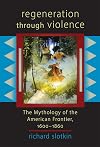
Regeneration Through Violence: The Mythology of the American Frontier, 1600-1860
by Richard Slotkin
Myth of the American Frontier (1)
On This Page
Description
National Book Award Finalist: A study of national myths, lore, and identity that "will interest all those concerned with American cultural history" (American Political Science Review). Winner of the American Historical Association's Albert J. Beveridge Award for Best Book in American History In Regeneration Through Violence, the first of his trilogy on the mythology of the American West, historian and cultural critic Richard Slotkin demonstrates how the attitudes and traditions that shape show more American culture evolved from the social and psychological anxieties of European settlers struggling in a strange new world to claim the land and displace Native Americans. Using the popular literature of the seventeenth, eighteenth, and early nineteenth centuries-including captivity narratives, the Daniel Boone tales, and the writings of Hawthorne, Thoreau, and Melville-Slotkin traces the full development of this myth. "Deserves the careful attention of everyone concerned with the history of American culture or literature. "-Comparative Literature "Slotkin's large aim is to understand what kind of national myths emerged from the American frontier experience. . . . [He] discusses at length the newcomers' search for an understanding of their first years in the New World [and] emphasizes the myths that arose from the experiences of whites with Indians and with the land." -Western American Literature. show lessTags
Recommendations


































Member Reviews
I'm sorry that this book seems very poorly represented in the collections of Librarythingers. Richard Slotkin came to understand a basic foundation of the American Myth. Americans seem to have divided the world into two areas, that inside the settler's stockade, and the "others", outside it.
Those defined as outside, will be well advised to dig foxholes at night.
When you combine this social background and natural land hunger, the careening advance across the continent to the pacific, and the treatment of the indigenous, and other European precursors, becomes easier to explain. The Mythology offers some comfort to those Americans who reflect upon their rather violent history, (We were programmed to do this while we were unconscious, so show more we're now sorry, and less responsible for the trouble we've caused?)
The research has been industrious, and the examples appear to be well chosen. Yes, it is a thick book, but to a non-American but neighbouring observer, a book that well rewards the reader. It was written in 1973, before the Tea Party brought a number of these memes forward in the public awareness. 1973. show less
Those defined as outside, will be well advised to dig foxholes at night.
When you combine this social background and natural land hunger, the careening advance across the continent to the pacific, and the treatment of the indigenous, and other European precursors, becomes easier to explain. The Mythology offers some comfort to those Americans who reflect upon their rather violent history, (We were programmed to do this while we were unconscious, so show more we're now sorry, and less responsible for the trouble we've caused?)
The research has been industrious, and the examples appear to be well chosen. Yes, it is a thick book, but to a non-American but neighbouring observer, a book that well rewards the reader. It was written in 1973, before the Tea Party brought a number of these memes forward in the public awareness. 1973. show less
Ratings
Members
- Recently Added By
Lists

Works Cited in The History of White People by Nell Irvin Painter
321 works; 2 members
Author Information

13+ Works 1,501 Members
Richar Slotkin is the Olin Professor of American Studies at Wesleyan University. He is the author of Gunfighter Nation and Regeneration Through Violence, both National Book Award Finalists, and The Crater. (Bowker Author Biography)
Awards and Honors
Series

Common Knowledge
- Canonical title
- Regeneration Through Violence: The Mythology of the American Frontier, 1600-1860
- Original publication date
- 1973
- Important places
- USA; American Frontier
- First words
- The mythology of a nation is the intelligible mask of that enigma called the "national character."
- Last words
- (Click to show. Warning: May contain spoilers.)Set the statuesque figures and their piled trophies in motion through space and time, and a more familiar landscape emerges—the whale, buffalo, and bear hunted to the verge of extinction for pleasure in killing and "scalped" for fame and the profit in hides by men like Buffalo Bill; the buffalo meat left to rot, till acres of prairie were covered with heaps of whitening bones, and the bones then ground for fertilizer; the Indian debased, impoverished, and killed in return for his gifts; the land and its people, its "dark" people especially, economically exploited and wasted; the warfare between man and nature, between race and race, exalted as a kind of heroic ideal; the piles of wrecked and rusted cars, heaped like Tartar pyramids of death-cracked, weather-browned, rain-rotted skulls, to signify our passage through the land.
Classifications
- Genres
- Nonfiction, Literature Studies and Criticism, Fiction and Literature, History
- DDC/MDS
- 810.9 — Literature & rhetoric American literature in English American literature in English History and criticism of American literature
- LCC
- PS88 .S5 — Language and Literature American literature American literature
- BISAC
Statistics
- Members
- 289
- Popularity
- 111,485
- Reviews
- 1
- Rating
- (4.09)
- Languages
- English, French
- Media
- Paper, Ebook
- ISBNs
- 6
- ASINs
- 4