
On the Nature of Things
by Titus Lucretius Carus
On This Page
Description
Fiction. Poetry. De rerum natura (On the Nature of Things) is a 1st century BC didactic poem by the Roman poet and philosopher Lucretius with the goal of explaining Epicurean philosophy to a Roman audience. Lucretius presents the principles of atomism; the nature of the mind and soul; explanations of sensation and thought; the development of the world and its phenomena; and explains a variety of celestial and terrestrial phenomena. The universe described in the poem operates according to show more these physical principles, guided by fortuna, "chance," and not the divine intervention of the traditional Roman deities. show lessTags
Recommendations





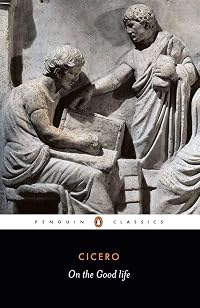

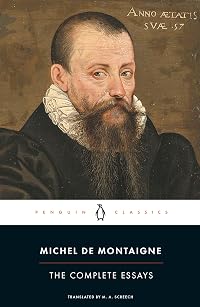
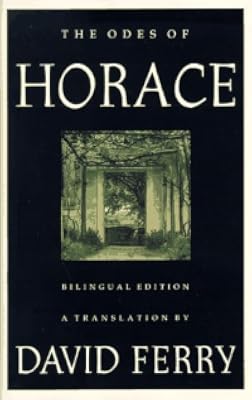
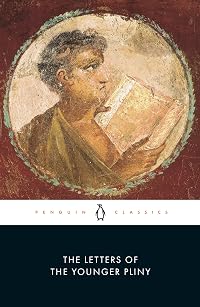





Member Recommendations
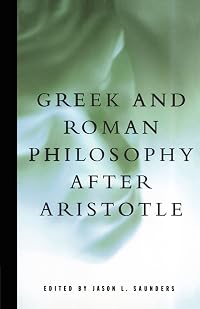
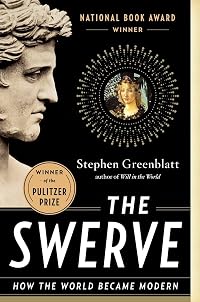
booksontrial These two books can serve as counter arguments of each other.
20
by anonymous user
Member Reviews
This is one of those classics that has always looked too hard even though it's widely quoted and I was a bit reluctant to start on 7000 lines plus of poetry. But finally made the effort...and it wasn't so difficult in this translation anyway. And it's certainly been an eye opener for me. As Richard Jenkyns says in the introduction ..it's a poem without a story, without people; instead it's a treatise on science and philosophy. And....amazingly modern.
Essentially, Lucretius sets out to explain the universe and we who live in it.
He was a convert to the philosophy of Epicurus who died in 270BC and Lucretius was writing about 40AD ...so a difference of about 300 years. And I find it remarkable that Lucretius was able to absorb and maybe show more transform the ideas of Epicurus into a major statement of how the world works. In many ways, he is amazingly modern...especially with his rejection of the gods and religion; "it is religion breeds wickedness and that has given rise to wrongful deeds".
Basically he espouses the atomic theory and explains how atoms can pretty much account for every phenomena that we observe in the world. Commencing with his evidence for the existence of particles which" ARE but cannot be seen"...as evidenced in the squalls and sweeping hurricanes.
And there is an amazing passage p43 explaining why "all things fall at equal speed through the still void. (although they fall at different speeds through water or thin air). It took another 1400 years for Galileo to show this.
From simple reasoning he claims that the atoms of things that flit about must come in many a shape.....and this is more or less what the periodic table combined with quantum theory tells us.Though he does suggest p55 that there is nothing that's composed of atoms of a single kind.....which seems to wipe out the chances of isolating the pure elements such as oxygen or gold.
It's a remarkable tour de force......not perfect: but given that nearly 2000 years have elapsed since he wrote the work it is astonishing to me how closely he was able to explain so much of the natural world. His explanation of magnetism p119 is rather fanciful but if you replace "seeds flowing out from the lodestone" by magnetic lines of force...you come fairly close to the truth.
I love his analysis of lightning....and his put-down of the superstitious: "If the gods can throw lightning bolts in whatever direction they like, why don't they smite the scoundrels ?...and why do they waste good throws on deserted places?...and why does Jupiter never hurl one of his blows in fine weather? And why does he smite the sea?.... what have the whitecaps ever done him? Great questions.
All in all, I was mightily impressed by his thoughtful rationality and his explanatory powers. Just amazing really. I'm surprised that it never really seemed to have more impact and we still have people today seeing God's justice in lightning bolts.
Oh, and I think the translator, A.E. Stallings, has done a great job. I'm not qualified to check his Latin but it certainly flows well. No mean feat translating poetry and keeping something of the metre etc.
Happy to give this book five stars. show less
Essentially, Lucretius sets out to explain the universe and we who live in it.
He was a convert to the philosophy of Epicurus who died in 270BC and Lucretius was writing about 40AD ...so a difference of about 300 years. And I find it remarkable that Lucretius was able to absorb and maybe show more transform the ideas of Epicurus into a major statement of how the world works. In many ways, he is amazingly modern...especially with his rejection of the gods and religion; "it is religion breeds wickedness and that has given rise to wrongful deeds".
Basically he espouses the atomic theory and explains how atoms can pretty much account for every phenomena that we observe in the world. Commencing with his evidence for the existence of particles which" ARE but cannot be seen"...as evidenced in the squalls and sweeping hurricanes.
And there is an amazing passage p43 explaining why "all things fall at equal speed through the still void. (although they fall at different speeds through water or thin air). It took another 1400 years for Galileo to show this.
From simple reasoning he claims that the atoms of things that flit about must come in many a shape.....and this is more or less what the periodic table combined with quantum theory tells us.Though he does suggest p55 that there is nothing that's composed of atoms of a single kind.....which seems to wipe out the chances of isolating the pure elements such as oxygen or gold.
It's a remarkable tour de force......not perfect: but given that nearly 2000 years have elapsed since he wrote the work it is astonishing to me how closely he was able to explain so much of the natural world. His explanation of magnetism p119 is rather fanciful but if you replace "seeds flowing out from the lodestone" by magnetic lines of force...you come fairly close to the truth.
I love his analysis of lightning....and his put-down of the superstitious: "If the gods can throw lightning bolts in whatever direction they like, why don't they smite the scoundrels ?...and why do they waste good throws on deserted places?...and why does Jupiter never hurl one of his blows in fine weather? And why does he smite the sea?.... what have the whitecaps ever done him? Great questions.
All in all, I was mightily impressed by his thoughtful rationality and his explanatory powers. Just amazing really. I'm surprised that it never really seemed to have more impact and we still have people today seeing God's justice in lightning bolts.
Oh, and I think the translator, A.E. Stallings, has done a great job. I'm not qualified to check his Latin but it certainly flows well. No mean feat translating poetry and keeping something of the metre etc.
Happy to give this book five stars. show less
Outstanding! I did not expect to enjoy this poem nearly as much as I did.
The Nature of Things is difficult to sum up, but it is not an exaggeration to say that this poem attempts to and succeeds at being both a treatment of natural science, a polemic against dogmatic religious beliefs, an encomium on reason, a guide to empirical inquiry, and a joyful celebration of the acquisition of wisdom as one of the true pleasures of life. It is a delightful reading experience and one that I certainly plan to read again.
The poem is also notable for its presentation of an atomic theory of matter, which did not originate with Lucretius but instead derives from Democritus, who also features prominently in this poem. The first two books of the poem show more concern matter and void (Book I) and the work of atoms (Book 2).
Atoms are the substance from which matter is made; they are undifferentiated bits of matter:
“Atoms aren’t assemblages made out of parts; they get
Their might from their eternal singleness” (Book 1: lines 611-612)
This sounds a little like what I understand about the pre-Socratics’ notion of oneness. Heraclitus even gets a mention but then moments later, Lucretius finds fault in Heraclitus’s inscrutable presentation, noting that:
“For idiots admire things all the more
When they discern them hidden in tangled words, and set great store
In anything that tickles the ear, in phrases dyed a shade
Of purple. “ (Book I: lines 642-645)
I found this observation rather funny and likewise when Lucretius continues to poke at the pre-Socractics and their belief that the world is made up of one thing, like fire or water. His point isn’t to undermine attempts at inquiry, however. He is attempting to democratize access to understanding as a path to pleasure and happiness for all.
Book II then concerns the formation of atoms into more complex matter. Because atoms are infinite and have a variety of hooks and other means of attaching themselves to other atoms, this gives rise to the diversity of matter in the world. At the same time, there are forms or patterns of matter so that we don’t suddenly end up with giant apples or 20-foot tall humans, or really tiny elephants. The shape of atoms also explains things like taste and scent where the more acrid and foul things are caused by hooked and barbed atoms that tear and slash at us while pleasant sights and smells and tastes are composed of smooth, round atoms that glide across us easily.
It’s easy to look at Lucretius’s Nature of Things and see plenty that we understand today quite differently. However, if we look at just his method of examining experience to form hypotheses that can be tested through available empirical means, we can see at least resonance with what we know today to explain similar kinds of experiences that we have of the natural world. Moreover, we see in Lucretius’s inquiry a methodology of inquiry of pursuing knowledge that embodies the Epicurian outlook that this poem is known for. The value of the poem is the inquiry and not necessarily the “facts” that it produces. It is a way of achieving harmony with nature through the cultivation of the mind:
“It’s more the mind that keeps life safely under lock and key;
The mind more than spirit has life in its sovereignty.
When the mind has fled, no shred of spirit can remain
In the flesh a moment longer, but follows swept up in its train,
Dispersing into air, and leaving the icy limbs behind in the frosty grip of Death” (Book III: lines 397-400)
Each sense that we have has its purpose in the cultivation of understanding and the development of mind. And if reason cannot lead one to a true answer, Lucretius is content with finding an explanation that suffices … until it doesn’t:
“If reason can’t unravel the mystery and gives us no clue
To why what had seemed square to us when viewed from near at hand
Looks rounded at a distance, if you cannot understand,
It’s better to offer erroneous explanations than let slip
Any aspect of the graspable out of your grip” (Book IV: lines 500-505)
Lucretius invites striving, struggling with the unknown, but measuring what is concluded against the experiences that we have. And don’t be afraid to get things wrong. It’s bound to happen.
Scale up our inquiry to the cosmos and the universe and look to the evidence around us for explanation but beware the influence of dogmatic religion on our sense of the Nature of Things:
“O foolish race of mortals, that gave good such jobs to do,
Then went and made them fierce with anger in the bargain too!
What groans you purchased for yourselves, what grievous injury
Forms, what tears you fashioned for the children yet to be!
It is not piety to cover up your head for show,
To bow and scrape before a stone, or stop by as you go
At every alter, flinging yourself upon the ground face down,
Lifting your palms at the gods’ shrines, nor piety to drown
Altars in the blood of brutes, nor to chain prayer to prayer;
Rather, to look on all things with a mind that’s free from care” (Book V: lines 1194-1202)
The way of the world is not due to “gods’ agency” (Book IV: line 91) but something fundamentally material and graspable by all:
“You must look into subjects such as these both far and deep
And consider them from every angle and with the broadest sweep,
Keeping in mind how fathomless is the Sum of Things, the All,
You’ll see a single sky is insignificantly small,
A tinier portion of the universe, for what it’s worth,
Than is one human being in relation to the earth.
But if you keep this basic tenet constantly in view,
And see it clearly, many things will cease to puzzle you” (Book IV: lines 646-653)
I just can’t help myself quoting from this work, which is so readable and enjoyable.
As a feat of creative artistry alone it is also worthy of admiration: six books of around 1200 lines of poetry each, all in rhyming couplets. In Book VI the rhyming became more intricate with some internal rhymes as well. Rarely did the rhymes seem forced. Some were downright clever. Occasionally, the line breaks and enjambments added something special in their own right, often though, they seemed to serve the broader structure of the poem.
Definitely worth your time. show less
The Nature of Things is difficult to sum up, but it is not an exaggeration to say that this poem attempts to and succeeds at being both a treatment of natural science, a polemic against dogmatic religious beliefs, an encomium on reason, a guide to empirical inquiry, and a joyful celebration of the acquisition of wisdom as one of the true pleasures of life. It is a delightful reading experience and one that I certainly plan to read again.
The poem is also notable for its presentation of an atomic theory of matter, which did not originate with Lucretius but instead derives from Democritus, who also features prominently in this poem. The first two books of the poem show more concern matter and void (Book I) and the work of atoms (Book 2).
Atoms are the substance from which matter is made; they are undifferentiated bits of matter:
“Atoms aren’t assemblages made out of parts; they get
Their might from their eternal singleness” (Book 1: lines 611-612)
This sounds a little like what I understand about the pre-Socratics’ notion of oneness. Heraclitus even gets a mention but then moments later, Lucretius finds fault in Heraclitus’s inscrutable presentation, noting that:
“For idiots admire things all the more
When they discern them hidden in tangled words, and set great store
In anything that tickles the ear, in phrases dyed a shade
Of purple. “ (Book I: lines 642-645)
I found this observation rather funny and likewise when Lucretius continues to poke at the pre-Socractics and their belief that the world is made up of one thing, like fire or water. His point isn’t to undermine attempts at inquiry, however. He is attempting to democratize access to understanding as a path to pleasure and happiness for all.
Book II then concerns the formation of atoms into more complex matter. Because atoms are infinite and have a variety of hooks and other means of attaching themselves to other atoms, this gives rise to the diversity of matter in the world. At the same time, there are forms or patterns of matter so that we don’t suddenly end up with giant apples or 20-foot tall humans, or really tiny elephants. The shape of atoms also explains things like taste and scent where the more acrid and foul things are caused by hooked and barbed atoms that tear and slash at us while pleasant sights and smells and tastes are composed of smooth, round atoms that glide across us easily.
It’s easy to look at Lucretius’s Nature of Things and see plenty that we understand today quite differently. However, if we look at just his method of examining experience to form hypotheses that can be tested through available empirical means, we can see at least resonance with what we know today to explain similar kinds of experiences that we have of the natural world. Moreover, we see in Lucretius’s inquiry a methodology of inquiry of pursuing knowledge that embodies the Epicurian outlook that this poem is known for. The value of the poem is the inquiry and not necessarily the “facts” that it produces. It is a way of achieving harmony with nature through the cultivation of the mind:
“It’s more the mind that keeps life safely under lock and key;
The mind more than spirit has life in its sovereignty.
When the mind has fled, no shred of spirit can remain
In the flesh a moment longer, but follows swept up in its train,
Dispersing into air, and leaving the icy limbs behind in the frosty grip of Death” (Book III: lines 397-400)
Each sense that we have has its purpose in the cultivation of understanding and the development of mind. And if reason cannot lead one to a true answer, Lucretius is content with finding an explanation that suffices … until it doesn’t:
“If reason can’t unravel the mystery and gives us no clue
To why what had seemed square to us when viewed from near at hand
Looks rounded at a distance, if you cannot understand,
It’s better to offer erroneous explanations than let slip
Any aspect of the graspable out of your grip” (Book IV: lines 500-505)
Lucretius invites striving, struggling with the unknown, but measuring what is concluded against the experiences that we have. And don’t be afraid to get things wrong. It’s bound to happen.
Scale up our inquiry to the cosmos and the universe and look to the evidence around us for explanation but beware the influence of dogmatic religion on our sense of the Nature of Things:
“O foolish race of mortals, that gave good such jobs to do,
Then went and made them fierce with anger in the bargain too!
What groans you purchased for yourselves, what grievous injury
Forms, what tears you fashioned for the children yet to be!
It is not piety to cover up your head for show,
To bow and scrape before a stone, or stop by as you go
At every alter, flinging yourself upon the ground face down,
Lifting your palms at the gods’ shrines, nor piety to drown
Altars in the blood of brutes, nor to chain prayer to prayer;
Rather, to look on all things with a mind that’s free from care” (Book V: lines 1194-1202)
The way of the world is not due to “gods’ agency” (Book IV: line 91) but something fundamentally material and graspable by all:
“You must look into subjects such as these both far and deep
And consider them from every angle and with the broadest sweep,
Keeping in mind how fathomless is the Sum of Things, the All,
You’ll see a single sky is insignificantly small,
A tinier portion of the universe, for what it’s worth,
Than is one human being in relation to the earth.
But if you keep this basic tenet constantly in view,
And see it clearly, many things will cease to puzzle you” (Book IV: lines 646-653)
I just can’t help myself quoting from this work, which is so readable and enjoyable.
As a feat of creative artistry alone it is also worthy of admiration: six books of around 1200 lines of poetry each, all in rhyming couplets. In Book VI the rhyming became more intricate with some internal rhymes as well. Rarely did the rhymes seem forced. Some were downright clever. Occasionally, the line breaks and enjambments added something special in their own right, often though, they seemed to serve the broader structure of the poem.
Definitely worth your time. show less
Enjoyed reading Ronald Melville’s verse translation of De rerum natura in a concentrated burst over the past week. Here are a couple of thoughts on the poem as a whole.
The two things that most impressed me were:
1. Lucretius’ bottom-up thinking: His general approach is to explain natural phenomena without recourse to outside agency and this method, allied with technological advances, has been essential to the progress of science. That Lucretius and the other atomists were read by so many of the greatest minds such as Newton, and may have been influential in his thinking about the laws of motion, is enough to secure him a valuable place in the history of western thought, in my eyes.
2. Lucretius’ poetry and spirit: There are so many show more wonderful passages, especially as the poem progresses, notably the lyrical codas to Books 3 and 5, the latter containing Lucretius’ potted history of the evolution of prehistoric man, probably my favourite section of the entire poem. I also enjoyed his irreverent spirit, notably the passage where he shamelessly advocates sexual permissiveness (“And by avoiding love you need not miss / The fruits that Venus offers, but instead / You may take the goods without the penalty”).
Only disappointment I had, apart from some of the comical explanations (i.e. a rough voice is caused by rough atoms, a smooth one by smooth atoms) and the occasional misogyny, was the way the poem ends abruptly, in an unsatisfying way. That said, I don’t feel that there’s enough in the text itself to suggest he was going mad; it’s fair to say that the first two books of the poem come across as more rigorous than the other four, but he seems lucid to me throughout and the greater freedom he enjoys in Books 3-6 is to the benefit of the poetry. show less
The two things that most impressed me were:
1. Lucretius’ bottom-up thinking: His general approach is to explain natural phenomena without recourse to outside agency and this method, allied with technological advances, has been essential to the progress of science. That Lucretius and the other atomists were read by so many of the greatest minds such as Newton, and may have been influential in his thinking about the laws of motion, is enough to secure him a valuable place in the history of western thought, in my eyes.
2. Lucretius’ poetry and spirit: There are so many show more wonderful passages, especially as the poem progresses, notably the lyrical codas to Books 3 and 5, the latter containing Lucretius’ potted history of the evolution of prehistoric man, probably my favourite section of the entire poem. I also enjoyed his irreverent spirit, notably the passage where he shamelessly advocates sexual permissiveness (“And by avoiding love you need not miss / The fruits that Venus offers, but instead / You may take the goods without the penalty”).
Only disappointment I had, apart from some of the comical explanations (i.e. a rough voice is caused by rough atoms, a smooth one by smooth atoms) and the occasional misogyny, was the way the poem ends abruptly, in an unsatisfying way. That said, I don’t feel that there’s enough in the text itself to suggest he was going mad; it’s fair to say that the first two books of the poem come across as more rigorous than the other four, but he seems lucid to me throughout and the greater freedom he enjoys in Books 3-6 is to the benefit of the poetry. show less
Enjoyed reading Ronald Melville’s verse translation of De rerum natura in a concentrated burst over the past week. Here are a couple of thoughts on the poem as a whole.
The two things that most impressed me were:
1. Lucretius’ bottom-up thinking: His general approach is to explain natural phenomena without recourse to outside agency and this method, allied with technological advances, has been essential to the progress of science. That Lucretius and the other atomists were read by so many of the greatest minds such as Newton, and may have been influential in his thinking about the laws of motion, is enough to secure him a valuable place in the history of western thought, in my eyes.
2. Lucretius’ poetry and spirit: There are so many show more wonderful passages, especially as the poem progresses, notably the lyrical codas to Books 3 and 5, the latter containing Lucretius’ potted history of the evolution of prehistoric man, probably my favourite section of the entire poem. I also enjoyed his irreverent spirit, notably the passage where he shamelessly advocates sexual permissiveness (“And by avoiding love you need not miss / The fruits that Venus offers, but instead / You may take the goods without the penalty”).
Only disappointment I had, apart from some of the comical explanations (i.e. a rough voice is caused by rough atoms, a smooth one by smooth atoms) and the occasional misogyny, was the way the poem ends abruptly, in an unsatisfying way. That said, I don’t feel that there’s enough in the text itself to suggest he was going mad; it’s fair to say that the first two books of the poem come across as more rigorous than the other four, but he seems lucid to me throughout and the greater freedom he enjoys in Books 3-6 is to the benefit of the poetry. show less
The two things that most impressed me were:
1. Lucretius’ bottom-up thinking: His general approach is to explain natural phenomena without recourse to outside agency and this method, allied with technological advances, has been essential to the progress of science. That Lucretius and the other atomists were read by so many of the greatest minds such as Newton, and may have been influential in his thinking about the laws of motion, is enough to secure him a valuable place in the history of western thought, in my eyes.
2. Lucretius’ poetry and spirit: There are so many show more wonderful passages, especially as the poem progresses, notably the lyrical codas to Books 3 and 5, the latter containing Lucretius’ potted history of the evolution of prehistoric man, probably my favourite section of the entire poem. I also enjoyed his irreverent spirit, notably the passage where he shamelessly advocates sexual permissiveness (“And by avoiding love you need not miss / The fruits that Venus offers, but instead / You may take the goods without the penalty”).
Only disappointment I had, apart from some of the comical explanations (i.e. a rough voice is caused by rough atoms, a smooth one by smooth atoms) and the occasional misogyny, was the way the poem ends abruptly, in an unsatisfying way. That said, I don’t feel that there’s enough in the text itself to suggest he was going mad; it’s fair to say that the first two books of the poem come across as more rigorous than the other four, but he seems lucid to me throughout and the greater freedom he enjoys in Books 3-6 is to the benefit of the poetry. show less
Not unexpectedly, a philosophical treatise in the form of a poem is not an easy read. But it easy to see how Lucretius' exposition of the Epicurean theories about the nature of the universe would have contributed to the growth of modern science once rediscovered by Renaissance Europe. Just the idea of deriving information from the evidence of the senses rather than from preconceived theory or authority entailed a new way of approaching knowledge.
I am rather struck by Lucretius insistence on the mortality of the soul; his preoccupation with the subject seems obsessive.
I am rather struck by Lucretius insistence on the mortality of the soul; his preoccupation with the subject seems obsessive.
This book was fascinating. In terms of science, it was interesting to see how much and how little people knew about the natural world. Some of what Lucretius believed was accurate, and some was highly inaccurate; but even when his facts are wrong, his way of seeing the world makes for a terrific reading experience. He states a few scientific principles, and then he ponders them deeply, looks at the same principle in several different examples, and then, often, draws moral or philosophical conclusions based on the science. While I don't agree with his philosophy, his dynamic style made for quite an enjoyable read. Moreover, it was fascinating to study Epicurean ideas and to read about the pursuit of pleasure. The six books deal with show more everything from atoms to the cosmos, from the human soul to the weather. Finally, A. E. Stallings' translation, with its meter and rhyme, makes the book a pleasure to read. show less
I read the Frank Copley translation, and found his notes and introduction quite useful. The poem itself is exceedingly strange and seems surprisingly modern in certain places (though decidedly less so in others). Glad to have finally read it, though; I can see why it's stood the test of time.
Members
- Recently Added By
Lists

100 Books to Read in a Lifetime (That Are Older Than 200 Years)
415 works; 174 members

Books that changed the world
67 works; 63 members

The Road to Freedom (Will Durant's 100 Best Books for an Education)
100 works; 8 members

Harold Bloom - The Western Canon: A. The Theocratic Age
97 works; 13 members

Filosofía - Clásicos
217 works; 1 member

Philip Ward's Lifetime Reading Plan
592 works; 22 members

The Luca Guadagnino Universe
62 works; 1 member

Recommended Reading : 600 Classics Reviewed, Editors of Salem Press, 2015
634 works; 6 members

The Well-Educated Mind, Susan Wise Bauer, 2016
179 works; 3 members

Books Read in 2006
421 works; 8 members

New Lifetime Reading Plan by Fadiman and Major
225 works; 5 members

Greatest Books, allegedly
484 works; 9 members

Mustich's 1000 Books to Read Before You Die: A Life Changing List
1,001 works; 19 members

Books Referenced by Izetbegovic's Islam Between East and West
233 works; 2 members
How to Read a Book's Recommended Reading List
309 works; 10 members

Trinity College Booklist (1951): Class Eight, Classic Civilization
39 works; 3 members

CCE 100 Great Books List
145 works; 8 members

1001 Books You Must Read Before You Die
1,448 works; 1,134 members

Read in 2006
140 works; 1 member
Talk Discussions
Past Discussions
Lucretius vs Intelligent Design in Ancient History (February 2010)
Author Information

Some Editions
Awards and Honors
Awards
Notable Lists
Series
Belongs to Publisher Series
Textos filosòfics (40)
Everyman's Library (750)
Penguin Classics (L018)
Reclams Universal-Bibliothek (4257)
Work Relationships
Is contained in
Is an adaptation of
Has the adaptation
Is abridged in
Has as a student's study guide
Common Knowledge
- Canonical title*
- De la Naturaleza de las Cosas
- Original title
- De rerum natura
- Alternate titles
- On the nature of the universe; The nature of things
- Original publication date
- ca. 54 BC; 1989-06
- First words
- Mother of Rome, delight of Gods and men, Dear Venus that beneath the gliding stars Makest to teem the many-voyaged main And fruitful lands- for all of living things Through thee alone are evermore conceived, Through thee are ... (show all)risen to visit the great sun- Before thee, Goddess, and thy coming on, Flee stormy wind and massy cloud away, For thee the daedal Earth bears scented flowers, For thee waters of the unvexed deep Smile, and the hollows of the serene sky Glow with diffused radiance for thee!
Mother of Aeneas and his race, delight of men and gods, life-giving Venus, it is your doing that under the wheeling constellations of the sky all nature teems with life, both the sex that buoys up our ships and the earth that... (show all) yields our food. [translated by R.E. Latham] - Last words
- (Click to show. Warning: May contain spoilers.)And sudden stress And poverty to many an awful act Impelled; and with a monstrous screaming they Would, on the frames of alien funeral pyres, Place their own kin, and thrust the torch beneath Oft brawling with much bloodshed round about Rather than quit dead bodies loved in life.
(Click to show. Warning: May contain spoilers.)Often they shed much blood in these disputes rather than abandon their dead. [translated by R.E. Latham] - Blurbers
- Furley, David; Chadwick, John
- Original language
- Latin
- Disambiguation notice
- Translations are not to be combined with the original Latin work. This is the umbrella work for translations and bilingual (Latin/other language) versions.
*Some information comes from Common Knowledge in other languages. Click "Edit" for more information.
Classifications
Statistics
- Members
- 5,971
- Popularity
- 2,154
- Reviews
- 52
- Rating
- (3.82)
- Languages
- 23 — Catalan, Czech, Danish, Dutch, English, Finnish, French, German, Greek (Ancient), Greek, Hungarian, Italian, Latin, Latvian, Multiple languages, Norwegian (Bokmål), Polish, Portuguese, Russian, Serbian, Spanish, Swedish, Turkish
- Media
- Paper, Audiobook, Ebook
- ISBNs
- 209
- UPCs
- 1
- ASINs
- 152