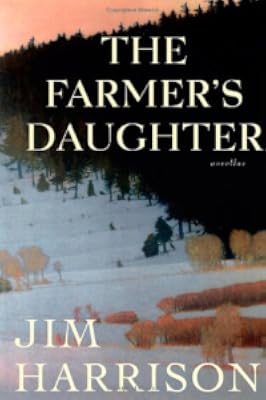
The Farmer's Daughter
by Jim Harrison
On This Page
Description
Three novellas which give a portrait of three unconventional American lives.Tags
Recommendations













Member Reviews
Well, this book has just left me at kind of a loss for words. I've been reading Harrison for 40 years now, and I know he's had his highs and lows, but this may be a new low. Maybe I should first admit that I only read the first novella, the title piece. And I had to force myself to finish it, because it just seemed a bit too far-fetched, if not a bit moronic, in the way the story was presented as kinda from the viewpoint of a 15-16 year-old girl, transplanted from Ohio to Montana. But the girl herself was simply not very believable - either too sexually precocious or too innocent, mostly the latter, I'd say. Waaay too intellectual for a kid that age, supposedly reading stuff like Tristram Shandy and The Red and the Black. Maybe, but not show more very likely. Attracted to much older men. I mean, for me, this Sarah was simply the fictitious invention of a dirty old man. And the ending? Blecch! I just don't think so. This was basically a hundred-page adult comic book sans pictures - sans 'art' for that matter. By the time I'd finished, I simply didn't want to read any more of the book, especially that last story about a "retired vampire." Geeze, Jim. What were you thinking? This book is such an embarrassment. I wonder if you were curious just what you could get away with and still get critical acclaim. Well, just about anything, it seems, as Publisher's Weekly's starred review said "Harrison shows he is still at the top of his game ..." I wonder what book they were reading. Maybe I'll just re-read one of Harrison's all-time best books, FARMER. No daughter in that one, although the teacher-farmer protagonist did have a fling with a very precocious teenager. Hmmm ... Maybe Jim's still writing the same story and it's just me that's changed. show less
Jim Harrison is one of those love-'em or hate-'em kind of writers, the love or hate coalescing around a question that's followed him from the get-go: is he "too macho?"
"Macho" is a label he vehemently rejects, pointing out that in Mexico, this word is reserved for men who express their dominance through gratuitous violence. Fine; the question is, then, is he too masculine?
What are we to make of the extraordinary, unearned sexual success of his male protagonists? Or of the precocious, preternatural sexuality of his adolscents? Are his female protagonists (Dalva, Julip, etc.) manifestations of his ideal female in their forthright sexuality? Indeed, what's up with all this sex? Is it just male wish fulfilment? (Or, recalling that it is show more fiction, male wishfulness?)
Or do Dalva and Julip usurp male prerogatives -- are they women who actually threaten male dominance? Is the sexuality of his male protagonists a boon, or an affliction? Is Harrison making some kind of point here that some of his critics continually miss?
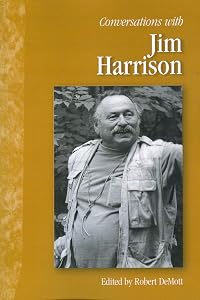
In the third novella of his latest collection, "The Games of Night," his narrator muses on that point: "... at odd moments we wonder who we truly are beneath the layers of paint the culture has applied to us." Harrison has always been after the truth beneath that veneer, the animal within. Perhaps it's because I read it concurrently with Conversations with Jim Harrison (University of Mississippi Press, 2002), in which Harrison continually answers interviewers on this point -- encouraging me to read with more intelligence than my usual lunkish efforts -- but it seems he's never found that animal so convincingly as in The Farmer's Daughter.
Not that he's universally successful. The title novella, told from the viewpoint of an adolescent girl, is the weakest of the three. Harrison never seems to fully inhabit her consciousness and consequently she doesn't come to life as richly or as fully as his other protagonists. She is too precocious (which Harrison hangs a lampshade on by continually having people say she's old beyond her years), and too sexually open to be a believable teenager. While she's undoubtedly a strong female character (in the same vein as Dalva and Julip), she never quite feels fully realized.
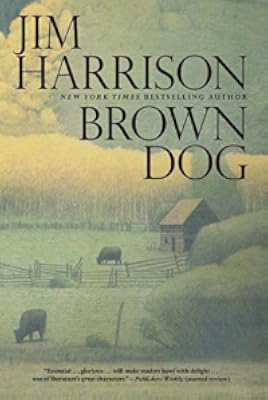
Harrison is far more successful in his reprise of his long-running character, Brown Dog. "Brown Dog Redux" finds BD on the lam, in Toronto, with his daughter Berry, who is rendered mute by fetal alcohol syndrome, and the story follows his return home to Michigan. It seems here that Harrison is putting BD to bed; if so, it's a fine, and hilarious, exit.
Brown Dog ambles through life in a perpetual state of lazy, masculine befuddlement. He desires women without irony, says his counsellor (and sole true love), Gretchen, and this is why they sleep with him; never has Harrison stated so bluntly what all this sex is about. But BD is not exactly marriage material, and consequently he is abandoned, rejected, and permanently perplexed. He is, as his name implies, just like a big, dopey puppy, and Harrison gets at this idea much more successfully here than he did with Cliff, in his recent novel The English Major, whose befuddled canine goofiness was clearest when waitresses patted him affectionately on the head.
This is Harrison's vision of masculinity: when we aren't puppies, we're dogs. And bearing in mind that dogs have teeth, we can also be wolves. The third novella of this collection, "The Games of Night," takes up lycanthropy, one of Harrison's old motifs. Harrison said of his unsuccessful, Hollywood-bastardized screenplay, Wolf (not related to his novel of the same title) that he wished he'd done it as a novella first, so he would have had control of it, and "The Games of Night" seems to be a belated attempt to correct that error.
Harrison's protagonist is bitten in the neck by a wolf cub at the age of 12, which results in a blood disorder with symptoms only too familiar to Harrison fans: outrageous appetites for food and sex, and a violent disposition which overcomes his better nature, to his later regret. Those appetites wax and wane with the moon, on a monthly cycle; he is not precisely a werewolf, but he is half wolf, or half dog. That this coincides with puberty is hardly coincidental, and interestingly, the narrator continually euphemizes this condition with such expressions as "my monthly affliction," recalling certain menstrual euphemisms. This is, Harrison asserts, the male condition.
Although the title novella is weaker than the other two, The Farmer's Daughter is possibly Harrison's best book, and the clearest expression of his concerns, in years. show less
"Macho" is a label he vehemently rejects, pointing out that in Mexico, this word is reserved for men who express their dominance through gratuitous violence. Fine; the question is, then, is he too masculine?
What are we to make of the extraordinary, unearned sexual success of his male protagonists? Or of the precocious, preternatural sexuality of his adolscents? Are his female protagonists (Dalva, Julip, etc.) manifestations of his ideal female in their forthright sexuality? Indeed, what's up with all this sex? Is it just male wish fulfilment? (Or, recalling that it is show more fiction, male wishfulness?)
Or do Dalva and Julip usurp male prerogatives -- are they women who actually threaten male dominance? Is the sexuality of his male protagonists a boon, or an affliction? Is Harrison making some kind of point here that some of his critics continually miss?
In the third novella of his latest collection, "The Games of Night," his narrator muses on that point: "... at odd moments we wonder who we truly are beneath the layers of paint the culture has applied to us." Harrison has always been after the truth beneath that veneer, the animal within. Perhaps it's because I read it concurrently with Conversations with Jim Harrison (University of Mississippi Press, 2002), in which Harrison continually answers interviewers on this point -- encouraging me to read with more intelligence than my usual lunkish efforts -- but it seems he's never found that animal so convincingly as in The Farmer's Daughter.
Not that he's universally successful. The title novella, told from the viewpoint of an adolescent girl, is the weakest of the three. Harrison never seems to fully inhabit her consciousness and consequently she doesn't come to life as richly or as fully as his other protagonists. She is too precocious (which Harrison hangs a lampshade on by continually having people say she's old beyond her years), and too sexually open to be a believable teenager. While she's undoubtedly a strong female character (in the same vein as Dalva and Julip), she never quite feels fully realized.
Harrison is far more successful in his reprise of his long-running character, Brown Dog. "Brown Dog Redux" finds BD on the lam, in Toronto, with his daughter Berry, who is rendered mute by fetal alcohol syndrome, and the story follows his return home to Michigan. It seems here that Harrison is putting BD to bed; if so, it's a fine, and hilarious, exit.
Brown Dog ambles through life in a perpetual state of lazy, masculine befuddlement. He desires women without irony, says his counsellor (and sole true love), Gretchen, and this is why they sleep with him; never has Harrison stated so bluntly what all this sex is about. But BD is not exactly marriage material, and consequently he is abandoned, rejected, and permanently perplexed. He is, as his name implies, just like a big, dopey puppy, and Harrison gets at this idea much more successfully here than he did with Cliff, in his recent novel The English Major, whose befuddled canine goofiness was clearest when waitresses patted him affectionately on the head.
This is Harrison's vision of masculinity: when we aren't puppies, we're dogs. And bearing in mind that dogs have teeth, we can also be wolves. The third novella of this collection, "The Games of Night," takes up lycanthropy, one of Harrison's old motifs. Harrison said of his unsuccessful, Hollywood-bastardized screenplay, Wolf (not related to his novel of the same title) that he wished he'd done it as a novella first, so he would have had control of it, and "The Games of Night" seems to be a belated attempt to correct that error.
Harrison's protagonist is bitten in the neck by a wolf cub at the age of 12, which results in a blood disorder with symptoms only too familiar to Harrison fans: outrageous appetites for food and sex, and a violent disposition which overcomes his better nature, to his later regret. Those appetites wax and wane with the moon, on a monthly cycle; he is not precisely a werewolf, but he is half wolf, or half dog. That this coincides with puberty is hardly coincidental, and interestingly, the narrator continually euphemizes this condition with such expressions as "my monthly affliction," recalling certain menstrual euphemisms. This is, Harrison asserts, the male condition.
Although the title novella is weaker than the other two, The Farmer's Daughter is possibly Harrison's best book, and the clearest expression of his concerns, in years. show less
I am very surprised to be the first person from Library thing to read Jim Harrison's new book. I have always thought that he had a big following. If you like him, then you will like these novellas. You have to be able to deal with his constant use of young men and women who have early and highly charged sexual appetites. I have trouble with the 35 year old teacher being with a 16 year old(although legal in Arizona) and her family is okay with that. But once you get through that, Jim has great narratives and interesting insights into life while also giving you a good read. One of my favorite authors.
Classic Harrison. Well written and casually insightful. Three stories including one of Brown Dog. The last story which I thought would be the silliest of things turned out to be more enlightening then the other two. Farmers daughter was also solid. If Harrison's not preaching about taking life in stride and acting the play out to the end than that's what I'm reading into it. It will be a sad day when Harrison stops writing.
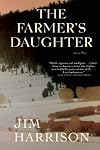
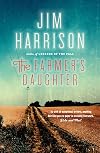
In The Farmer's Daughter, Jim Harrison returns to his signature three-novella format. In addition to the title story, this volume includes Brown Dog Redux, the fourth Harrison novella featuring his iconoclastic hero, and The Games of the Night, a gothic werewolf tale.
The Farmer’s Daughter is the weakest of the three, which is too bad because, creatively, it is the most courageous. . . .
Full review posted on Rose City Reader.
The Farmer’s Daughter is the weakest of the three, which is too bad because, creatively, it is the most courageous. . . .
Full review posted on Rose City Reader.
Superbe nouvelle plutôt que roman vu la longueur du texte, mais il m'a passionnée de bout en bout. Histoire descriptive et sensible à la fois, le personnage central, Sarah, est très attachante. On a envie de l'aider, de la soutenir, et on est soulagé par la décision qu'elle prend à la fin.
Apr 28, 2018French
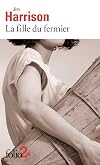
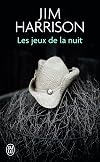
Ces trois nouvelles – La Fille du fermier, Chien Brun, le retour et Les Jeux de la nuit – présentent trois destins solitaires dans le décor rude de l'Amérique profonde: Sarah, la jeune fille qui veut se venger d'avoir été violée, l'Indien Chien Brun qui cherche une compagne, et Samuel, mi-homme mi-bête en proie à des accès de violence les nuits de pleine lune.
Moi qui considère Jim Harrison comme l'un des plus grands écrivains américains actuels (Légendes d'automne et De Marquette à Vera Cruz m'ont laissé d'excellents souvenirs), je n'ai pu m'empêcher d'être déçue par ces nouvelles, qui datent de 2009. Cela ne me dérange pas d'y retrouver le thème – cher à Harrison – de la recherche de l'identité à show more travers l'errance, qui ici se double de la recherche de l'âme sœur. Mais le style m'en semble d'une brutalité caricaturalement américaine: tout se résout à coups de fusil ou de tequila, les personnages masculins consomment des quantités de viande invraisemblables, et leur désir sexuel est aussi grossier qu'inextinguible. Bref, tout cela est beaucoup trop cowboy pour mon goût. En même temps, le récit si (inutilement) détaillé empêche l'intrigue d'avancer vraiment, en particulier dans Chien Brun, le retour. Des trois, je retiendrais cependant La Fille du fermier, plus émouvante et bien vue. Par contre la traduction peine souvent à éviter les américanismes. show less
Moi qui considère Jim Harrison comme l'un des plus grands écrivains américains actuels (Légendes d'automne et De Marquette à Vera Cruz m'ont laissé d'excellents souvenirs), je n'ai pu m'empêcher d'être déçue par ces nouvelles, qui datent de 2009. Cela ne me dérange pas d'y retrouver le thème – cher à Harrison – de la recherche de l'identité à show more travers l'errance, qui ici se double de la recherche de l'âme sœur. Mais le style m'en semble d'une brutalité caricaturalement américaine: tout se résout à coups de fusil ou de tequila, les personnages masculins consomment des quantités de viande invraisemblables, et leur désir sexuel est aussi grossier qu'inextinguible. Bref, tout cela est beaucoup trop cowboy pour mon goût. En même temps, le récit si (inutilement) détaillé empêche l'intrigue d'avancer vraiment, en particulier dans Chien Brun, le retour. Des trois, je retiendrais cependant La Fille du fermier, plus émouvante et bien vue. Par contre la traduction peine souvent à éviter les américanismes. show less
Oct 29, 2011French
Members
- Recently Added By
Lists

Favourite Books
1,817 works; 310 members
Author Information

81+ Works 11,877 Members
James Thomas Harrison was born on December 11, 1937 in Grayling, Michigan. After receiving a B.A. in comparative literature from Michigan State University in 1960 and a M.A. in comparative literature from the same school in 1964, he briefly taught English at the State University of New York at Stony Brook. During his lifetime, he wrote 14 show more collections of poetry, 21 volumes of fiction, two books of essays, a memoir, and a children's book. His collections of poetry included Plain Song, The Theory and Practice of Rivers, Songs of Unreason, and Dead Man's Float. He received a Guggenheim fellowship for his poetry in 1969. His essays on food, much of which first appeared in Esquire, was collected in the 2001 book, The Raw and the Cooked. His memoir, Off to the Side, was published in 2002. His first novel, Wolf, was published in 1971. His other works of fiction included A Good Day to Die, Farmer, The Road Home, Julip, and The Ancient Minstrel. His novel, Legends of the Fall, was adapted into a feature film starring Anthony Hopkins and Brad Pitt. Harrison wrote the screenplay for the movie. His novel, Dalva, was adapted as a made-for-television movie starring Rod Steiger and Farrah Fawcett. He died on March 26, 2016 at the age of 78. (Bowker Author Biography) show less
Some Editions
Common Knowledge
- Canonical title*
- Les jeux de la nuit
- Original title
- The farmer's daughter
- Original publication date
- 2009-12-15 (1e édition originale américaine, Grove Press) (1e édition originale américaine, Grove Press); 2010-08-28 (1e traduction et édition française, Flammarion) (1e traduction et édition française, Flammarion)
- Epigraph*
- /
- Dedication*
- /
- First words*
- La Fille du fermier
Première partie
1
1986
Elle était née bizarre, du moins le croyait-elle. Ses parents avaient mis de la glace dans son âme, ce qui n’avait rien d’... (show all)exceptionnel. [...] - Original language*
- Anglais (Etats-Unis) (Etats-Unis)
*Some information comes from Common Knowledge in other languages. Click "Edit" for more information.
Classifications
Statistics
- Members
- 305
- Popularity
- 104,577
- Reviews
- 7
- Rating
- (3.71)
- Languages
- English, French
- Media
- Paper, Audiobook, Ebook
- ISBNs
- 18
- ASINs
- 6