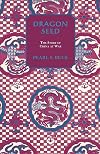
Dragon Seed
by Pearl S. Buck
On This Page
Description
A Nobel laureate's gripping historical novel about the Japanese invasion of Nanking Farmer Liang Tan knows only a quiet, traditional life in his remote Chinese farming community. When news filters in that Japanese forces are invading the country, he and his fellow villagers believe that if they behave decently to the Japanese soldiers, the civilians might remain undisturbed. They're in for a shock, as the attackers lay waste to the country and install a puppet government designed to show more systematically carry out Japanese interests. In response, the Chinese farmers and their families form a resistancewhich not only carries grave risk, but also breaks their vow of nonviolence, leading them to wonder if they're any different than their enemy.Later adapted into a film featuring Katharine Hepburn, Dragon Seed is a brilliant and unflinching look at the horrors of war.This ebook features an illustrated biography of Pearl S. Buck including rare images from the author's estate. show lessTags
Recommendations




















Member Recommendations
Member Reviews
A strain of crazed, self-righteous fanaticism runs throughout Pearl S. Buck's work. In her better novels, such as The Good Earth, her storytelling skills are so strong that this fault, as I see it, fades into the background. But Dragon Seed is not one of her better works. It amounts to little more than wartime propaganda. And the constant pleading interspersed with revenge fantasies at times makes it an ugly work. Yes, China was undergoing a ruthless Japanese invasion and occupation. And Buck self identified with the Chinese. So, in that sense, it is all understandable. But the ferocity of the tone of the book, its lack of subtlety and its constant waving of the bloody flag will forever doom Dragon Seed to nothing more than a mere show more reflection of its times.
The story itself revolves around a fictionalized depiction of the Rape of Nanking in 1937, although the novel was not published until 1942, just as the United States was entering World War II following the attack on Pearl Harbor. That fact provides the only sense of hope in the story, that after four years of Japanese occupation China now has allies who promise that the "tunnel may be dark and long, but at the end there is light." The fate of the novel's characters reflect this state of affairs, for everything is left unresolved at book's end. The main and final struggle is yet to be fought.
Dragon Seed is bleak, heavy-handed effort. And it reveals Buck as something of a harridan. Her novels and her personal philosophy seem driven with her confirmed belief that she was in the right, that China's only appropriate future was the one she felt it must follow. However much she may have come to criticize the American and British missionary efforts in China, she retained that same zealous attitude, just for a slightly different set of values. She thought herself the defender against anti-Asian bigotry. How ironic that contemporary readers of her work, cut from the same desire to reshape the world in the 21st century image of Western "appropriateness" now condemn her efforts as racist filled stereotypes. There is something instructive in that. People who write books to please contemporary audiences and announce their own virtue often have their own voices turned against them in subsequent generations. Perhaps a fate that also awaits those so criticizing Buck today. show less
The story itself revolves around a fictionalized depiction of the Rape of Nanking in 1937, although the novel was not published until 1942, just as the United States was entering World War II following the attack on Pearl Harbor. That fact provides the only sense of hope in the story, that after four years of Japanese occupation China now has allies who promise that the "tunnel may be dark and long, but at the end there is light." The fate of the novel's characters reflect this state of affairs, for everything is left unresolved at book's end. The main and final struggle is yet to be fought.
Dragon Seed is bleak, heavy-handed effort. And it reveals Buck as something of a harridan. Her novels and her personal philosophy seem driven with her confirmed belief that she was in the right, that China's only appropriate future was the one she felt it must follow. However much she may have come to criticize the American and British missionary efforts in China, she retained that same zealous attitude, just for a slightly different set of values. She thought herself the defender against anti-Asian bigotry. How ironic that contemporary readers of her work, cut from the same desire to reshape the world in the 21st century image of Western "appropriateness" now condemn her efforts as racist filled stereotypes. There is something instructive in that. People who write books to please contemporary audiences and announce their own virtue often have their own voices turned against them in subsequent generations. Perhaps a fate that also awaits those so criticizing Buck today. show less
Farmer Liang Tan knows only a quiet, traditional life in his remote Chinese farming community. When news filters in that Japanese forces are invading the country, he and his fellow villagers believe that if they behave decently to the Japanese soldiers, the civilians might remain undisturbed. They’re in for a shock, as the attackers lay waste to the country and install a puppet government designed to systematically carry out Japanese interests. In response, the Chinese farmers and their families form a resistance—which not only carries grave risk, but also breaks their vow of nonviolence, leading them to wonder if they’re any different than their enemy
A powerful story of a Chinese peasant farmer and his family and how they deal with the senselessness and brutality of war. The language of the book is simple as it comes from the farmer, but his thoughts and feelings are beautifully expressed. Some parts of the book may be hard to read. The ugliness and horrors of war are all there, but the story is told without today’s graphic descriptions. Another wonderful Pearl S. Buck story.
Not being entirely interested in Asian culture or history, I've avoided Pearl S. Buck's work. However, this was a book club selection and so I took it on. This story will stay with me for years. While the setting is China and the main characters Chinese, it has nothing to do with any particular culture. Rather it is a character study of the effects of war upon a culture and its individuals.
I had to do some research on the book in order to discover who the enemy of the story was. She never identifies them, never names the central city of the story, and only gives the Chinese names for other countries of the world that have bearing upon the story. She deliberately and skillfully avoids naming the protaganists leaving the reader free to show more avoid the temptation to vilify and label populations and instead concentrate upon the effect of the story's plot. Because this was written in 1941 using China's history during the years of 1937-1945, I have to believe that it was intended to be Buck's treatise on the evils of the wars of her lifetime.
I heartily recommend the book as being well written and particularly relevant for today's readers. show less
I had to do some research on the book in order to discover who the enemy of the story was. She never identifies them, never names the central city of the story, and only gives the Chinese names for other countries of the world that have bearing upon the story. She deliberately and skillfully avoids naming the protaganists leaving the reader free to show more avoid the temptation to vilify and label populations and instead concentrate upon the effect of the story's plot. Because this was written in 1941 using China's history during the years of 1937-1945, I have to believe that it was intended to be Buck's treatise on the evils of the wars of her lifetime.
I heartily recommend the book as being well written and particularly relevant for today's readers. show less
Sometimes spoken of as Pearl Buck's _other_ policy-changing novel: _The Good Earth_ repealed the Chinese Exclusion Act, this one gave America the second thoughts about funding Japan that ultimately led to World War II.
This is actually incorrect -- the chronology is off by a couple of years, and _Dragon Seed_ was first published in 1942 -- but believe me, had it been printed prior to the Second World War it most certainly could have started it. I recommend not reading this book unless one has a _very_ strong stomach -- the previous reviewer expressing disbelief at some of the things the Japanese did in China was significantly understating the matter. (Also, if you have any lingering affection for Hirohito's state, this will be an show more excellent cure. Inspired by the cartoon of the mother telling her son to throw away his sheriff's badge and six-shooter, I call it "Brokeback Mountain therapy." Although, with pederasty, so the analogy is not quite complete.)
However, this may be of interest in spite of it all to _Pavilion of Women_ readers -- this book is in many ways a dress rehearsal for that one. But I would strongly recommend that one read _Pavilion_, very much the stronger (and less disgusting) novel, first...
(Also, the novel that gets such prominent billing in this book is _The Water Margin_.) show less
This is actually incorrect -- the chronology is off by a couple of years, and _Dragon Seed_ was first published in 1942 -- but believe me, had it been printed prior to the Second World War it most certainly could have started it. I recommend not reading this book unless one has a _very_ strong stomach -- the previous reviewer expressing disbelief at some of the things the Japanese did in China was significantly understating the matter. (Also, if you have any lingering affection for Hirohito's state, this will be an show more excellent cure. Inspired by the cartoon of the mother telling her son to throw away his sheriff's badge and six-shooter, I call it "Brokeback Mountain therapy." Although, with pederasty, so the analogy is not quite complete.)
However, this may be of interest in spite of it all to _Pavilion of Women_ readers -- this book is in many ways a dress rehearsal for that one. But I would strongly recommend that one read _Pavilion_, very much the stronger (and less disgusting) novel, first...
(Also, the novel that gets such prominent billing in this book is _The Water Margin_.) show less
I'd never read any of Pearl Buck's books, but an NPR review of a new biography of the author got me interested. I found her portrayal of a traditional multi-generational Chinese family during the Japanese invasion of the 1930's absolutely fascinating. The characters were fully fleshed out, and it gave me a real feeling for the culture's stoicism and the people's attachment to both the land and the ways of their ancestors.
This book was everything I expected from Pearl S. Buck. I was taken in by the family and hardships of the time. I have read a few books covering the invasion of China by Japan and the horrors that happened, but I have to admit that this story really got to me. There were so many times that I had to put the book down just to collect myself before going on. My only wish was that it told more about what happened after the war to all the family members, but then I guess the book would be a lot longer.
Members
- Recently Added By
Lists

Publisher's Weekly Bestsellers - Part II - 1940 - 1979
355 works; 5 members

The Luca Guadagnino Universe
62 works; 1 member
Author Information

440+ Works 37,183 Members
Pearl S. Buck, June 26, 1892 - March 6, 1973 Pearl Sydenstricker Buck was an American author, best know for her novels about China. Buck was born on June 26, 1892, in Hillsboro, West Virginia, but as the daughter of Presbyterian missionaries she was taken to China in infancy. She received her early education in Shanghai, but returned to the United show more States to attend college, and graduated from Randolph-Macon Woman's College in Virginia in 1914. Buck became a university teacher there and married John Lossing Buck, an agricultural economist, in 1917. Buck and her husband both taught in China, and she published magazine articles about life there. Her first novel East Wind, West Wind was published in 1930. Buck achieved international success with The Good Earth, which won the Pulitzer Prize in 1932. This story of a Chinese peasant family's struggle for survival was later made into a MGM film. Buck resigned from the Presbyterian Board of Foreign Missions after publishing an article that was critical of missionaries. She returned to the United States because of political unrest in China. Buck's novels during this period include Sons, A House Divided, and The Mother. She also wrote biographies of her father (Fighting Angel) and her mother (The Exile). She won the Nobel Prize for Literature in 1938. During her career, Buck published over 70 books: novels, nonfiction, story collections, children's books, and translations from the Chinese. She also wrote under the pseudonym John Sedges. In the United States, Buck was active in the civil rights and women's rights movements. In 1942 she founded the East and West Association to promote understanding between Asia and the West. In 1949, Buck established Welcome House, the first international interracial adoption agency. In 1964, she established the Pearl S. Buck foundation to sponsor support for Amerasian children who were not considered adoptable. Pearl Buck died in Danbury, Vermont, on March 6, 1973. (Bowker Author Biography) show less
Some Editions
Awards and Honors
Distinctions
Notable Lists
Series
Belongs to Publisher Series
Zephyr Books (34)
Ullstein (23886)
Work Relationships
Is contained in
Has the adaptation
Has as a student's study guide
Common Knowledge
- Canonical title
- Dragon Seed
- Original title
- Dragon Seed
- Original publication date
- 1942
- Related movies
- Dragon Seed (1944 | IMDb)
- Epigraph
- DRAGON SEED
To the Chinese the dragon is not an evil creature, but is a god and the friend of men who worship him. He "holds in his power prosperity and peace." Ruling the waters and the winds, he sends the good r... (show all)ain, and is hence the symbol of fecundity. In the Hsia dynasty two dragons fought a great duel until both disappeared, leaving only a fertile foam from which were born the descendants of the Hsia. Thus the dragons came to be looked upon as the ancestors of a race of heroes. - First words
- Ling Tan lifted his head.
- Last words
- (Click to show. Warning: May contain spoilers.)"Only a promise," Lao Er said.
Classifications
- Genres
- Fiction and Literature, General Fiction, Historical Fiction
- DDC/MDS
- 813.52 — Literature & rhetoric American literature in English American fiction in English 1900-1999 1900-1945
- LCC
- PS3503 .U198 .D7 — Language and Literature American literature American literature Individual authors 1900-1960
- BISAC
Statistics
- Members
- 991
- Popularity
- 26,535
- Reviews
- 15
- Rating
- (3.89)
- Languages
- 8 — Dutch, English, Finnish, French, German, Italian, Spanish, Swedish
- Media
- Paper, Audiobook, Ebook
- ISBNs
- 35
- UPCs
- 2
- ASINs
- 65