There is 1 current discussion about this work.
On This Page
Description
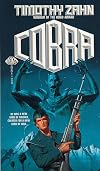
EARTH'S ONLY HOPE WAS THE COBRASThe colony worlds Adirondack and Silvern fell to the Troft forces almost without a struggle. Outnumbered and on the defensive, Earth made a desperate decision. It would attack the aliens not from space, but on the ground—with forces the Trofts did not even suspect.
Thus were created the Cobras, a guerilla force whose weapons were surgically implanted, invisible to the unsuspecting eye, yet undeniably deadly. But power brings temptation, and not all the show more Cobras could be trusted to fight for Earth alone. Jonny Moreau would learn the uses—and abuses—of his special abilities and what it truly meant to be a Cobra.
At the publisher's request, this title is sold without DRM (Digital Rights Management).
. show less
Tags
Recommendations











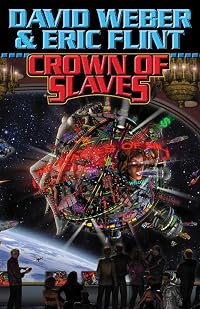
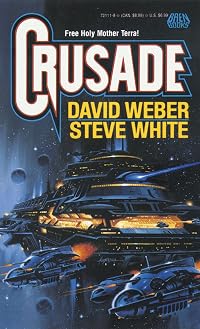
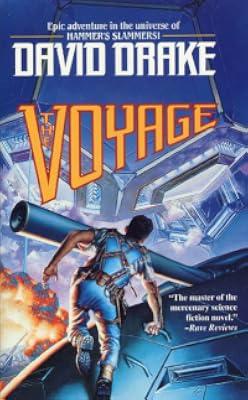


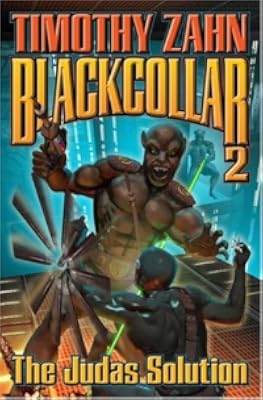




Member Recommendations

Member Reviews
Timothy Zahn, a frequent contributor to the Star Wars Universe, has also written several military science fiction series. The Cobra series, which began in 1985, has a post-Vietnam feel and undoubtedly owes a lot to the enhanced soldiers of Joe Haldeman’s The Forever War. The first Cobra novel provides the usual basic training and first battle narratives, but it also brings the warrior hero home suffering from post-traumatic stress and moving on into a political career.
Zahn is a pro whose work is always readable.
Zahn is a pro whose work is always readable.
When I read the cover blurb for this book, I expected something like the Blackcollar series: military sci-fi about super soldiers, cyborgs in this case instead of pharmaceutically enhanced ninjas. That impression is completely wrong. While there are some battle scenes in this book, that isn’t really the focus. This isn’t really military sci-fi at all, but rather speculative fiction about politics using super soldiers as a thought experiment.
This is the second book I’ve read recently that looks at the problem of how a society would change if people appeared within it who were faster, stronger, and generally more dangerous than the norm. The first, Heroes Fall, was in the superhero genre. The reaction of that society to superhumans show more in their midst is mostly adulation, with a few generally ignored naysayers. The corruption of society is subtle and slow, underneath the public fanfare.
For the Dominion of Man, the seventy-world setting of Cobra, their cyborg super soldiers were created [perhaps in a bit of a panic] to help win a war, without much thought for what would come afterward. Men with unusual strength, automated reflexes, and lasers built into their fingertips are not universally loved once demobilized, especially when accidents and misunderstandings that escalate into things far worse start to occur.
I was reminded of David Morell’s First Blood, a novel that really captured the struggles of Vietnam veterans to find a place back home, or the ending of The Hurt Locker, when Jeremy Renner’s Sgt. James stands bewildered by the endless varieties of breakfast cereal in a supermarket. Men who did everything their government and society asked of them come home to find that they no longer have a home to return to.
The bulk of the book is taken up with the search for an acceptable political solution to the problems the Cobras pose to their society. Officially, the Cobras are war heroes. In the public eye, they are mostly objects of fear and loathing. Unofficially, the Central Committee that runs the Dominion considers them a threat; bored and frustrated former soldiers that have more in common with each other than their fellow citizens can become agents of revolution.
While we are treated to brief interludes within the halls of power on the planet Asgard, we mostly see this play out through the eyes of Jonny Moreau, a bright young man who volunteered to go off to war, and found that he was changed forever by the experience. We follow Moreau from young adulthood, when he volunteers for service, into middle age, when he brokers a deal to preserve hard won freedoms and privileges for his fellow Cobras at immense personal cost. I gather there are a number of sequels that follow from this book, as Zahn explores the further implications of Jonny Moreau’s actions at the end of this book.
Since this is hard sci-fi, many of the problems the Cobras face, both in battle and life, stem from the physical consequences of their modifications. During the bootcamp section of the book, the Cobra trainees spend time learning how to pick up unusually heavy things without tearing their ligaments or giving themselves subdermal hematomas. Their bones have been strengthened, and their strength and speed supplemented by servo motors, but the rest of their bodies remain much as they always were.
First and foremost, they are men, and they want the same things as anyone else: a job, a family, a home. Unfortunately, most other people don’t want them around. In a memorable incident in his home town after Jonny comes marching home, a couple of young punks hassle him in a local entertainment center, and then swerve their car towards him when they seem him walking on the street later. Jonny’s programmed combat reflexes take over [literally, COBRA means computerized body reflex armament], he shoots out the tires of the kids’ car and they both die in the resulting crash.
The reason this all happens is that the computer implanted in the brain cannot be removed with causing brain damage, and the finger lasers cannot be removed without amputation, and that was a price the Central Committee was unwilling to pay [or unwilling to be seen to be willing to pay]. Although, I did wonder why they didn’t do something about the power source, which was implanted in the chest, and thus much easier to get to. Much of the other equipment Jonny carried into war was successfully removed, but none of it other than the strengthened bones would work without power. I do remember reading about how much heavier their bodies got, so maybe it was seen as too much of a burden to leave them with limbs too heavy to lift. Perhaps this could have been explored a bit more.
The Central Committee itself is interesting, insofar as it really is an Inner Party. The Central Committee almost functions as a character, one analogous to Lathe in the Blackcollar novels or Thrawn in Heir to the Empire, powerful and far-seeing, capable of predicting its opponents and laying traps. It is also quite good at governing, since the Dominion of Man seems quite peaceful and prosperous. Except, in this case, everything that happens is because the Central Committee made a mistake in even allowing the Cobras to be created. Over the many years depicted in the novel, we see the Central Committee continue to dominate, but also to make critical mistakes at times. I enjoyed how Zahn took a central idea in his style and inverted it, making the the clever and powerful Central Committee the antagonist.
I also liked the broad sweep of the novel, covering several decades in the life of Jonny Moreau. Since the kind of things Zahn wants to explore in this novel take a long time to work themselves out, nothing shorter than a generation would have been adequate. Looking through the blurbs for the many sequels, we will continue to follow the Moreau family as the implications of Jonny’s solution work themselves out over the generations to follow. Overall, this was an interesting novel, and I’m curious to see where Zahn decided to take the society he created in the conclusion of this book. show less
This is the second book I’ve read recently that looks at the problem of how a society would change if people appeared within it who were faster, stronger, and generally more dangerous than the norm. The first, Heroes Fall, was in the superhero genre. The reaction of that society to superhumans show more in their midst is mostly adulation, with a few generally ignored naysayers. The corruption of society is subtle and slow, underneath the public fanfare.
For the Dominion of Man, the seventy-world setting of Cobra, their cyborg super soldiers were created [perhaps in a bit of a panic] to help win a war, without much thought for what would come afterward. Men with unusual strength, automated reflexes, and lasers built into their fingertips are not universally loved once demobilized, especially when accidents and misunderstandings that escalate into things far worse start to occur.
I was reminded of David Morell’s First Blood, a novel that really captured the struggles of Vietnam veterans to find a place back home, or the ending of The Hurt Locker, when Jeremy Renner’s Sgt. James stands bewildered by the endless varieties of breakfast cereal in a supermarket. Men who did everything their government and society asked of them come home to find that they no longer have a home to return to.
The bulk of the book is taken up with the search for an acceptable political solution to the problems the Cobras pose to their society. Officially, the Cobras are war heroes. In the public eye, they are mostly objects of fear and loathing. Unofficially, the Central Committee that runs the Dominion considers them a threat; bored and frustrated former soldiers that have more in common with each other than their fellow citizens can become agents of revolution.
While we are treated to brief interludes within the halls of power on the planet Asgard, we mostly see this play out through the eyes of Jonny Moreau, a bright young man who volunteered to go off to war, and found that he was changed forever by the experience. We follow Moreau from young adulthood, when he volunteers for service, into middle age, when he brokers a deal to preserve hard won freedoms and privileges for his fellow Cobras at immense personal cost. I gather there are a number of sequels that follow from this book, as Zahn explores the further implications of Jonny Moreau’s actions at the end of this book.
Since this is hard sci-fi, many of the problems the Cobras face, both in battle and life, stem from the physical consequences of their modifications. During the bootcamp section of the book, the Cobra trainees spend time learning how to pick up unusually heavy things without tearing their ligaments or giving themselves subdermal hematomas. Their bones have been strengthened, and their strength and speed supplemented by servo motors, but the rest of their bodies remain much as they always were.
First and foremost, they are men, and they want the same things as anyone else: a job, a family, a home. Unfortunately, most other people don’t want them around. In a memorable incident in his home town after Jonny comes marching home, a couple of young punks hassle him in a local entertainment center, and then swerve their car towards him when they seem him walking on the street later. Jonny’s programmed combat reflexes take over [literally, COBRA means computerized body reflex armament], he shoots out the tires of the kids’ car and they both die in the resulting crash.
The reason this all happens is that the computer implanted in the brain cannot be removed with causing brain damage, and the finger lasers cannot be removed without amputation, and that was a price the Central Committee was unwilling to pay [or unwilling to be seen to be willing to pay]. Although, I did wonder why they didn’t do something about the power source, which was implanted in the chest, and thus much easier to get to. Much of the other equipment Jonny carried into war was successfully removed, but none of it other than the strengthened bones would work without power. I do remember reading about how much heavier their bodies got, so maybe it was seen as too much of a burden to leave them with limbs too heavy to lift. Perhaps this could have been explored a bit more.
The Central Committee itself is interesting, insofar as it really is an Inner Party. The Central Committee almost functions as a character, one analogous to Lathe in the Blackcollar novels or Thrawn in Heir to the Empire, powerful and far-seeing, capable of predicting its opponents and laying traps. It is also quite good at governing, since the Dominion of Man seems quite peaceful and prosperous. Except, in this case, everything that happens is because the Central Committee made a mistake in even allowing the Cobras to be created. Over the many years depicted in the novel, we see the Central Committee continue to dominate, but also to make critical mistakes at times. I enjoyed how Zahn took a central idea in his style and inverted it, making the the clever and powerful Central Committee the antagonist.
I also liked the broad sweep of the novel, covering several decades in the life of Jonny Moreau. Since the kind of things Zahn wants to explore in this novel take a long time to work themselves out, nothing shorter than a generation would have been adequate. Looking through the blurbs for the many sequels, we will continue to follow the Moreau family as the implications of Jonny’s solution work themselves out over the generations to follow. Overall, this was an interesting novel, and I’m curious to see where Zahn decided to take the society he created in the conclusion of this book. show less
Although this is a military science fiction story, there is also a lot of political manoeuvring in the interactions between the colonists and the central committee of Terran controlled space. Unlike most modern military SF, the military operatives are seen as something to be feared rather than feted - the Cobra tales were written well before the positive effects that the First Gulf War had on the attitudes people had to the American military in particular - Zahn isn't a Vietnam vet himself but his generation would see the military through the filter of that engagement.
I enjoyed Cobra and the other books in the series, I thought it was a decent series about ex-military men who'd been used by the government, and what happens afterwards. Well done.
human superwarriors take on the aliens. Slower paced, but action packed enough for me.
Ratings
Members
- Recently Added By
Lists

Baen Free Library
72 works; 2 members
Talk Discussions
Current Discussions
Cobra in Good Show Sir! — bad science fiction and fantasy covers (May 9)
Author Information

268+ Works 53,539 Members
Timothy Zahn was born in Chicago, Illinois on September 1, 1951. He received a B.S. degree in physics from Michigan State University in East Lansing in 1973 and a M.S. degree in physics from the University of Illinois in Champaign-Urbana in 1975. In 1975, Zahn began writing science fiction as a hobby. When his thesis advisor died in 1979, show more effectively wiping out three years of work, he decided to try making a living at writing. Since then, Zahn has published short stories, novelettes, novels, and short fiction collections. He is best known for writing the Star Wars the Thrawn Trilogy: Heir to the Empire, Dark Force Rising, and The Last Command. The novella, Cascade Point (1984) won a Hugo Award. He also writes numerous series including Cobra, Blackcollar, Dragonback, and Conquerors' Trilogy. Zahn co-authored with David Weber A Call To Duty, the first book in the Manticore Ascendant Series, which made the New York Times bestseller list in October 2014. (Bowker Author Biography) show less
Some Editions
Series

Belongs to Publisher Series
Venture SF (15)
Work Relationships
Is contained in
Common Knowledge
- Original publication date
- 1985
- People/Characters
- Jonny Moreau
- Important places
- Adirondack; Silvern; Horizon; Aventine; Capitalia
- First words
- The music all that morning had been of the militant type that had dominated the airwaves for the past few weeks; but to the discerning ear there was a grim undertone to it that hadn't been there since the very start of the al... (show all)ien invasion.
- Last words
- (Click to show. Warning: May contain spoilers.). . . he told the captain quietly. "Let's go home."
Classifications
Statistics
- Members
- 495
- Popularity
- 61,114
- Reviews
- 6
- Rating
- (3.65)
- Languages
- 5 — Czech, English, German, Polish, Russian
- Media
- Paper, Audiobook, Ebook
- ISBNs
- 13
- ASINs
- 7