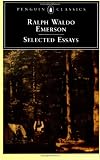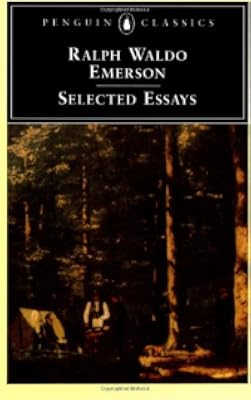
Selected Essays
by Ralph Waldo Emerson 
On This Page
Description
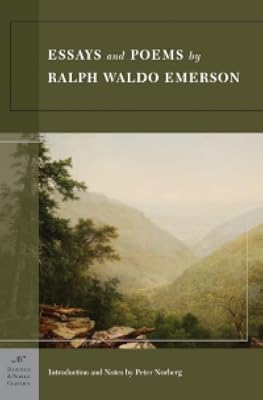
Ralph Waldo Emerson believed that an appreciation of its vast natural resources would become the foundation of American culture. His assertion that human thought and actions proceed from nature, was a radical departure from the traditional European emphasis on domesticating nature to suit human needs. His philosophy is rich in common natural scenes of daily life, and expresses the inherent harmony between man and nature. including Nature, The American Scholar, Self-reliance and The show more Transcendentalist, as well as his assessments of Montaigne, Napoleon and Thoreau. show lessTags
Recommendations










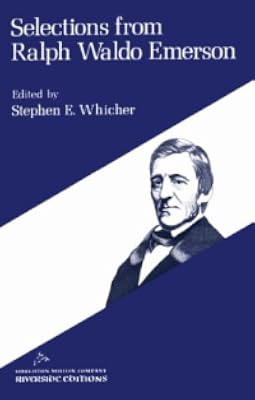


Member Reviews
"Our day of dependence, our long apprenticeship to the learning of other lands, draws to a close." (pg. 83)
Dense and abstract, Ralph Waldo Emerson's Selected Essays often become something of a trial for the modern reader. Part essayist and part philosopher, the delivery of his sermons on nature, fate, history, art and academia require endurance, and while this is in part a mark against the modern reader, used to shorter and more manageable chucks of information delivery, it also speaks to the lofty and (in the best possible sense) indulgent nature of Emerson's prose. The fact that many of these essays were in fact (or were at first) lectures, helps mitigate against this, as Emerson's conversational tone ensures the reader doesn't get show more too bogged down, but the book does require fortitude. While by no means stale, the work of Emerson is at least possessing of a hard crust.
Once that crust is broken through, the ideas inside are nourishing. Oliver Wendell Holmes, quoted in the introduction to my Penguin Classics edition, named Emerson's essays as the United States' "intellectual declaration of independence" (pg. 16), the moment when it no longer sought to borrow so heavily from its European cultural inheritance but looked inward and tackled its own being on its own terms. Emerson dwells at that nexus of Old World and New that has always made America so fascinating and conflicted, and his vibrant advocacy and discussion of individualism and Man using his conscious will to align with the vast continental landscape have echoed in the American self-image ever since.
For all his dated prosing, Emerson can really deliver a ringing line when he wants to, and 'Man the Reformer' in particular speaks to our own time, his warning of our moral dependency on flawed and compromised articles long unheeded. But above all, the fundamental influence of Emerson's ideas on American letters makes him an essential read for anyone serious about appreciating the country's literary and intellectual development. The most famous and important of the man's essays are collected here in Selected Essays, and the book is a good choice if you wish to pay Emerson his dues. show less
Dense and abstract, Ralph Waldo Emerson's Selected Essays often become something of a trial for the modern reader. Part essayist and part philosopher, the delivery of his sermons on nature, fate, history, art and academia require endurance, and while this is in part a mark against the modern reader, used to shorter and more manageable chucks of information delivery, it also speaks to the lofty and (in the best possible sense) indulgent nature of Emerson's prose. The fact that many of these essays were in fact (or were at first) lectures, helps mitigate against this, as Emerson's conversational tone ensures the reader doesn't get show more too bogged down, but the book does require fortitude. While by no means stale, the work of Emerson is at least possessing of a hard crust.
Once that crust is broken through, the ideas inside are nourishing. Oliver Wendell Holmes, quoted in the introduction to my Penguin Classics edition, named Emerson's essays as the United States' "intellectual declaration of independence" (pg. 16), the moment when it no longer sought to borrow so heavily from its European cultural inheritance but looked inward and tackled its own being on its own terms. Emerson dwells at that nexus of Old World and New that has always made America so fascinating and conflicted, and his vibrant advocacy and discussion of individualism and Man using his conscious will to align with the vast continental landscape have echoed in the American self-image ever since.
For all his dated prosing, Emerson can really deliver a ringing line when he wants to, and 'Man the Reformer' in particular speaks to our own time, his warning of our moral dependency on flawed and compromised articles long unheeded. But above all, the fundamental influence of Emerson's ideas on American letters makes him an essential read for anyone serious about appreciating the country's literary and intellectual development. The most famous and important of the man's essays are collected here in Selected Essays, and the book is a good choice if you wish to pay Emerson his dues. show less
Ratings
Members
- Recently Added By
Lists

Armed Services Editions
150 works; 1 member

Mind & Thought
7 works; 2 members

1964 College Preparatory Reading List
202 works; 8 members

The College Board: 101 Great Books Recommended for College-Bound Readers
111 works; 7 members
Author Information

795+ Works 21,063 Members
Known primarily as the leader of the philosophical movement transcendentalism, which stresses the ties of humans to nature, Ralph Waldo Emerson, American poet and essayist, was born in Boston in 1803. From a long line of religious leaders, Emerson became the minister of the Second Church (Unitarian) in 1829. He left the church in 1832 because of show more profound differences in interpretation and doubts about church doctrine. He visited England and met with British writers and philosophers. It was during this first excursion abroad that Emerson formulated his ideas for Self-Reliance. He returned to the United States in 1833 and settled in Concord, Massachusetts. He began lecturing in Boston. His first book, Nature (1836), published anonymously, detailed his belief and has come to be regarded as his most significant original work on the essence of his philosophy of transcendentalism. The first volume of Essays (1841) contained some of Emerson's most popular works, including the renowned Self-Reliance. Emerson befriended and influenced a number of American authors including Henry David Thoreau. It was Emerson's practice of keeping a journal that inspired Thoreau to do the same and set the stage for Thoreau's experiences at Walden Pond. Emerson married twice (his first wife Ellen died in 1831 of tuberculosis) and had four children (two boys and two girls) with his second wife, Lydia. His first born, Waldo, died at age six. Emerson died in Concord on April 27, 1882 at the age of 78 due to pneumonia and is buried in Sleepy Hollow Cemetery in Concord, Massachusetts. (Bowker Author Biography) show less
Ralph Waldo Emerson has a Legacy Library. Legacy libraries are the personal libraries of famous readers, entered by LibraryThing members from the Legacy Libraries group.
Series
Belongs to Publisher Series
Common Knowledge
- Canonical title
- Selected Essays
Classifications
Statistics
- Members
- 482
- Popularity
- 62,992
- Reviews
- 1
- Rating
- (4.22)
- Languages
- English
- Media
- Paper, Ebook
- ISBNs
- 9
- ASINs
- 9