On This Page
Description
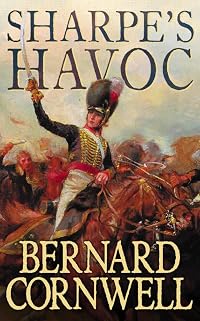
New York Times Bestselling Author Richard Sharpe returns to the battlefields of the Iberian Peninsula, where he and his men bravely fight the French invasion into Portugal in 1809. The world-renowned Sharpe series is now available with gorgeous packaging for a new generation of readers A few years after Richard Sharpe's heroic exploits on the battlefields of Trafalgar, Sharpe finds himself once again in Portugal, fighting the savage armies of Napoleon Bonaparte, as they try to bring the show more whole of the Iberian Peninsula under their control. Travelling with a small British contingent, Sharpe is on the lookout for Kate Savage, the daughter of an English wine shipper, who has gone missing a few months before. But just as he follows the first leads to the missing girl, the French onslaught on Portugal begins and the city of Oporto becomes a bloody scene of carnage and disaster as it falls into the hands of the enemy. show lessTags
Recommendations













Member Reviews
Starting with a desperate evacuation of a town as an invading French army completes its conquest of northern Portugal and a pontoon bridge fails and sends hundreds of civilians to their crushed, watery deaths and ending with a freakily similar battle at another bridge in which the French receive more than a little poetic justice, Sharpe's Havoc is a hell of a fine read, like all of these books are.
It's a funny old thing, though, reading a series like Bernard Cornwell's Richard Sharpe books. But then again, the Sharpe books are rather a funny old series. For originally, there were just a few of these, and they were all set during and in the midst of the Peninsular War. Then they got very popular, so popular that they were adapted for show more television. The TV show, featuring the awesome likes of Sean Bean and Pete Postlethwaite and David Troughton, was very popular as well, so popular that there grew to be demand for more Sharpe books and TV adaptations of those books and somewhere in the middle of all of this came the notion that perhaps some prequel novels detailing Sharpe's pre-Napoleonic adventures might go over well and...
The result is a great heap of prose books that may be likened unto a long and convoluted run of a Big Two superhero comic book, rich with minutia and ret-conning and related geek-bait (the geeks in question this time being military history buffs, and damned if Cornwell isn't turning me into one of those. I found myself doting over the details of how Baker rifles work and the finer points of using case shot [and learning where the term "shrapnel" came from]), daunting in the extreme for the newcomer, who has two basic choices in how to approach this mass of material:* in publication order, or in chronological order. Choose publication order and you're going to be all over the place, historically speaking, starting out on the Peninsula in the middle of the Talavera Campaign in 1809, proceeding more or less chronologically for a while, but pretty soon you're lurching back and forth in time as though you had a TARDIS, not coming to, say, our man's adventures in India in 1799 until you've read a whole lot of novels. The thought of that makes my brain hurt a little, so I opted to read the novels in chronological order. As I've mentioned elsewhere, the fact that said order begins in India made that choice even more appealing.
But reading chronologically is not without its perils, too. While I'm sure the publication order readers just see an ever ascending level of quality in the writing, the characterizations, the battle scenes, etc. as they move on in the series, we chronological readers must weather lots of unexpected peaks and valleys, not to mention what seem like glaring omissions (for instance, last novel, Sharpe's Rifles, contained no references to Lady Grace, whom Sharpe wooed and won in the middle of the battle of Trafalgar, because when SR was written she had not yet been written into existence and readers are presented with a Sharpe that seems to have little experience with women except as casual whores, which is jarring for those of us who have read our man's Indian adventures and seen him happily, if still somewhat temporarily, paired with many lovely ladies). But we weather them happily, because Sharpe is awesome.
But so, Sharpe's Havoc is very much a case in point. It takes place not long after the events chronicled in SR, but while SR is a very early book (though still not the very first; the very first Sharpe novel is... the next one after SH in the chronological list), presenting Sharpe as greener and less confident than we've gotten used to seeing him, SH was written some 20 odd years later, after Cornwell had written many more novels, including the Indian prequels, and developed his firm and masterful command of the art of writing a Sharpe story.
Which is to say that from my perspective, SH looks to be one of the best, if not the best, of the Sharpe novels, and certainly my favorite since Sharpe's Fortress, the best of the three India books. Sharpe is 100% Sharpe, smart, capable, cunning, sometimes cruel, stubborn and devastatingly creative, qualities he desperately needs as he struggles not only against the French, against the deprivations and duties of wartime abroad, but also against the machinations of yet another turncoat superior officer. His main foe this time around, Colonel Christopher, can't hold a candle to Major Dodd in the scary-danger department being more of a political schemer and a misguided idealist, but that makes him all the more actually dangerous to Sharpe**, who can handle any jerk on the battlefield or in skirmishes of all sorts, but who is still pretty rough and clueless when it comes to society and the way it works -- or is supposed to work.
And of course, Christopher is far from Sharpe's only problem. His men are still cut off from the rest of their regiment and sort of juking their way through the war at Arthur Wellesley's whim. The Iberian peninsula is crawling with French soldiers. The ordinary people are unreliable; many passionately committed to maintaining their independence from Napoleon's empire but ill-trained and ill-equipped and looking to people like Sharpe to make up for their deficiencies. Generals and other superiors have high expectations for him, too, but are a bit out of touch with what he's dealing with, sometimes by nature, sometimes due to circumstances, and sometimes because of Christopher's machinations. And then there's the novel's Girl, this time the pretty young heiress to a British wine dynasty who has grown up in Portugal and refuses to leave it despite the danger. Thank goodness Sharpe is too busy to do the predictable by her, this time around, at least.
Does SH feel at times a bit formulaic? Yes, yes it does at times. Cornwell is going back to the same wells - turncoat officers, pretty women in need of rescue but not entirely helpless (thus even more attractive to Sharpe), natives/partisans of both kinds: noble/proud and gutless/scheming, big sweeping battle scenes and expertly presented representations of the ordinary soldier's life - but they're good wells to go back to, yielding high quality stuff every time. It's still mostly fresh, here, but as I read, part of me sort of longed to go back to the unevenness and occasional roughness of the earlier books as being more likely to have actual surprises in store for me. Here, everybody seems just a little embalmed. Consummately embalmed, but embalmed all the same.
Despite that, SH is a fantastic read, amusing, emotional, bloody and thrilling. If I haven't convinced you to give Sharpe a try by now, seven books into the series, I despair of you. I really do. It's everything most of my people read books for and then some.
*Well, perhaps three, if you want to count just reading them in any random order. Or many more than three if you want to treat every possible reading order as a separate choice. But come on.
**Though dude, do not make off with Sharpe's telescope, a gift from Sir Arthur Wellesley he has cherished since receiving it (and his battlefield commission) on saving the future Iron Duke's life back in India. show less
It's a funny old thing, though, reading a series like Bernard Cornwell's Richard Sharpe books. But then again, the Sharpe books are rather a funny old series. For originally, there were just a few of these, and they were all set during and in the midst of the Peninsular War. Then they got very popular, so popular that they were adapted for show more television. The TV show, featuring the awesome likes of Sean Bean and Pete Postlethwaite and David Troughton, was very popular as well, so popular that there grew to be demand for more Sharpe books and TV adaptations of those books and somewhere in the middle of all of this came the notion that perhaps some prequel novels detailing Sharpe's pre-Napoleonic adventures might go over well and...
The result is a great heap of prose books that may be likened unto a long and convoluted run of a Big Two superhero comic book, rich with minutia and ret-conning and related geek-bait (the geeks in question this time being military history buffs, and damned if Cornwell isn't turning me into one of those. I found myself doting over the details of how Baker rifles work and the finer points of using case shot [and learning where the term "shrapnel" came from]), daunting in the extreme for the newcomer, who has two basic choices in how to approach this mass of material:* in publication order, or in chronological order. Choose publication order and you're going to be all over the place, historically speaking, starting out on the Peninsula in the middle of the Talavera Campaign in 1809, proceeding more or less chronologically for a while, but pretty soon you're lurching back and forth in time as though you had a TARDIS, not coming to, say, our man's adventures in India in 1799 until you've read a whole lot of novels. The thought of that makes my brain hurt a little, so I opted to read the novels in chronological order. As I've mentioned elsewhere, the fact that said order begins in India made that choice even more appealing.
But reading chronologically is not without its perils, too. While I'm sure the publication order readers just see an ever ascending level of quality in the writing, the characterizations, the battle scenes, etc. as they move on in the series, we chronological readers must weather lots of unexpected peaks and valleys, not to mention what seem like glaring omissions (for instance, last novel, Sharpe's Rifles, contained no references to Lady Grace, whom Sharpe wooed and won in the middle of the battle of Trafalgar, because when SR was written she had not yet been written into existence and readers are presented with a Sharpe that seems to have little experience with women except as casual whores, which is jarring for those of us who have read our man's Indian adventures and seen him happily, if still somewhat temporarily, paired with many lovely ladies). But we weather them happily, because Sharpe is awesome.
But so, Sharpe's Havoc is very much a case in point. It takes place not long after the events chronicled in SR, but while SR is a very early book (though still not the very first; the very first Sharpe novel is... the next one after SH in the chronological list), presenting Sharpe as greener and less confident than we've gotten used to seeing him, SH was written some 20 odd years later, after Cornwell had written many more novels, including the Indian prequels, and developed his firm and masterful command of the art of writing a Sharpe story.
Which is to say that from my perspective, SH looks to be one of the best, if not the best, of the Sharpe novels, and certainly my favorite since Sharpe's Fortress, the best of the three India books. Sharpe is 100% Sharpe, smart, capable, cunning, sometimes cruel, stubborn and devastatingly creative, qualities he desperately needs as he struggles not only against the French, against the deprivations and duties of wartime abroad, but also against the machinations of yet another turncoat superior officer. His main foe this time around, Colonel Christopher, can't hold a candle to Major Dodd in the scary-danger department being more of a political schemer and a misguided idealist, but that makes him all the more actually dangerous to Sharpe**, who can handle any jerk on the battlefield or in skirmishes of all sorts, but who is still pretty rough and clueless when it comes to society and the way it works -- or is supposed to work.
And of course, Christopher is far from Sharpe's only problem. His men are still cut off from the rest of their regiment and sort of juking their way through the war at Arthur Wellesley's whim. The Iberian peninsula is crawling with French soldiers. The ordinary people are unreliable; many passionately committed to maintaining their independence from Napoleon's empire but ill-trained and ill-equipped and looking to people like Sharpe to make up for their deficiencies. Generals and other superiors have high expectations for him, too, but are a bit out of touch with what he's dealing with, sometimes by nature, sometimes due to circumstances, and sometimes because of Christopher's machinations. And then there's the novel's Girl, this time the pretty young heiress to a British wine dynasty who has grown up in Portugal and refuses to leave it despite the danger. Thank goodness Sharpe is too busy to do the predictable by her, this time around, at least.
Does SH feel at times a bit formulaic? Yes, yes it does at times. Cornwell is going back to the same wells - turncoat officers, pretty women in need of rescue but not entirely helpless (thus even more attractive to Sharpe), natives/partisans of both kinds: noble/proud and gutless/scheming, big sweeping battle scenes and expertly presented representations of the ordinary soldier's life - but they're good wells to go back to, yielding high quality stuff every time. It's still mostly fresh, here, but as I read, part of me sort of longed to go back to the unevenness and occasional roughness of the earlier books as being more likely to have actual surprises in store for me. Here, everybody seems just a little embalmed. Consummately embalmed, but embalmed all the same.
Despite that, SH is a fantastic read, amusing, emotional, bloody and thrilling. If I haven't convinced you to give Sharpe a try by now, seven books into the series, I despair of you. I really do. It's everything most of my people read books for and then some.
*Well, perhaps three, if you want to count just reading them in any random order. Or many more than three if you want to treat every possible reading order as a separate choice. But come on.
**Though dude, do not make off with Sharpe's telescope, a gift from Sir Arthur Wellesley he has cherished since receiving it (and his battlefield commission) on saving the future Iron Duke's life back in India. show less
#7 in the Richard Sharpe series.
6 months after escaping from Spain into Portugal, Sharpe and his men find themselves accompanying Captain Hogan of the Royal Engineers as he maps northern Portugal for the British Army garrisoning Oporto, with the French Army on its way.
Suddenly, Kate Savage, the daughter of a British wine factor in Oporto disappears. Hogan orders Sharpe to the Savage family summer home, Vila Real de Zedes, in order to find Kate and return her to her mother. In addition, Sharpe is to accompany Colonel Christopher, a functionary of the Foreign Office, who is also looking for Kate and who has a mysterious diplomatic mission to accomplish for the British. in reality, Christopher is planning to become a traitor in order to show more curry favor with Napoleon and hopefully earn himself the right to rule northern Portugal.
Before Sharpe and his men can leave Oporto, the French attack. Christopher disappears; Sharpe and his men are nearly trapped at the River Douro until they are led to safety by a very odd young Portuguese officer, Lieutenant Vincente. Sharpe and Vincente, with their combined troops, search in vain for a way to cross the river so that Sharpe and his men can head for Lisbon and the British garrison there.
They are not successful, but find themselves in a series of nasty, desperate fights that eventually lead them back to Oporto to be reunited with British troops under Sir Arthur Wellesly where they participate in the battle to retake the city. The French are defeated; a race begins to overtake the defeated French Army and annihilate it. Sharpe plays a crucial role in the pursuit and effects a daring rescue as well.
Sharpe's Havoc is nonstop action, even more so than in Sharpe's Rifles; this book is longer, and there is more space devoted to outstanding description of the fighting. Cornwell continues to turn out superbly written books in this genre. My only quibble with Sharpe's Havoc is that it could have used better editing. Evidently the only sound men or women could make during the Napoleonic Wars was the various conjugations of the verb "to scream". Additionally, Sharpe constantly comments "bitterly", too many times in the same or adjacent paragraphs. But these are minor flaws.
As well as the outstanding battle descriptions, Cornwell spends a good deal of time describing the brutal French treatment of the Portuguese civilian population, including but not limited to the rape of women and young girls and the burning alive of villagers--"collateral damage". it is a grim look at the cost of war on a civilian population.
There is an excellent map of the campaign in northern Portugal at the beginning of the book. As usual, Cornwell has written a Historical Note at the end separating historical fact from fiction, which leaves the reader--again, as usual--with the sense that he has gotten the history just right.
Highly recommended. show less
6 months after escaping from Spain into Portugal, Sharpe and his men find themselves accompanying Captain Hogan of the Royal Engineers as he maps northern Portugal for the British Army garrisoning Oporto, with the French Army on its way.
Suddenly, Kate Savage, the daughter of a British wine factor in Oporto disappears. Hogan orders Sharpe to the Savage family summer home, Vila Real de Zedes, in order to find Kate and return her to her mother. In addition, Sharpe is to accompany Colonel Christopher, a functionary of the Foreign Office, who is also looking for Kate and who has a mysterious diplomatic mission to accomplish for the British. in reality, Christopher is planning to become a traitor in order to show more curry favor with Napoleon and hopefully earn himself the right to rule northern Portugal.
Before Sharpe and his men can leave Oporto, the French attack. Christopher disappears; Sharpe and his men are nearly trapped at the River Douro until they are led to safety by a very odd young Portuguese officer, Lieutenant Vincente. Sharpe and Vincente, with their combined troops, search in vain for a way to cross the river so that Sharpe and his men can head for Lisbon and the British garrison there.
They are not successful, but find themselves in a series of nasty, desperate fights that eventually lead them back to Oporto to be reunited with British troops under Sir Arthur Wellesly where they participate in the battle to retake the city. The French are defeated; a race begins to overtake the defeated French Army and annihilate it. Sharpe plays a crucial role in the pursuit and effects a daring rescue as well.
Sharpe's Havoc is nonstop action, even more so than in Sharpe's Rifles; this book is longer, and there is more space devoted to outstanding description of the fighting. Cornwell continues to turn out superbly written books in this genre. My only quibble with Sharpe's Havoc is that it could have used better editing. Evidently the only sound men or women could make during the Napoleonic Wars was the various conjugations of the verb "to scream". Additionally, Sharpe constantly comments "bitterly", too many times in the same or adjacent paragraphs. But these are minor flaws.
As well as the outstanding battle descriptions, Cornwell spends a good deal of time describing the brutal French treatment of the Portuguese civilian population, including but not limited to the rape of women and young girls and the burning alive of villagers--"collateral damage". it is a grim look at the cost of war on a civilian population.
There is an excellent map of the campaign in northern Portugal at the beginning of the book. As usual, Cornwell has written a Historical Note at the end separating historical fact from fiction, which leaves the reader--again, as usual--with the sense that he has gotten the history just right.
Highly recommended. show less
This is my second book in the series and the plot pattern seems repetitive: Sharp finds himself in a tight spot and shows different sides of his character while he's getting out of it. I liked they way Sharp's character evolved since the previous book and the writing time gap seemed to be beneficial. Here Sharp is more solid as a character and he evolves coherently with the internal chronology. The descriptions of the everyday sides of the war life are detailed and interesting even if too vicious sometimes. I'm not an expert to comment on historical accuracy but they ring true enough. All in all, this was a very enjoyable read and I'll be sure to pick more books from the series.
You'd think Sharpe would have some empathy for deserters given how many times he's seriously contemplated ditching the army, but I suppose he's now fully committed as an officer and clearly takes it personally -- what a workaholic. #Portugal1809
Filled to the brim with mayhem, murder and malicious maniacal madness this seventh installment in the Sharpe series is astonishing. Cornwell’s tendency towards historical accuracy while maintaining macabre sense of action and suspense entices the reader to rush forward like one of the “forlorn hopes” he illustrates so well. I can hardly wait to put my grubby hands on the next installment.
Maybe it's me, but I just couldn't get into this one the way I have with previous books in the series. I realize that writing historical fiction involves a lot of "connect the dots" and I just didn't seem to care for the way Cornwell did it this time. Two episodes worked for me, the night attack on the howitzer and the defense of the seminary, but the rest of the book seemed to be just wasting time until the next "dot" was reached.
I did like how Sharpe was able to operate independently here, and I definitely enjoyed some of his subordinates, I just wish they were given more to do.
I did like how Sharpe was able to operate independently here, and I definitely enjoyed some of his subordinates, I just wish they were given more to do.
3.5*
I am finding that the plots of these books are formulaic - not in the historical parts (i.e. the military and political situation), but in Sharpe's personal life. I don't especially mind that but will have to space out my reading of the series more than I have been...
I am finding that the plots of these books are formulaic - not in the historical parts (i.e. the military and political situation), but in Sharpe's personal life. I don't especially mind that but will have to space out my reading of the series more than I have been...
Members
- Recently Added By
Lists

THE WAR ROOM
813 works; 24 members
Author Information

187+ Works 94,203 Members
Bernard Cornwell was born in London, England, on February 23, 1944, and came to the United States in 1980. He received a B.A. from the University of London in 1967. Cornwell served as producer of the British Broadcasting Corporation from 1969-1976. After this he was head of current affairs for BBC-TV in Belfast, Northern Ireland. In 1979 he became show more editor of television news for Thames Television of London. Since 1980 he has been a freelance writer. he lives with his wife on Cape Cod. Cornwell's Sharpe series, adventure stories about a British soldier set in the Peninsula War of 1808-1814, are built on the author's interest in the Duke of Wellington's army. Titles include Sharpe's Rifles, Sharpe's Revenge, Sharpe's Siege, Sharpe's Regiment, and Sharpe's Waterloo. The Last Kingdom series has ten books. Book ten, The Flame Bearer is on the bestsellers list. He has also written other works including Wildtrack, Killer's Wake, Sea Lord, Stormchild, Rebel, Copperhead, and Battle Flag. His title Death of Kings made The New York Times Best Seller List in 2012 and In 2014 his title The Pagan Lord made the list again. (Bowker Author Biography) show less
Awards and Honors
Distinctions
Series

Work Relationships
Is contained in
Sharpe's Rifles | Sharpe's Havoc | Sharpe's Eagle | Sharpe's Gold | Sharpe's Escape by Bernard Cornwell
Sharpe's War Battle Collection (Sharpe's Waterloo, Sharpe's Siege, Sharpe's Regiment, Sharpe's Company, Sharpe's Battle, Sharpe's Fury, Sharpe's Escape, Sharpe's Gold, Sharpe's Eagle, Sharpe's Havoc, Sharpe's Rifles, Sharpe's Prey, Sharpe's Trafalgar, Sharpe's Fortress, Sharpe's Triumph, Sharpe's Tiger) by Bernard Cornwell
Sharpe Series (Sharpe's Trafalgar; Sharpe's Tiger; Sharpe's Triumph; Sharpe's Fortress; Sharpe's Prey; Sharpe's Rifles; Sharpe's Havoc; Sharpe's Eagle; Sharpe's Gold; Sharpe's Escape; Sharpe's Battle; Sharpe's Company; Sharpe's Sword; Sharpe's Enemy) by Bernard Cornwell
Sharpe's War Collection (Sharpe's Battle, Sharpe's Eagle, Sharpe's Escape, Sharpe's Fortress, Sharpe's Fury, Sharpe's Gold, Sharpe's Havoc, Sharpe's Prey, Sharpe's Rifles, Sharpe's Tiger, Sharpe's Trafalgar, Sharpe's Triumph) by Bernard Cornwell
Sharpe's War Collection: Sharpe's Battle, Sharpe's Eagle, Sharpe's Escape, Sharpe's Fortress, Sharpe's Fury, Sharpe's Gold, Sharpe's Havoc, Sharpe's Prey by Bernard Cornwell
Common Knowledge
- Canonical title
- Sharpe's Havoc
- Original title
- Sharpe's Havoc
- Alternate titles
- Sharpe's Havoc: Richard Sharpe and the Campaign in Northern Portugal, Spring 1809
- Original publication date
- 2003
- People/Characters
- Richard Sharpe; Patrick Harper; Michael Hogan; Jorge Vicente; Daniel Hagman; Lieutenant Colonel Christopher (show all 8); Major Dulong; Lord Pumphrey
- Important places
- Oporto, Portugal
- Important events
- The campaign in northern Portugal, spring 1809
- Dedication
- Sharpe's Havoc is for William T. Oughtred who knows why.
- First words
- Miss Savage was missing.
- Last words
- (Click to show. Warning: May contain spoilers.)So Sharpe and Harper will march again.
- Disambiguation notice
- Sharpe's Mission, ISBN 3404160886 is the German translation for Sharpe's Havoc; not the movie by Tom Clegg.
Classifications
Statistics
- Members
- 1,485
- Popularity
- 15,733
- Reviews
- 21
- Rating
- (3.95)
- Languages
- 6 — Czech, English, German, Italian, Portuguese, Spanish
- Media
- Paper, Audiobook, Ebook
- ISBNs
- 44
- ASINs
- 22