
On This Page
Description
Asked by an old servant of Queen Catherine Parr to investigate claims of wrongs committed against a young ward of the court, Matthew Shardlake embarks on the most politically dangerous case of his career against a backdrop of war between England and France.Tags
Recommendations
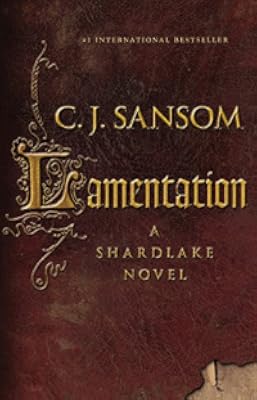

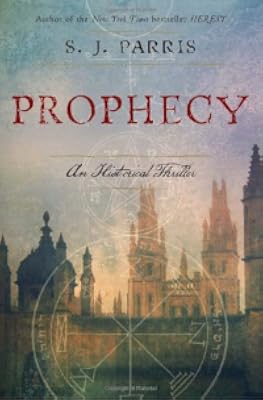
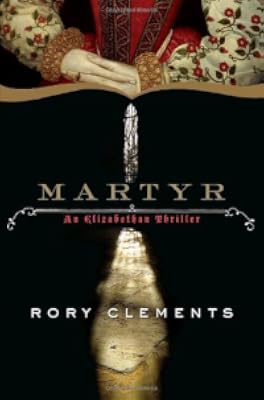

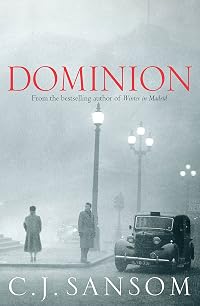





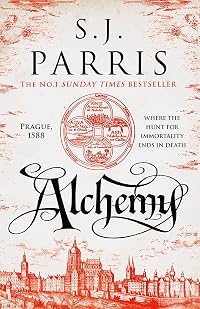


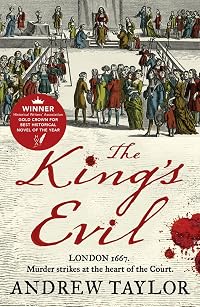
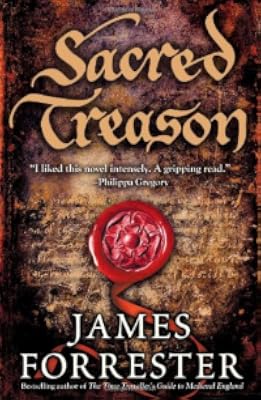
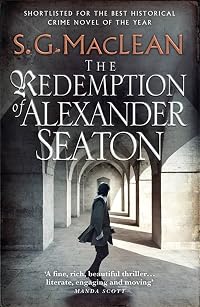







Member Recommendations
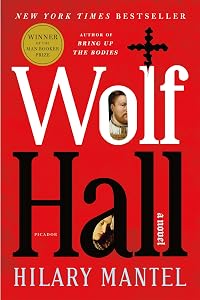
bookfitz While not a mystery, "Wolf Hall" by Hilary Mantel is another great novel set in Tudor England.
30
Member Reviews
Oh this was good! I nearly missed my bus stop several times. Shardlake & Jack Barak are two wonderful creations; very human and often annoy the hell out of each other but when the chips are down they see each other through. The answer to one of the two mysteries to be solved was a real shocker-didn't see it coming at all and very clever. Shardlake also has a nasty encounter with his old enemy Richard Rich. As ever beautifully rich in historical detail and just as you feel it would be like to live in Tudor England.
After enjoying book 1 in this series and not having volumes 2 - 4 to hand, I started reading this volume out of order. It is set in 1544 at a time when Henry VIII has involved England in a vainglorious war with France, impoverishing the country and devaluing the currency with increasingly serious effects on ordinary people and especially the poor. Meanwhile, the landowners are looking to enclose village common lands and further worsen rural poverty.
Against this background, Matthew Shardlake, the barrister protagonist of the series, is involved in two new cases. One he takes on at the request of Queen Catherine Parr, to investigate the apparent suicide of the son of an old womanservant of hers, which seems to have been in reaction to a show more horrifying discovery he had apparently made about an ex-pupil of his. Two children, Hugh and Emma, were orphaned and their wardship was bought through the corrupt Court of Wards by a prosperous man who has retired to the country and adapted the old priory he bought, after the Dissolution of the monasteries, into a comfortable home. It seems, however, that he might have been in debt and has bought the children's wardship so that he can illegally sell much of the timber cut from their lands, with the connivance of certain corrupt officials. Not content with that, he is also trying to enclose the woodland belonging to local villagers which adjoins his land.
The other case Shardlake assumes on behalf of a woman he knows who is incarcerated in the Bedlam, the hospital for the mentally ill - known as 'mad' in his time. The woman has agarophobia, but possibly has developed other issues after living there for twenty-some years following certain traumatic events. She has developed an unreciprocated love for Shardlake who, out of a sense of guilt that he cannot return it and also desirous of decreasing her dependence on his visits, starts to investigate the events which led to her internment there, even though she is not keen for him to do so. He is able to combine the two cases, as the place where she used to live is on the way to the house where the wealthy man lives and the surviving ward, the sister having died of smallpox. The trouble is, that house is not far from Portsmouth where the French are imminently expected to invade.
In this novel, Shardlake seems more driven and one-track-minded in his struggle to arrive at the truth, to the despair of Barak, a character who did not appear in book 1, but is a street wise and intelligent man torn between his regard for Shardlake and his concern about his wife back in London, who is far advanced in pregnancy. Shardlake's one man crusade for the truth leads him and sometimes Barak into danger, and threatens to bring him into collision with some of the most ruthless and powerful men in the Kingdom, including men he has apparently made enemies of in previous books. There is also the danger that he will encounter the King on his repeated visits to Portsmouth, as it seems he upset Henry in a previous volume, and Henry is noted for his unforgiving nature and vindictiveness.
As soon as it became clear when this story was set I did have a good idea of at least one major disaster that would occur as the book unfolded having prior knowledge of the pride of Henry's fleet, the Mary Rose, and what happened to it . It is a measure of the author's successful creation of minor characters that I thought 'oh no' when friends of Shardlake's are assigned to that location. I also did not guess the major twist in the main case until the point where Shardlake's own realisation occurs. One aspect I liked is that the character of Guy, the physician monk from volume 1 who was the only person Shardlake liked and respected in that story, has become an old friend and is now a doctor.
I did find Shardlake a little too obsessive in this, to the point of monomania, repeatedly putting himself and others into danger. Also, although I am aware that characters in historical novels cannot really speak as they would have at the time, as it would be very difficult for a modern audience to understand, the use of certain anacronisms such as 'lunch' do tend to jolt me out of the story. But otherwise it was an enjoyable read which I rate at 4 stars. show less
Against this background, Matthew Shardlake, the barrister protagonist of the series, is involved in two new cases. One he takes on at the request of Queen Catherine Parr, to investigate the apparent suicide of the son of an old womanservant of hers, which seems to have been in reaction to a show more horrifying discovery he had apparently made about an ex-pupil of his. Two children, Hugh and Emma, were orphaned and their wardship was bought through the corrupt Court of Wards by a prosperous man who has retired to the country and adapted the old priory he bought, after the Dissolution of the monasteries, into a comfortable home. It seems, however, that he might have been in debt and has bought the children's wardship so that he can illegally sell much of the timber cut from their lands, with the connivance of certain corrupt officials. Not content with that, he is also trying to enclose the woodland belonging to local villagers which adjoins his land.
The other case Shardlake assumes on behalf of a woman he knows who is incarcerated in the Bedlam, the hospital for the mentally ill - known as 'mad' in his time. The woman has agarophobia, but possibly has developed other issues after living there for twenty-some years following certain traumatic events. She has developed an unreciprocated love for Shardlake who, out of a sense of guilt that he cannot return it and also desirous of decreasing her dependence on his visits, starts to investigate the events which led to her internment there, even though she is not keen for him to do so. He is able to combine the two cases, as the place where she used to live is on the way to the house where the wealthy man lives and the surviving ward, the sister having died of smallpox. The trouble is, that house is not far from Portsmouth where the French are imminently expected to invade.
In this novel, Shardlake seems more driven and one-track-minded in his struggle to arrive at the truth, to the despair of Barak, a character who did not appear in book 1, but is a street wise and intelligent man torn between his regard for Shardlake and his concern about his wife back in London, who is far advanced in pregnancy. Shardlake's one man crusade for the truth leads him and sometimes Barak into danger, and threatens to bring him into collision with some of the most ruthless and powerful men in the Kingdom, including men he has apparently made enemies of in previous books. There is also the danger that he will encounter the King on his repeated visits to Portsmouth, as it seems he upset Henry in a previous volume, and Henry is noted for his unforgiving nature and vindictiveness.
As soon as it became clear when this story was set I did have a good idea of at least one major disaster that would occur as the book unfolded
I did find Shardlake a little too obsessive in this, to the point of monomania, repeatedly putting himself and others into danger. Also, although I am aware that characters in historical novels cannot really speak as they would have at the time, as it would be very difficult for a modern audience to understand, the use of certain anacronisms such as 'lunch' do tend to jolt me out of the story. But otherwise it was an enjoyable read which I rate at 4 stars. show less
Spring, 1543. Henry VIII is looking for a sixth wife and tensions are high as the religious factions brace themselves for another shift in the balance of power at court.
Matthew Shardlake, lawyer hero of Sansom’s four previous historical whodunnits, has more than enough to keep him busy. A young boy locked up in Bedlam is in danger of being burned as a heretic and an old friend has been brutally murdered. Shardlake, with his servant Jack Barak and his physician friend Guy Malton, find themselves on the trail of a uniquely terrifying killer who stages his murders with gruesome ingenuity according to different passages in the Book of Revelation. With the streets of London bristling with a religious madness of their own, Shardlake must show more hold tight to his own principles and clear-eyed sanity.
Rich in period detail, Sansom’s London comes to life on the page, as do his characters as they desperately hunt a monster instantly recognisable to a twenty-first century audience. From the rooms of King’s Inns to wealthy Thameside mansions to the appalling cells of Bedlam in a search for the roots of madness, Sansom’s narrative never flags. show less
Matthew Shardlake, lawyer hero of Sansom’s four previous historical whodunnits, has more than enough to keep him busy. A young boy locked up in Bedlam is in danger of being burned as a heretic and an old friend has been brutally murdered. Shardlake, with his servant Jack Barak and his physician friend Guy Malton, find themselves on the trail of a uniquely terrifying killer who stages his murders with gruesome ingenuity according to different passages in the Book of Revelation. With the streets of London bristling with a religious madness of their own, Shardlake must show more hold tight to his own principles and clear-eyed sanity.
Rich in period detail, Sansom’s London comes to life on the page, as do his characters as they desperately hunt a monster instantly recognisable to a twenty-first century audience. From the rooms of King’s Inns to wealthy Thameside mansions to the appalling cells of Bedlam in a search for the roots of madness, Sansom’s narrative never flags. show less
Intervening on behalf of one of her female servants, queen Catherine Parr requests that Shardlake take on the case of Hugh Curteys, a young man whom the servant's son, Michael Calfhill, had believed to have been terribly wronged, Calfhill having since committed suicide. No concrete evidence of any wrongdoing exists, and Shardlake has to answer his case in the notoriously corrupt Court of Wards, where his opponent is evidently hostile towards him from the beginning. Acceding to the queen's influence, the judge grudgingly grants Shardlake the right to take depositions from all the parties concerned at their place of residence in Hampshire.
Once again - after Sovereign - Sansom decides to move the location of the plot outside London, giving show more him, and us, the opportunity to visit the Hampshire and Sussex countryside and the assembled navy in Portsmouth, where an attack from the French appears to be imminent. As always, he seems to capture the mood perfectly, the battle weariness among the veterans, the barely suppressed excitement and optimism among the new recruits, the jitteriness amongst the general population. This is where Heartstone comes into its own, the depiction of everyday life, imbuing even the minor characters with a voice of their own. I felt genuine grief when I learnt of the death of one member of Shardlake's household, mentioned in passing, and could feel the horror faced by George Leacon at the siege of Boulogne; the passages of the sinking of the Mary Rose are quite harrowing and will haunt you for days. Yet I was less convinced of the mystery central to this story, and could never really identify with Hugh Curteys, who is always portrayed as devoid of emotion, whereas the other members of the Hobbey household, though coming across as unsympathetic, are at least ruled by their emotions; this is the reason why I have only awarded it four stars. While parts of Heartstone are as sublime as previous volumes in the series, I still had the nagging feeling that it didn't hang together just as well, it starts off far too slowly and drags on for too long, with nothing worthwhile happening for several chapters. While Sansom has taken the admirable step of not always making Shardlake likeable, I have to confess that in Heartstone I found him to be particularly irritating, stubbornly pursuing his ideas to the detriment of everyone around him, not considering that his actions will have consequences; Barak aptly phrases it thus: 'That's the problem, ..., you set something in motion and before you know where you are it's all out of control.'
To me, Sansom's stories have always been more than 'just' a historical mystery, they let us explore what it means to be human and allow us to gain a deeper understanding of history. As Dr Jerome de Groot writes in the 'Opinion' column in October's issue of the BBC History magazine, 'Historical fiction can give readers a more profound insight into the past, and illuminate an issue in a way that non-fiction prose can never hope to achieve.' So take that on the chin, all you nitpickers and sticklers for one hundred per cent historical accuracy! I am just grateful for the time I was allowed to spend in Shardlake and Barak's company, not to mention all the other friendly or sinister characters I've encountered along the way. Thank you for the ride, Mr Sansom, and for allowing us to partake in the journey, it's been a pleasure. show less
Once again - after Sovereign - Sansom decides to move the location of the plot outside London, giving show more him, and us, the opportunity to visit the Hampshire and Sussex countryside and the assembled navy in Portsmouth, where an attack from the French appears to be imminent. As always, he seems to capture the mood perfectly, the battle weariness among the veterans, the barely suppressed excitement and optimism among the new recruits, the jitteriness amongst the general population. This is where Heartstone comes into its own, the depiction of everyday life, imbuing even the minor characters with a voice of their own. I felt genuine grief when I learnt of the death of one member of Shardlake's household, mentioned in passing, and could feel the horror faced by George Leacon at the siege of Boulogne; the passages of the sinking of the Mary Rose are quite harrowing and will haunt you for days. Yet I was less convinced of the mystery central to this story, and could never really identify with Hugh Curteys, who is always portrayed as devoid of emotion, whereas the other members of the Hobbey household, though coming across as unsympathetic, are at least ruled by their emotions; this is the reason why I have only awarded it four stars. While parts of Heartstone are as sublime as previous volumes in the series, I still had the nagging feeling that it didn't hang together just as well, it starts off far too slowly and drags on for too long, with nothing worthwhile happening for several chapters. While Sansom has taken the admirable step of not always making Shardlake likeable, I have to confess that in Heartstone I found him to be particularly irritating, stubbornly pursuing his ideas to the detriment of everyone around him, not considering that his actions will have consequences; Barak aptly phrases it thus: 'That's the problem, ..., you set something in motion and before you know where you are it's all out of control.'
To me, Sansom's stories have always been more than 'just' a historical mystery, they let us explore what it means to be human and allow us to gain a deeper understanding of history. As Dr Jerome de Groot writes in the 'Opinion' column in October's issue of the BBC History magazine, 'Historical fiction can give readers a more profound insight into the past, and illuminate an issue in a way that non-fiction prose can never hope to achieve.' So take that on the chin, all you nitpickers and sticklers for one hundred per cent historical accuracy! I am just grateful for the time I was allowed to spend in Shardlake and Barak's company, not to mention all the other friendly or sinister characters I've encountered along the way. Thank you for the ride, Mr Sansom, and for allowing us to partake in the journey, it's been a pleasure. show less
Sparely written and well researched, like Sansom's other Shardlake novels this book leaves you with a real feeling of how the politics of Henry VIII's court impacted on those lower down the social hierarchy. Add to that the plot of the book - the two linked apparent cases of wrongdoing being investigated by Shardlake - and you have an immensely readable book. The dramatic twist at the end underlines Sansom's skill as a novelist. The references to Shardlake meeting the future Elizabeth 1 seem to hint that the series will continue into the Elizabethan era - hopefully.
While suspenseful and intricate, this Shardlake outing felt more personal and less world-altering. Though he is asked by the new Queen (Katherine Parr) to go and look into an incident involving the Court of Wards, it’s not the ultra-political plot that he usually gets roped into. No Cranmer or Cromwell type machinations. And it seems that we got a lot more of the day-to-day life of a person in the 16th century, too. The helplessness the general population felt against military conscription and greedy landlords enclosing forest and pastures, of widows and children shown no mercy or compassion by courts ruled by greed and kickbacks, things like that. And of course Barak and Shardlake have to travel far in this one and it just flat takes show more forever. There’s a lot of finding inns, carts broken down in the road, soldiers having right of way and bad weather. And Barak’s narrow escape from conscription himself only to be pissed off he’s so far away from Tamesin during the end of this second pregnancy. He routinely ticks Shardlake off for pursuing helpless causes and hopeless cases and not backing off when he’s expressly told to do so. Several times they have sharp words and Shardlake can barely communicate his driving need to ferret out secrets and set things ‘to rights’. I think their relationship has reached a new level of honesty, trust and equality. It’s part of what helps to create the more personal feel of this installment.
Spoilers afoot.
As happens in a lot of mysteries, the two main ones are connected by Shardlake’s involvement. First Hugh’s wardship by the Hobbeys; because Michael the former tutor didn’t actually get deposed or give evidence before he was found hanged (ruled a suicide, but of course it wasn’t), there is only suspicion of fraud. When Shardlake gets to the Hobbey household he senses something wrong and after an escalating series of violent events (omg that dog attack was cringeworthy), he finally ferrets out the truth and lays open the scam. Not before a near miss with an arrow, snarling lawyers, sinister stewards, a death and a bunch of pissed off villagers make a lot of noise about Hobbey enclosing lands. Personally I found that little twist that ensures the scam to be more on the unbelievable side because I know a bit about the long bow and exactly how much upper body strength it takes to be good with one. But, Hugh compared to David was always shown to be the more accurate, not the more powerful archer. And when Hugh runs away, Shardlake follows (and reluctantly, Barak, too) and gets caught up in Richard Rich’s clutches again.
That’s when the second of the three major plotlines gets basically resolved; why is Ellen Fettiplace in the Bedlam, who pays her fees and why is there no order of insanity keeping her there? It breaks down like this; spurned would-be lover Philip West is a low-level courtier of Henry’s. Henry wants to divorce Catherine of Aragon and marry Ann Boleyn. He writes her a letter stating so which he entrusts to West to deliver. He takes a young lawyer friend with him, but along the way runs into Ellen who still won’t have him. He goes mental and rapes her. His lawyer friend encourages him and actually holds Ellen down. While the deed is being done, he steals the letter and later gives it to Queen Catherine (boy there have been a whole mess of them, haven’t there?) The friend runs off and leaves the raper and the rapee and gets lost in the woods. He ends up at the Fettiplace foundry. The door opens and Ellen stumbled in, yelled rape and the workman Gratick goes for him and after a struggle the place is on fire. Ellen’s father confronts him and get himself stabbed by the friend who then weights him and drops him into the mill pond. The young lawyer is none other than Richard Rich himself in a set-piece of infamous villainy. I’m sure Rich wasn’t a saint, but wow...that was over the top.
And of course after their meeting and the forced bargain, Shardlake goes to fetch Emma/Hugh off the Mary Rose, a warship preparing for the French invasion at Portsmouth. Like every other time Shardlake gets into trouble, he underestimates who he’s going up against and just walks right into it. Barak did not accompany him, at Shardlake’s own insistence, so he’s on his own and has to be rescued. Fate puts he and Emma/Hugh together again and they both make it to shore unlike the hundreds of soldiers and sailors who didn’t. Emma disappears, but not before they can talk about the change of wardship and how he’ll basically give her the freedom to choose her life on her own.
Now finally he and Barak can get back to London; Barak to Tamesin and the birth, Shardlake to his house and his vulgar brute of a steward. I like the new stray he takes on with this outsing and that Guy is back to his old self after the knee-jerk little asshole punks destroyed his office. Later still there’s a wonderful scene between him, Queen Katherine and Richard Rich. Delicious.
As usual the details are excellent and not too overwhelming, although I wonder at the level and quality use of the F word in this one. Like someone saying he knew fuck all about something. Did they say that in 1550? Or a goose walking over someone’s grave; is the saying that old? I hope so, but it did make me wonder. show less
Spoilers afoot.
As happens in a lot of mysteries, the two main ones are connected by Shardlake’s involvement. First Hugh’s wardship by the Hobbeys; because Michael the former tutor didn’t actually get deposed or give evidence before he was found hanged (ruled a suicide, but of course it wasn’t), there is only suspicion of fraud. When Shardlake gets to the Hobbey household he senses something wrong and after an escalating series of violent events (omg that dog attack was cringeworthy), he finally ferrets out the truth and lays open the scam. Not before a near miss with an arrow, snarling lawyers, sinister stewards, a death and a bunch of pissed off villagers make a lot of noise about Hobbey enclosing lands. Personally I found that little twist that ensures the scam to be more on the unbelievable side because I know a bit about the long bow and exactly how much upper body strength it takes to be good with one. But, Hugh compared to David was always shown to be the more accurate, not the more powerful archer. And when Hugh runs away, Shardlake follows (and reluctantly, Barak, too) and gets caught up in Richard Rich’s clutches again.
That’s when the second of the three major plotlines gets basically resolved; why is Ellen Fettiplace in the Bedlam, who pays her fees and why is there no order of insanity keeping her there? It breaks down like this; spurned would-be lover Philip West is a low-level courtier of Henry’s. Henry wants to divorce Catherine of Aragon and marry Ann Boleyn. He writes her a letter stating so which he entrusts to West to deliver. He takes a young lawyer friend with him, but along the way runs into Ellen who still won’t have him. He goes mental and rapes her. His lawyer friend encourages him and actually holds Ellen down. While the deed is being done, he steals the letter and later gives it to Queen Catherine (boy there have been a whole mess of them, haven’t there?) The friend runs off and leaves the raper and the rapee and gets lost in the woods. He ends up at the Fettiplace foundry. The door opens and Ellen stumbled in, yelled rape and the workman Gratick goes for him and after a struggle the place is on fire. Ellen’s father confronts him and get himself stabbed by the friend who then weights him and drops him into the mill pond. The young lawyer is none other than Richard Rich himself in a set-piece of infamous villainy. I’m sure Rich wasn’t a saint, but wow...that was over the top.
And of course after their meeting and the forced bargain, Shardlake goes to fetch Emma/Hugh off the Mary Rose, a warship preparing for the French invasion at Portsmouth. Like every other time Shardlake gets into trouble, he underestimates who he’s going up against and just walks right into it. Barak did not accompany him, at Shardlake’s own insistence, so he’s on his own and has to be rescued. Fate puts he and Emma/Hugh together again and they both make it to shore unlike the hundreds of soldiers and sailors who didn’t. Emma disappears, but not before they can talk about the change of wardship and how he’ll basically give her the freedom to choose her life on her own.
Now finally he and Barak can get back to London; Barak to Tamesin and the birth, Shardlake to his house and his vulgar brute of a steward. I like the new stray he takes on with this outsing and that Guy is back to his old self after the knee-jerk little asshole punks destroyed his office. Later still there’s a wonderful scene between him, Queen Katherine and Richard Rich. Delicious.
As usual the details are excellent and not too overwhelming, although I wonder at the level and quality use of the F word in this one. Like someone saying he knew fuck all about something. Did they say that in 1550? Or a goose walking over someone’s grave; is the saying that old? I hope so, but it did make me wonder. show less
Heartstone is the fifth book in the Shardlake series – and as un-put-downable as the previous ones. A couple of years have past since the end of Revelation, the last book in the series. We're now in the last few years of Henry VIII's reign and he is engaged in his 3rd campaign against France (as disastrous and pointless as the previous ones). He is now married to Catherine Parr, an old friend of Shardlake.
At the outset, it is clear that Shardlake is feeling unsettled. His housekeeper, Joan, has died and his new steward is not working out as he had hoped. With Barak and Tamasin about to have a baby, he feels his lack of family deeply. England is also feeling nervous, with the French poised to invade and foreigners, such as Guy, being show more attacked in the street.
The queen engages Shardlake in what (inevitably) proves to be a rather dangerous case. He is asked to look into a case in the Court of Wards, which means he travels towards the threat of invasion. Whilst there, he has his own interests to investigate, including the story of Ellen, whom we met in Revelation.
The plot is skillfully woven as we follow Shardlake on his travels, culminating in the French attack and the warships used to protect England. The cast of characters include Shardlake's old enemy Richard Rich, and a brief, tantalising glimpse of the young Elizabeth.
As with previous Shardlake outings, the book works not just as a mystery, but also as a compelling and well-drawn historical novel. Shardlake's world is deftly created. It is as detailed as the tapestries of a unicorn hunt that hang, in the story, on the walls of Hoyland Priory. The characters are never merely twenty-first-century men and women in costume. They convince as people of their time, yet there are very contemporary concerns on display. Perhaps it is impossible to write about the effects of war, without the reader seeing an oblique commentary on current conflicts. Nonetheless, it remains a story about events of the Tudor world.
I finished this after a few serious sleep-deprived nights and put it down with regret. There are some obvious paths forward for the next Shardlake adventure – and I can’t wait to see where Sansom takes us.
…
Interestingly, the next night there was a program on the TV about the lifting of the Mary Rose. The detailed descriptions of the ship and its time in this book were reinforced by the historical record put together around this project. Sansom’s words leapt off the page, as the pieces were puzzled together on screen. This is just another confirmation of his skill both as an author and as an historian. show less
At the outset, it is clear that Shardlake is feeling unsettled. His housekeeper, Joan, has died and his new steward is not working out as he had hoped. With Barak and Tamasin about to have a baby, he feels his lack of family deeply. England is also feeling nervous, with the French poised to invade and foreigners, such as Guy, being show more attacked in the street.
The queen engages Shardlake in what (inevitably) proves to be a rather dangerous case. He is asked to look into a case in the Court of Wards, which means he travels towards the threat of invasion. Whilst there, he has his own interests to investigate, including the story of Ellen, whom we met in Revelation.
The plot is skillfully woven as we follow Shardlake on his travels, culminating in the French attack and the warships used to protect England. The cast of characters include Shardlake's old enemy Richard Rich, and a brief, tantalising glimpse of the young Elizabeth.
As with previous Shardlake outings, the book works not just as a mystery, but also as a compelling and well-drawn historical novel. Shardlake's world is deftly created. It is as detailed as the tapestries of a unicorn hunt that hang, in the story, on the walls of Hoyland Priory. The characters are never merely twenty-first-century men and women in costume. They convince as people of their time, yet there are very contemporary concerns on display. Perhaps it is impossible to write about the effects of war, without the reader seeing an oblique commentary on current conflicts. Nonetheless, it remains a story about events of the Tudor world.
I finished this after a few serious sleep-deprived nights and put it down with regret. There are some obvious paths forward for the next Shardlake adventure – and I can’t wait to see where Sansom takes us.
…
Interestingly, the next night there was a program on the TV about the lifting of the Mary Rose. The detailed descriptions of the ship and its time in this book were reinforced by the historical record put together around this project. Sansom’s words leapt off the page, as the pieces were puzzled together on screen. This is just another confirmation of his skill both as an author and as an historian. show less
Members
- Recently Added By
Published Reviews
ThingScore 83
"While Sansom has an unerring sense of pace and a deft historical touch, he has a tendency to repeat thematic clues."
added by bookfitz
"The novel has it all: an ingenious plot, ceaseless suspense, villains galore, tipsy priests, a bull-baiting, a stag hunt, several murders, the horrors of war, a brooding sense of evil and a glittering portrait of a fascinating age."
added by bookfitz
"The characters are sympathetic and the quirks of the historic courts interesting enough, but the plot is so tangled in the tedium of troop movements and provisions that it drags on longer than Catherine and Henry’s marriage."
added by bookfitz
Lists

Historical Fiction
889 works; 91 members

Best Historical Crime
44 works; 17 members
MysteryCAT: Historical Crime
27 works; 7 members

Walter Scott Prize Winners and Shortlist
66 works; 6 members

Books Read in 2019
4,052 works; 108 members

The 100 Best Crime Novels and Thrillers since 1945
100 works; 6 members
Author Information

All Editions
Some Editions
Awards and Honors
Series

Work Relationships
Common Knowledge
- Canonical title
- Heartstone
- Original title
- Heartstone
- Original publication date
- 2010
- People/Characters
- Matthew Shardlake; Jack Barak (assistent of Shardlake); Tamasin Reedbourne (wife of Barak); Guy Malton (physician); Ellen Fettiplace (patient in Bedlam); Hob Gebons (warder at Bedlam) (show all 44); Edwin Shawms (keeper at Bedlam); William Coldiron / William Pile (steward of Shardlake); Josephine Coldiron (servant of Shardlake, daughter of William); Katherine Parr (queen, as Catherine); Robert Warner (lawyer for the queen); Bess Calfhill (old servant of the queen); Emma Curteys (merchant's daughter); Hugh Curteys (merchant's son); Michael Calfhill (son of Bess, tutor of Emma and Hugh); Nicholas Hobbey (cloth merchant, ward of Emma and Hugh); Abigail Hobbey (wife of Nicholas); David Hobbey (son of Nicholas and Abigail); Vincent Dyrick (lawyer for Hobbey); Samuel Feaveryear (clerk of Dyrick); Richard Rich, 1st Baron Rich; William Paulet (Master of the Court of Wards); Gervase Mylling (clerk at Court of Wards); Broughton (vicar of Curteys family); Edmund Carver (alderman); Goodryke (army recruiter); Ambrose Fulstowe (steward of Hobbey); Avery (hunt master of Hobbey); Ursula (servant of Hobbey); Leonard Ettis (yeoman of Hoyland village); Quintin Priddis (former coroner, now feodary); Edward Priddis (lawyer, son of Quintin); George Leacon (army officer); Tom Llewellyn (archer); Stephen Carswell (soldier); John Seckford (old vicar in Rolfswood); William Fettiplace (father of Ellen); Peter Gratwyck (employee of Fettiplace); Wilf Harrydance (local in Rolfswood, friend of Peter); Humphrey Buttress (magistrate at Rolfswood, buyer of Fettiplace house); Philip West (former fiancé of Ellen, now assistant purser on Mary Rose); Beatrice West (mother of Philip); Harold Trevelyan (coroner); Henry VIII, King of England
- Important places
- London, England, UK; Hoyland, Hampshire, England; Rolfswood, Sussex, England; Portsmouth, Hampshire, England, UK; Portchester, Hampshire, England, UK
- Important events
- Battle of the Solent (1545-07-18 | 1545-07-19); The sinking of the Mary Rose (1545-07-19)
- First words
- The Churchyard was peaceful in the summer afternoon.
- Last words
- (Click to show. Warning: May contain spoilers.)The dead yellow leaves swirled around her feet.
- Publisher's editor
- Rejt, Maria
- Blurbers
- Gregory, Philippa; Kemp, Peter; Orr, Robert; Hardyment, Christina; James, P.D.
- Original language
- English
Classifications
Statistics
- Members
- 1,864
- Popularity
- 11,560
- Reviews
- 70
- Rating
- (4.17)
- Languages
- 12 — Czech, English, Finnish, French, German, Hungarian, Italian, Norwegian (Bokmål), Norwegian, Russian, Croatian, Spanish
- Media
- Paper, Audiobook, Ebook
- ISBNs
- 41
- ASINs
- 20