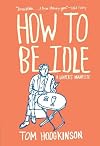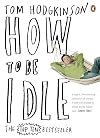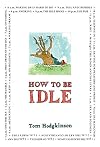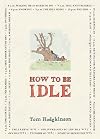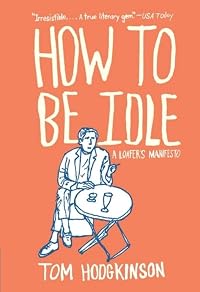
How to Be Idle
by Tom Hodgkinson
On This Page
Description
Yearning for a life of leisure? In 24 chapters representing each hour of a typical working day, this book will coax out the loafer in even the most diligent and schedule-obsessed worker. From the founding editor of the celebrated magazine about the freedom and fine art of doing nothing, The Idler, comes not simply a book, but an antidote to our work-obsessed culture. In How to Be Idle, Hodgkinson presents his learned yet whimsical argument for a new, universal standard of living: being happy show more doing nothing. He covers a whole spectrum of issues affecting the modern idler-sleep, work, pleasure, relationships-bemoaning the cultural skepticism of idleness while reflecting on the writing of such famous apologists for it as Oscar Wilde, Robert Louis Stevenson, Dr. Johnson, and Nietzsche-all of whom have admitted to doing their very best work in bed. It's a well-known fact that Europeans spend fewer hours at work a week than Americans. So it's only befitting that one of them-the very clever, extremely engaging, and quite hilarious Tom Hodgkinson-should have the wittiest and most useful insights into the fun and nature of being idle. Following on the quirky, call-to-arms heels of the bestselling Eat, Shoots and Leaves: The Zero Tolerance Approach to Punctuation by Lynne Truss, How to Be Idle rallies us to an equally just and no less worthy cause: reclaiming our right to be idle. show lessTags
Recommendations


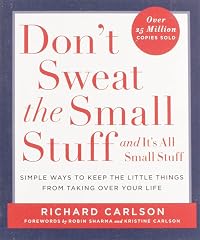
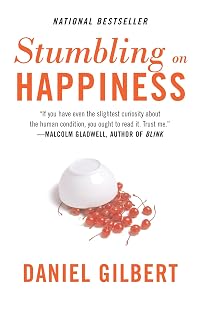
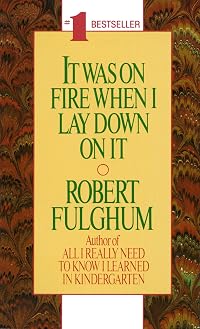
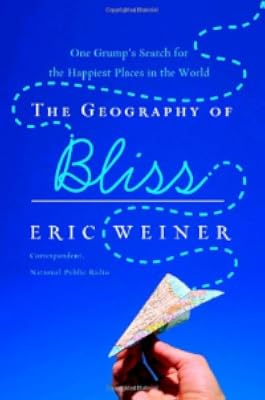
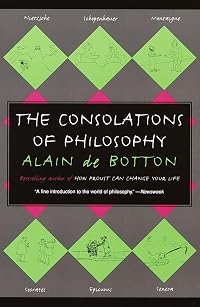
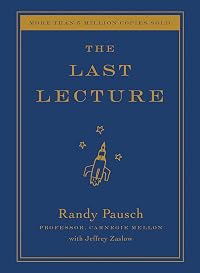
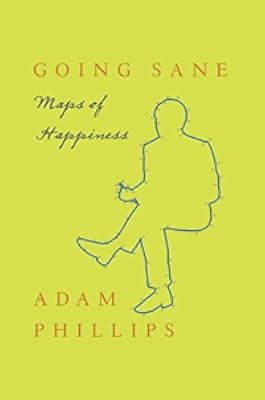
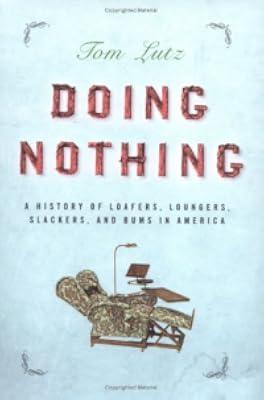
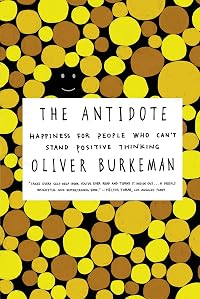
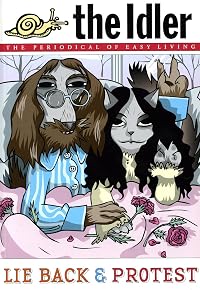
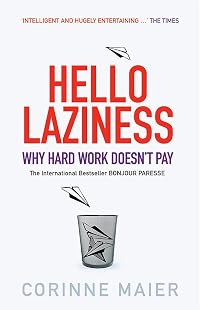
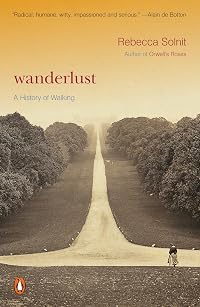
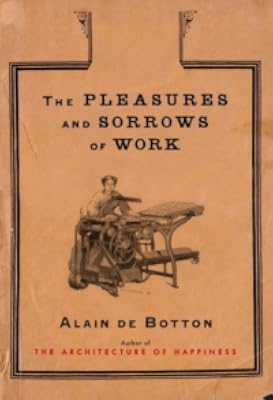
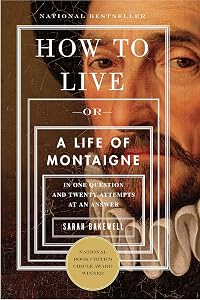
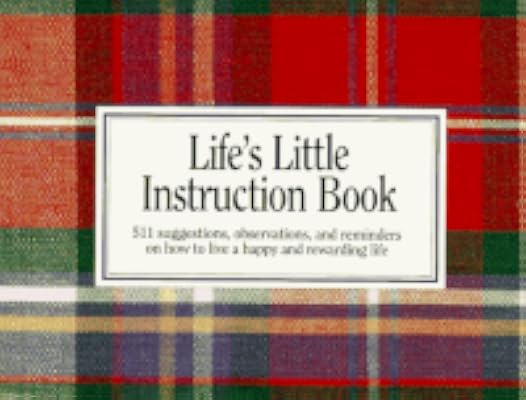
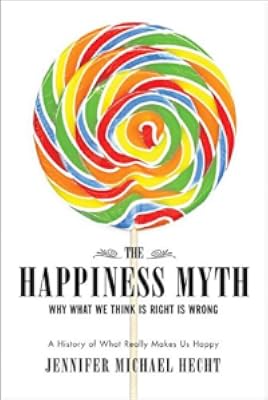
Member Recommendations

JuliaMaria Oblomowerei: hier Oblomow, der Roman, der den Begriff prägte
Member Reviews
'How To Be Idle' filled me with a huge sense of vindication, as I am an idler by nature. In this book, Hodgkinson takes the reader through a day of idling, covering such topics as lie-ins, hangovers, rambling, and fishing. He draws on a diverse and idiosyncratic range of literature, including [b:Against Nature|210255|Against Nature|Joris-Karl Huysmans|https://images.gr-assets.com/books/1385099642s/210255.jpg|306152], [b:Nickel and Dimed: On (Not) Getting By in America|1869|Nickel and Dimed On (Not) Getting By in America|Barbara Ehrenreich|https://images.gr-assets.com/books/1442378091s/1869.jpg|1840613], and [b:Three Men in a Boat|4921|Three Men in a Boat (Three Men, #1)|Jerome K. show more Jerome|https://images.gr-assets.com/books/1392791656s/4921.jpg|4476508], all of which I enjoyed. The tone is affable and amusing, albeit avowedly masculine (this is my only real quibble). The idea is to present a philosophical alternative to the tedious protestant work ethic that gained ascendancy during the Industrial Revolution. Rather than living to work, we should work just as much as we need to in order to live and spend the rest of our time enjoying ourselves.
My personal style of idling is somewhat different to Hodgkinson's, whilst retaining the same spirit. I don't drink or smoke and prefer coffee to tea. However, my daily routine is that of an idler. I wake up sometime after 10am, doze for a while thinking about the day ahead, assemble a cup of coffee and bowl of muesli, consume both slowly whilst still in my pyjamas, then spend most of the day reading in libraries and cafés or pottering about the house. I can enjoy this lifestyle as I am a PhD student, one with a work ethic than tends to spending weeks thinking and then half a day actually producing work. It's a happy life, much more congenial than the nine to five office job that I used to have. (Being time-rich suits me much better than having twice the income and getting up at 7am every day.) Other idle pleasures I would add to Hodgkinson's list include: doing the washing up whilst listening to music, mocking terrible films with friends, cycling around at 2am, browsing libraries, and writing reviews on goodreads.
Now I'm tempted to try and sort my friends into idlers and botherers. Whilst the world needs both, I am content to be an idler who sometimes bothers. show less
My personal style of idling is somewhat different to Hodgkinson's, whilst retaining the same spirit. I don't drink or smoke and prefer coffee to tea. However, my daily routine is that of an idler. I wake up sometime after 10am, doze for a while thinking about the day ahead, assemble a cup of coffee and bowl of muesli, consume both slowly whilst still in my pyjamas, then spend most of the day reading in libraries and cafés or pottering about the house. I can enjoy this lifestyle as I am a PhD student, one with a work ethic than tends to spending weeks thinking and then half a day actually producing work. It's a happy life, much more congenial than the nine to five office job that I used to have. (Being time-rich suits me much better than having twice the income and getting up at 7am every day.) Other idle pleasures I would add to Hodgkinson's list include: doing the washing up whilst listening to music, mocking terrible films with friends, cycling around at 2am, browsing libraries, and writing reviews on goodreads.
Now I'm tempted to try and sort my friends into idlers and botherers. Whilst the world needs both, I am content to be an idler who sometimes bothers. show less
“We go into debt to chase our desires, and then keep working to pay the debt. It’s the modern form of indentured labor.”
I was excited to read How to Be Idle: A Loafer's Manifesto on my way to living in Panamá as one of my biggest goals with this move is to SLOW THE HECK DOWN. From what I hear, the Panamanians have their priorities straighter than Americans when it comes to idling, celebrating and putting family at the top of the list. I need to learn to be and do better in this way.
Some male authors can write in a way that resonates with both males and females. Tom Hodgkinson, not so much. His (non-toxic) masculinity was prevalent on most pages...his British-ness as well.
Tom covers a topic related to slowing down and doing show more nothing in each chapter:
Ch 1: Waking Up
Ch 2: Toil & Trouble
Ch 3: Sleeping In
Ch 4: Skiving for Pleasure
Ch 5: The Hangover
Ch 6: The Death of Lunch
Ch 7: On Being Ill
Ch 8: the Nap
Ch 9: Time for Tea
Ch 10: The Ramble
Ch 11: First Drink of the Day
Ch 12: On Fishing
Ch 13: Smoking
Ch 14: The Idle Home
Ch 15: The Pub
Ch 16: Riot
Ch 17: The Moon and the Stars
Ch 18: Sex and Idleness
Ch 19: The Art of Conversation
Ch 20: Party Time
Ch 21: Meditation
Ch 22: Sleep
Ch 23: On Holidays
Ch 24: A Waking Dream
Despite the heavy testosterone (fishing, drinking, smoking, etc.), he shifted my perspective in a big way and I enjoyed the book enough to stick with it until the end (something I no longer do out of a sense of some unnecessary obligation...a sign that I'm evolving!).
The ongoing discussion of the shift that occurred in society as a direct result of the Industrial Revolution was the most interesting and valuable aspect of the book for me. Now I get why humans, particularly the American ones, are obsessed with work, work, work. Most importantly, now I get the guilt I have when I do nothing...awareness is the first step in healing.
Although written before Covid, there is a definite parallel between the post-Industrial Revolution societal mentality and the post-Covid. I feel much better equipped to explain what I mean by the powers-that-be having an agenda without sounding like a Trump loving conspiracy nut.
I hope my "husband" reads the book as he is a cocktail-loving fisherman who knows the value of a good idle session. show less
I was excited to read How to Be Idle: A Loafer's Manifesto on my way to living in Panamá as one of my biggest goals with this move is to SLOW THE HECK DOWN. From what I hear, the Panamanians have their priorities straighter than Americans when it comes to idling, celebrating and putting family at the top of the list. I need to learn to be and do better in this way.
Some male authors can write in a way that resonates with both males and females. Tom Hodgkinson, not so much. His (non-toxic) masculinity was prevalent on most pages...his British-ness as well.
Tom covers a topic related to slowing down and doing show more nothing in each chapter:
Ch 1: Waking Up
Ch 2: Toil & Trouble
Ch 3: Sleeping In
Ch 4: Skiving for Pleasure
Ch 5: The Hangover
Ch 6: The Death of Lunch
Ch 7: On Being Ill
Ch 8: the Nap
Ch 9: Time for Tea
Ch 10: The Ramble
Ch 11: First Drink of the Day
Ch 12: On Fishing
Ch 13: Smoking
Ch 14: The Idle Home
Ch 15: The Pub
Ch 16: Riot
Ch 17: The Moon and the Stars
Ch 18: Sex and Idleness
Ch 19: The Art of Conversation
Ch 20: Party Time
Ch 21: Meditation
Ch 22: Sleep
Ch 23: On Holidays
Ch 24: A Waking Dream
Despite the heavy testosterone (fishing, drinking, smoking, etc.), he shifted my perspective in a big way and I enjoyed the book enough to stick with it until the end (something I no longer do out of a sense of some unnecessary obligation...a sign that I'm evolving!).
The ongoing discussion of the shift that occurred in society as a direct result of the Industrial Revolution was the most interesting and valuable aspect of the book for me. Now I get why humans, particularly the American ones, are obsessed with work, work, work. Most importantly, now I get the guilt I have when I do nothing...awareness is the first step in healing.
Although written before Covid, there is a definite parallel between the post-Industrial Revolution societal mentality and the post-Covid. I feel much better equipped to explain what I mean by the powers-that-be having an agenda without sounding like a Trump loving conspiracy nut.
I hope my "husband" reads the book as he is a cocktail-loving fisherman who knows the value of a good idle session. show less
This book was useful in that it points to historical authors and works and it is reasonably well-referenced and includes some historical texts in an appendix. I enjoyed reading the book and had a good laugh several times, but it was obvious that the author was young (at the time of writing) and tended to reify a young person's happy relationship with drugs and alcohol as something that could not only be perpetuated indefinitely, but that was a normal part of being an idler. That may be true if you want to die young or do yourself a Hemingway, but it seemed to be a little too keen on the idea of chemically-induced idling rather than an intellectually-focused "flâneurie". I suppose it is easy to be a critic, but the book is formulaic in show more the way [a:Robert Greene|865|Robert Greene|https://images.gr-assets.com/authors/1298212921p2/865.jpg], [a:Ryan Holiday|5775580|Ryan Holiday|https://images.gr-assets.com/authors/1340390663p2/5775580.jpg], or [a:Mark Manson|15815787|Mark Manson|https://s.gr-assets.com/assets/nophoto/user/u_50x66-632230dc9882b4352d753eedf9396530.png] tend to write. This is a recent trend and while I have followed this trend and read the contents of these authors greedily, it just doesn't have the spark that sets apart great literature from great absorption of the work of others. That's it! These works are useful and good, but the works tend to be - what was it they recently suggested lecturers should be? - that's right, "curators" of content. That's it precisely. This book is an excellent example of curated content on idling that the reader will enjoy and no doubt learn from. But it lacks that creative spark of great literature, and it tends to be mono-cultural in its appeal. Just like a competent lecturer. You will learn, not burn. show less
I didn’t finish this book, though I read large chunks of it. The author has some really good points, that apply just as much (if not more so) to American society as to his own British. Why should we look at any apparent idleness with suspicion? Why is it more important to look like we’re busy for eight hours than to accomplish something really useful in four and enjoy the rest of our time?
And yet….
The book would have worked better for me if H. had been clearer about idleness as “doing what you choose to do, and yes, that activity might actually resemble work” (which does appear in some spots to be what he ultimately means) rather than idleness as “doing things socially considered fun, like hanging out in pubs, lying in bed show more doing nothing, smoking, boozing" (which seems to be the larger part of his argument). Many of the activities he talks about as examples of how to enjoy idleness would drive me batty with boredom. It’s quite possible that an evening of knitting for the joy of the yarn and the desire to see the final project (and not because I really need to finish this project for a deadline) would fit right into his definition of idleness, but if it doesn’t, well, I’d much rather spend an evening knitting than an evening drinking beer in a pub.
Also, I come away from this book with the strong impression that he’s speaking to men, not to women. For example, he brushes off the work of childrearing with “train them to get their own breakfasts on weekends as soon as possible”. That’s nice, but in the intervening years, the kid has to be nursed or bottlefed, diapered, bathed, kept from poisoning itself, civilized into a reasonable human, etc., etc. As a mother, especially as the mother of a mentally disabled kid and for several years a single mother thereof, I had no choice on whether to be idle, because if I didn’t do the work of caring for my child, no one else was going to take up the slack. (The chapter in which H. sings the praises of skiving, slacking on work and enjoying watching someone else do it instead, raised my hackles to say the least.) The chapter on sex, too, is clearly aimed at men, with a token wave of “yeah, women just lose all interest in sex once they’ve got some kids”. (Er, not necessarily.)
Overall, an interesting concept, and I would love to see a book on the glories of idleness written by a mother, but H.’s take didn’t work for me. show less
And yet….
The book would have worked better for me if H. had been clearer about idleness as “doing what you choose to do, and yes, that activity might actually resemble work” (which does appear in some spots to be what he ultimately means) rather than idleness as “doing things socially considered fun, like hanging out in pubs, lying in bed show more doing nothing, smoking, boozing" (which seems to be the larger part of his argument). Many of the activities he talks about as examples of how to enjoy idleness would drive me batty with boredom. It’s quite possible that an evening of knitting for the joy of the yarn and the desire to see the final project (and not because I really need to finish this project for a deadline) would fit right into his definition of idleness, but if it doesn’t, well, I’d much rather spend an evening knitting than an evening drinking beer in a pub.
Also, I come away from this book with the strong impression that he’s speaking to men, not to women. For example, he brushes off the work of childrearing with “train them to get their own breakfasts on weekends as soon as possible”. That’s nice, but in the intervening years, the kid has to be nursed or bottlefed, diapered, bathed, kept from poisoning itself, civilized into a reasonable human, etc., etc. As a mother, especially as the mother of a mentally disabled kid and for several years a single mother thereof, I had no choice on whether to be idle, because if I didn’t do the work of caring for my child, no one else was going to take up the slack. (The chapter in which H. sings the praises of skiving, slacking on work and enjoying watching someone else do it instead, raised my hackles to say the least.) The chapter on sex, too, is clearly aimed at men, with a token wave of “yeah, women just lose all interest in sex once they’ve got some kids”. (Er, not necessarily.)
Overall, an interesting concept, and I would love to see a book on the glories of idleness written by a mother, but H.’s take didn’t work for me. show less
Tom Hodgkinson would like to return to the days of Samuel Johnson, before the Industrial Revolution came along and turned independent workers into cogs in the bosses' machine. "How To Be Idle" encourages the reader to sleep in, lie about, meditate, daydream, go fishing, take a nap, and generally opt out of the rat race. True, he goes a bit too far -- odes to smoking and hangovers have no charm for me. (Yeah, stick it to The Man by wrecking your lungs and liver!) But on the whole, I agree that idleness is beneficial and necessary, at least in comparison with the usual hyper-caffeinated sleep-deprived existence. Productivity nuts take note -- Samuel Johnson slept in and lingered over dinner AND got a lot done.
Although I've only read a little over 1/2 the book, I'm calling this one done. I found almost nothing in this book to justify reading further. In the six weeks I had this checked out from the library, I struggled to read as much as I did. The writing style is satisfactory and the author draws from many interesting sources. The purpose of the book--to encourage people to enjoy their lives more fully--is noble. The main problem with this book is that it's much too specific. Rather than showing the reader possibilities for enjoying more idleness in their lives, it advocates rather strongly for a very particular lifestyle--that which Tom Hodgkinson enjoys. With chapters on topics such as hangovers, fishing and smoking, those who don't show more indulge in these activities (or even disdain them) are likely to find this book insipid and ego-centric. This book did not speak to me or my experiences. show less
This book made me think about life and how I'm living it (and for those who dislike it, at least read the last chapter, it has the most fuel for thought). Although I don't agree with him entirely I do think that we have become enslaved by the system and serve it rather than it serving us. Many of us live to work rather than work to live and we need to look at how we're living and decide if we really want to continue in misery or change things to suit us. We have moved, unthinking, into the 20th and 21st centuries, all the time moving faster, working harder, striving for something that might be within our grasp if we slowed down and thought about it.
Although I wouldn't be as idle as he espouses, I do think that I wouldn't mind show more down-shifting my life.
This book is a series of views on a variety of issues from smoking to napping, a book that encourages us to think about our lives rather than just put our lives in neutral and keep going. Agree with him or disagree with him, he made me think about how much of my life is spent rushing instead of enjoying. show less
Although I wouldn't be as idle as he espouses, I do think that I wouldn't mind show more down-shifting my life.
This book is a series of views on a variety of issues from smoking to napping, a book that encourages us to think about our lives rather than just put our lives in neutral and keep going. Agree with him or disagree with him, he made me think about how much of my life is spent rushing instead of enjoying. show less
Members
- Recently Added By
Lists

CONTRA EL TRABAJO Y A FAVOR DE LA PEREZA
3 works; 1 member
Author Information

46+ Works 2,295 Members
Tom Hodgkinson is the author of The Freedom Manifesto and How to Be Idle. Editor of the British magazine The Idler, he also contributes a parenting column to The Daily Telegraph and writes for various newspapers and magazines in Britain. He lives on a farm in Devon, England, with his family.
Common Knowledge
- Canonical title*
- Anleitung zum Müßiggang
- Original title
- How to be idle
- Original publication date
- 2004
- Dedication
- For Gavin Hills,
who knew how to live - First words
- It's good to be idle.
- Last words
- (Click to show. Warning: May contain spoilers.)It is called being idle.
*Some information comes from Common Knowledge in other languages. Click "Edit" for more information.
Classifications
Statistics
- Members
- 865
- Popularity
- 31,571
- Reviews
- 19
- Rating
- (3.75)
- Languages
- 7 — Czech, Dutch, English, Finnish, German, Italian, Spanish
- Media
- Paper, Ebook
- ISBNs
- 17
- UPCs
- 1
- ASINs
- 8