
About the Author
Tom Lutz is the founding editor and publisher of the Los Angeles Review of Books and Distinguished Professor of Creative Writing at the University of California at Riverside. His many books include Born Slippy: A Novel (2020) and Doing Nothing: A History of Loafers, Loungers, Slackers, and Bums show more (2008), which won the American Book Award. show less
Image credit: University of California, Riverside
Works by Tom Lutz
Doing Nothing: A History of Loafers, Loungers, Slackers, and Bums in America (2006) 254 copies, 2 reviews
And the Monkey Learned Nothing: Dispatches from a Life in Transit (Sightline Books) (2016) 13 copies, 1 review
LOS ANGELES REVIEW OF BOOKS, QUARTERLY JOURNAL, FALL 2016, EMERGING VOICES, WRITING FROM LOS ANGELES (2017) 2 copies
Associated Works
Hebbes 2 — Contributor — 4 copies
Tagged
Common Knowledge
Members
Reviews
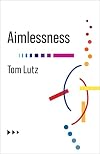
Aimlessness by Tom Lutz far exceeded my expectations. This was both a fun read and a very thought-provoking read.
The book, in its structure and execution, illustrates much of what Lutz says about the idea itself. There is a type of organization, but a loose organization, within which there is a lot of wandering aimlessly. Don't read the word aimless here as a useless or pointless endeavor, it isn't, it is letting things, in this case ideas, lead us to where they may. It is the dynamic show more between idea, choice, free association, applying concepts to what we think or do then seeing where those may lead us. And, if necessary, retracing our steps and wandering in a different direction.
This isn't the capitalist negativity toward aimlessness as having no economic value. Or rather, it isn't simply about that limited and harmful oversimplification, it is about everything from being predominantly aimless in one's activities to incorporating some degree of aimlessness into one's activities. I would argue that more good, even what capitalists consider "productive" good, has come from aimlessness as from focused concentration and work. The best is a combination that allows the strengths of each to flourish without killing the other.
I was particularly fond of the parts that mentioned Gertrude Stein. A long time ago I had a love/hate relationship with her writing until I learned to appreciate both her aimlessness and what she requires of her readers. But every now and then I still get frustrated when I am reading her. Plus any book that can flow from Lyotard to Maynard G Krebs is worth reading.
I highly recommend this to readers who like to read works that might seem almost like a collage yet offers many wonderful ideas to consider and, in spite of (or because of) the aimlessness makes many connections and subtle arguments.
Reviewed from a copy made available by the publisher via NetGalley. show less
The book, in its structure and execution, illustrates much of what Lutz says about the idea itself. There is a type of organization, but a loose organization, within which there is a lot of wandering aimlessly. Don't read the word aimless here as a useless or pointless endeavor, it isn't, it is letting things, in this case ideas, lead us to where they may. It is the dynamic show more between idea, choice, free association, applying concepts to what we think or do then seeing where those may lead us. And, if necessary, retracing our steps and wandering in a different direction.
This isn't the capitalist negativity toward aimlessness as having no economic value. Or rather, it isn't simply about that limited and harmful oversimplification, it is about everything from being predominantly aimless in one's activities to incorporating some degree of aimlessness into one's activities. I would argue that more good, even what capitalists consider "productive" good, has come from aimlessness as from focused concentration and work. The best is a combination that allows the strengths of each to flourish without killing the other.
I was particularly fond of the parts that mentioned Gertrude Stein. A long time ago I had a love/hate relationship with her writing until I learned to appreciate both her aimlessness and what she requires of her readers. But every now and then I still get frustrated when I am reading her. Plus any book that can flow from Lyotard to Maynard G Krebs is worth reading.
I highly recommend this to readers who like to read works that might seem almost like a collage yet offers many wonderful ideas to consider and, in spite of (or because of) the aimlessness makes many connections and subtle arguments.
Reviewed from a copy made available by the publisher via NetGalley. show less
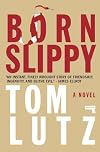
Tom Lutz’s Born Slippy is the story of an amoral manipulator and the kind-hearted workingman who probably comes closest to being his friend.
Frank Baltimore is a handyman in rural New England, in the particularly depressed and depressing areas where the mills have left, but nothing much has taken their place. Teenage Dmitry, the nephew of some friends, ends up with a summer job “working” for Frank, despite being an unskilled builder and a truly apathetic worker.
Dmitry is constantly show more testing boundaries, cheerfully self-serving in every way. The book blurb describes Dmitry as a “charming sociopath” and, over the years, he stops seeming like a hedonistic child and more like a cleverly calculating personification of greed. This makes for a fascinating read, especially as good-natured, often plodding Frank is such an odd confidant for Dmitry. Frank begins the book somehow supporting an ex-girlfriend’s children from a previous relationship, and somehow accepting the worst ends of work deals. And when things improve for him, the novel seems to ask us how much of his later successes are due to Dmitry’s habits rubbing off on him? How much greed and manipulation are just part of life and capitalism?
After honing his manipulation and money-making skills, Dmitry lands in Asia, in the financial expat circles, where the standards for decency are even lower. Here, he really lets his greed for money, women, and power run free, and it’s impossible to look away from this absolute madness.
I enjoyed the travelogue a great deal. There are a few standout descriptions, one of Turner’s Falls, MA, another of traveling through Damshui, Taiwan, and a short bit about seeing LA sunshine after living in New England, that were really spot-on, amazing depictions. But I found many of the minor characters and most of the women slightly flat. The scenes with expat finance bros, trophy taitai or disaffected Massholes were perfectly fine, but there’s a liveliness in Frank and Dmitry that just isn’t found in any of the secondary characters.
I don’t want to reveal too much, because seeing exactly how Frank and Dmitry develop is the real enjoyment in this book, but there were a few moments where I was both mentally screaming at Frank not to go forth and be an idiot, and also fully knowing that he was going to be a well-meaning chump, again and again.
Most of the secondary characters question their friendship, explicitly asking or just quietly wondering what Frank sees in Dmitry. That’s really the core of the novel. At times, Frank enjoys seeing himself as a Dmitry’s teacher or moral compass, but could that be the only thing that draws and holds them together? Does Dmitry get something out of telling his wild stories to a working stiff? Does he somehow enjoy his excess more in telling Frank about it? What makes this sociopath character tick? show less
Frank Baltimore is a handyman in rural New England, in the particularly depressed and depressing areas where the mills have left, but nothing much has taken their place. Teenage Dmitry, the nephew of some friends, ends up with a summer job “working” for Frank, despite being an unskilled builder and a truly apathetic worker.
Dmitry is constantly show more testing boundaries, cheerfully self-serving in every way. The book blurb describes Dmitry as a “charming sociopath” and, over the years, he stops seeming like a hedonistic child and more like a cleverly calculating personification of greed. This makes for a fascinating read, especially as good-natured, often plodding Frank is such an odd confidant for Dmitry. Frank begins the book somehow supporting an ex-girlfriend’s children from a previous relationship, and somehow accepting the worst ends of work deals. And when things improve for him, the novel seems to ask us how much of his later successes are due to Dmitry’s habits rubbing off on him? How much greed and manipulation are just part of life and capitalism?
After honing his manipulation and money-making skills, Dmitry lands in Asia, in the financial expat circles, where the standards for decency are even lower. Here, he really lets his greed for money, women, and power run free, and it’s impossible to look away from this absolute madness.
I enjoyed the travelogue a great deal. There are a few standout descriptions, one of Turner’s Falls, MA, another of traveling through Damshui, Taiwan, and a short bit about seeing LA sunshine after living in New England, that were really spot-on, amazing depictions. But I found many of the minor characters and most of the women slightly flat. The scenes with expat finance bros, trophy taitai or disaffected Massholes were perfectly fine, but there’s a liveliness in Frank and Dmitry that just isn’t found in any of the secondary characters.
I don’t want to reveal too much, because seeing exactly how Frank and Dmitry develop is the real enjoyment in this book, but there were a few moments where I was both mentally screaming at Frank not to go forth and be an idiot, and also fully knowing that he was going to be a well-meaning chump, again and again.
Most of the secondary characters question their friendship, explicitly asking or just quietly wondering what Frank sees in Dmitry. That’s really the core of the novel. At times, Frank enjoys seeing himself as a Dmitry’s teacher or moral compass, but could that be the only thing that draws and holds them together? Does Dmitry get something out of telling his wild stories to a working stiff? Does he somehow enjoy his excess more in telling Frank about it? What makes this sociopath character tick? show less

I wish I was brave enough to explore places where I do not know the language or the customs, depending on people I meet along the way, and taking dirt roads until they end nowhere; agreeing to tours that aren't in the guidebooks, not knowing where I am being taken, with only my instincts to trust; talking with people I'll never meet again, asking what they think of the world they live in...and listening.
Tom Lutz takes me on such trips, visiting Moroco, Turkey, South Africa, Romania, show more Tanzania, Tibet, Albania, Iran, Azerbaijan, Sri Lanka, Ukraine, Malawi, Kyrgyzstan, and more places along the way. show less
Tom Lutz takes me on such trips, visiting Moroco, Turkey, South Africa, Romania, show more Tanzania, Tibet, Albania, Iran, Azerbaijan, Sri Lanka, Ukraine, Malawi, Kyrgyzstan, and more places along the way. show less
This book begins with a 2013 explosion caused by the central character in the novel Dmitry. Flashback to when the narrator Frank meets this immoral manipulator. Tom Lutz wears down our patience with these boring characters. Allusions to other literary books can only go so far to make this supposedly intellectual thriller digestible. Don’t waste your time.
Lists
Awards


You May Also Like


Associated Authors
Statistics
- Works
- 40
- Also by
- 1
- Members
- 583
- Popularity
- #43,004
- Rating
- 3.4
- Reviews
- 9
- ISBNs
- 48
- Languages
- 2