
Tom Hodgkinson
Author of How to Be Idle
About the Author
Tom Hodgkinson is the author of The Freedom Manifesto and How to Be Idle. Editor of the British magazine The Idler, he also contributes a parenting column to The Daily Telegraph and writes for various newspapers and magazines in Britain. He lives on a farm in Devon, England, with his family.
Image credit: rightee / Andy Wright
Series
Works by Tom Hodgkinson
The Freedom Manifesto: How to Free Yourself from Anxiety, Fear, Mortgages, Money, Guilt, Debt, Government, Boredom, Supermarkets, Bills, Melancholy, Pain, Depression, Work, and… (2006) 540 copies, 17 reviews
The Idle Parent: Why Laid-Back Parents Raise Happier and Healthier Kids (2009) 196 copies, 8 reviews
Brave Old World: A Month-by-Month Guide to Husbandry, or the Fine Art of Looking After Yourself (2011) 57 copies, 2 reviews
Kleine Auszeiten im Alltag: Eine Anleitung | Für ein leichteres und unbeschwerteres Leben (2023) 2 copies
The Idler 69: Emma Thompson 1 copy
The Idler 65: Gary Kemp 1 copy
The Idler: Graham Coxon on the disappointments of fame, plus joyful frugality, swanky hankies and Stewart Lee: 87 (2022) 1 copy
The Idler 68: Sleaford Mods 1 copy
The Idler 67: Aisling Bea 1 copy
cum am ales liberatea 1 copy
Associated Works
The Idle Traveller: The Art of Slow Travel (2012) — Introduction, some editions — 88 copies, 9 reviews
Tagged
Common Knowledge
- Canonical name
- Hodgkinson, Tom
- Birthdate
- 1968
- Gender
- male
- Occupations
- editor ('The Idler' (bi-annual magazine))
author - Nationality
- UK
- Places of residence
- Devon, England, UK
- Associated Place (for map)
- England, UK
Members
Reviews
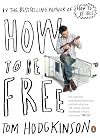
This is either the best or worst book to read when you’re finishing a PhD and thinking deep thoughts about what to do next with your life. I’m not sure which yet - ask me in a few years. ‘How to be Free’ continues in the same vein as [b:How to Be Idle|623922|How to Be Idle|Tom Hodgkinson|https://images.gr-assets.com/books/1388368701s/623922.jpg|1768914], which I greatly enjoyed. The former has a more philosophical and political bent, however. The tendency to skip thither and yon, show more drawing inspiration from Sartre and Chaucer, reminds me a little of a less obtuse Žižek. Hodgkinson makes no claims to present a coherent political philosophy, which is good because he doesn’t. Instead, he critiques many aspects of modern life - or rather, modern life in 2006 when the horrible invasion of smartphones had barely begun. Given his scathing words about blackberries, I don’t imagine he approves of them. The book is structured around pieces of mostly practical advice, like replacing your car with a bicycle, growing your own vegetables, and accepting that the only meaning of life is that which we create ourselves.
I am sympathetic to almost all that Hodgkinson says and his so-conservative-it’s-radical philosophy is interesting and appealing. He harks back to late Medieval times, which he feels exemplify freedom from centralised authority and local co-operation. It’s certainly a valid point that taking inspiration from the past rather than the future is more pragmatic, given that the future is only ever an illusion. Hodgkinson is strongest when dismantling consumerism and presenting the appeal of thrift and self-reliance, but weakest when assuming that everyone else (who isn’t a straight white man) enjoys the same things in life as him. Thus, I definitely agree with the pursuit of inexpensive pleasures, but drinking and smoking have no appeal for me. I prefer night-time walks, browsing libraries, and rambling discussions with friends. Also, I don’t want to learn the ukulele, I’d rather learn Spanish. Nonetheless, the neo-Medieval anarchism advanced here is not proscriptive. Moreover, it’s refreshing to be told not to worry about having a career and the comments on housing are very good. A mortgage is essentially renting a house from the bank, at great cost. If only renting wasn’t so appallingly insecure. It’s relaxing to read a book in praise of carelessness - what’s the point of trying to earn lots of money, to get more than anyone else? We’re all going to die anyway. Might as well enjoy life, rather than trying to purchase enjoyment in rare hours not spent working. show less
I am sympathetic to almost all that Hodgkinson says and his so-conservative-it’s-radical philosophy is interesting and appealing. He harks back to late Medieval times, which he feels exemplify freedom from centralised authority and local co-operation. It’s certainly a valid point that taking inspiration from the past rather than the future is more pragmatic, given that the future is only ever an illusion. Hodgkinson is strongest when dismantling consumerism and presenting the appeal of thrift and self-reliance, but weakest when assuming that everyone else (who isn’t a straight white man) enjoys the same things in life as him. Thus, I definitely agree with the pursuit of inexpensive pleasures, but drinking and smoking have no appeal for me. I prefer night-time walks, browsing libraries, and rambling discussions with friends. Also, I don’t want to learn the ukulele, I’d rather learn Spanish. Nonetheless, the neo-Medieval anarchism advanced here is not proscriptive. Moreover, it’s refreshing to be told not to worry about having a career and the comments on housing are very good. A mortgage is essentially renting a house from the bank, at great cost. If only renting wasn’t so appallingly insecure. It’s relaxing to read a book in praise of carelessness - what’s the point of trying to earn lots of money, to get more than anyone else? We’re all going to die anyway. Might as well enjoy life, rather than trying to purchase enjoyment in rare hours not spent working. show less

Mood: Annoyed and disappointed.
It's a nice idea, to have a collection of writings dedicated to knocking down the Puritan work ethic. But the anthology suffers the serious shortcoming that it is almost entirely male -- thus leaving one to wonder whether this is a commentary on the laziness of the editors, putting into practice what they preach, or on the hard-working nature of women.
An alternative theory is suggested by the authors' note in the introduction that
This bizarrely lopsided anthology, then, it is the fault of stray booksellers and the editors' circle of acquaintances.
Regardless of the explanation, it's too bad, because I generally like the editor Tom Hodgkinson's work, but how do you develop an anthology spanning contributors over centuries and somehow manage to find only one woman among fifty-seven? And her piece is about sex, natch.
For gods' sake, gender is the foremost category in the specialization of labor -- it didn't occur to the writers to consider that women might have something useful to say about idleness and/or the puritan work ethic?
One can only conclude that there must be something awry with the editors or the world (or, as I suspect, both).
If the former then unfortunately I find their sad failure to even consider gender in their contributors undermines their argument because first I have to conclude that works of scholarship do better with a bit of effort; and second, I find it difficult to take seriously an anthology that so evidences male privilege. Really? Men are idle? Women the world over will not be surprised. "Women do two-thirds of the world’s work, receive 10 percent of the world’s income and own 1 percent of the means of production."
I'd like to celebrate idleness, but when I'm confronted with a lot of men celebrating idleness I am inescapably forced to wonder if their female companions are picking up their men's share of the work. Hey, I'd like to be idle, and I was in fact hoping to engage in a little constructive idleness by reading this anthology. But once again I'm forced to abandon idleness to fight the patriarchy. show less
It's a nice idea, to have a collection of writings dedicated to knocking down the Puritan work ethic. But the anthology suffers the serious shortcoming that it is almost entirely male -- thus leaving one to wonder whether this is a commentary on the laziness of the editors, putting into practice what they preach, or on the hard-working nature of women.
An alternative theory is suggested by the authors' note in the introduction that
The hours of research we putshow more
in at the British Library yielded a minimum of material; the off-hand telephone inquiry, the randomly browsed volume, the bookshop where the relevant works seemed to leap off the shelves and into our hands -- it was out of these serendipitous sources that the collection was hewn.
This bizarrely lopsided anthology, then, it is the fault of stray booksellers and the editors' circle of acquaintances.
Regardless of the explanation, it's too bad, because I generally like the editor Tom Hodgkinson's work, but how do you develop an anthology spanning contributors over centuries and somehow manage to find only one woman among fifty-seven? And her piece is about sex, natch.
For gods' sake, gender is the foremost category in the specialization of labor -- it didn't occur to the writers to consider that women might have something useful to say about idleness and/or the puritan work ethic?
One can only conclude that there must be something awry with the editors or the world (or, as I suspect, both).
If the former then unfortunately I find their sad failure to even consider gender in their contributors undermines their argument because first I have to conclude that works of scholarship do better with a bit of effort; and second, I find it difficult to take seriously an anthology that so evidences male privilege. Really? Men are idle? Women the world over will not be surprised. "Women do two-thirds of the world’s work, receive 10 percent of the world’s income and own 1 percent of the means of production."
I'd like to celebrate idleness, but when I'm confronted with a lot of men celebrating idleness I am inescapably forced to wonder if their female companions are picking up their men's share of the work. Hey, I'd like to be idle, and I was in fact hoping to engage in a little constructive idleness by reading this anthology. But once again I'm forced to abandon idleness to fight the patriarchy. show less
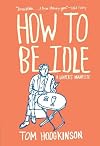
'How To Be Idle' filled me with a huge sense of vindication, as I am an idler by nature. In this book, Hodgkinson takes the reader through a day of idling, covering such topics as lie-ins, hangovers, rambling, and fishing. He draws on a diverse and idiosyncratic range of literature, including [b:Against Nature|210255|Against Nature|Joris-Karl Huysmans|https://images.gr-assets.com/books/1385099642s/210255.jpg|306152], [b:Nickel and Dimed: On (Not) Getting By in America|1869|Nickel and Dimed show more On (Not) Getting By in America|Barbara Ehrenreich|https://images.gr-assets.com/books/1442378091s/1869.jpg|1840613], and [b:Three Men in a Boat|4921|Three Men in a Boat (Three Men, #1)|Jerome K. Jerome|https://images.gr-assets.com/books/1392791656s/4921.jpg|4476508], all of which I enjoyed. The tone is affable and amusing, albeit avowedly masculine (this is my only real quibble). The idea is to present a philosophical alternative to the tedious protestant work ethic that gained ascendancy during the Industrial Revolution. Rather than living to work, we should work just as much as we need to in order to live and spend the rest of our time enjoying ourselves.
My personal style of idling is somewhat different to Hodgkinson's, whilst retaining the same spirit. I don't drink or smoke and prefer coffee to tea. However, my daily routine is that of an idler. I wake up sometime after 10am, doze for a while thinking about the day ahead, assemble a cup of coffee and bowl of muesli, consume both slowly whilst still in my pyjamas, then spend most of the day reading in libraries and cafés or pottering about the house. I can enjoy this lifestyle as I am a PhD student, one with a work ethic than tends to spending weeks thinking and then half a day actually producing work. It's a happy life, much more congenial than the nine to five office job that I used to have. (Being time-rich suits me much better than having twice the income and getting up at 7am every day.) Other idle pleasures I would add to Hodgkinson's list include: doing the washing up whilst listening to music, mocking terrible films with friends, cycling around at 2am, browsing libraries, and writing reviews on goodreads.
Now I'm tempted to try and sort my friends into idlers and botherers. Whilst the world needs both, I am content to be an idler who sometimes bothers. show less
My personal style of idling is somewhat different to Hodgkinson's, whilst retaining the same spirit. I don't drink or smoke and prefer coffee to tea. However, my daily routine is that of an idler. I wake up sometime after 10am, doze for a while thinking about the day ahead, assemble a cup of coffee and bowl of muesli, consume both slowly whilst still in my pyjamas, then spend most of the day reading in libraries and cafés or pottering about the house. I can enjoy this lifestyle as I am a PhD student, one with a work ethic than tends to spending weeks thinking and then half a day actually producing work. It's a happy life, much more congenial than the nine to five office job that I used to have. (Being time-rich suits me much better than having twice the income and getting up at 7am every day.) Other idle pleasures I would add to Hodgkinson's list include: doing the washing up whilst listening to music, mocking terrible films with friends, cycling around at 2am, browsing libraries, and writing reviews on goodreads.
Now I'm tempted to try and sort my friends into idlers and botherers. Whilst the world needs both, I am content to be an idler who sometimes bothers. show less
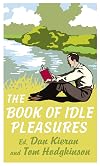
I thought this was going to be dire but I found myself agreeing with the authors, idling away, flat on my back looking at the stars, skimming stones and chasing butterflies. As for dressing gowns and slippers - no thank you.
Lists
You May Also Like


Associated Authors
Statistics
- Works
- 46
- Also by
- 1
- Members
- 2,292
- Popularity
- #11,208
- Rating
- 3.7
- Reviews
- 62
- ISBNs
- 104
- Languages
- 10
- Favorited
- 7