
Paul Kingsnorth
Author of The Wake
About the Author
Paul Kingsnorth was born in 1972 in Worcester. He is an English writer who was former deputy -editor of the Ecologist and a co-founder of the Dark Mountain Project. He was educated at St. Anne's College, Oxford, where he studied modern history. During this period he became involved in the British show more road protest movement at sites including Twyford Down and Solsbury Hill London. In 2004, he was one of the founders of the Free West Papua Campaign, which campaigns for the secession of the provinces of Papua and West Papua from Indonesia. In recent years, he has written for or contributed to the Guardian, Independent, Daily Telegraph, Daily Express, Le Monde, and New Statesman. His first book, One No, Many Yeses, an investigative journey through the 'anti-globalisation' movement, was published in six languages in thirteen countries. His second book, Real England, was published by Portobello Books in 2008. His first collection of poetry, Kidland and other poems, was published by Salmon in 2011.He won the Poetry Life National Competition in 1998, and was named BBC Wildlife Poet of the Year in the same year. In 2012, he won the Wenlock Prize.His first novel, The Wake, published in April 2014, was longlisted for the Man Booker Prize and the Folio Prize, shortlisted for the Goldsmiths Prize and won the Gordon Burn Prize. It also won the inaugural Book of the Year at UK Bookseller Industry Awards. (Bowker Author Biography) show less
Image credit: Kingsnorth protesting the construction of a bypass near Bath in 1994
Series
Works by Paul Kingsnorth
The Cross & the Machine 3 copies
Associated Works
These Our Monsters: The English Heritage Collection of Short Stories (2019) — Contributor — 26 copies, 1 review
Tagged
Common Knowledge
- Birthdate
- 1972
- Gender
- male
- Occupations
- author
writer
editor (The Ecologist magazine)
journalist
founder (2009; Dark Mountain Project) - Nationality
- UK
- Birthplace
- Worcester, Worcestershire, England, UK
- Places of residence
- Ireland
- Associated Place (for map)
- England, UK
Members
Discussions
2014 Booker Prize longlist: The Wake in Booker Prize (August 2014)
Reviews
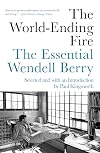
Summary: A collection of the essays, mostly focused on local culture, the care of places, and the hubris of technological solutions.
The works of Wendell Berry span the gamut from poetry to novels and short stories to essays, in addition to many articles contributed to various magazines and journals. I have a number of volumes just with his essays. This recently published work draws from them, and I think, does capture the “essential” Wendell Berry as an essayist.
The collection opens with show more “A Native Hill” and “The Making of a Marginal Farm.” They capture one essential of Wendell Berry–the loving knowledge of and care for a place, as Berry tramps the ground once farmed by his family, and describes his own farm, its features and how it must be cared for to continue to be useful beyond his life. He describes the slow work of rebuilding topsoil, describing a bucket which has collected leaves, twigs, feathers, droppings, and other degree, which have slowly decayed over decades into a few inches of soil. He comes back again and again to the idea that we should give up looking for big solutions, or solutions for someone else to implement. The question is what does our place require to preserve its soil, its life, and thus to sustain us? What must we do to protect the air, the water, the soil, and feed ourselves.
He decries the global food economy in “The Total Economy” in which production and consumption are separated, where farm work becomes servitude done by unseen workers rather than the hard but noble work of feeding both oneself and others through the care for plants and animals living on the soil. He reminds us in “The Pleasures of Eating” of both the joy and act of self-defense of growing, preparing, and being mindful of the sources of our food.
He writes of his own choices to use simpler but sufficient technologies: a good team of horses and various plows, mowers, and other attachments. He gives his reasons for not buying a computer. Hand-written text, edited and typed up by his wife to be sent to his publisher is enough, and he questions how a computer can make it better. He offers standards for technological innovation that should give pause, including that it should be cheaper, as small in scale, do better work, use less energy, and be repairable by a person of ordinary intelligence with the requisite tools.
The essay following “Why I Am Not Going to Buy a Computer” addresses the firestorm that resulted when people found out about the work his wife did for him and made all kinds of invidious assumptions. He uses it as an occasion, one of several, to talk about domestic economies–of the home being the center of work for husband, wife, and children. In “Economy and Pleasure” he talks about how we have separated our work and our pleasure, recounting the storytelling among a crew during tobacco harvest time, or time with a grand-daughter, who drove a team for the first time, hauling a load of dirt to spread on a barn floor, and her response at the end, “Wendell, isn’t it fun?”
One of his repeated themes is that big tech and big government are not going to solve the problems they’ve created, because all of our challenges reduce to local challenges–this stream, this strip mine, this local community, this school system. He not only advocates for local culture but names the prejudice against country people and questions, what is the best way to farm in all of earth’s “fragile localities”
His penultimate essay, “The Future of Agriculture,” is the most recent in the collection, and in a pithy way sums up his essay-writing career. He offers seven things we must do that are straightforward common sense and concludes:
“This is a agenda that may be undertaken by ordinary citizens at any time, on their own initiative. In fact, it describes an effort already undertaken all over the world by many people. It defines also the expectation that citizens who by their gifts are exceptional will not shirk the most humble services” (p.333).
Berry’s words seem prophetic to me. The disruptions of the pandemic to global supply chains has awakened us to things like computer chip shortages. But a recent problem with infant formula brought to our attention how fraught is our system of producing and transporting food essentials. Climate-change induced droughts in food-producing areas as far flung as California and southern France and Spain should be alarm bells. A threatened rail strike as I write could be catastrophic.
So where do I begin? Perhaps it is to look at converting some of the lawn I mow to gardens. I recall a 15 by 15 garden at our former home and how much food we got out of it, how good it was, and how much fun we had ordering seeds and starting plants under lights. How did I get away from that? We’re coming up on the time to replace a roof as well as some electrical upgrades. Perhaps it is time for solar. Not sure it will pay back in our lives or change things in a big way. But that’s Mr. Berry’s point. It’s the small, local acts of care that extend even beyond our lives that are our “humble service.” Now, if only I can get off this computer… show less
The works of Wendell Berry span the gamut from poetry to novels and short stories to essays, in addition to many articles contributed to various magazines and journals. I have a number of volumes just with his essays. This recently published work draws from them, and I think, does capture the “essential” Wendell Berry as an essayist.
The collection opens with show more “A Native Hill” and “The Making of a Marginal Farm.” They capture one essential of Wendell Berry–the loving knowledge of and care for a place, as Berry tramps the ground once farmed by his family, and describes his own farm, its features and how it must be cared for to continue to be useful beyond his life. He describes the slow work of rebuilding topsoil, describing a bucket which has collected leaves, twigs, feathers, droppings, and other degree, which have slowly decayed over decades into a few inches of soil. He comes back again and again to the idea that we should give up looking for big solutions, or solutions for someone else to implement. The question is what does our place require to preserve its soil, its life, and thus to sustain us? What must we do to protect the air, the water, the soil, and feed ourselves.
He decries the global food economy in “The Total Economy” in which production and consumption are separated, where farm work becomes servitude done by unseen workers rather than the hard but noble work of feeding both oneself and others through the care for plants and animals living on the soil. He reminds us in “The Pleasures of Eating” of both the joy and act of self-defense of growing, preparing, and being mindful of the sources of our food.
He writes of his own choices to use simpler but sufficient technologies: a good team of horses and various plows, mowers, and other attachments. He gives his reasons for not buying a computer. Hand-written text, edited and typed up by his wife to be sent to his publisher is enough, and he questions how a computer can make it better. He offers standards for technological innovation that should give pause, including that it should be cheaper, as small in scale, do better work, use less energy, and be repairable by a person of ordinary intelligence with the requisite tools.
The essay following “Why I Am Not Going to Buy a Computer” addresses the firestorm that resulted when people found out about the work his wife did for him and made all kinds of invidious assumptions. He uses it as an occasion, one of several, to talk about domestic economies–of the home being the center of work for husband, wife, and children. In “Economy and Pleasure” he talks about how we have separated our work and our pleasure, recounting the storytelling among a crew during tobacco harvest time, or time with a grand-daughter, who drove a team for the first time, hauling a load of dirt to spread on a barn floor, and her response at the end, “Wendell, isn’t it fun?”
One of his repeated themes is that big tech and big government are not going to solve the problems they’ve created, because all of our challenges reduce to local challenges–this stream, this strip mine, this local community, this school system. He not only advocates for local culture but names the prejudice against country people and questions, what is the best way to farm in all of earth’s “fragile localities”
His penultimate essay, “The Future of Agriculture,” is the most recent in the collection, and in a pithy way sums up his essay-writing career. He offers seven things we must do that are straightforward common sense and concludes:
“This is a agenda that may be undertaken by ordinary citizens at any time, on their own initiative. In fact, it describes an effort already undertaken all over the world by many people. It defines also the expectation that citizens who by their gifts are exceptional will not shirk the most humble services” (p.333).
Berry’s words seem prophetic to me. The disruptions of the pandemic to global supply chains has awakened us to things like computer chip shortages. But a recent problem with infant formula brought to our attention how fraught is our system of producing and transporting food essentials. Climate-change induced droughts in food-producing areas as far flung as California and southern France and Spain should be alarm bells. A threatened rail strike as I write could be catastrophic.
So where do I begin? Perhaps it is to look at converting some of the lawn I mow to gardens. I recall a 15 by 15 garden at our former home and how much food we got out of it, how good it was, and how much fun we had ordering seeds and starting plants under lights. How did I get away from that? We’re coming up on the time to replace a roof as well as some electrical upgrades. Perhaps it is time for solar. Not sure it will pay back in our lives or change things in a big way. But that’s Mr. Berry’s point. It’s the small, local acts of care that extend even beyond our lives that are our “humble service.” Now, if only I can get off this computer… show less

This was both solid and interesting! (And disappointing!)
Solid, because this worked very well as a work of historical fiction. The Wake deals with the run-up to and the fallout of the Norman conquest of England in 1066, as experienced by a conquered people attempting guerilla war. It is also a portrait of the narcissist that is its main character, Buccmaster of Holland. At the beginning of the story he is a prideful freeholder, one of the few in his village deep in the marshy fens, where show more most farmers are unfree thralls. His psyche is obsessed with his own superiority over those on lower social rungs, those who work for him, and the other members of his household, where he will not tolerate even imagined slights against his god-given patriarchy. He is hateful of any kind of attempted control over him (real or imaginary), and driven by a constant need for validation and admiration. When the Normans come and conquer England, Buccmaster loses his lands and, worse, his status. He becomes an outlaw instead, nurturing delusions of infamy and obsessed with maintaining control over his little band of merry men, usually through bullying, manipulation and self-serving biases. His only measure for people’s worth is how high he ranks in their estimation.
Where this gets interesting is the language this book is written in. In order to set his novel in an Anglo-Saxon world that was lost with the Norman conquest, Kingsnorth has produced what he calls a “shadow tongue” of Old English: present-day English re-spelled and purged of French-derived vocabulary in order to make it feel like Anglo-Saxon. It is easier to illustrate than to explain: i stands on a long seolfor strand it is night all is deorcness but the mona thynne lic a sithe blaed the sea is cuman in and risan and fallan on the strand lic the beatan of a heorte (p. 76). It may take a few pages to get used to, but this “shadow tongue” is mostly just unusually-spelled regular English, and adjusting to it shouldn’t be hard. (Though see the tangent below.)
So. If you feel like you can deal with a violent narcissist as a main character, written in English dressed up as its eleventh-century forebear, I think the book is definitely worth your effort.
***
Ok, super nerdy tangent here, probably irrelevant to most of you reading this. You see, I have two MAs in historical linguistics, I am working towards a PhD in this field, I have studied older versions of several Germanic languages and I may or may not have published papers on these subjects. In other words, I think I have a few more things to say about the language in this book. They are not things that are likely to matter to many others, but they do to me.
Frankly, I was actually pretty disappointed with Kingsnorth’s “shadow tongue”. I do realise that a) I am in a very atypical position here, b) this is, realistically speaking, the best fake Old English I am going to get in a traditionally published work of fiction, and c) this book was written pretty much to cater to my interests. But still. I have to admit that what Anglo-Saxon flavour there was in this re-spelled Present-day English, it wasn’t nearly enough! And it fell short of its goals in some pretty obvious ways, too.
My biggest complaint is that I would have liked to see a greater variety of word endings. Nominal morphology is bare-bones, adjectival morphology is non-existent. But it is verbal morphology that is particularly poor: Kingsnorth uses one single ending for the simple present paradigm (I is, thu is, he/she is, we is, thu is, they is); one for the simple past; and one for all non-finite forms. This is so completely unlike Old English that it was a major disappointment. Especially for I is, wtf was he thinking there? Also, the auxiliaries used for tense, aspect and mood were straight-up modern English -- annoyingly so. Also also, I don’t think I can forgive Kingsnorth for doing away with case distinctions in the 2nd person pronouns in exactly those places where Present-day English has none.
Secondly, Kingsnorth’s attempt to simultaneously shun words with French origins and to (mostly) avoid Anglo-Saxon words that require a glossary has a predictable result: the language ended up way too simplistic. While the limited, oft-repeated vocabulary kinda helped in illustrating Buccmaster’s thoughts going round and round in the same rut, it also made Kingsnorth’s fake Anglo-Saxon feel too impoverished to be a proper language. And I think that may have been the opposite of what he was going for.
And finally, and this is more of an anachronism than anything else, Kingsnorth uses the word fuck(ing) quite a bit (spelled as fucc or fuccan). And while Present-day English may use a sexual taboo word as an all-purpose swear word, none of the reasons why that is the case are really valid in the era in which this novel is set. (Much of this goes for other four-letter words, too.) Similarly, Buccmaster (and others) are often very sarcastic in how they express themselves -- again, that feels more like 21st-century speech patterns rather than eleventh-century ones.
In his afterword, Kingsnorth professes impatience with historical fiction written in Present-day English for imposing contemporary speaking patterns on historical eras. In some superficial ways he may have succeeded in avoiding this, because the language used in this book does look and sound a little like Anglo-Saxon. But in others the grammar and the speaking patterns of modern English are so unnecessary and so dominant. And in yet other ways (the limited vocab, having characters say I is, argh!), he makes his characters sound like simple-minded “Dark Age” folk, a caricature that’s the bane of medievalists’ existence. So yeah: speaking as a professional historical linguist: Kingsnorth's "shadow tongue" was frustrating: it had the right ideas, but ended up under-delivering. I am disappointed :( show less
Solid, because this worked very well as a work of historical fiction. The Wake deals with the run-up to and the fallout of the Norman conquest of England in 1066, as experienced by a conquered people attempting guerilla war. It is also a portrait of the narcissist that is its main character, Buccmaster of Holland. At the beginning of the story he is a prideful freeholder, one of the few in his village deep in the marshy fens, where show more most farmers are unfree thralls. His psyche is obsessed with his own superiority over those on lower social rungs, those who work for him, and the other members of his household, where he will not tolerate even imagined slights against his god-given patriarchy. He is hateful of any kind of attempted control over him (real or imaginary), and driven by a constant need for validation and admiration. When the Normans come and conquer England, Buccmaster loses his lands and, worse, his status. He becomes an outlaw instead, nurturing delusions of infamy and obsessed with maintaining control over his little band of merry men, usually through bullying, manipulation and self-serving biases. His only measure for people’s worth is how high he ranks in their estimation.
Where this gets interesting is the language this book is written in. In order to set his novel in an Anglo-Saxon world that was lost with the Norman conquest, Kingsnorth has produced what he calls a “shadow tongue” of Old English: present-day English re-spelled and purged of French-derived vocabulary in order to make it feel like Anglo-Saxon. It is easier to illustrate than to explain: i stands on a long seolfor strand it is night all is deorcness but the mona thynne lic a sithe blaed the sea is cuman in and risan and fallan on the strand lic the beatan of a heorte (p. 76). It may take a few pages to get used to, but this “shadow tongue” is mostly just unusually-spelled regular English, and adjusting to it shouldn’t be hard. (Though see the tangent below.)
So. If you feel like you can deal with a violent narcissist as a main character, written in English dressed up as its eleventh-century forebear, I think the book is definitely worth your effort.
***
Ok, super nerdy tangent here, probably irrelevant to most of you reading this. You see, I have two MAs in historical linguistics, I am working towards a PhD in this field, I have studied older versions of several Germanic languages and I may or may not have published papers on these subjects. In other words, I think I have a few more things to say about the language in this book. They are not things that are likely to matter to many others, but they do to me.
Frankly, I was actually pretty disappointed with Kingsnorth’s “shadow tongue”. I do realise that a) I am in a very atypical position here, b) this is, realistically speaking, the best fake Old English I am going to get in a traditionally published work of fiction, and c) this book was written pretty much to cater to my interests. But still. I have to admit that what Anglo-Saxon flavour there was in this re-spelled Present-day English, it wasn’t nearly enough! And it fell short of its goals in some pretty obvious ways, too.
My biggest complaint is that I would have liked to see a greater variety of word endings. Nominal morphology is bare-bones, adjectival morphology is non-existent. But it is verbal morphology that is particularly poor: Kingsnorth uses one single ending for the simple present paradigm (I is, thu is, he/she is, we is, thu is, they is); one for the simple past; and one for all non-finite forms. This is so completely unlike Old English that it was a major disappointment. Especially for I is, wtf was he thinking there? Also, the auxiliaries used for tense, aspect and mood were straight-up modern English -- annoyingly so. Also also, I don’t think I can forgive Kingsnorth for doing away with case distinctions in the 2nd person pronouns in exactly those places where Present-day English has none.
Secondly, Kingsnorth’s attempt to simultaneously shun words with French origins and to (mostly) avoid Anglo-Saxon words that require a glossary has a predictable result: the language ended up way too simplistic. While the limited, oft-repeated vocabulary kinda helped in illustrating Buccmaster’s thoughts going round and round in the same rut, it also made Kingsnorth’s fake Anglo-Saxon feel too impoverished to be a proper language. And I think that may have been the opposite of what he was going for.
And finally, and this is more of an anachronism than anything else, Kingsnorth uses the word fuck(ing) quite a bit (spelled as fucc or fuccan). And while Present-day English may use a sexual taboo word as an all-purpose swear word, none of the reasons why that is the case are really valid in the era in which this novel is set. (Much of this goes for other four-letter words, too.) Similarly, Buccmaster (and others) are often very sarcastic in how they express themselves -- again, that feels more like 21st-century speech patterns rather than eleventh-century ones.
In his afterword, Kingsnorth professes impatience with historical fiction written in Present-day English for imposing contemporary speaking patterns on historical eras. In some superficial ways he may have succeeded in avoiding this, because the language used in this book does look and sound a little like Anglo-Saxon. But in others the grammar and the speaking patterns of modern English are so unnecessary and so dominant. And in yet other ways (the limited vocab, having characters say I is, argh!), he makes his characters sound like simple-minded “Dark Age” folk, a caricature that’s the bane of medievalists’ existence. So yeah: speaking as a professional historical linguist: Kingsnorth's "shadow tongue" was frustrating: it had the right ideas, but ended up under-delivering. I am disappointed :( show less
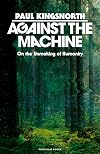
"Remain human despite it all." (pg. 318)
The main strength of Against the Machine, Paul Kingsnorth's recent cultured jeremiad against modern technological civilisation, is that while the arguments and opinions will be broadly familiar and will strike a chord with the sort of readers who are already drawn to this book (and consequently, to this review), the book itself remain bracing and original.
One can readily identify many of the main topics Kingsnorth laments: the prevalence of smartphones show more and algorithms and social media and relentless technological interconnectivity in general; the decline of organic human connections and authentic local culture; the breakdown of norms and standards under what is more commonly ringfenced as 'late stage capitalism' (although Kingsnorth isn't dogmatic enough to use that term) – all of which can be diagnosed as aspects of the insatiable 'Machine' which has comprehensively uprooted all that was good in our culture.
Kingsnorth's approach to all of this is never as tired or as hackneyed as one might expect; this is no idle rant or lament for the 'good old days'. The author is inquisitive, searching out alternate angles to all of the above topics, making his Against the Machine both a compelling synthesis of the current aversions to the zeitgeist and, in itself, a fresh contribution to the debate. But its real value is that it is the work of an independent mind. Kingsnorth is not a sly Marxist trying to slip his ideology in by the back door, nor is he a militant Green blocking traffic on motorways – though he was, interestingly, one of the latter in his youth.
Nowadays he describes himself as a "former green" (pg. 181) and a current Orthodox Christian; his book is no regurgitated two-minute-hate against all the ready-made targets you recognise from mainstream discourse, but is instead nuanced and unique to his own intellectual journey. Technological culture and 'the West', which birthed and cultivates the 'Machine', are his targets, which might lead you to label him as just another 'leftie', but then he criticises – in no uncertain terms – leftie shibboleths like identity politics, the trans agenda and Covid lockdowns. When Kingsnorth gives his opinions, you know they are his own.
Because of this, the reader gains a confidence in the author. The topics are made fresh and interesting through the lens of an author who is treating them honestly rather than with a ready-made ideological lens; even when they are political (and, rest assured, they are not always political) they do not repel. Because of this honesty and originality, I found myself enjoying the book even when I disagreed with some (though certainly not all) of Kingsnorth's points. Contrary to the author, I think Western civilisation contains within itself the seeds to save itself from its decline, and what's more it will do so. I am also not as dismissive of space travel, which I think provides the opportunity and impetus to reinvent our culture that Kingsnorth (elsewhere in the book) explicitly says we need.
Even when you disagree with some of the particulars – and Kingsnorth can get pretty out there sometimes – the book is never less than rewarding for those readers who want something intelligent and different to chew on. It is very well-written, even if Kingsnorth is more of a steady hand than an engrossing polemicist, and regardless of how far you agree with his comprehensive, almost doom-laden and yet hopeful diagnosis of the world we live in, one must respect the achievement here. It will always be interesting and worthwhile for a reader to roam amongst words of integrity. And, pleasingly, in writing them and disseminating them Paul Kingsnorth has made his own small victory against the Machine. show less
The main strength of Against the Machine, Paul Kingsnorth's recent cultured jeremiad against modern technological civilisation, is that while the arguments and opinions will be broadly familiar and will strike a chord with the sort of readers who are already drawn to this book (and consequently, to this review), the book itself remain bracing and original.
One can readily identify many of the main topics Kingsnorth laments: the prevalence of smartphones show more and algorithms and social media and relentless technological interconnectivity in general; the decline of organic human connections and authentic local culture; the breakdown of norms and standards under what is more commonly ringfenced as 'late stage capitalism' (although Kingsnorth isn't dogmatic enough to use that term) – all of which can be diagnosed as aspects of the insatiable 'Machine' which has comprehensively uprooted all that was good in our culture.
Kingsnorth's approach to all of this is never as tired or as hackneyed as one might expect; this is no idle rant or lament for the 'good old days'. The author is inquisitive, searching out alternate angles to all of the above topics, making his Against the Machine both a compelling synthesis of the current aversions to the zeitgeist and, in itself, a fresh contribution to the debate. But its real value is that it is the work of an independent mind. Kingsnorth is not a sly Marxist trying to slip his ideology in by the back door, nor is he a militant Green blocking traffic on motorways – though he was, interestingly, one of the latter in his youth.
Nowadays he describes himself as a "former green" (pg. 181) and a current Orthodox Christian; his book is no regurgitated two-minute-hate against all the ready-made targets you recognise from mainstream discourse, but is instead nuanced and unique to his own intellectual journey. Technological culture and 'the West', which birthed and cultivates the 'Machine', are his targets, which might lead you to label him as just another 'leftie', but then he criticises – in no uncertain terms – leftie shibboleths like identity politics, the trans agenda and Covid lockdowns. When Kingsnorth gives his opinions, you know they are his own.
Because of this, the reader gains a confidence in the author. The topics are made fresh and interesting through the lens of an author who is treating them honestly rather than with a ready-made ideological lens; even when they are political (and, rest assured, they are not always political) they do not repel. Because of this honesty and originality, I found myself enjoying the book even when I disagreed with some (though certainly not all) of Kingsnorth's points. Contrary to the author, I think Western civilisation contains within itself the seeds to save itself from its decline, and what's more it will do so. I am also not as dismissive of space travel, which I think provides the opportunity and impetus to reinvent our culture that Kingsnorth (elsewhere in the book) explicitly says we need.
Even when you disagree with some of the particulars – and Kingsnorth can get pretty out there sometimes – the book is never less than rewarding for those readers who want something intelligent and different to chew on. It is very well-written, even if Kingsnorth is more of a steady hand than an engrossing polemicist, and regardless of how far you agree with his comprehensive, almost doom-laden and yet hopeful diagnosis of the world we live in, one must respect the achievement here. It will always be interesting and worthwhile for a reader to roam amongst words of integrity. And, pleasingly, in writing them and disseminating them Paul Kingsnorth has made his own small victory against the Machine. show less
Summary: An account of the rise of techno-capitalism and the threat it poses to humanity and to the Earth.
“What Progress wants is to replace us.
“Perhaps the last remaining question is whether we will let it.”
That stark concluding heading and sentence in a chapter titled “What Progress Wants” stopped me dead in my tracks. It explained the urgency behind Paul Kingsnorth’s cultural and historical analysis in Against the Machine. He believes the advance of what he calls “the show more Machine,” the culturally embedded expression of techno-capitalism marks the death of a culture, threatens humanity, as well as the earth.
Kingsnorth refers to himself at points as a Luddite. But these are not the stark ravings of a mad man. Rather, he offer a thoughtful piece of cultural analysis drawing upon a range of voices from Simone Weil, Lewis Mumford, and Jacques Ellul and many others. But first, what does he mean by “the Machine”? This statement captures the essence:
“This then is the Machine. It is not simply the sum total of various individual technologies we have cleverly managed to rustle up–cars, laptops, robot mowers, and the rest. In fact, such ‘technics’, as Mumford calls them, are the product of the Machine, not its essence. The Machine is, rather, a tendency within us, made concrete by power and circumstance, which coalesces in a huge agglomeration of power, control, and ambition” (p. 37).
In part one of the book, Kingsnorth explores our need for roots and how the Machine has uprooted us from both nature and culture. Our “culture wars” are symptomatic of that rootlessness, Part two traces how the Machine evolved, particularly in the “disenchantment” of Enlightenment science, the rise of the cosmopolis, and the driving force of want.
Part three lays out the aspects of life Machine culture is eroding. He contrasts four “P’s” of traditional culture with four “S’s” of Machine culture
Past. Where a culture comes from vs.
Science. Where we come from, a non-mythic story.
People. Who a culture is. A sense of being ‘a people.” vs.
The Self. Who we are. The highest good is the self.
Place. Where a culture is. Nature in its local, particular manifestation vs.
Sex. What we do. A means of sacral pleasure and affirmation of individual identity (“sexuality”).
Prayer. Where a culture is going. Its religious tradition, relating to God or the gods. vs.
The Screen. Where we are going, both as distraction and interface for a post-human reality.
Finally, part four turns to the choice we face. He argues that the way of seeing that he calls “The West,” that gave birth to the machine must die. He calls for a kind of asceticism, either “cooked” (moderated) or “raw” (radical) with regard to technology. However, he doesn’t entertain “a two-edged sword” view. The Machine, as he’s construed it is destructive of both humanity and culture. He doesn’t believe we can escape the Machine, but he calls for a different vision that once again embraces the four “P’s” of past, people, place, and prayer. He speaks of building alternative communities in language reminiscent of Ron Dreher’s The Benedict Option. In his home in western Ireland, he is attempting to live out his ideas.
I had a couple responses as I read. Firstly, I was struck by his references to Weil, Mumford, and Ellul. He really wasn’t saying anything they had not already said, only chronicling how their ideas had played out. My generation was reading these thinkers fifty years ago–at least a few of us! I wonder why we didn’t pay them heed!
Secondly, it is interesting to me that Paul Kingsnorth is a recent convert (2020) to Christianity. His vision of the “two ways” starkly delineates the idolatry of techno-capitalism that leads to death and the four “P’s” that lead to life. His book, I believe, is a prophetic word to Christians as well as the wider culture caught up in the captivities of a dying culture, epitomized by the Machine. Will we turn back to what he calls “the eternal things” or will we let the Machine replace us? show less
“What Progress wants is to replace us.
“Perhaps the last remaining question is whether we will let it.”
That stark concluding heading and sentence in a chapter titled “What Progress Wants” stopped me dead in my tracks. It explained the urgency behind Paul Kingsnorth’s cultural and historical analysis in Against the Machine. He believes the advance of what he calls “the show more Machine,” the culturally embedded expression of techno-capitalism marks the death of a culture, threatens humanity, as well as the earth.
Kingsnorth refers to himself at points as a Luddite. But these are not the stark ravings of a mad man. Rather, he offer a thoughtful piece of cultural analysis drawing upon a range of voices from Simone Weil, Lewis Mumford, and Jacques Ellul and many others. But first, what does he mean by “the Machine”? This statement captures the essence:
“This then is the Machine. It is not simply the sum total of various individual technologies we have cleverly managed to rustle up–cars, laptops, robot mowers, and the rest. In fact, such ‘technics’, as Mumford calls them, are the product of the Machine, not its essence. The Machine is, rather, a tendency within us, made concrete by power and circumstance, which coalesces in a huge agglomeration of power, control, and ambition” (p. 37).
In part one of the book, Kingsnorth explores our need for roots and how the Machine has uprooted us from both nature and culture. Our “culture wars” are symptomatic of that rootlessness, Part two traces how the Machine evolved, particularly in the “disenchantment” of Enlightenment science, the rise of the cosmopolis, and the driving force of want.
Part three lays out the aspects of life Machine culture is eroding. He contrasts four “P’s” of traditional culture with four “S’s” of Machine culture
Past. Where a culture comes from vs.
Science. Where we come from, a non-mythic story.
People. Who a culture is. A sense of being ‘a people.” vs.
The Self. Who we are. The highest good is the self.
Place. Where a culture is. Nature in its local, particular manifestation vs.
Sex. What we do. A means of sacral pleasure and affirmation of individual identity (“sexuality”).
Prayer. Where a culture is going. Its religious tradition, relating to God or the gods. vs.
The Screen. Where we are going, both as distraction and interface for a post-human reality.
Finally, part four turns to the choice we face. He argues that the way of seeing that he calls “The West,” that gave birth to the machine must die. He calls for a kind of asceticism, either “cooked” (moderated) or “raw” (radical) with regard to technology. However, he doesn’t entertain “a two-edged sword” view. The Machine, as he’s construed it is destructive of both humanity and culture. He doesn’t believe we can escape the Machine, but he calls for a different vision that once again embraces the four “P’s” of past, people, place, and prayer. He speaks of building alternative communities in language reminiscent of Ron Dreher’s The Benedict Option. In his home in western Ireland, he is attempting to live out his ideas.
I had a couple responses as I read. Firstly, I was struck by his references to Weil, Mumford, and Ellul. He really wasn’t saying anything they had not already said, only chronicling how their ideas had played out. My generation was reading these thinkers fifty years ago–at least a few of us! I wonder why we didn’t pay them heed!
Secondly, it is interesting to me that Paul Kingsnorth is a recent convert (2020) to Christianity. His vision of the “two ways” starkly delineates the idolatry of techno-capitalism that leads to death and the four “P’s” that lead to life. His book, I believe, is a prophetic word to Christians as well as the wider culture caught up in the captivities of a dying culture, epitomized by the Machine. Will we turn back to what he calls “the eternal things” or will we let the Machine replace us? show less
Lists
Awards


You May Also Like


Associated Authors
Statistics
- Works
- 21
- Also by
- 3
- Members
- 2,571
- Popularity
- #9,989
- Rating
- 3.7
- Reviews
- 80
- ISBNs
- 69
- Languages
- 6
- Favorited
- 3