
Brian Catling (1948–2022)
Author of The Vorrh
About the Author
Series
Works by Brian Catling
The Vorrh Trilogy Series 3 Books Collection Set By Brian Catling(The Vorrh, The Erstwhile, The Cloven) (2023) 2 copies
The Tulpa Index 2 copies
Future exiles : 3 London poets 2 copies
Large Ghost 1 copy
Were 1 copy
La montaña hueca 1 copy
Cyclops 1 copy
Boschlog 1 copy
Bobby Awl: Authentic Narrative of an Imaginary Conversation Between the Death Mask of Bobby Awl and B. Catling (2007) 1 copy
Cutting Room Oona Grimes 1 copy
A Mystery of Remnant 1 copy
Associated Works
Tagged
Common Knowledge
- Legal name
- Catling, Brian
- Other names
- Catling, B.
- Birthdate
- 1948-10-23
- Date of death
- 2022-09-26
- Gender
- male
- Education
- Walworth secondary school
Maidstone College of Art
Walthamstow School of Art
Royal College of Art - Occupations
- professor (fine art)
poet
sculptor
novelist
performer - Organizations
- Royal College of Art (teacher)
Royal Academy Schools (teacher)
Ruskin School of Art (professor of fine art|retired|2017) - Awards and honors
- Royal Academy (elected|2016)
- Nationality
- UK
- Birthplace
- London, England, UK
- Map Location
- England, UK
Members
Reviews
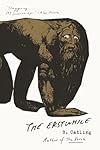
The Erstwhile is the sequel to Catling's Vorrh, and it continues various plot threads begun in the earlier book. I was most interested by the one that was added, concerning the retired German Jewish academic Hector Schumann, healed by his interactions with the Erstwhile, who are angels demoted after their failure to guard the Tree of Life in the primordial garden. Schumann ends up in London, investigating another Erstwhile in Bedlam Hospital, and pursued by Nazis for whom he was supposed to show more have been the agent.
Naturally, most of the component stories are still situated in Africa. The transformed warden Sidrus serves as the chief villain in the events in the forest of the Vorrh and its neighboring colonial town of Essenwald. He is motivated by vengeance, but he is also the vehicle of an entity identified with the Englishman Williams whose strange destiny was the focus of the first book of the series. Events concerning the friends Cyrena and Ghertrude develop strangely, while the former cyclops Ishmael briefly becomes a hero by virtue of participating in an expedition into the Vorrh to recover a formerly subjugated tribe of workers.
Despite blurbers and reviewers insisting on the sui generis quality of Catling's fantasy, I found it comparable to several in the "new weird" field. Stylistically, I felt it was closest to The Divinity Student of Michael Cisco. It also had a kinship to Jeff Vandermeer's Ambergris books, although it was less structurally inventive. And I think it suffers ever so slightly from comparison to the superior Well-Built City Trilogy of Jeffrey Ford. It is distinctive among these for its connection to real historical persons and places alongside its extreme fantastic elements. And there's not much literature that falls into its larger class, so Catling's books are worth the attention they demand from those who enjoy those. show less
Naturally, most of the component stories are still situated in Africa. The transformed warden Sidrus serves as the chief villain in the events in the forest of the Vorrh and its neighboring colonial town of Essenwald. He is motivated by vengeance, but he is also the vehicle of an entity identified with the Englishman Williams whose strange destiny was the focus of the first book of the series. Events concerning the friends Cyrena and Ghertrude develop strangely, while the former cyclops Ishmael briefly becomes a hero by virtue of participating in an expedition into the Vorrh to recover a formerly subjugated tribe of workers.
Despite blurbers and reviewers insisting on the sui generis quality of Catling's fantasy, I found it comparable to several in the "new weird" field. Stylistically, I felt it was closest to The Divinity Student of Michael Cisco. It also had a kinship to Jeff Vandermeer's Ambergris books, although it was less structurally inventive. And I think it suffers ever so slightly from comparison to the superior Well-Built City Trilogy of Jeffrey Ford. It is distinctive among these for its connection to real historical persons and places alongside its extreme fantastic elements. And there's not much literature that falls into its larger class, so Catling's books are worth the attention they demand from those who enjoy those. show less

The Vorrh is the first book in a multi-volume fantasy by Brian Catling, set mostly in Africa at the start of the 20th century. The title names a forest in the story, one dreaded by natives and exploited by European industry, with legendary dimensions relating to the Garden of Eden and non-human intelligences. Much of the story takes place in the nearby colonial town of Essenwald.
The cast of characters is large, with multiple plot strands that cross sufficiently to form a net, but never show more fully converge into a braid. Two of the key characters are historical persons: the French poet Raymond Roussel and the English photographer Eadweard Muybridge. There are no pure heroes; any character with real significance in the book also has faults and culpability. But there are certainly some fairly plain villains.
The Muybridge story has a science-fictional air with the liminal qualities of Victorian technology and experimentation in both photography and medicine. The level of the fantastic in Catling's Africa perhaps even exceeds that of Jeff Vandermeer's Ambergris and is pretty much comparable to that of Jeffery Ford's Well-Built City books. But situating The Vorrh in a historical place and period makes its preternatural elements more vivid.
I have in my collection the next book The Erstwhile, but I will be taking a breather before I continue to it. The Vorrh is a hefty tome, and for me it was sometimes slow going. Still, I think it deserves the high praise it has received from other contemporary fantasists, and it exhibits a highly distinctive imagination. show less
The cast of characters is large, with multiple plot strands that cross sufficiently to form a net, but never show more fully converge into a braid. Two of the key characters are historical persons: the French poet Raymond Roussel and the English photographer Eadweard Muybridge. There are no pure heroes; any character with real significance in the book also has faults and culpability. But there are certainly some fairly plain villains.
The Muybridge story has a science-fictional air with the liminal qualities of Victorian technology and experimentation in both photography and medicine. The level of the fantastic in Catling's Africa perhaps even exceeds that of Jeff Vandermeer's Ambergris and is pretty much comparable to that of Jeffery Ford's Well-Built City books. But situating The Vorrh in a historical place and period makes its preternatural elements more vivid.
I have in my collection the next book The Erstwhile, but I will be taking a breather before I continue to it. The Vorrh is a hefty tome, and for me it was sometimes slow going. Still, I think it deserves the high praise it has received from other contemporary fantasists, and it exhibits a highly distinctive imagination. show less
Imagination is a gift, prophecy a curse.
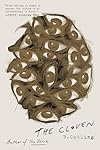
The Vorrh trilogy is a visionary work that takes vision as its guiding theme — sight and blindness, reality and imagination, past and prophecy. Here, tangled in the primeval foliage of Catling's weird prose, are the cyclops-messiah Ishmael, raised by insectoid steampunk robots, a blind girl gifted with sight, a slavedriver deprived of his, and motion picture pioneer Eadweard Muybridge, resurrected from his own ghostly colloidal plates. The original show more cockney seer, Blake, shows up in colloquy with an autistic angel called Nicholas Parsons; and Blake's pre- and post-lapsarian visions are echoed in the trilogy's grounding of the Eden myth in the Vorrh, the sentient forest at the heart of Africa, its various colonial penetrations symbolic of the Fall. What's lost from the world, as alluded to in the title of this third volume, is unity, the oneness of vision embodied in Ishmael and sought by the failed angels, the "erstwhile", to atone for their failure to rein in mankind's hideous excesses — the ugliest of which looms over The Cloven in the shape of the second world war.
I think Catling is unique in several respects. One is his ability to write action scenes, and scenes of violence and torture, in ways that defy cliché: his bad guys are thoroughly, creatively, nasty, the assassin and all-round instrument of evil Sidrus being exhibit A. In this third installment, Sidrus finally gets his comeuppance in one of the series' trademark incidents of gloriously original body horror, but even what's left of him remains deeply menacing. Another is the effortlessness with which he introduces the historical to the fictional — Muybridge, Blake, and, in The Cloven, Eugène Marais are as integral to and as at home in the story as Ishmael, Meta, or Solli the teenage cockney Jewish gangster. It's like they lived to be in these stories! Another is the uncultivated profusion of his prose style. Verbing of nouns often comes across as a cheap and flashy authorial trick, but when Catling does it it's always a thrill. His language is so rich, baroque at times, that it should be impossible to sustain over a 1200+ page trilogy, but it's indefatigable, endlessly surprising.
I still think the trilogy format is basically stupid and redundant, but I understand it from a publishing standpoint. The Cloven draws together most, but not all, of the myraid plot strands scattered across the first two books. It's a highly satisfactory collection of conclusions, and the epilogue with my favourite two characters, the angel Nicholas and his counterpart, lovable old Prof. Schumann,wading into the Thames estuary , actually made me well up a little. The conclusion to the story as a whole is beautiful, breathtaking — a grand perversion of the usual "fate of mankind" binary. I stupidly let 2+ years elapse between books one and two, and 18 months between 2 and 3, so I'd forgotten many details. But that just heightens my anticipatory pleasure at the prospect of wandering again through this weird and endlessly wonderful fantasy world full of horrors, curiosities and delights. show less
The Vorrh trilogy is a visionary work that takes vision as its guiding theme — sight and blindness, reality and imagination, past and prophecy. Here, tangled in the primeval foliage of Catling's weird prose, are the cyclops-messiah Ishmael, raised by insectoid steampunk robots, a blind girl gifted with sight, a slavedriver deprived of his, and motion picture pioneer Eadweard Muybridge, resurrected from his own ghostly colloidal plates. The original show more cockney seer, Blake, shows up in colloquy with an autistic angel called Nicholas Parsons; and Blake's pre- and post-lapsarian visions are echoed in the trilogy's grounding of the Eden myth in the Vorrh, the sentient forest at the heart of Africa, its various colonial penetrations symbolic of the Fall. What's lost from the world, as alluded to in the title of this third volume, is unity, the oneness of vision embodied in Ishmael and sought by the failed angels, the "erstwhile", to atone for their failure to rein in mankind's hideous excesses — the ugliest of which looms over The Cloven in the shape of the second world war.
I think Catling is unique in several respects. One is his ability to write action scenes, and scenes of violence and torture, in ways that defy cliché: his bad guys are thoroughly, creatively, nasty, the assassin and all-round instrument of evil Sidrus being exhibit A. In this third installment, Sidrus finally gets his comeuppance in one of the series' trademark incidents of gloriously original body horror, but even what's left of him remains deeply menacing. Another is the effortlessness with which he introduces the historical to the fictional — Muybridge, Blake, and, in The Cloven, Eugène Marais are as integral to and as at home in the story as Ishmael, Meta, or Solli the teenage cockney Jewish gangster. It's like they lived to be in these stories! Another is the uncultivated profusion of his prose style. Verbing of nouns often comes across as a cheap and flashy authorial trick, but when Catling does it it's always a thrill. His language is so rich, baroque at times, that it should be impossible to sustain over a 1200+ page trilogy, but it's indefatigable, endlessly surprising.
I still think the trilogy format is basically stupid and redundant, but I understand it from a publishing standpoint. The Cloven draws together most, but not all, of the myraid plot strands scattered across the first two books. It's a highly satisfactory collection of conclusions, and the epilogue with my favourite two characters, the angel Nicholas and his counterpart, lovable old Prof. Schumann,
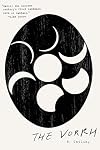
The Vorrh: an experimental, absurdist novel from the late Brian Catling set in (and around) the heart of Africa. In the Foreword, Alan Moore says he considers this to be among the very best that fantasy has to offer; a "landmark fantasy" of the 21st century. Even Neil Gaiman and Phillip Pullman—both notable fantasy authors—have praised this novel. I figured I was in for something special, but after my first reading, I was baffled, thinking that they must've endorsed the wrong novel.
And show more now, after a second reading, I find myself even more baffled. In a nutshell, Catling's writing is verbose, yet dull, and too clever by half. The lack of structure only exacerbates these issues, and the novel itself is too long. Catling left many of his darlings alive, and the story suffers for it.
In an interview done by Three Crows Magazine, Catling admits that he had no idea how many words he'd written by the end of the novel. He also mentions that he never tried writing a novel before this one. When the interviewer asks Catling if he had a world building process, Catling says this in reply:
Maybe that's the problem. He aspired to top a bad novel instead of a good one.
World building is a balancing act. Too much or too little tends to diminish an otherwise decent book. But beyond the quantity, the most important thing is creating a world that's not only believable, but one where its details enrich the story and deepen the expression of the world. That's why Susanna Clarke's Jonathan Strange & Mr Norrel and China Mieville's Perdido Street Station work so well. While both worlds appear excessively detailed, they're actually painstakingly crafted in ways where details are rarely wasted or included just for the sake of having more to read about. Both worlds are strong, but they surely didn't get that way from spontaneity alone. Clarke and Meiville had to kill their darlings in order to achieve the illusion of verisimilitude.
Further along in the interview, Catling says that his first order of business after finishing The Vorrh was to begin writing the sequel:
I'm not sure why his friends didn't suggest that he should figure out and refine the first book before moving on. Maybe it's because there are times when a writer has entered that creative fire; that "zone" of hot iron that must be struck before it cools. But my point is: on top of being an inexperienced prose writer, Catling wrote without much reflection or revision. He never stopped to think about whether certain details, scenes and characters were truly needed.
It makes sense if you consider his approach. Catling mentions that he "can't remember bits of the Vorrh" because his memory is "fixed in forward motion." But this type of approach seems better suited for poetry as opposed to a novel. And to attempt a long novel after only really writing poetry your whole life? That's pretty gutsy, I'll give him that.
This "forward motion" approach is most apparent when it comes to the characters. This novel should've been called The Bowman's Journey and Other Stories since there's an exhausting amount of characters to keep track of. On the whole, I found them too hollow and too self-loathing, and they fail to remain interesting across the book's vastness. Each story thread keeps jostling for position, resulting in scenes that cut in and out, and arcs that struggle to progress due to murky character motivations. Catling is more focused on the characters as vessels for foregone conclusions rather than treating them as creations whose psychology is more dynamic and deserving of exploration. Most characters don't even meet each other; they're related simply by being close to the Vorrh at the same time.
But even when we finally get to that untamable and mysterious forest, it's disappointing. It's not as magical or absurd as it's made out to be. The reason, I believe, is that Catling's writing comes across as very detached and even joyless in tone and style.
To help me explain this central problem, I'll be referring to Ursula K. Le Guin's enlightening essay on writing style, entitled "From Elfland to Poughkeepsie." In it, she claims that style "is how you see: your vision, your understanding of the world, your voice.... To create what Tolkien calls 'a secondary universe' is to make a new world. A world where no voice has ever spoken before; where the act of speech is the act of creation. The only voice that speaks there is the creator’s voice. And every word counts."
Somewhere along the way, I settled on the notion that writing style is just another part of the storytelling equation. An important one, sure, but I weighed it about as equally as I did things like the world and the characters. But Le Guin made me realize that style is a lot more important. It's true, isn't it? What is style if not how a writer views the world? It's not just "another element," it's the sum of every element.
Further on in Le Guin's essay, she compares some of Eddison's and Tolkien's writing to a cut-and-dry political scene from a modern-sounding fantasy written in "plain and apparently direct prose." Le Guin's critique of such writing is this:
When I read this, I thought, wow, this sounds exactly like The Vorrh. It's why it barely feels like a fantasy, and it's the reason why the writing is kind of grating and uninviting. I can't "feel" the forest through Catling's writing. I can't "feel" the people and the sights and sounds. The spirit of it all is missing. And it's as though Catling already knew what he'd find in the Vorrh, and is relaying that information to us in a plodding way.
Of course, there are stories that utilize plain prose successfully, but there's a genuine element in those stories, and the writers know themselves and their limits. In The Vorrh, all of that is missing. Here's an example of what I mean from the book:
Now, you might be thinking that this is only how a certain character talks. Surely, the rest of the book is different, right? But it's not. This tone and manner of speech never changes. And it's not as though this part of the scene is "bad," but isn't the writing kind of rigid? Too busy for what it's actually describing? And the scenery here, doesn't it seem wooden? Catling's style is a dead ringer for "fake plainness."
Here's another example from the book that stood out to me: "Sidrus and his tribe—all named Sidrus after the centurion who had saved the Sefer haYashar from extinction in the ruins of Jerusalem—had started as a scholastic branch growing out of the split tree of the Tubal-Cain. Somewhere in its tangled history, it had bred with the testaments of Enoch and Lilithian blasphemies to produce the hieratic order that Sidrus now fervently represented. The warrant he carried was of the Boundary Holders of the Forest, a position of responsible fanaticism that suited him well."
Where's the sense of wonder and discovery in the narrator's voice? This supposedly esoteric, secretive knowledge is being told to us like it's just another Tuesday.
Here is another quote from Le Guin's essay that explains why this sort of style is detrimental here:
Catling's book does contain a lot of the trappings of fantasy: the forbidden woods, the monsters, the spirits, the ancients, the secret orders, the curses, etc. There's even a hero's journey and other tropes. But there's something wrong with the style. It's inappropriate; "journalistic." The writing is at odds with what's actually going on.
The other majorly off-putting thing about this book is its widespread misogyny. Somehow, Catling manages to work it into nearly every character's viewpoint in a way that's not satirical or self-aware, but complacent and accepting. At first I thought it was just one or two characters, or that Catling was attempting to portray the time period's chauvinism, but as the novel goes on it's clear that Catling falls into a lot of the same pitfalls that pop fantasy authors do when it comes to writing women. There's your typical "self-sufficient woman completely loses her personality after sleeping with the male protagonist and becomes hopelessly attached to him" cliché, but beyond that, there's something uglier rooted in the story. Women are either shown to be selfish and cunning, or subservient and made to suffer through awful situations so that the men can benefit. There's no in-between. It goes past ineptitude and into spitefulness. For such an experimental and modern book, the othering of women is surprisingly regressive and parochial.
And the borderline rape scenes don't exactly help, either. The relationships lack any sort of real intimacy, and are rather transgressive for the sake of sensationalism. For comparison, there's Perdido Street Station, a modern fantasy novel in its own right that contains sex scenes intended to be uncomfortable and shocking, but they're also written with careful attention paid to the psyche of both parties—realistic people—involved. Catling pays little mind to the psyche of his characters, and so the sex between them ends up being alienating and performative. It's all about power and spectacle; a power fantasy. Put a few authentic souls into this book and the whole thing would collapse like Jericho.
Catling is also overly cruel to his characters. For example, a blind woman's sight is restored after she sleeps with a certain character (yup, that happens), but all this newly gained sight does is reveal a lot of ugliness and horror. Sight ends up being her curse, and Catling makes sure of it by putting her into situations which will only make her regret gaining eyesight. Would it really pain Catling to let one positive thing happen to her? This is not to say that dark subjects can't be a part of The Vorrh, but the way an author treats those subjects is important. Mieville's Bas-Lag and Peake's Castle Gormenghast are also full of dark, awful happenings, and Mieville can be especially cruel, but he has his limits and is prone to a lot of self-reflection. Catling, on the other hand, loves nothing more than making this novel dark, and I mean dark. Grimdark squared. "Extreme" is his destination and nobody can stop him.
Going back to the whole genre discussion of the book, I couldn't help but notice that Electric Literature claims that Catling "created a new kind of fantasy novel." It has the same ring to it that Kazuo Ishiguro's claim of writing a different kind of fantasy does. It's an outdated, condescending sort of view, as if to say that poor ol' fantasy is always in need of a certain type of writer to make it respectable enough to read.
Funnily enough, Catling says that he never intended to write a fantasy. Quote: "I’ve not read a lot of fantasy literature...I thought I was writing a surrealist novel. But it wasn’t my intention. Of course when it came out and people were calling it fantasy, I thought, well, I guess it sort of is. But it wasn’t my intent."
A fantasist that refuses to acknowledge or engage with other fantasists' work is at best doing themselves a disservice and at worst risking unoriginality. This book is much more than a fantasy, but that's what it is at its core: a fantasy. It just strikes me as odd that Catling didn't think he was writing one. And while the Vorrh is an interesting concept, it's hardly a new one for fantasy, especially since stories based on a magical haunted forest have been around for ages.
Is "surreal" the right word for this novel? It's a lot less strange and magical than many other fantasy books I've read. The fantastic elements are secondary; they further each character's conceptual journey, yet they rarely flourish into something truly bizarre or astonishing. But it is a grimdark-esque power fantasy—one that is too cruel to its characters, especially the women. And the sidetracking is plentiful, resulting in a lot of meandering and indulgences. A handful of the book's ideas and scenes are good, but if I hadn't pushed myself to continue reading, I would've stopped halfway through. Ultimately, the lack of an appropriate style and an abundance of othering ruined what could've been a great book. show less
And show more now, after a second reading, I find myself even more baffled. In a nutshell, Catling's writing is verbose, yet dull, and too clever by half. The lack of structure only exacerbates these issues, and the novel itself is too long. Catling left many of his darlings alive, and the story suffers for it.
In an interview done by Three Crows Magazine, Catling admits that he had no idea how many words he'd written by the end of the novel. He also mentions that he never tried writing a novel before this one. When the interviewer asks Catling if he had a world building process, Catling says this in reply:
"No. I sat down and wrote it. I had the opening scene in my head for something like ten years. I had only written poetry before so I didn’t think prose was something I could do. I kept trying but I only got to page three, then I threw it away. Then circumstances changed. I was on a plane to Australia on my way to an art residency. Somebody gave me a book to read on the plane by a fairly well known author. After about a third of it, I thought, 'This is fucking awful. I can do better.' Then another part of me said, 'Well prove it, this is just pub talk.' So I started to write and it all came out. There was no world building. There was no structure, it just came out."
Maybe that's the problem. He aspired to top a bad novel instead of a good one.
World building is a balancing act. Too much or too little tends to diminish an otherwise decent book. But beyond the quantity, the most important thing is creating a world that's not only believable, but one where its details enrich the story and deepen the expression of the world. That's why Susanna Clarke's Jonathan Strange & Mr Norrel and China Mieville's Perdido Street Station work so well. While both worlds appear excessively detailed, they're actually painstakingly crafted in ways where details are rarely wasted or included just for the sake of having more to read about. Both worlds are strong, but they surely didn't get that way from spontaneity alone. Clarke and Meiville had to kill their darlings in order to achieve the illusion of verisimilitude.
Further along in the interview, Catling says that his first order of business after finishing The Vorrh was to begin writing the sequel:
"I remember finishing it and thinking, 'My god I’ve done it, I’ve actually done it. That's incredible.' I walked away from the table and went, 'Uh-oh, no you haven’t. There is more.' So I went back and started on the second one... I suddenly realised I didn’t know how many words I had done. So I did a word count and worked out how many pages that was and realised I had no idea how many pages that was. So I went to my bookshelf, to some of my favourites and realised I’d gone past them. I was only a third in. I said, I don’t know what this is, but I can’t stop and think about it.' There was only one thing to do and that was to carry on. I had two friends. One of them was Ian Sinclair who I sent drafts to and I asked, 'Is this ok because I’m not quite sure what is going on here?' and he came back and said, 'Just keep going.'"
I'm not sure why his friends didn't suggest that he should figure out and refine the first book before moving on. Maybe it's because there are times when a writer has entered that creative fire; that "zone" of hot iron that must be struck before it cools. But my point is: on top of being an inexperienced prose writer, Catling wrote without much reflection or revision. He never stopped to think about whether certain details, scenes and characters were truly needed.
It makes sense if you consider his approach. Catling mentions that he "can't remember bits of the Vorrh" because his memory is "fixed in forward motion." But this type of approach seems better suited for poetry as opposed to a novel. And to attempt a long novel after only really writing poetry your whole life? That's pretty gutsy, I'll give him that.
This "forward motion" approach is most apparent when it comes to the characters. This novel should've been called The Bowman's Journey and Other Stories since there's an exhausting amount of characters to keep track of. On the whole, I found them too hollow and too self-loathing, and they fail to remain interesting across the book's vastness. Each story thread keeps jostling for position, resulting in scenes that cut in and out, and arcs that struggle to progress due to murky character motivations. Catling is more focused on the characters as vessels for foregone conclusions rather than treating them as creations whose psychology is more dynamic and deserving of exploration. Most characters don't even meet each other; they're related simply by being close to the Vorrh at the same time.
But even when we finally get to that untamable and mysterious forest, it's disappointing. It's not as magical or absurd as it's made out to be. The reason, I believe, is that Catling's writing comes across as very detached and even joyless in tone and style.
To help me explain this central problem, I'll be referring to Ursula K. Le Guin's enlightening essay on writing style, entitled "From Elfland to Poughkeepsie." In it, she claims that style "is how you see: your vision, your understanding of the world, your voice.... To create what Tolkien calls 'a secondary universe' is to make a new world. A world where no voice has ever spoken before; where the act of speech is the act of creation. The only voice that speaks there is the creator’s voice. And every word counts."
Somewhere along the way, I settled on the notion that writing style is just another part of the storytelling equation. An important one, sure, but I weighed it about as equally as I did things like the world and the characters. But Le Guin made me realize that style is a lot more important. It's true, isn't it? What is style if not how a writer views the world? It's not just "another element," it's the sum of every element.
Further on in Le Guin's essay, she compares some of Eddison's and Tolkien's writing to a cut-and-dry political scene from a modern-sounding fantasy written in "plain and apparently direct prose." Le Guin's critique of such writing is this:
"It is a fake plainness. It is not really simple, but flat. It is not really clear, but inexact. Its directness is specious. Its sensory cues—extremely important in imaginative writing—are vague and generalized; the rocks, the wind, the trees are not there, are not felt; the scenery is cardboard, or plastic. The tone as a whole is profoundly inappropriate to the subject."
When I read this, I thought, wow, this sounds exactly like The Vorrh. It's why it barely feels like a fantasy, and it's the reason why the writing is kind of grating and uninviting. I can't "feel" the forest through Catling's writing. I can't "feel" the people and the sights and sounds. The spirit of it all is missing. And it's as though Catling already knew what he'd find in the Vorrh, and is relaying that information to us in a plodding way.
Of course, there are stories that utilize plain prose successfully, but there's a genuine element in those stories, and the writers know themselves and their limits. In The Vorrh, all of that is missing. Here's an example of what I mean from the book:
"My shelter feels like it has not been used for years, the stitched-together sacking that made its rudimentary door falling apart in my hand as I try to unhook it. This crouching space had been scratched out from the soft yellow stone, just big enough for a small man or boy and a few goats. There are still remnants of occupation: a low bed or table blocking the far end; a few tools bearing the labour scars of generations; a car wheel, its tyre worn smooth; dry, sand-encrusted empty bottles; and a few exhausted shotgun cartridges. Hanging on a nail is a fragment of rusted armour, an articulated breastplate of diminutive size. Whether this is a genuine artefact dug up from some unknown battle, or part of a carnival costume from one of the gaudy pageants that once marked the saint’s passage through the year, it is impossible to say. The hot land and the salt wind have etched and cooked it into another time, a time that never stained memory, because it was too ancient to have yet been conceived."
Now, you might be thinking that this is only how a certain character talks. Surely, the rest of the book is different, right? But it's not. This tone and manner of speech never changes. And it's not as though this part of the scene is "bad," but isn't the writing kind of rigid? Too busy for what it's actually describing? And the scenery here, doesn't it seem wooden? Catling's style is a dead ringer for "fake plainness."
Here's another example from the book that stood out to me: "Sidrus and his tribe—all named Sidrus after the centurion who had saved the Sefer haYashar from extinction in the ruins of Jerusalem—had started as a scholastic branch growing out of the split tree of the Tubal-Cain. Somewhere in its tangled history, it had bred with the testaments of Enoch and Lilithian blasphemies to produce the hieratic order that Sidrus now fervently represented. The warrant he carried was of the Boundary Holders of the Forest, a position of responsible fanaticism that suited him well."
Where's the sense of wonder and discovery in the narrator's voice? This supposedly esoteric, secretive knowledge is being told to us like it's just another Tuesday.
Here is another quote from Le Guin's essay that explains why this sort of style is detrimental here:
"To what then is it appropriate? To journalism. It is journalistic prose. In journalism, the suppression of the author’s personality and sensibility is deliberate. The goal is an impression of objectivity. The whole thing is meant to be written fast and read faster. This technique is right, for a newspaper. It is wrong for a novel, and dead wrong for a fantasy. A language intended to express the immediate and the trivial is applied to the remote and the elemental. The result, of course, is a mess....
The general assumption is that, if there are dragons or hippogriffs in a book, or if it takes place in a vaguely Keltic or Near Eastern medieval setting, or if magic is done in it, then it’s a fantasy. This is a mistake.
A writer who doesn’t know the West may deploy acres of sagebrush and rimrock without achieving a real Western. A writer may fumble about with spaceships and strains of mutant bacteria and never be anywhere near real science fiction. A writer may even write a five-hundred-page novel about Sigmund Freud which has absolutely nothing to do with Sigmund Freud; it has been done; it was done just a couple of years ago. And in the same way, a writer may use all the trappings of fantasy without ever actually imagining anything.
My argument is that this failure, this fakery, is visible instantly in the style."
Catling's book does contain a lot of the trappings of fantasy: the forbidden woods, the monsters, the spirits, the ancients, the secret orders, the curses, etc. There's even a hero's journey and other tropes. But there's something wrong with the style. It's inappropriate; "journalistic." The writing is at odds with what's actually going on.
The other majorly off-putting thing about this book is its widespread misogyny. Somehow, Catling manages to work it into nearly every character's viewpoint in a way that's not satirical or self-aware, but complacent and accepting. At first I thought it was just one or two characters, or that Catling was attempting to portray the time period's chauvinism, but as the novel goes on it's clear that Catling falls into a lot of the same pitfalls that pop fantasy authors do when it comes to writing women. There's your typical "self-sufficient woman completely loses her personality after sleeping with the male protagonist and becomes hopelessly attached to him" cliché, but beyond that, there's something uglier rooted in the story. Women are either shown to be selfish and cunning, or subservient and made to suffer through awful situations so that the men can benefit. There's no in-between. It goes past ineptitude and into spitefulness. For such an experimental and modern book, the othering of women is surprisingly regressive and parochial.
And the borderline rape scenes don't exactly help, either. The relationships lack any sort of real intimacy, and are rather transgressive for the sake of sensationalism. For comparison, there's Perdido Street Station, a modern fantasy novel in its own right that contains sex scenes intended to be uncomfortable and shocking, but they're also written with careful attention paid to the psyche of both parties—realistic people—involved. Catling pays little mind to the psyche of his characters, and so the sex between them ends up being alienating and performative. It's all about power and spectacle; a power fantasy. Put a few authentic souls into this book and the whole thing would collapse like Jericho.
Catling is also overly cruel to his characters. For example, a blind woman's sight is restored after she sleeps with a certain character (yup, that happens), but all this newly gained sight does is reveal a lot of ugliness and horror. Sight ends up being her curse, and Catling makes sure of it by putting her into situations which will only make her regret gaining eyesight. Would it really pain Catling to let one positive thing happen to her? This is not to say that dark subjects can't be a part of The Vorrh, but the way an author treats those subjects is important. Mieville's Bas-Lag and Peake's Castle Gormenghast are also full of dark, awful happenings, and Mieville can be especially cruel, but he has his limits and is prone to a lot of self-reflection. Catling, on the other hand, loves nothing more than making this novel dark, and I mean dark. Grimdark squared. "Extreme" is his destination and nobody can stop him.
Going back to the whole genre discussion of the book, I couldn't help but notice that Electric Literature claims that Catling "created a new kind of fantasy novel." It has the same ring to it that Kazuo Ishiguro's claim of writing a different kind of fantasy does. It's an outdated, condescending sort of view, as if to say that poor ol' fantasy is always in need of a certain type of writer to make it respectable enough to read.
Funnily enough, Catling says that he never intended to write a fantasy. Quote: "I’ve not read a lot of fantasy literature...I thought I was writing a surrealist novel. But it wasn’t my intention. Of course when it came out and people were calling it fantasy, I thought, well, I guess it sort of is. But it wasn’t my intent."
A fantasist that refuses to acknowledge or engage with other fantasists' work is at best doing themselves a disservice and at worst risking unoriginality. This book is much more than a fantasy, but that's what it is at its core: a fantasy. It just strikes me as odd that Catling didn't think he was writing one. And while the Vorrh is an interesting concept, it's hardly a new one for fantasy, especially since stories based on a magical haunted forest have been around for ages.
Is "surreal" the right word for this novel? It's a lot less strange and magical than many other fantasy books I've read. The fantastic elements are secondary; they further each character's conceptual journey, yet they rarely flourish into something truly bizarre or astonishing. But it is a grimdark-esque power fantasy—one that is too cruel to its characters, especially the women. And the sidetracking is plentiful, resulting in a lot of meandering and indulgences. A handful of the book's ideas and scenes are good, but if I hadn't pushed myself to continue reading, I would've stopped halfway through. Ultimately, the lack of an appropriate style and an abundance of othering ruined what could've been a great book. show less
Lists
Awards

You May Also Like


Associated Authors
Statistics
- Works
- 33
- Also by
- 2
- Members
- 1,908
- Popularity
- #13,492
- Rating
- 3.6
- Reviews
- 40
- ISBNs
- 63
- Languages
- 4
- Favorited
- 2