On This Page
Description
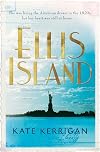
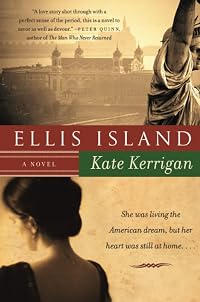
"In 1920s New York, a young Irish woman must choose between her new life and her husband back home in Ireland"--Tags
Recommendations
















Member Reviews
Ellie Flaherty is a young woman living in a small town in Ireland who, after a series of small inconveniences, has just married her childhood sweetheart, John. But when John is seriously injured fighting in the Irish resistance against England, his injuries force Ellie to take some drastic measures. Due to their financial insolvency, there's no money for the operation that John needs to fully recover. Soon Ellie finds herself on a ship to America to begin working as a ladies' maid, with plans to send her pay home to John for his needs. But America is nothing like what Ellie had been expecting, and soon she's caught up in its siren song. Leapfrogging out of her job as a maid and on to bigger and better things, Ellie reinvents herself as show more a young cosmopolitan woman about the city and finds the freedom and elegance she never had in Ireland. Years pass when an unexpected event threatens to send her home to her life back on the farm, but Ellie isn't sure she's ready to leave behind the land of opportunity for a small backwater, despite the fact that she loves John deeply. In this country mouse/city mouse tale, Kate Kerrigan shares the story of a woman whose loyalties and heart are torn in two opposing directions, and the choices she must make to finally bring everything together.
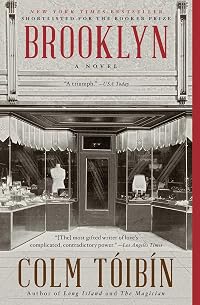
Having recently read Brooklyn by Colm Toibin, I was eager to read another Irish immigrant story to see how the two tales were similar and how they differed. Generally, I enjoy these types of stories and find that I always learn a lot about history when I indulge myself with one of them. One of the key differences in this story from Brooklyn was its historical focus on the struggles Ireland had with England to win the freedom of their country. Though the plot wasn’t totally centered around this conflict, there were a few pertinent pieces that hinged on this plot element, and through John’s injury, Ellie gains the impetus to travel to America, where the bulk of this story really takes place.
Ellie was a wonderful character, and very human. Though she wasn’t overly selfish, she was pragmatic about how much easier life was for her in America. She was sensitive to her family back home and knew that they also would fare better in America, but she never became pushy and overbearing with them. Ellie also had the kind of attitude that lent itself to the enjoyment of her new surroundings without ever becoming frivolous. The crux of her conundrum came when she discovered that she simply could not lead two very different lives, and that the life she wanted for herself might not be the life she had to settle for. This was a very hard choice for her to make, and her reactions and behavior upon making it were not only realistic, but potent. Though Ellie found a way to navigate America and make her situation work for her, in reality, her heart was at odds with itself over her separation from John. The situation was even more complex because Ellie and John had been in love since their childhood, and John’s absence left a huge hole in Ellie’s life.
Ellie’s time in America was drawn with large strokes, and instead of minute detail, there was more of an overall encompassing of the large period of time she spent away from Ireland. I particularly enjoyed her first few American discoveries, such as indoor plumbing, telephones and electricity. What was interesting is that Kerrigan never seemed to mention that life in Ireland lacked all of these benefit but instead filled in that gap by showing Ellie’s first reactions to these strange accouterments of life in the States. Her gradual immersion into an American lifestyle changed her in ways that made it hard for her to ever be that humble girl that left the farm, but it didn’t taint her in ways that made it impossible for her to ever return. Most of the time I was reading, it was like looking through the eyes of a foreign stranger who was constantly surprised and delighted by the things that most Americans take for granted.
I must say a lot of this book surprised me, because it’s not your typical immigrant tale. Sometimes I find that these stories have set patterns that they never stray away from. This tale wasn’t like that. People didn’t do the things that you expected them to do, and many of the issues were not handled in the way I had expected them to be. I enjoyed this because it made for a rather unpredictable and organic feeling story that intrigued me. Though I had been expecting the last third of the book to unravel in a very orderly and predictable way, Kerrigan mixed it up for her readers and gave them something other than the usual to chew on. From top to tail it was a bittersweet story, and it was such a pleasant read that I had a hard time putting it down.
Though there are other books out there that are similar to this one, I believe that Kerrigan’s offering is a cut above due to the advanced character creation and narrative. Each section of this story seemed to build upon the last, creating a brilliant melange of a tale that readers who enjoy immigrant stories will love. It was a gentle tale, told with style, and I found that as I turned the last page, I wished I could continue on the journey with Ellie. I’m hopeful that the next time Kate Kerrigan plys her pen, she creates a heroine as delicious as Ellie Flaherty. show less
Having recently read Brooklyn by Colm Toibin, I was eager to read another Irish immigrant story to see how the two tales were similar and how they differed. Generally, I enjoy these types of stories and find that I always learn a lot about history when I indulge myself with one of them. One of the key differences in this story from Brooklyn was its historical focus on the struggles Ireland had with England to win the freedom of their country. Though the plot wasn’t totally centered around this conflict, there were a few pertinent pieces that hinged on this plot element, and through John’s injury, Ellie gains the impetus to travel to America, where the bulk of this story really takes place.
Ellie was a wonderful character, and very human. Though she wasn’t overly selfish, she was pragmatic about how much easier life was for her in America. She was sensitive to her family back home and knew that they also would fare better in America, but she never became pushy and overbearing with them. Ellie also had the kind of attitude that lent itself to the enjoyment of her new surroundings without ever becoming frivolous. The crux of her conundrum came when she discovered that she simply could not lead two very different lives, and that the life she wanted for herself might not be the life she had to settle for. This was a very hard choice for her to make, and her reactions and behavior upon making it were not only realistic, but potent. Though Ellie found a way to navigate America and make her situation work for her, in reality, her heart was at odds with itself over her separation from John. The situation was even more complex because Ellie and John had been in love since their childhood, and John’s absence left a huge hole in Ellie’s life.
Ellie’s time in America was drawn with large strokes, and instead of minute detail, there was more of an overall encompassing of the large period of time she spent away from Ireland. I particularly enjoyed her first few American discoveries, such as indoor plumbing, telephones and electricity. What was interesting is that Kerrigan never seemed to mention that life in Ireland lacked all of these benefit but instead filled in that gap by showing Ellie’s first reactions to these strange accouterments of life in the States. Her gradual immersion into an American lifestyle changed her in ways that made it hard for her to ever be that humble girl that left the farm, but it didn’t taint her in ways that made it impossible for her to ever return. Most of the time I was reading, it was like looking through the eyes of a foreign stranger who was constantly surprised and delighted by the things that most Americans take for granted.
I must say a lot of this book surprised me, because it’s not your typical immigrant tale. Sometimes I find that these stories have set patterns that they never stray away from. This tale wasn’t like that. People didn’t do the things that you expected them to do, and many of the issues were not handled in the way I had expected them to be. I enjoyed this because it made for a rather unpredictable and organic feeling story that intrigued me. Though I had been expecting the last third of the book to unravel in a very orderly and predictable way, Kerrigan mixed it up for her readers and gave them something other than the usual to chew on. From top to tail it was a bittersweet story, and it was such a pleasant read that I had a hard time putting it down.
Though there are other books out there that are similar to this one, I believe that Kerrigan’s offering is a cut above due to the advanced character creation and narrative. Each section of this story seemed to build upon the last, creating a brilliant melange of a tale that readers who enjoy immigrant stories will love. It was a gentle tale, told with style, and I found that as I turned the last page, I wished I could continue on the journey with Ellie. I’m hopeful that the next time Kate Kerrigan plys her pen, she creates a heroine as delicious as Ellie Flaherty. show less
Most immigration stories discuss the reasons one leaves a homeland for a foreign country, the hardships endured along the way and eventually some form of resolution of life in the new country. Everything about Ellis Island breaks the mold of immigration novels and forges its own path. Ultimately, the story is much richer for it.
The first half of the novel follows the traditional story-telling format. Girl meets boy, girl marries boy. The happily-ever-after, however, does not come, as both John and Ellie are swept up in the Irish revolution. Hardship follows, as one knows it must. Interestingly, Ellie's move to New York from Ireland is never meant to be permanent, and this is where the traditional story shifts into something unique. show more For, she is going to earn money for her husband, rather than being the one left behind waiting to be send for later. She is the one to blaze the pioneer trail for her family, leaving all that is familiar for the unknown all because of the love she holds for John and the belief she has in their marriage. Her growing self-awareness and strength are predictable, as she lands in New York harbor during the roaring Twenties - that golden era when women were grabbing new freedoms and rights, when the spirit was one of adventure, and everyone just wanted to have fun. Ellie truly does come into her own in New York, blossoming and embracing the new culture as any modern woman is wont to do.
What gives Ellis Island its power is the continuing fidelity and love Ellie has towards her husband, even after years of separation. When forced to make a decision between her new-found freedoms and luxuries and her husband, Ellie's decision is as surprising as it is rare. Love and sticking by that love for richer and for poorer tends to be the vows spoken but not necessarily reality. One reads about all of the immigrants who came to America for a better life but very rarely do we get a glimpse of those who opted to go back across the ocean. How does the hustle and bustle of the United States, especially during the 1920s change a person? Can one ever truly go back?
Ireland and New York in the 1920s are revealed in great detail, making the contrasts between the two worlds more transparent. The reader can feel the tension as ancient antagonisms against the British rule sparks the revolution and call for home rule. S/he can sense the pulse of energy that radiates from New York City, the clicking and clacking of heels on the sidewalks, the noise of the crowd. Ms. Kerrigan presents the attitudes, opinions, customs, and other minutiae of the day with no fuss or embellishments. Ellis Island truly is a glimpse back into the past towards a long-ago decade where everything was ripe with possibilities.
My only fault with the novel is its title. Ellis Island is so misleading. Only two brief scenes actually take place on Ellis Island, as this is not a novel about an immigrant but about a woman and her journey who just happens to go through Ellis Island on one of her stops along the way. Other than that, Ellis Island is an engaging glimpse of the past. Ellie is a character who quickly generates sympathy with the reader, and her journey of self-discovery is as pleasurable as it is fascinating from a historical perspective. An Irish village and New York City in the 1920s really were two different worlds, and her ability to maneuver through the two makes for a great story and excellent history lesson.
Thank you to Mary Sasso from Harper Perennial for my review copy! show less
The first half of the novel follows the traditional story-telling format. Girl meets boy, girl marries boy. The happily-ever-after, however, does not come, as both John and Ellie are swept up in the Irish revolution. Hardship follows, as one knows it must. Interestingly, Ellie's move to New York from Ireland is never meant to be permanent, and this is where the traditional story shifts into something unique. show more For, she is going to earn money for her husband, rather than being the one left behind waiting to be send for later. She is the one to blaze the pioneer trail for her family, leaving all that is familiar for the unknown all because of the love she holds for John and the belief she has in their marriage. Her growing self-awareness and strength are predictable, as she lands in New York harbor during the roaring Twenties - that golden era when women were grabbing new freedoms and rights, when the spirit was one of adventure, and everyone just wanted to have fun. Ellie truly does come into her own in New York, blossoming and embracing the new culture as any modern woman is wont to do.
What gives Ellis Island its power is the continuing fidelity and love Ellie has towards her husband, even after years of separation. When forced to make a decision between her new-found freedoms and luxuries and her husband, Ellie's decision is as surprising as it is rare. Love and sticking by that love for richer and for poorer tends to be the vows spoken but not necessarily reality. One reads about all of the immigrants who came to America for a better life but very rarely do we get a glimpse of those who opted to go back across the ocean. How does the hustle and bustle of the United States, especially during the 1920s change a person? Can one ever truly go back?
Ireland and New York in the 1920s are revealed in great detail, making the contrasts between the two worlds more transparent. The reader can feel the tension as ancient antagonisms against the British rule sparks the revolution and call for home rule. S/he can sense the pulse of energy that radiates from New York City, the clicking and clacking of heels on the sidewalks, the noise of the crowd. Ms. Kerrigan presents the attitudes, opinions, customs, and other minutiae of the day with no fuss or embellishments. Ellis Island truly is a glimpse back into the past towards a long-ago decade where everything was ripe with possibilities.
My only fault with the novel is its title. Ellis Island is so misleading. Only two brief scenes actually take place on Ellis Island, as this is not a novel about an immigrant but about a woman and her journey who just happens to go through Ellis Island on one of her stops along the way. Other than that, Ellis Island is an engaging glimpse of the past. Ellie is a character who quickly generates sympathy with the reader, and her journey of self-discovery is as pleasurable as it is fascinating from a historical perspective. An Irish village and New York City in the 1920s really were two different worlds, and her ability to maneuver through the two makes for a great story and excellent history lesson.
Thank you to Mary Sasso from Harper Perennial for my review copy! show less
The only child of a devout Catholic father who nonetheless failed the priesthood and a mother so terribly wounded by a community that still judges her for her family's past sins that the family hardly mixes with their neighbors, young Ellie Flaherty's childhood is a drab and loveless affair. It's no wonder, then, that when Ellie's mother lets her out, as an act of charity, to play with John Hogan whose parents have both passed away from TB, that she quickly falls in love with his easy smile and his awe at the nature that surrounds their village in Ireland. The pair are best friends through their school days, but when John leaves for Dublin to apprentice with a carpenter, Ellie wonders if she's lost him for good, but she need not worry, show more for when they meet again their love is stronger than ever, and soon the pair are married.
Married life isn't easy in their rural Irish home during the Irish rebellion, and John, a soldier for the Irish Republican Army, is severely wounded. The only way John will walk again is with an expensive operation, and Ellie knows the only way to afford it will be for her to join a friend working as a lady's maid in America. Soon enough, Ellie is being seduced by the promise, independence, and society of life as a young woman in New York City during the Roaring 20s. Will Ellie be able to return to a life of poverty in Ireland with her one true love, or will the siren call of the city of dreams lure her into a new life altogether?
Ellis Island is Ellie's story, and hers alone. Though the pages of Ellis Island are full of characters, her Irish family, her husband John, her rich employer Isobel Adams, and her friends from her typing job, not to mention the charming Charles Irvington who would woo her given the chance, Ellie's character is the only one that truly jumps off the page. The rest, while fleshed out enough, merely give structure to Ellie's journey, not just from Ireland to America, but from thoughtless, selfish childhood to accepting, understanding adulthood. Kerrigan's Ireland and 1920s New York City are almost like characters themselves, and Kerrigan draws out the wonder and the fast pace of a city on the rise just as well as she pictures for us the quaint, if sometimes desperately poor, Irish countryside. The contrasts between Ellie's two lives are sharp, but Kerrigan ultimately manages to show the great value in both of them.
Ellis Island is littered with the sort of coincidences that might make the story seem contrived but for the impression that Ellie's story is so human and turns out the way so many human stories do. Ellie's story reveals a life peppered with joys and haunted by regrets and thoughts of what might have been. Ellie's coming of age mirrors so many in that we come to understand the lives around us, and we don't just "settle" but learn to love even the small joys that our lives have to offer us. Ellis Island was a little lighter fare than perhaps I was expecting but is ultimately an enjoyable historical love story that brings the 1920s to life and gives us a memorable character finding herself during a captivating time in history. show less
Married life isn't easy in their rural Irish home during the Irish rebellion, and John, a soldier for the Irish Republican Army, is severely wounded. The only way John will walk again is with an expensive operation, and Ellie knows the only way to afford it will be for her to join a friend working as a lady's maid in America. Soon enough, Ellie is being seduced by the promise, independence, and society of life as a young woman in New York City during the Roaring 20s. Will Ellie be able to return to a life of poverty in Ireland with her one true love, or will the siren call of the city of dreams lure her into a new life altogether?
Ellis Island is Ellie's story, and hers alone. Though the pages of Ellis Island are full of characters, her Irish family, her husband John, her rich employer Isobel Adams, and her friends from her typing job, not to mention the charming Charles Irvington who would woo her given the chance, Ellie's character is the only one that truly jumps off the page. The rest, while fleshed out enough, merely give structure to Ellie's journey, not just from Ireland to America, but from thoughtless, selfish childhood to accepting, understanding adulthood. Kerrigan's Ireland and 1920s New York City are almost like characters themselves, and Kerrigan draws out the wonder and the fast pace of a city on the rise just as well as she pictures for us the quaint, if sometimes desperately poor, Irish countryside. The contrasts between Ellie's two lives are sharp, but Kerrigan ultimately manages to show the great value in both of them.
Ellis Island is littered with the sort of coincidences that might make the story seem contrived but for the impression that Ellie's story is so human and turns out the way so many human stories do. Ellie's story reveals a life peppered with joys and haunted by regrets and thoughts of what might have been. Ellie's coming of age mirrors so many in that we come to understand the lives around us, and we don't just "settle" but learn to love even the small joys that our lives have to offer us. Ellis Island was a little lighter fare than perhaps I was expecting but is ultimately an enjoyable historical love story that brings the 1920s to life and gives us a memorable character finding herself during a captivating time in history. show less
Ellis Island by Kate Kerrigan is a novel about Ellie, an Irish girl who grows up in a small town and marries her childhood sweetheart, John. When John is injured fighting with the IRA, Ellie knows she needs to find a way to pay for the expensive operation that will allow him to walk again. At the same time, she gets a letter from a school friend, Sheila, who has moved to New York City and offers Ellie a position with her employer, an eccentric and rich woman named Isobel.
Ellie leaves her husband and her homeland, vowing to stay away just long enough to earn enough money for John's medical treatment. Soon, though, she gets swept up in the American dream and the lavish lifestyles she finds within her reach. As John refuses to leave show more Ireland, Ellie wonders if she can ever leave New York, and if she does, if Ireland will ever feel like home again.
I enjoyed reading Ellis Island - it is a simple story of love complicated by money. The writing was straightforward, though at times Kerrigan seems to set up a plot complication without seeing it through. At one point Ellie is interrupted while writing a less than flattering letter home about her employer, and she stashes the half-written note under her mattress. I expected that someone would find it and get her into trouble, but it was never mentioned again. To paraphrase Anton Chekhov's advice on writing - if you introduce a loaded gun, somebody better fire it.
Likewise, the story moved between places, people, and circumstances without dwelling on them much once they were gone (with the important exception of the juxtaposition between New York City and Ireland). Kerrigan spends a lot of text talking about Ellie's boat ride from Ireland to New York, introducing several peripheral characters that Ellie, as the first-person narrator, apparently never thinks about again. Why spend so much time describing the journey if it doesn't have a long-lasting impact on the character? Maybe as a kind of transition in the story between the two important settings?
I keep trying to nail down exactly what it was about this novel that made it good-but-not-amazing to me, and I think it has to do with the lack of depth. Everything felt kind of cursory - the characters, the events, the plot. Almost as if we never really got down to the meat of everything. I can't say that the reader did not get to know Ellie, John, and the other major characters, but it felt like we could have known them better, on a more personal level. Maybe they were a little flat and not three-dimensional enough for me? Maybe Kerrigan attempts to cover too much time in too few pages? The first third of the book is background information about Ellie and John's relationship as children, which does help us understand them better, but I almost wish Kerrigan had spent more time on the main tension in the story - Ellie is in New York, her husband is in Ireland, neither wants to leave but both want to be together - and then just suggested or hinted back to their upbringings.
I think that's it. To me, the most interesting dynamic going on in the story was that these two people in love wanted such different things. I wanted Kerrigan to spend more time exploring those emotions - making them real and painful for the reader, instead of some of the background information. The closest Kerrigan got to making the reader feel the characters' despair is when she describes Ellie waiting at Ellis Island for her husband to arrive, and then her disappointment when he does not come. I wanted more of that!
Ellis Island is a cute historical fiction novel. I've read many novels about Irish immigration to the United States, but never from the point of view of an Irish author rather than an American. The ending left the reader with a message more powerful than the typical immigration story. Readers who enjoy historical fiction, Ireland, and/or New York City will enjoy this novel. show less
Ellie leaves her husband and her homeland, vowing to stay away just long enough to earn enough money for John's medical treatment. Soon, though, she gets swept up in the American dream and the lavish lifestyles she finds within her reach. As John refuses to leave show more Ireland, Ellie wonders if she can ever leave New York, and if she does, if Ireland will ever feel like home again.
I enjoyed reading Ellis Island - it is a simple story of love complicated by money. The writing was straightforward, though at times Kerrigan seems to set up a plot complication without seeing it through. At one point Ellie is interrupted while writing a less than flattering letter home about her employer, and she stashes the half-written note under her mattress. I expected that someone would find it and get her into trouble, but it was never mentioned again. To paraphrase Anton Chekhov's advice on writing - if you introduce a loaded gun, somebody better fire it.
Likewise, the story moved between places, people, and circumstances without dwelling on them much once they were gone (with the important exception of the juxtaposition between New York City and Ireland). Kerrigan spends a lot of text talking about Ellie's boat ride from Ireland to New York, introducing several peripheral characters that Ellie, as the first-person narrator, apparently never thinks about again. Why spend so much time describing the journey if it doesn't have a long-lasting impact on the character? Maybe as a kind of transition in the story between the two important settings?
I keep trying to nail down exactly what it was about this novel that made it good-but-not-amazing to me, and I think it has to do with the lack of depth. Everything felt kind of cursory - the characters, the events, the plot. Almost as if we never really got down to the meat of everything. I can't say that the reader did not get to know Ellie, John, and the other major characters, but it felt like we could have known them better, on a more personal level. Maybe they were a little flat and not three-dimensional enough for me? Maybe Kerrigan attempts to cover too much time in too few pages? The first third of the book is background information about Ellie and John's relationship as children, which does help us understand them better, but I almost wish Kerrigan had spent more time on the main tension in the story - Ellie is in New York, her husband is in Ireland, neither wants to leave but both want to be together - and then just suggested or hinted back to their upbringings.
I think that's it. To me, the most interesting dynamic going on in the story was that these two people in love wanted such different things. I wanted Kerrigan to spend more time exploring those emotions - making them real and painful for the reader, instead of some of the background information. The closest Kerrigan got to making the reader feel the characters' despair is when she describes Ellie waiting at Ellis Island for her husband to arrive, and then her disappointment when he does not come. I wanted more of that!
Ellis Island is a cute historical fiction novel. I've read many novels about Irish immigration to the United States, but never from the point of view of an Irish author rather than an American. The ending left the reader with a message more powerful than the typical immigration story. Readers who enjoy historical fiction, Ireland, and/or New York City will enjoy this novel. show less
Rural life in Ireland vs high life in New York.
My main problem with this book is not the book itself but the excess of information we are given on the back cover. I would have preferred to have been left wondering what decision Ellie would make - whether to embrace her newfound life in New York or return to her childhood sweetheart and the hardships of her native Ireland. If you feel the same way then read no further and don't read the back of the book!
******************************************************************************************************************
Unfortunately, we knew from the start that Ellie is drawn back to "the power of home and blood and old love", and for me, that was the wrong decision - I wanted her to stay in show more New York. Perhaps I am influenced by my own past - having left UK for a new life in Dubai I could relate to the excitement of New York and was frustrated by John's refusal to give it a go and at least make an informed decision.
Of course, the money she'd made in US did help alleviate many of the hardships they had suffered in the early days, so she wasn't entierly returning to the old life.
The characterisations were good but sometimes a little shallow; Ellie's mother, in particular, frustrated me. Having said that, the descriptions of the hardships of Ireland, contrasted to the bright life of NY, were excellent - and perhaps contributed to my feeling that she should have stayed. The book is worth the read for these images alone.
I was also fascinated by the lack of class distinction in 20's New York, the fact that an intelligent, hard working young girl could raise herself from servitiude to wealthy, independent living with such apparent ease - and I think it will be that image that stays with me from this book. show less
My main problem with this book is not the book itself but the excess of information we are given on the back cover. I would have preferred to have been left wondering what decision Ellie would make - whether to embrace her newfound life in New York or return to her childhood sweetheart and the hardships of her native Ireland. If you feel the same way then read no further and don't read the back of the book!
******************************************************************************************************************
Unfortunately, we knew from the start that Ellie is drawn back to "the power of home and blood and old love", and for me, that was the wrong decision - I wanted her to stay in show more New York. Perhaps I am influenced by my own past - having left UK for a new life in Dubai I could relate to the excitement of New York and was frustrated by John's refusal to give it a go and at least make an informed decision.
Of course, the money she'd made in US did help alleviate many of the hardships they had suffered in the early days, so she wasn't entierly returning to the old life.
The characterisations were good but sometimes a little shallow; Ellie's mother, in particular, frustrated me. Having said that, the descriptions of the hardships of Ireland, contrasted to the bright life of NY, were excellent - and perhaps contributed to my feeling that she should have stayed. The book is worth the read for these images alone.
I was also fascinated by the lack of class distinction in 20's New York, the fact that an intelligent, hard working young girl could raise herself from servitiude to wealthy, independent living with such apparent ease - and I think it will be that image that stays with me from this book. show less
I had heard Ellis Island being mentioned as ‘being a book you’d like if you enjoyed [Colm Toibin’s] Brooklyn’. I really enjoyed Brooklyn, so I thought I’d read it. However, don’t trust what you hear- although this book has vague similarities to Brooklyn (namely Irish girl goes to America), that where the comparison stops. Firstly, Ellis Island is set earlier, during the War of Independence, so our main character Ellie, steps foot in New York in the 1920s. Secondly, Ellie is married with an injured husband to support.
I should backtrack to give you an overall idea of the plot – it quickly explains Ellie’s restricted upbringing in Ireland and her hasty (but loving) marriage to John, a boy she’s known since childhood. Her show more parents cast her out after hearing of her marriage (she was meant to be joining a convent) and Ellie and John live in a small cottege in the woods. Money is scarce and when John is wounded during the war, Ellie goes to America to work as a lady’s maid to save money for John’s operation. It will only be for one short year…or not. Ellie finds life in America to be free and cheerful in comparison to home. She makes good friends, earns good money and doesn’t want to come back to Ireland. She is eventually forced back by circumstances, but will she stay?
I found Ellie a very likeable character who desperately wants to fit in with her neighbours, but is not sure how to go about doing it. I found John to be rather frustrating at times (particularly later in the book) but his reasoning for being so stubborn is understandable. The story flows well, and I didn’t find myself skimming over any parts. I think it’s a light and interesting representation of the Irish and American people at that time.
I finished this book very quickly, as I was reading almost every moment that I had. I’m also excited to hear that there’s a sequel in the works – is Ellie happy with her decision?
If you enjoy historical novels dealing with love, family, religion and happiness, pick this book up. It’s a lot happier than Brooklyn and has a definite resolution. show less
I should backtrack to give you an overall idea of the plot – it quickly explains Ellie’s restricted upbringing in Ireland and her hasty (but loving) marriage to John, a boy she’s known since childhood. Her show more parents cast her out after hearing of her marriage (she was meant to be joining a convent) and Ellie and John live in a small cottege in the woods. Money is scarce and when John is wounded during the war, Ellie goes to America to work as a lady’s maid to save money for John’s operation. It will only be for one short year…or not. Ellie finds life in America to be free and cheerful in comparison to home. She makes good friends, earns good money and doesn’t want to come back to Ireland. She is eventually forced back by circumstances, but will she stay?
I found Ellie a very likeable character who desperately wants to fit in with her neighbours, but is not sure how to go about doing it. I found John to be rather frustrating at times (particularly later in the book) but his reasoning for being so stubborn is understandable. The story flows well, and I didn’t find myself skimming over any parts. I think it’s a light and interesting representation of the Irish and American people at that time.
I finished this book very quickly, as I was reading almost every moment that I had. I’m also excited to hear that there’s a sequel in the works – is Ellie happy with her decision?
If you enjoy historical novels dealing with love, family, religion and happiness, pick this book up. It’s a lot happier than Brooklyn and has a definite resolution. show less
I picked this story because it presents a few elements I like: it’s an historical novel, it’s set in the Twenties, it has an Irish protagonist. It’s the story of an Irish immigrant to Roaring Twenties America, I thought it was going to be a journey of discovery, not only on the outside, but also on the inside. The contrast between Irish rural life and the boasting modern life of Twenties New York promised to be exiting and interesting.
Uhm…
Maybe I was expecting too much, but where this story presents an interesting concept, the execution didn’t quite meet my expectation.
I actually enjoyed the first 100 pages, where the main characters are still kids. I liked the way they tried to be together, overcoming the limits of the show more rural society they lived in. But as soon as they became adults my interest dropped, I think for two reasons: I found the MC, Ellie, seriously unsympathetic, and many historical events are treated with excessive superficiality.
I found the way the author treats the fight for independence particularly unsatisfying. I never felt the pressure, the hopes, the pain, the uncertainty that I connect with the concept of fighting for freedom of your own home coming across to me. The war is portrayed as distant and never really impacted the characters in a profound way, not even when their lives are changed. Or maybe this is because Ellie is so utterly uninterested and even resentful to the fight that nothing but that indifference came to me.
Everything seemed so easy. Ellie leaves Ireland alone (and I do wonder whether this is really accurate, historically) for New York. The journey across the ocean is easy and comfortable. She reaches New York and she has a job. She gains more and more with no particular effort and – I’d say – no particular merit either. She meets one of the richest men in NY and he falls in love with her. I mean… And all the while, even when she stresses the fact she’s doing this for John, she acts as if she really didn’t care for no-one but herself. Her own achievements are always the paramount idea in her mind, she never considers renouncing anything for someone else.
I had a very hard time connecting with her.
The ending was completely unsatisfying, maybe because it’s quite unclear. I came to it and wonder: well, so what? The story presents lots of threads that seem to go nowhere and don’t add anything to the story. The plot was very confused and the main character never seemed to be affected by it.
It was a big disappointment for me. show less
Uhm…
Maybe I was expecting too much, but where this story presents an interesting concept, the execution didn’t quite meet my expectation.
I actually enjoyed the first 100 pages, where the main characters are still kids. I liked the way they tried to be together, overcoming the limits of the show more rural society they lived in. But as soon as they became adults my interest dropped, I think for two reasons: I found the MC, Ellie, seriously unsympathetic, and many historical events are treated with excessive superficiality.
I found the way the author treats the fight for independence particularly unsatisfying. I never felt the pressure, the hopes, the pain, the uncertainty that I connect with the concept of fighting for freedom of your own home coming across to me. The war is portrayed as distant and never really impacted the characters in a profound way, not even when their lives are changed. Or maybe this is because Ellie is so utterly uninterested and even resentful to the fight that nothing but that indifference came to me.
Everything seemed so easy. Ellie leaves Ireland alone (and I do wonder whether this is really accurate, historically) for New York. The journey across the ocean is easy and comfortable. She reaches New York and she has a job. She gains more and more with no particular effort and – I’d say – no particular merit either. She meets one of the richest men in NY and he falls in love with her. I mean… And all the while, even when she stresses the fact she’s doing this for John, she acts as if she really didn’t care for no-one but herself. Her own achievements are always the paramount idea in her mind, she never considers renouncing anything for someone else.
I had a very hard time connecting with her.
The ending was completely unsatisfying, maybe because it’s quite unclear. I came to it and wonder: well, so what? The story presents lots of threads that seem to go nowhere and don’t add anything to the story. The plot was very confused and the main character never seemed to be affected by it.
It was a big disappointment for me. show less
Members
- Recently Added By
Author Information
24+ Works 1,069 Members
Series

Common Knowledge
- Canonical title
- Ellis Island
- Original publication date
- 2010
- People/Characters
- Ellie Hogan; John Hogan
- Important places
- Ireland; New York, New York, USA; Ellis Island, New York, USA
- Dedication
- for Niall
- First words
- Prologue: It was snowing on the Jersey Shore.
Chapter One: The first time I fell in love with John, I was eight and he was ten. - Last words
- (Click to show. Warning: May contain spoilers.)“Why, you’re my Ellie,” he said. “You’re my only one.”
(Click to show. Warning: May contain spoilers.)Epilogue: America had planted the seed of freedom in my heart, but it was the rich soil of home that had enabled it to grow. - Blurbers
- Quinn, Peter
Classifications
Statistics
- Members
- 339
- Popularity
- 93,484
- Reviews
- 29
- Rating
- (3.52)
- Languages
- English, French
- Media
- Paper, Ebook
- ISBNs
- 11
- ASINs
- 3