Frank Lloyd Wright: An Autobiography
by Frank Lloyd Wright
Frank Lloyd Wright: An Autobiography (Collections and Selections — 1-5)
On This Page
Description
Opening with his life as a child with his Welsh forebears in the midwest, his running away to plunge into the creative ferment of the Chicago 1890s, this is the story of one of the world's most productive careers.Tags
Recommendations

















Member Reviews
Sibyl Moholy-Nagy, the venerable architectectural historian and critic, once remarked that an architect's talent to write well was inversely proportional to his talent to design. And she was talking about Frank Lloyd Wright (1867-1959) at the time. Wright, she thought, was one of the worst writers on matters architectural, which may account, in part, for the greatness of his architecture.
I've often spoken of this book, Wright's "An Autobiography" as being one of the perhaps three most important architectural books of the 20th century, along with Le Corbusier's "Towards a New Architecture" and Robert Venturi's "Complexity and Contradiction in Architecture". I would further propose that of these three, Wright's book was the most important show more and influential because it was intended for, and in fact has reached, the general reading public as well as its professional audience.
While on one level this is an autobiographical overview of Wright's life and career, he talks at length about his design philosophy of buildings and cities, and goes on to discuss just about everything else imaginable, from the wonders of rural American life to pacificsm in wartime. Because of who he was, and more importantly because what he did, those views are worth hearing.
This book was published three times -- first, in 1932; then a second time, with a large additional section in 1943; and finally as a postumous third edition, with a further large additional section in 1977.
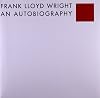
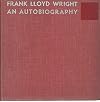
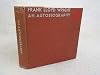
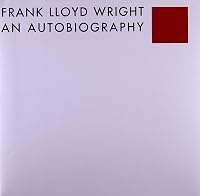
This 1943 edition, as a piece of book production, is by far the most aesthetically pleasing. Bound in in red cloth in a square format, the volume is divided into several "books", each of which has a specially designed graphic plate or divider page, printed in silver on a chocolate brown stock. A very handsome piece of graphic design. Though this edition lacks the plentiful illustrations of the other editions, there are numerous other books on and by Wright that have all the illustrations one could want or need.
Remebering that Wright was essentially a Victorian, we can perhaps overlook the overly verbose and purple prose style, and just enjoy this fascinating look into the personal and professional worlds in which Frank Lloyd Wright revolutionized architecture as we know it. show less
I've often spoken of this book, Wright's "An Autobiography" as being one of the perhaps three most important architectural books of the 20th century, along with Le Corbusier's "Towards a New Architecture" and Robert Venturi's "Complexity and Contradiction in Architecture". I would further propose that of these three, Wright's book was the most important show more and influential because it was intended for, and in fact has reached, the general reading public as well as its professional audience.
While on one level this is an autobiographical overview of Wright's life and career, he talks at length about his design philosophy of buildings and cities, and goes on to discuss just about everything else imaginable, from the wonders of rural American life to pacificsm in wartime. Because of who he was, and more importantly because what he did, those views are worth hearing.
This book was published three times -- first, in 1932; then a second time, with a large additional section in 1943; and finally as a postumous third edition, with a further large additional section in 1977.
This 1943 edition, as a piece of book production, is by far the most aesthetically pleasing. Bound in in red cloth in a square format, the volume is divided into several "books", each of which has a specially designed graphic plate or divider page, printed in silver on a chocolate brown stock. A very handsome piece of graphic design. Though this edition lacks the plentiful illustrations of the other editions, there are numerous other books on and by Wright that have all the illustrations one could want or need.
Remebering that Wright was essentially a Victorian, we can perhaps overlook the overly verbose and purple prose style, and just enjoy this fascinating look into the personal and professional worlds in which Frank Lloyd Wright revolutionized architecture as we know it. show less
This is a masterful work of both autobiography and propaganda. It is extremely well written and interesting both for its content and the obvious ploys for attention and respect. I would suggest it to anyone studying FLW in any depth.
Frank Lloyd Wright began work on An Autobiography at Taliesin in 1925. His wife, Olgivanna Hinzenberg Wright, encouraged him to put his thoughts on paper. Wright stated, “But for her this book were never written.”
The book was expanded in 1943. Olgivanna was an editor and proofreader of his work.
Kyle Dockery, collections manager at Taliesin, stated that Wright most likely wrote his drafts by hand in his drafting studio at Taliesin III. Either Olgivanna or his secretary, Gene Masselink, typed his documents after he wrote them.
Dockery says that Wright had a desk in his bedroom at Taliesin. “He was a prolific napper,” Dockery says. Wright often woke up in the middle of the night with an idea. He wrote it down in his bedroom.
Wright show more commented about his happy, busy days working at home: “Taliesin life at this time, not too late, is one continuous round of movement, usually in happy rhythms ending in sound sleep for all…only to begin again with play and laughter at sunrise, settling down after breakfast into serious work that is play too – for we love the work we do, even when we are all adding tired to tired and adding it again.”
He also valued education. “All this family was imbued with the idea of education as salvation,” he stated. “Education it was that made man out of the brute and saved him from the beast. Education it was…that unlocked the stores of beauty to let it come crowding in on every side at every gate.”
Wright made sure that his children received a good education. He valued music and ensured that each learned a musical instrument. He sent his female and male children to colleges and universities.
Wright found truth sacred. His family motto was “Truth Against the World.” On a plaque at his Oak Park, Ill., home, he wrote, “Truth Is Life.”
“I know that recounting facts does not constitute truth,” he wrote. “Truth lies deeper. It is something we can feel but seldom touch with facts. So I am better off to have got the facts on record.”
Olgivanna Hinzenberg Wright was also an author. She had a newspaper column in the Capital Times, Madison, Wis. She wrote at Taliesin and did not have an office at the newspaper. She obtained this job because the editor was their friend. The publisher was an advocate of Wright’s work on Madison’s Monona Terrace.
Olgivanna most likely wrote her books at Taliesin West in Arizona. She has an autobiography that is very different from Wright’s. It was posthumously published.
Regarding his Oak Park, Ill., neighborhood, Wright noted in An Autobiography, Oak Park was called “Saint’s Rest.” The community of families and church workers made his mother feel at home. “The quiet village looked much like Madison to mother,” he wrote.
Wright’s father, a former preacher, taught at a conservatory in Madison. After a brief sojourn in New England, Wright lived and worked on the farm of his uncle and aunt. He escaped to Chicago and began to apprentice as an architect. Wright’s mother moved from Madison to be closer to her son.
Wright reflected on the Queen Anne architecture in the neighborhood while taking a walk one day. The homes, built on tiny lawns, featured a masonry foundation, wood walls with shingles or siding, decorative brackets, bay windows, and gabled roofs. “Simplicity,” Wright wrote, “was as far from this scrap-pile as the pandemonium of the barnyard is far from music. But easy enough for the architect.”
Wright stated, “I had an idea that the horizontal planes in buildings, those planes parallel to the earth, identify themselves with the ground – make the building belong to the ground. I began putting this idea to work.”
Wright’s homes were designed with low ceilings to fit someone about 5'8" – the size of Frank Lloyd Wright. Instead of rooms side by side, he designed a large room with a central fireplace, and dining, kitchen, and sleeping areas around it. Wright made furniture and decorative objects for his homes with the overall design aesthetic of “organic simplicity.”
Unlike Louis Sullivan, his former boss, who believed that “form follows function,” Wright believed that “form and function are one.” Buildings, he wrote, favored “the expressive flow of continuous surface.”
Wright had a studio in his home at Oak Park and worked from there until 1895. He converted it into bedrooms in 1895 to accommodate his six children by Catherine Tobin Wright.
What else is in An Autobiography?
Wright comments on working as a child on the farm and spending time with cows. He moved from place to place until he found a home in Chicago. He lived and worked there for many years, dividing his time for a while between Oak Park and his hometown of Spring Green.
Wright tells many stories about his work years and the homes he designed for his clients. Overall, this is a fascinating book, surprisingly well-written for someone with an architectural mind.
https://www.amazon.com/Frank-Lloyd-Wright-Autobiography/dp/0764932438 show less
The book was expanded in 1943. Olgivanna was an editor and proofreader of his work.
Kyle Dockery, collections manager at Taliesin, stated that Wright most likely wrote his drafts by hand in his drafting studio at Taliesin III. Either Olgivanna or his secretary, Gene Masselink, typed his documents after he wrote them.
Dockery says that Wright had a desk in his bedroom at Taliesin. “He was a prolific napper,” Dockery says. Wright often woke up in the middle of the night with an idea. He wrote it down in his bedroom.
Wright show more commented about his happy, busy days working at home: “Taliesin life at this time, not too late, is one continuous round of movement, usually in happy rhythms ending in sound sleep for all…only to begin again with play and laughter at sunrise, settling down after breakfast into serious work that is play too – for we love the work we do, even when we are all adding tired to tired and adding it again.”
He also valued education. “All this family was imbued with the idea of education as salvation,” he stated. “Education it was that made man out of the brute and saved him from the beast. Education it was…that unlocked the stores of beauty to let it come crowding in on every side at every gate.”
Wright made sure that his children received a good education. He valued music and ensured that each learned a musical instrument. He sent his female and male children to colleges and universities.
Wright found truth sacred. His family motto was “Truth Against the World.” On a plaque at his Oak Park, Ill., home, he wrote, “Truth Is Life.”
“I know that recounting facts does not constitute truth,” he wrote. “Truth lies deeper. It is something we can feel but seldom touch with facts. So I am better off to have got the facts on record.”
Olgivanna Hinzenberg Wright was also an author. She had a newspaper column in the Capital Times, Madison, Wis. She wrote at Taliesin and did not have an office at the newspaper. She obtained this job because the editor was their friend. The publisher was an advocate of Wright’s work on Madison’s Monona Terrace.
Olgivanna most likely wrote her books at Taliesin West in Arizona. She has an autobiography that is very different from Wright’s. It was posthumously published.
Regarding his Oak Park, Ill., neighborhood, Wright noted in An Autobiography, Oak Park was called “Saint’s Rest.” The community of families and church workers made his mother feel at home. “The quiet village looked much like Madison to mother,” he wrote.
Wright’s father, a former preacher, taught at a conservatory in Madison. After a brief sojourn in New England, Wright lived and worked on the farm of his uncle and aunt. He escaped to Chicago and began to apprentice as an architect. Wright’s mother moved from Madison to be closer to her son.
Wright reflected on the Queen Anne architecture in the neighborhood while taking a walk one day. The homes, built on tiny lawns, featured a masonry foundation, wood walls with shingles or siding, decorative brackets, bay windows, and gabled roofs. “Simplicity,” Wright wrote, “was as far from this scrap-pile as the pandemonium of the barnyard is far from music. But easy enough for the architect.”
Wright stated, “I had an idea that the horizontal planes in buildings, those planes parallel to the earth, identify themselves with the ground – make the building belong to the ground. I began putting this idea to work.”
Wright’s homes were designed with low ceilings to fit someone about 5'8" – the size of Frank Lloyd Wright. Instead of rooms side by side, he designed a large room with a central fireplace, and dining, kitchen, and sleeping areas around it. Wright made furniture and decorative objects for his homes with the overall design aesthetic of “organic simplicity.”
Unlike Louis Sullivan, his former boss, who believed that “form follows function,” Wright believed that “form and function are one.” Buildings, he wrote, favored “the expressive flow of continuous surface.”
Wright had a studio in his home at Oak Park and worked from there until 1895. He converted it into bedrooms in 1895 to accommodate his six children by Catherine Tobin Wright.
What else is in An Autobiography?
Wright comments on working as a child on the farm and spending time with cows. He moved from place to place until he found a home in Chicago. He lived and worked there for many years, dividing his time for a while between Oak Park and his hometown of Spring Green.
Wright tells many stories about his work years and the homes he designed for his clients. Overall, this is a fascinating book, surprisingly well-written for someone with an architectural mind.
https://www.amazon.com/Frank-Lloyd-Wright-Autobiography/dp/0764932438 show less
Personal revelations show a heritage of Welsh forebears and a variety of experiences creating FLW...
Ratings
Members
- Recently Added By
Lists

Autodidacts
15 works; 4 members

Best Books of 1926-1935
403 works; 10 members
Talk Discussions
Past Discussions
Frank Lloyd Wright in Memoirs and autobiographies (December 2023)
Author Information

219+ Works 4,366 Members
Wright is widely considered the greatest American architect and certainly one of the most influential. Throughout a career of nearly 70 years, he produced masterpiece after masterpiece, each different and boldly new and yet each with the unmistakable touch of Wright's genius in the treatment of material, the detailing, and the overall concept. show more Born in Wisconsin of Welsh ancestry, Wright studied civil engineering at the University of Wisconsin and began his career in Chicago as chief assistant to Louis Henry Sullivan, who influenced his early thinking on the American architect as harbinger of democracy and on the organic nature of the true architecture. Out of these ideas, Wright developed the so-called prairie house, of which the Robie House in Chicago and the Avery Coonley House in Riverdale, Illinois, are outstanding examples. In the "prairie-style," Wright used terraces and porches to allow the inside to flow easily outside. Movement within such houses is also open and free-floating from room to room and from layer to layer. Public buildings followed: the Larkin Administration Building in Buffalo (destroyed) and the Unity Temple in Oak Park, Illinois, the former probably the most original and seminal office building up to that time (1905). The Midway Gardens in Chicago and the Imperial Hotel in Tokyo (both gone) came next, winning Wright still greater acclaim. Personal tragedy, misunderstanding, and neglect dogged Wright's middle years, but he prevailed, and in his later life gathered enormous success and fame. The masterworks of his mature years are the Johnson Wax Building in Racine, Wisconsin, and Fallingwater, Bear Run, Pennsylvania---with its bold cantilevered balconies over a running stream, probably the most admired and pictured private house in American architecture; then, toward the end of his life, the spiral design of the Guggenheim Museum in New York City. Wright's own houses, to which he joined architectural studios, are also noteworthy: Taliesin West was a true Shangri-la in the Arizona desert, to which he turned in order to escape the severe winters in Wisconsin, where he had built his extraordinary Taliesin East. Wright was a prolific and highly outspoken writer, ever polemical, ever ready to propagate his ideas and himself. All of his books reflect a passionate dedication to his beliefs---in organic architecture, democracy, and creativity. (Bowker Author Biography) show less
Series

Work Relationships
Is contained in
Contains
Has as a supplement
Common Knowledge
- Original publication date
- 1932
- People/Characters
- Frank Lloyd Wright
- Important places
- Oak Park, Illinois, USA
Classifications
Statistics
- Members
- 276
- Popularity
- 116,347
- Reviews
- 4
- Rating
- (3.54)
- Languages
- English, French, Italian
- Media
- Paper
- ISBNs
- 6
- UPCs
- 1
- ASINs
- 6