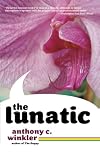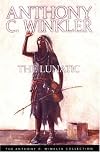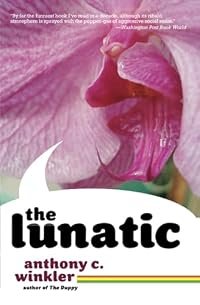
The Lunatic
by Anthony C. Winkler
On This Page
Description
The first-ever US publication of this Caribbean classic upon which a feature film by the same title is based.Tags
Recommendations













Member Reviews
Funny, raunchy, out-of-order outrageousness that packs a bit of a morality tale. Plus, it has some of the best verdurous characters ever set down in print. Thoroughly delightful & well-recommended.
There are many ways a reader can approach Anthony C Winkler’s The Lunatic, as a comic novel, as a satire of cultural encounter, as a work of fantasy, as a West Indian contribution to magical realism, as an evocation of the rural Jamaica of the recent past. But it should never, under any circumstances, be read on public transportation. You’ll be laughing much too hard. Unless you’re a prude and references to genitalia and sexuality in Jamaican Creole are offensive, especially when uttered by trees and bushes. In which case, this book is not for you.
The Lunatic is primarily the story of Aloysius of the thousand names, a homeless madman (to use the common Jamaican term) living in the countryside near Moneague in the parish of St Ann, show more but entwined in it is the story of the white landowner Hubert ‘Busha’ McIntosh. Aloysius converses with trees, bushes, female genitalia, a cricket ball, and animals, having been hauled off to the asylum in Kingston after a verbal altercation with a Trinidadian jackass.
The main thread of the story concerns what happens when Aloysius falls in with Inga, a radical German tourist, and with Service, a crude butcher and they hatch a plan to rob Busha McIntosh’s house which ends with Aloysius saving the Busha’s life. Because this is a comic novel, all ends well, with Aloysius cared for by the farting Widow Dawkins, Service in prison, and Inga in Rome with the Red Brigades.
Along the way we are treated to Busha’s own obsession with not being buried in the village graveyard, where cows and goats can defecate and urinate on him and his family, the village shopkeeper, Shubert, to whom everybody but the Busha and the madman owes money and who recalls people not by their names but by the dollar amounts in his record book, and a parade of others, Jamaican and foreign, whose lives intersect with the main characters’.
We are also treated to some serious discussion, often under a veneer of laughter, but serious nonetheless, of race in Jamaica. The socialist lawyer, Linstrom, who decides to take up the case of Aloysius at the end of the book, brings it up in order to save him from prison. Sarah, Busha’s wife, brings it up when she learns that Inga is living with Aloysius in the bush. Sameer, the Lebanese businessman, who sells Busha a mausoleum brings it up, it pervades the novel. Busha fears the shame of the only white man on the village cricket team being dismissed for a duck. Aloysius redeems himself by being unable to let the white Busha be killed. The white foreigner, Inga simply walks out of prison. The existence of white power and privilege, deference to it, and resentment about it are ever present.. That’s not surprising for a work by a white Jamaican sensitive to his position in his native society but aware of his Jamaicanness and not ashamed to celebrate it in all its aspects.
Class plays its part in the story, but Winkler does not handle it as well, or as interestingly as he does race. He does, nonetheless, put in the mouth of the socialist lawyer Linstrom, some wonderfully sarcastic remarks about ‘bumpkin’. The subject that he brings out best is religion and the hypocritical attitude that its advocates have towards the temptations presented by rum and pum-pum.
The novel is, for me, an evocation of the rural Jamaica of the recent past. Winkler’s observation of the St Ann of the 1970s, to which he had returned from the United States to teach at Moneague Teachers’ College – described vividly in his memoir Going Home to Teach (Kingston: LMH Publishers 1995) – resonates strongly with my own memories of life in St Elizabeth in the late 1960s and early 1970s, though many of the typical human characters are transposed into the landscape. Thus, the ‘warner woman’, the older woman, typically Pentecostal who has been ‘moved by the spirit’ to call on the sinful to repent becomes a preaching bush – ‘that claimed to have taken a correspondence course from an American seminary’ – that wakes Aloysius by ranting loudly against ‘dis Babylon dat we call Jamaica’.
What Winkler gives us is a deeply amusing, vulgar, and heartfelt look at a piece of rural Jamaican life written by someone who deeply loves Jamaica and the Jamaican people and knows them very well. show less
The Lunatic is primarily the story of Aloysius of the thousand names, a homeless madman (to use the common Jamaican term) living in the countryside near Moneague in the parish of St Ann, show more but entwined in it is the story of the white landowner Hubert ‘Busha’ McIntosh. Aloysius converses with trees, bushes, female genitalia, a cricket ball, and animals, having been hauled off to the asylum in Kingston after a verbal altercation with a Trinidadian jackass.
The main thread of the story concerns what happens when Aloysius falls in with Inga, a radical German tourist, and with Service, a crude butcher and they hatch a plan to rob Busha McIntosh’s house which ends with Aloysius saving the Busha’s life. Because this is a comic novel, all ends well, with Aloysius cared for by the farting Widow Dawkins, Service in prison, and Inga in Rome with the Red Brigades.
Along the way we are treated to Busha’s own obsession with not being buried in the village graveyard, where cows and goats can defecate and urinate on him and his family, the village shopkeeper, Shubert, to whom everybody but the Busha and the madman owes money and who recalls people not by their names but by the dollar amounts in his record book, and a parade of others, Jamaican and foreign, whose lives intersect with the main characters’.
We are also treated to some serious discussion, often under a veneer of laughter, but serious nonetheless, of race in Jamaica. The socialist lawyer, Linstrom, who decides to take up the case of Aloysius at the end of the book, brings it up in order to save him from prison. Sarah, Busha’s wife, brings it up when she learns that Inga is living with Aloysius in the bush. Sameer, the Lebanese businessman, who sells Busha a mausoleum brings it up, it pervades the novel. Busha fears the shame of the only white man on the village cricket team being dismissed for a duck. Aloysius redeems himself by being unable to let the white Busha be killed. The white foreigner, Inga simply walks out of prison. The existence of white power and privilege, deference to it, and resentment about it are ever present.. That’s not surprising for a work by a white Jamaican sensitive to his position in his native society but aware of his Jamaicanness and not ashamed to celebrate it in all its aspects.
Class plays its part in the story, but Winkler does not handle it as well, or as interestingly as he does race. He does, nonetheless, put in the mouth of the socialist lawyer Linstrom, some wonderfully sarcastic remarks about ‘bumpkin’. The subject that he brings out best is religion and the hypocritical attitude that its advocates have towards the temptations presented by rum and pum-pum.
The novel is, for me, an evocation of the rural Jamaica of the recent past. Winkler’s observation of the St Ann of the 1970s, to which he had returned from the United States to teach at Moneague Teachers’ College – described vividly in his memoir Going Home to Teach (Kingston: LMH Publishers 1995) – resonates strongly with my own memories of life in St Elizabeth in the late 1960s and early 1970s, though many of the typical human characters are transposed into the landscape. Thus, the ‘warner woman’, the older woman, typically Pentecostal who has been ‘moved by the spirit’ to call on the sinful to repent becomes a preaching bush – ‘that claimed to have taken a correspondence course from an American seminary’ – that wakes Aloysius by ranting loudly against ‘dis Babylon dat we call Jamaica’.
What Winkler gives us is a deeply amusing, vulgar, and heartfelt look at a piece of rural Jamaican life written by someone who deeply loves Jamaica and the Jamaican people and knows them very well. show less
Ratings
Members
- Recently Added By
Author Information
25 Works 531 Members
Awards and Honors
Notable Lists
Common Knowledge
- Original publication date
- 1987
- Dedication
- For Katharine Tilley
- Blurbers
- James, Marlon; Weissman, Benjamin
Classifications
- Genres
- Fiction and Literature, General Fiction, Suspense & Thriller, Romance
- DDC/MDS
- 813.54 — Literature & rhetoric American literature in English American fiction in English 1900-1999 1945-1999
- LCC
- PS3573 .I53218 .L8 — Language and Literature American literature American literature Individual authors 1961-
- BISAC
Statistics
- Members
- 72
- Popularity
- 435,172
- Reviews
- 2
- Rating
- (4.33)
- Languages
- English
- Media
- Paper, Ebook
- ISBNs
- 6
- ASINs
- 1