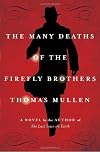
The Many Deaths of the Firefly Brothers
by Thomas Mullen
On This Page
Description
Late one night in August 1934, following a yearlong spree of bank robberies across the Midwest, Jason and Whit Fireson are forced into a police shootout and die...for the first time.Now it appears that the bank robbers known as the Firefly Brothers by an admiring public have at last met their end in a hail of bullets. Jason and Whit's lovers-Darcy, a wealthy socialite, and Veronica, a hardened survivor-struggle between grief and an unyielding belief that the Firesons have survived. While show more they and the Firesons' stunned mother and straight-arrow third son wade through conflicting police reports and press accounts, wild rumors spread that the bandits are still at large. Through it all, the Firefly Brothers remain as charismatic, unflappable, and as mythical as the American Dream itself, racing to find the women they love and make sense of a world in which all has come unmoored. Complete with kidnappings and gangsters, heiresses and speakeasies, The Many Deaths of the Firefly Brothers is an imaginative and spirited saga about what happens when you are hopelessly outgunned-and a masterly tale of hardship, redemption, and love that transcends death. show lessTags
Recommendations

















Member Recommendations
Member Reviews
As soon as I opened The Many Deaths of the Firefly Brothers I remembered my fascination with gangsters of the 30s and how obsessively I read about them while I was in high school. I was happy to be back in that world.
Jason and Whit Fireson become Public Enemies #1, sought by J. Edgar Hoover and every local cop in the country. The book starts off with them dead and on cooling boards, yet soon they are back robbing banks and trying to catch up with Jason’s “twist” and Whit’s wife and son.
Thomas Mullen has brought life to the 30s; the desperation of people out of work, the hunger, Hoovervilles, foreclosures, and desolation of the landscape and peoples’ souls.
When Jason and White “wake” up from their first death, they cannot show more remember how they got there, but they remember their second and third deaths. Eventually they remember their first death, too.
The book is more than their bank robbing spree and we learn about their Father, their brother Weston, and Jason’s girl Darcy’s story too.
The writing is authoritative. That’s the first word that comes to mind. The times are presented accurately and vividly. The author is very comfortable with the 30s, and I didn’t get a sense of research slapped onto a story. Everything flows as though the author was there, telling several stories simultaneously and wrapping things up … nicely is not perhaps the right word… but satisfyingly at the end. I’m happy with the way it ended and could walk away from it, except there’s a whole new book in the last paragraph or so that I would be more than happy to read. show less
Jason and Whit Fireson become Public Enemies #1, sought by J. Edgar Hoover and every local cop in the country. The book starts off with them dead and on cooling boards, yet soon they are back robbing banks and trying to catch up with Jason’s “twist” and Whit’s wife and son.
Thomas Mullen has brought life to the 30s; the desperation of people out of work, the hunger, Hoovervilles, foreclosures, and desolation of the landscape and peoples’ souls.
When Jason and White “wake” up from their first death, they cannot show more remember how they got there, but they remember their second and third deaths. Eventually they remember their first death, too.
The book is more than their bank robbing spree and we learn about their Father, their brother Weston, and Jason’s girl Darcy’s story too.
The writing is authoritative. That’s the first word that comes to mind. The times are presented accurately and vividly. The author is very comfortable with the 30s, and I didn’t get a sense of research slapped onto a story. Everything flows as though the author was there, telling several stories simultaneously and wrapping things up … nicely is not perhaps the right word… but satisfyingly at the end. I’m happy with the way it ended and could walk away from it, except there’s a whole new book in the last paragraph or so that I would be more than happy to read. show less
The beauty and the horror of Thomas Mullen’s book, [The Many Deaths of the Firefly Brothers], rest in his refusal to answer the principal question in the reader’s mind: “Why don’t the Fireson brothers die?”
Jason and Whit Fireson, depression-era bank robbers and public enemies, wake up on a small-town coroner’s cold, metal examining table, ventilated by large caliber, fatal gunshot wounds. Neither can remember how they came to die, nor how their re-quickening took place. Over the next two weeks, the brothers retrace their steps in hopes of learning who double-crossed them. They leave bodies and pain and confusion in their wake, and they die again, and again.
Mullen’s 1930s Midwest and the people struggling to survive there, show more bear a strong resemblance to landscape and personalities of Steinbeck’s [Grapes of Wrath]. And Jason Fireson’s swagger covers a multitude of sins and an ocean of regret, making him more of a character from a Greek tragedy than one from a Jimmy Cagney or Bogart movie. For such a young author, Mullen deftly steps into one of this country’s most complex and tumultuous times, striking a careful balance between the action of a thriller and the spirit of noir. He tackles the issues of identity and self-perception with a soul older than its years.
Still, the question nags, “Why don’t they die?” I suspect that Mullen leaves the question unanswered to allow the reader room to breathe, allow for individual answers about the nature of good and evil and all the space in between.
Bottom Line: This story sneaks up on you disguised as a crime thriller, and reveals itself, by pages, as thought provoking literature.
4 ½ bones!!!!! show less
Jason and Whit Fireson, depression-era bank robbers and public enemies, wake up on a small-town coroner’s cold, metal examining table, ventilated by large caliber, fatal gunshot wounds. Neither can remember how they came to die, nor how their re-quickening took place. Over the next two weeks, the brothers retrace their steps in hopes of learning who double-crossed them. They leave bodies and pain and confusion in their wake, and they die again, and again.
Mullen’s 1930s Midwest and the people struggling to survive there, show more bear a strong resemblance to landscape and personalities of Steinbeck’s [Grapes of Wrath]. And Jason Fireson’s swagger covers a multitude of sins and an ocean of regret, making him more of a character from a Greek tragedy than one from a Jimmy Cagney or Bogart movie. For such a young author, Mullen deftly steps into one of this country’s most complex and tumultuous times, striking a careful balance between the action of a thriller and the spirit of noir. He tackles the issues of identity and self-perception with a soul older than its years.
Still, the question nags, “Why don’t they die?” I suspect that Mullen leaves the question unanswered to allow the reader room to breathe, allow for individual answers about the nature of good and evil and all the space in between.
Bottom Line: This story sneaks up on you disguised as a crime thriller, and reveals itself, by pages, as thought provoking literature.
4 ½ bones!!!!! show less
 This review was written for LibraryThing Early Reviewers.
I can't write a reasoned, objective review of this book because I loved it so, so much. If I were living in 1934, and the Firefly Brothers were, well, not fictional, I'd be filling scrapbooks with newspaper clippings of their exploits.
The book opens with Jason Fireson waking up in a morgue. He's pretty good at sleeping anywhere, but he's never woken up naked on a metal table before. He's also got a row of welt-like holes on his chest. It doesn't take him long to find his brother on an adjacent table, wake him up and make their escape from the police station, thanks to an all too frightened officer they find in a locker room, who seems to think that they should be dead.
The brothers can't remember anything of the last few days and so show more the book moves back and forth through time, telling the story of how they became infamous bank robbers and of what happened to them after they woke from the dead. There's a mystery here, too, of what happened to get them killed in the first place.
Mullen takes the unbelievable and weaves it with a realistic depiction of how unrelentingly difficult the depression was for millions of Americans, sending families to live in ramshackle Hoovervilles and causing men to fight for any job available. show less
The book opens with Jason Fireson waking up in a morgue. He's pretty good at sleeping anywhere, but he's never woken up naked on a metal table before. He's also got a row of welt-like holes on his chest. It doesn't take him long to find his brother on an adjacent table, wake him up and make their escape from the police station, thanks to an all too frightened officer they find in a locker room, who seems to think that they should be dead.
The brothers can't remember anything of the last few days and so show more the book moves back and forth through time, telling the story of how they became infamous bank robbers and of what happened to them after they woke from the dead. There's a mystery here, too, of what happened to get them killed in the first place.
Mullen takes the unbelievable and weaves it with a realistic depiction of how unrelentingly difficult the depression was for millions of Americans, sending families to live in ramshackle Hoovervilles and causing men to fight for any job available. show less
When the colder, darker weather of autumn comes along, I seem to gravitate towards stories with a slightly darker feel to them, be it Gothic, noir or something a bit on the gritty side. Mullen’s Depression-era story is the perfect read to go along with rainy, wind-swept days. The title is an apt one, and provides the reader with a bit of insight into the story considering the story starts out with the Fireson brothers resurrection. One may throw their hands up in frustration at this but Mullen uses this “spoiler” of his own disclosure to build a wonderful story around the fact that the Fireson brothers have no memories of the events that lead to them “waking up” in the police morgue with their bodies altered by what looks like show more bullet holes. The story takes the reader on a Depression-era crime adventure in keeping with the myth, legend and lore of outlaw celebrities the likes of the Dillinger Gang and Bonny and Clyde. The story has everything – bank heists, bumbling cops, fedora-wearing Tommy-gun toting men, shoot-outs, a car chase, an intrepid young Bureau of Investigation agent, crooked business men and even a “damsel in distress”. While reading this one, I was able to see the story play out, like watching a flickering old black and white gangster movie.
The story has a decidedly noir feel to it, in part due to the gloomy Depression setting. Even with that gloom, the story provides glimpses of Robin Hood style flair as the Firefly Brothers become folk heroes of the destitute populous. There is a noticeable divide between the hard-core villains and the “charming gentlemen” criminals (hence that Robin Hood angle I mentioned earlier). Yes, the story has a phantasmagorical aspect to it in the resurrection of the Firefly Brothers and some of the story comes across as a bit of a cliché but, the heart of the story is really about a family (the Firesons) and the lies that people tell themselves and the people they love. The deep dive Mullen does into the past lives of his characters makes it stand out, for me anyways, from other bank heist-styled stories I have read to date. Outside of that core family piece, [The Many Deaths of the Firefly Brothers] is a wonderful escapism read where even the criminals are not “cut and dry” characters. As one reviewer has mentioned, “the story wonderfully illuminates why 1930’s America spawned so many dark heroes”. Everyone needs an idea or an individual to look up to, even if the attention is focused on an antihero. Under Mullen’s pen, one can easily see why antiheros can be so popular. show less
The story has a decidedly noir feel to it, in part due to the gloomy Depression setting. Even with that gloom, the story provides glimpses of Robin Hood style flair as the Firefly Brothers become folk heroes of the destitute populous. There is a noticeable divide between the hard-core villains and the “charming gentlemen” criminals (hence that Robin Hood angle I mentioned earlier). Yes, the story has a phantasmagorical aspect to it in the resurrection of the Firefly Brothers and some of the story comes across as a bit of a cliché but, the heart of the story is really about a family (the Firesons) and the lies that people tell themselves and the people they love. The deep dive Mullen does into the past lives of his characters makes it stand out, for me anyways, from other bank heist-styled stories I have read to date. Outside of that core family piece, [The Many Deaths of the Firefly Brothers] is a wonderful escapism read where even the criminals are not “cut and dry” characters. As one reviewer has mentioned, “the story wonderfully illuminates why 1930’s America spawned so many dark heroes”. Everyone needs an idea or an individual to look up to, even if the attention is focused on an antihero. Under Mullen’s pen, one can easily see why antiheros can be so popular. show less
Should he believe this one? He'd lost track of the number of bank robberies attributed to his brothers - sometimes multiple banks on the same day, on opposite sides of the country. He was surprised that law enforcement hadn't found a way to pin the Lindbergh kidnapping on them, or maybe even the stock-market crash, or the depression itself. People seemed to believe his brothers possessed special gifts - that they could journey across space, multiply themselves, predict the future. They weren't men but ghosts, trickster spooks who disobeyed not only man's laws but God's as well.
It's the middle of the Great Depression in the United States. Unemployment rates are off the charts. The Hoovervilles are growing as more and more people lose show more their jobs and are evicted from their homes. Men wander the streets and stand in breadlines hoping to make enough money and get enough food to get by another day, another week. Having failed to make a living the "right" way under these inhospitable conditions, Jason and Whit Fireson turned to making ends meet in more nefarious ways. After the death of John Dillinger, the Firesons also known as "The Firefly Brothers," have become number one public enemies. A pair of skilled bank robbers, with their bold and well-timed strikes against villified financial institutions the Firefly Brothers have become both loved and feared by the less fortunate and more law abiding citizens of the US. With the help of the media, their lawless deeds have ballooned into a modern mythology. However, there's far more to the Firesons even than what the papers suppose.
The Many Deaths of the Firefly Brothers opens up a window on the lives of the unlikeliest of heros. Easily moving backward and forward through time from the perspectives of both themselves, Jason's girlfriend, and their decidedly less infamous brother, Mullen makes the "mythical" Firesons into the real people they are, for better and for worse.
While it's a rollicking tale of dashing bank robbers, high speed chases, narrow escapes, and shootouts, The Many Deaths of the Firefly Brothers is much, much more. It's a mystery wrapped in a touch of magic and modern day myth. It's an unfortunate yet vividly accurate picture of a painful era of American history when men were reduced to helpless shells of themselves who couldn't hope to provide for their families and found themselves looking to bank robbers to provide the hope and the power that was missing from their lives. It's a saga about a family derailed by a father whose American dream turned into a nightmare and a son who couldn't seem to do the right thing, even when he tried his hardest. It's a story that starts, literally, with a bang and an impossible surprise, and slowly peels off layer after layer until we know all the players intimately, revealing the resolution to the mystery bit by bit keeping the pages turning until the ending that, if you're anything like me, you'll never see coming. show less
It's the middle of the Great Depression in the United States. Unemployment rates are off the charts. The Hoovervilles are growing as more and more people lose show more their jobs and are evicted from their homes. Men wander the streets and stand in breadlines hoping to make enough money and get enough food to get by another day, another week. Having failed to make a living the "right" way under these inhospitable conditions, Jason and Whit Fireson turned to making ends meet in more nefarious ways. After the death of John Dillinger, the Firesons also known as "The Firefly Brothers," have become number one public enemies. A pair of skilled bank robbers, with their bold and well-timed strikes against villified financial institutions the Firefly Brothers have become both loved and feared by the less fortunate and more law abiding citizens of the US. With the help of the media, their lawless deeds have ballooned into a modern mythology. However, there's far more to the Firesons even than what the papers suppose.
The Many Deaths of the Firefly Brothers opens up a window on the lives of the unlikeliest of heros. Easily moving backward and forward through time from the perspectives of both themselves, Jason's girlfriend, and their decidedly less infamous brother, Mullen makes the "mythical" Firesons into the real people they are, for better and for worse.
While it's a rollicking tale of dashing bank robbers, high speed chases, narrow escapes, and shootouts, The Many Deaths of the Firefly Brothers is much, much more. It's a mystery wrapped in a touch of magic and modern day myth. It's an unfortunate yet vividly accurate picture of a painful era of American history when men were reduced to helpless shells of themselves who couldn't hope to provide for their families and found themselves looking to bank robbers to provide the hope and the power that was missing from their lives. It's a saga about a family derailed by a father whose American dream turned into a nightmare and a son who couldn't seem to do the right thing, even when he tried his hardest. It's a story that starts, literally, with a bang and an impossible surprise, and slowly peels off layer after layer until we know all the players intimately, revealing the resolution to the mystery bit by bit keeping the pages turning until the ending that, if you're anything like me, you'll never see coming. show less
This review was written for LibraryThing Early Reviewers.RidgewayGirl recommended this book to me and then she brought me her copy to read, so I knew she really had enjoyed it. This isn’t always a surety that I will like it, we disagree about books all the time, but we both gave this book the same rating - which is a rarity. And we both gave it five stars. That’s really, really rare. Like, planets-are-aligning rare and you should read it quickly before the world ends!
Just kidding. About the end of the world bit, that is.
Obviously from the title you know something is not quite normal, but still I credit Mullen’s gifted writing for making it so easy to roll with. I’ve always been too straight-laced to root for the criminal element. I can’t imagine giving succor to people like Bonnie show more & Clyde or Dillinger, and I was shaking my head last week at those Dougherty siblings, but I actually found myself wanting these two characters to succeed. Jason and Whit Fireson are brothers who have turned to robbing banks during the Great Depression. They’ve been killed during a shootout with police but then they wake up in the morgue. Mullen doesn’t interfere or waste time trying to explain how or why this is happening, he just lets the situation develop and it moves beautifully from there.
Pick this one up, you won’t be sorry. show less
Just kidding. About the end of the world bit, that is.
Obviously from the title you know something is not quite normal, but still I credit Mullen’s gifted writing for making it so easy to roll with. I’ve always been too straight-laced to root for the criminal element. I can’t imagine giving succor to people like Bonnie show more & Clyde or Dillinger, and I was shaking my head last week at those Dougherty siblings, but I actually found myself wanting these two characters to succeed. Jason and Whit Fireson are brothers who have turned to robbing banks during the Great Depression. They’ve been killed during a shootout with police but then they wake up in the morgue. Mullen doesn’t interfere or waste time trying to explain how or why this is happening, he just lets the situation develop and it moves beautifully from there.
Pick this one up, you won’t be sorry. show less
It's 1934, with brother outlaws Jason and Whit Fireson awakening in the morgue, pierced with deadly bullet holes and with no idea what's happened, or even whether they're alive, dead, or in between. As they struggle to make sense of their situation, and to escape and stay ahead of the cops, they take advantage of reports of their deaths to plan a few more heists and to find their girls, both of whom have disappeared. Death makes its appearance again (and again), and with the newly-formed FBI finally facing the fact that the Firesons may not really be dead, the law closes in. Will the brothers find their women, one of whom has been kidnapped, and manage to disappear before they're arrested and killed for good? And how many times can they show more wake from the grave before fate is done with them? This makes the novel sound supernatural, but it's not really. The resurrections are simply one part of the plot, just as confusing to the characters as to the narrator or the reader, and the questions of why and for how many repeats gives an added tension to the plot.
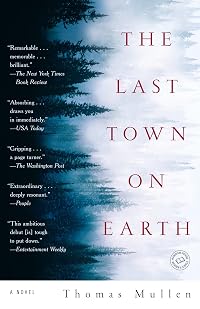
Life in the Great Depression is amply mined to show how the brothers' situation is difficult for the law to decipher: poor photos, lack of communication, piecemeal law enforcement. And the dialogue is often funny and very real, especially between the brothers. This is the second Mullen I've read, after "The Last Town on Earth", which I also gave 4 stars. Very enjoyable and recommended. show less
Life in the Great Depression is amply mined to show how the brothers' situation is difficult for the law to decipher: poor photos, lack of communication, piecemeal law enforcement. And the dialogue is often funny and very real, especially between the brothers. This is the second Mullen I've read, after "The Last Town on Earth", which I also gave 4 stars. Very enjoyable and recommended. show less
Members
- Recently Added By
Lists

to get
244 works; 2 members

Library TBR
64 works; 1 member
Author Information

8+ Works 3,288 Members
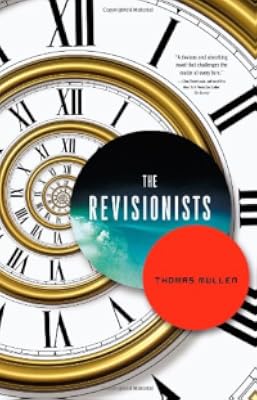
Thomas Mullen is an American author, born in Providence, Rhode Island. He is a graduate of Oberlin College. He writes stories and essays which have been published in Grantland, Paste, The Huffington Post, and Atlanta Magazine. His novels include The Last Town on Earth, The Many Deaths of the Firefly Brothers, and The Revisionists. He writes the show more Darktown series, which includes the novels Darktown, and Lightning Men. He won the James Fenimore Cooper Prize for excellence in historical fiction with his book, The Last Town on Earth. (Bowker Author Biography) show less
Awards and Honors
Awards
Distinctions
Notable Lists
Common Knowledge
- Canonical title
- The Many Deaths of the Firefly Brothers
- Original publication date
- 2010
- People/Characters
- Jason Fireson; Whit Fireson; Darcy Windham; Veronica
- Important places
- Indiana, USA
- Important events
- Great Depression
- Epigraph
- Men's memories are uncertain, and the past that was differs little from the past that was not.
- Cormac McCarthy, Blood Meridian
It seemed a little too pat. It had the austere simplicity of fiction rather than the tangled woof of fact.
- Raymond Chandler, The Big Sleep - Dedication
- For my parents, brothers, and sister.
- First words
- It all began when they died.
- Blurbers
- Walter, Jess; Clinch, Jon; Bayard, Louis; Donohue, Keith; Bakopoulos, Dean
- Original language
- English US
Classifications
Statistics
- Members
- 333
- Popularity
- 95,267
- Reviews
- 33
- Rating
- (3.76)
- Languages
- English
- Media
- Paper, Audiobook, Ebook
- ISBNs
- 13
- ASINs
- 5