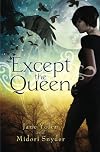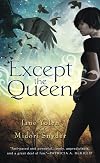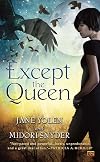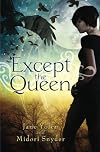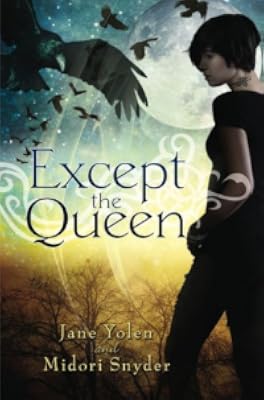
Except the Queen
by Jane Yolen, Midori Snyder
On This Page
Description
Cast from the high court of the Fairy Queen, sisters Serena and Meteora must find a way to survive in the mortal realm of Earth. But when signs point to a rising power that threatens to tear asunder both fairy and human worlds, they realize that they were chosen to fight the menace because they were the only ones who could do what must be done.Tags
Recommendations










Member Reviews
Sometimes books written by dual authors can be terrible due to clashing writing styles, but this one was actually quite readable. I presume that Yolen and Snyder wrote this by each taking the perspective of one of the protagonist sisters (who end up getting separated quite quickly in the plotline), so each sister could have a unique voice, but still have a unified story.
I also quite liked how full they packed the story with many different mythologies, often to quite comical effect. Baba Yaga (or Baba Yaga-type characters) is one of my favourites, so I found the her reinvention quite entertaining. This Baba Yaga occupies a world of her own between the Seelie and Unseelie courts so she holds a unique type of power that moderates intense show more situations. I was less fond of the graphic descriptions of her gnashing up a horse with her iron teeth, but the iron teeth serve their purpose as a signal that she is more of the mortal realm than the traditional Faerie courts. Some African or Native American power characters are also introduced as power players, but we didn't really get enough information about them to make a final decision. They're physically described as black-skinned women, but their crow alter-egos could belong to either set of myths. Regardless, they're pretty awesome! show less
I also quite liked how full they packed the story with many different mythologies, often to quite comical effect. Baba Yaga (or Baba Yaga-type characters) is one of my favourites, so I found the her reinvention quite entertaining. This Baba Yaga occupies a world of her own between the Seelie and Unseelie courts so she holds a unique type of power that moderates intense show more situations. I was less fond of the graphic descriptions of her gnashing up a horse with her iron teeth, but the iron teeth serve their purpose as a signal that she is more of the mortal realm than the traditional Faerie courts. Some African or Native American power characters are also introduced as power players, but we didn't really get enough information about them to make a final decision. They're physically described as black-skinned women, but their crow alter-egos could belong to either set of myths. Regardless, they're pretty awesome! show less
Two fairies discover the Fairy Queen's biggest secret but vow to keep their mouths shut in order to avoid the Queen's wrath. Unfortunately, one of them leaks the secret and both are banished from the high court, thrown into the mortal world, one in New York and one in Wisconsin, without their magic, youth or beauty. They soon realize that being an old lady in the human world isn't easy, but they make the most of their situations. That's when they start seeing other fey hiding among the humans; fey without the best intentions.
Except the Queen wasn't a page-turner, yet I wasn't bored, but I also wasn't engrossed. It was fun to read from each sister's perspective, a banished fairy living in the human world, namely as they navigated mundane show more tasks like buying groceries or mailing a letter or eating "special" brownies. I loved when Serana was walking down the streets of NYC, singing, and the reaction from the passersby like she was a nutcase because she was singing. Yet how many of them cross busy streets yapping into the cellphone glued to their ear completely unaware of their surroundings?! The humor was used effectively to balance the darker elements as well as bring attention to realities that maybe humans shouldn't just accept as "normal."
The heart of the story, for me, was the examination of women and aging, that a woman can age and still be beautiful, that "old" doesn't automatically mean useless. So yeah, my favorite thing about this book was that the two sisters, the heroines, were old, weren't skinny, weren't even beautiful (by societal standards), didn't have fairy magic (for the most part), and they still saved the day.
3 stars
Disclaimer: sex (R-rated but not graphic when compared to typical urban fantasy nowadays), profanity (lots of f-bombs), drug use, a few bloody scenes (but again not overly graphic), mentions an attempted rape of a teenage girl. I'd recommend this to mature readers, say, 14+ show less
Except the Queen wasn't a page-turner, yet I wasn't bored, but I also wasn't engrossed. It was fun to read from each sister's perspective, a banished fairy living in the human world, namely as they navigated mundane show more tasks like buying groceries or mailing a letter or eating "special" brownies. I loved when Serana was walking down the streets of NYC, singing, and the reaction from the passersby like she was a nutcase because she was singing. Yet how many of them cross busy streets yapping into the cellphone glued to their ear completely unaware of their surroundings?! The humor was used effectively to balance the darker elements as well as bring attention to realities that maybe humans shouldn't just accept as "normal."
The heart of the story, for me, was the examination of women and aging, that a woman can age and still be beautiful, that "old" doesn't automatically mean useless. So yeah, my favorite thing about this book was that the two sisters, the heroines, were old, weren't skinny, weren't even beautiful (by societal standards), didn't have fairy magic (for the most part), and they still saved the day.
3 stars
Disclaimer: sex (R-rated but not graphic when compared to typical urban fantasy nowadays), profanity (lots of f-bombs), drug use, a few bloody scenes (but again not overly graphic), mentions an attempted rape of a teenage girl. I'd recommend this to mature readers, say, 14+ show less
Oh my god. There are fantasy book, fairytales, and then there are Fairytales. This is one hell of a story. Told by two writers, with two main characters and at least a few more important secondary characters, this story is one of the more interesting and intricate contemporary fairytales I've read.
Except the Queen begins in the court of the light fey - with two very close sisters, members of the high court witnessing something the queen has done. Unfortunately, though they tried to keep it locked away, after a time it comes out - accidently it's slipped out, and there are whispers and laughs about it throughout the court. The queen has to act, and is very angry, because she cannot afford to lose face with her subjects. She banishes show more these sisters - beautiful and magical Serena and Meteora. They're banished to the world of humans, separated and each ends up in a huge city far away from each other with no magic. Not only are they stripped of their magic, but of their beauty and immortal youth. They must live as aging women, with all the aches and pains and weaknesses of elderly women.
They have to start out with nothing - not even clothes. One ends up on a train with the legendary Baba Yaga, and the other wakens in a hospital, weak and taken for a homeless woman. Each of them are fortunate to end up in a place - one has to take care of Baba Yaga's house, and the other is set up in an apartment by a social worker. The book is told in alternating points of view - Meteora's story, then Serena's, then Meteora's etc. And once in a while the narrative cuts to the evil one, or to this kid who lives parttime as a dog, and parttime as a human - resisting as best he can his father's strong magical call. It's put together very well.
At first it seems they have only to live and survive, but slowly, they learn that there is a great danger coming from the dark fey. Even though they have been stripped of their magic, living in a modern world affects them, the metals hurt, the noise and pollution bother them and they have to learn to get along in a modern human world. They find that though they don't have magic, they are able to recognize certain magics, work with herbs and talk to animals, etc. Each of them gradually comes to terms with being separated and with their loss of magic and begin to learn how to deal in this new modern world without the other by their side.
Each of them makes friends and comes across evil until everything comes together in a huge threat to the world. Except the Queen was written so well, with so many legendary fairytale like characters popping up that this was a very interesting, compelling read. Though the women were suddenly in older bodies (instead of getting to gradually grow old like we do) and were so devastated by their losses, they ended up with loves, friends, and allies and managed to help others. A very well written dark fairytale with traditional characters and modern characters. The journey from the two being thrown into the modern world with nothing to their learning to live, to support themselves and to eventually make a difference in a major threat was inspiring and fun to read. These two authors should think about writing another book together, Except the Queen was a great read. show less
Except the Queen begins in the court of the light fey - with two very close sisters, members of the high court witnessing something the queen has done. Unfortunately, though they tried to keep it locked away, after a time it comes out - accidently it's slipped out, and there are whispers and laughs about it throughout the court. The queen has to act, and is very angry, because she cannot afford to lose face with her subjects. She banishes show more these sisters - beautiful and magical Serena and Meteora. They're banished to the world of humans, separated and each ends up in a huge city far away from each other with no magic. Not only are they stripped of their magic, but of their beauty and immortal youth. They must live as aging women, with all the aches and pains and weaknesses of elderly women.
They have to start out with nothing - not even clothes. One ends up on a train with the legendary Baba Yaga, and the other wakens in a hospital, weak and taken for a homeless woman. Each of them are fortunate to end up in a place - one has to take care of Baba Yaga's house, and the other is set up in an apartment by a social worker. The book is told in alternating points of view - Meteora's story, then Serena's, then Meteora's etc. And once in a while the narrative cuts to the evil one, or to this kid who lives parttime as a dog, and parttime as a human - resisting as best he can his father's strong magical call. It's put together very well.
At first it seems they have only to live and survive, but slowly, they learn that there is a great danger coming from the dark fey. Even though they have been stripped of their magic, living in a modern world affects them, the metals hurt, the noise and pollution bother them and they have to learn to get along in a modern human world. They find that though they don't have magic, they are able to recognize certain magics, work with herbs and talk to animals, etc. Each of them gradually comes to terms with being separated and with their loss of magic and begin to learn how to deal in this new modern world without the other by their side.
Each of them makes friends and comes across evil until everything comes together in a huge threat to the world. Except the Queen was written so well, with so many legendary fairytale like characters popping up that this was a very interesting, compelling read. Though the women were suddenly in older bodies (instead of getting to gradually grow old like we do) and were so devastated by their losses, they ended up with loves, friends, and allies and managed to help others. A very well written dark fairytale with traditional characters and modern characters. The journey from the two being thrown into the modern world with nothing to their learning to live, to support themselves and to eventually make a difference in a major threat was inspiring and fun to read. These two authors should think about writing another book together, Except the Queen was a great read. show less
So many things to like about this book!
How great to read a book that recognizes Faerie as a dangerous place with plenty of folks in it who'd like to eat you (or at least bleed you dry). When did people forget this? Even Tinkerbelle was a fierce warrior!
This story of two sisters banished from the fey and their journey of discovery in our world is appropriately magical and fun. Think of all the things that are normal for us that would defy description for most other people - mailmen and mailboxes, grocery stores, cell phones, money - the list goes on and on. Throw in Baba Yaga (and I do adore Baba Yaga), a Jack, a murder of crow children, and assorted crones and you get a wonderful stew that delivers up until the very end.
Much about this show more book reminded me of my favorite Charles de Lint book, Someplace to be Flying and pieces of it reminded me of American Gods, but it is authentically and entirely its own creature and I thoroughly enjoyed it! show less
How great to read a book that recognizes Faerie as a dangerous place with plenty of folks in it who'd like to eat you (or at least bleed you dry). When did people forget this? Even Tinkerbelle was a fierce warrior!
This story of two sisters banished from the fey and their journey of discovery in our world is appropriately magical and fun. Think of all the things that are normal for us that would defy description for most other people - mailmen and mailboxes, grocery stores, cell phones, money - the list goes on and on. Throw in Baba Yaga (and I do adore Baba Yaga), a Jack, a murder of crow children, and assorted crones and you get a wonderful stew that delivers up until the very end.
Much about this show more book reminded me of my favorite Charles de Lint book, Someplace to be Flying and pieces of it reminded me of American Gods, but it is authentically and entirely its own creature and I thoroughly enjoyed it! show less
When Meteora and Serana get cast out of the faerie realm of Greenwood and shoved into aging mortal bodies in the modern world, you've got you expect that things will be interesting, not just for the characters but also for the reader. Banished from their home not even for a prank but for knowing too much about the Queens secrets, they have to do their best at making their way in a life that's difficult for those who have been brought up to it, let alone those who are used to something quite dissimilar.
Naturally, this leads to a whole host of humourous misunderstandings, both linguistically and culturally, made worse by the fact that they aren't plunked into this world together but instead sent cities apart. Aside from having to adjust show more to the annoyances of aging bodies that don't work half as well as they're used to, the sisters experience shocks at the way people will casually fling about vulgar curses without a care, misread "Co-op" as coop and wondering why there are no chickens running around, and send letters to each other by pigeon until they discover the baffling system of postal service, which they refer to as "eagle mail." You can't help but chuckle at what they get themselves into and how they misinterpret all the little things we take for granted.
But this book isn't all fun and games, and it takes a look into the darker side of the faerie realm and fey natures. Interwoven with Meteora and Serana are the stories of Sparrow, plagued by nightmares and unknowingly marked by an UnSeelie fey as part of his blood tithe, and Robin, son of and slave to an UnSeelie fey who's spent his life at his father's beck and call, thinking himself no better than a dog. Their stories weave in and out and around each other like ribbons on a Maypole, making the story rich and intriguing, and brings everything together at the end in a convincing and satisfying way.
Which, is we discover, is exactly how it should have been all along. It goes without saying that things aren't always as they appear, especially when you're dealing with the fey.
The style and pacing of this book is flawless, fascinating, and as an introduction to these two authors, I can safely say that my curiosity has been piqued enough to make me want to check out what else they've done. If it's even half as good as Except the Queen, I think I'm bound to enjoy it. With its dark background, mythological interest, and sense of humour, this book is highly recommended to fans of urban fantasy and faeries. show less
Naturally, this leads to a whole host of humourous misunderstandings, both linguistically and culturally, made worse by the fact that they aren't plunked into this world together but instead sent cities apart. Aside from having to adjust show more to the annoyances of aging bodies that don't work half as well as they're used to, the sisters experience shocks at the way people will casually fling about vulgar curses without a care, misread "Co-op" as coop and wondering why there are no chickens running around, and send letters to each other by pigeon until they discover the baffling system of postal service, which they refer to as "eagle mail." You can't help but chuckle at what they get themselves into and how they misinterpret all the little things we take for granted.
But this book isn't all fun and games, and it takes a look into the darker side of the faerie realm and fey natures. Interwoven with Meteora and Serana are the stories of Sparrow, plagued by nightmares and unknowingly marked by an UnSeelie fey as part of his blood tithe, and Robin, son of and slave to an UnSeelie fey who's spent his life at his father's beck and call, thinking himself no better than a dog. Their stories weave in and out and around each other like ribbons on a Maypole, making the story rich and intriguing, and brings everything together at the end in a convincing and satisfying way.
Which, is we discover, is exactly how it should have been all along. It goes without saying that things aren't always as they appear, especially when you're dealing with the fey.
The style and pacing of this book is flawless, fascinating, and as an introduction to these two authors, I can safely say that my curiosity has been piqued enough to make me want to check out what else they've done. If it's even half as good as Except the Queen, I think I'm bound to enjoy it. With its dark background, mythological interest, and sense of humour, this book is highly recommended to fans of urban fantasy and faeries. show less
This urban fantasy has an interesting premise: two faerie sisters are kicked out of Faerie by the Queen for being indiscreet about her affair with a mortal man and must learn to live in the mortal world. Their lives between intertwined with two troubled teenagers, and as the book winds on, both the sisters and readers realize that the story they find themselves in is far more complicated than they imagined. Regrettably, the great story line suffers in the execution: the narrative suffers from too many viewpoints, particularly in the first half of the novel, and it is difficult to keep track of which characters know what. That being said, it’s still a good read, particularly once the reader gets oriented and the pace picks up. The show more character growth of the no-longer-young-and-immortal faerie sisters is welcome, as are the observations on the place of old women and outsiders in society throughout the novel. Readers familiar with European fairy traditions will appreciate the riffs on traditional fairy tales wound through the narrative. Teachers and librarins should be aware that there is sex and violence in the novel, making it appropriate for more mature readers. Surprisingly gritty for a fantasy novel, Except the Queen will pull in fans of fantasy, but may serve to turn off those just getting into the genre due to the complexity of its form. show less
Two faerie sisters wind up banished to the modern world after seeing something they shouldn't have seen. Excellent urban fantasy that'll appeal to people who enjoy Charles de Lint, this one is made special in that, unlike much urban fantasy, the characters aren't all young. I'd not much thought about how much of a difference that would make, but it really does add depth to the story.
Members
- Recently Added By
Lists

Recommended Faerie books
67 works; 22 members
Author Information

660+ Works 104,230 Members
Jane Yolen was born February 11, 1939 in New York City. She received a bachelor's degree from Smith College in 1960 and a master's degree in education from the University of Massachusetts in 1976. After college, she became an editor in New York City and wrote during her lunch break. She sold her first children's book, Pirates in Petticoats, at the show more age of 22. Since then, she has written over 300 books for children, young adults, and adults. Her other works include the Emperor and the Kite, Owl Moon, How Do Dinosaurs Say Goodnight? and The Devil's Arithmetic. She has won numerous awards including the Kerlan Award, the Regina Medal, the Keene State Children's Literature Award, the Caldecott Medal, two Nebula Awards, two Christopher Medals, the World Fantasy Award, three Mythopoeic Fantasy Awards, the Golden Kite Award, the Jewish Book Award, the World Fantasy Association's Lifetime Achievement Award, and the Association of Jewish Libraries Award. (Bowker Author Biography) show less

20+ Works 2,336 Members
Work Relationships
Is contained in
Common Knowledge
- Original publication date
- 2010-02-02
- Dedication
- For Terri Windling, Ellen Datlow, Isak Dinesen, Angela Carter, Alice Hoffman, Ellen Kushner, Delia Sherman, Pamela Dean, Patricia Wrede, Holly Black, Emma Bull, Patricia A. McKillip, Ellen Klages, Kelly Link, Diana Wynne Jone... (show all)s, Robin McKinley, Shannon Hale, and all the other sisters of fantasy. —JY
For my mother, Jeanette Snyder, who made sure I knew how to swim in the river of myth and fairy tale. —MS - First words
- You are in the forest that is not your own.
- Blurbers
- McKillip, Patricia A.
Classifications
Statistics
- Members
- 339
- Popularity
- 93,392
- Reviews
- 15
- Rating
- (3.63)
- Languages
- English, Italian
- Media
- Paper, Ebook
- ISBNs
- 7
- ASINs
- 5