
The Hand That First Held Mine
by Maggie O'Farrell
On This Page
Description
Lexie Sinclair is plotting an extraordinary life for herself.Hedged in by her parents' genteel country life, she plans her escape to London. There, she takes up with Innes Kent, a magazine editor who wears duck-egg blue ties and introduces her to the thrilling, underground world of bohemian, post-war Soho. She learns to be a reporter, to know art and artists, to embrace her life fully and with a deep love at the center of it. She creates many lives—all of them unconventional. And when she show more finds herself pregnant, she doesn't hesitate to have the baby on her own.
Later, in present-day London, a young painter named Elina dizzily navigates the first weeks of motherhood. She doesn't recognize herself: she finds herself walking outside with no shoes; she goes to the restaurant for lunch at nine in the morning; she can't recall the small matter of giving birth. But for her boyfriend, Ted, fatherhood is calling up lost memories, with images he cannot place.
As Ted's memories become more disconcerting and more frequent, it seems that something might connect these two stories— these two women— something that becomes all the more heartbreaking and beautiful as they all hurtle toward its revelation.
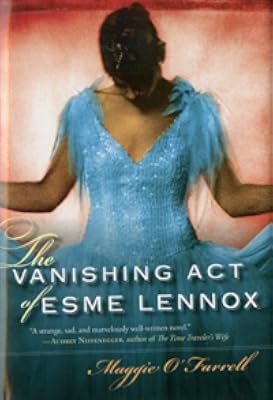
Here Maggie O'Farrell brings us a spellbinding novel of two women connected across fifty years by art, love, betrayals, secrets, and motherhood. Like her acclaimed The Vanishing Act of Esme Lennox, it is a "breathtaking, heart-breaking creation."* And it is a gorgeous inquiry into the ways we make and unmake our lives, who we know ourselves to be, and how even our most accidental legacies connect us.
*The Washington Post Book World
. show less
Tags
Recommendations













Member Recommendations
Member Reviews
Unfortunately, The Hand that First Held Mine is one of those books about which I have no strong feelings, and I have been wracking my brain trying to discern why this may be. The mysterious connection is compelling. Each character's story is intriguing. The descriptions are amazingly clear and easily pictured. I really did enjoy the story. So what is it about the story that still has me feeling blank a week after finishing it? It wasn't until I started writing this review before I finally figured it out.
For one thing, Elina's postpartum depression is amazingly difficult to read. The detailed descriptions make her pain, confusion and pain that much more uncomfortable to watch unfold. In addition, there is a pervading sense of doom on show more each page of the story that draws the reader into turning the page while making the act of reading each page uncomfortable and nerve-wracking. Lexie, as the more vibrant and capable of the characters, remains one of the bright spots of the novel, but even when her story takes center stage, the reader is left with a feeling of foreshadowing at her ultimate future. This haunting feeling persists throughout the story.
The connection between the characters was surprising only because it should not have been so. With hindsight, I get the impression that Ms. O'Farrell deliberately misdirects the reader from realizing the connection only because the connection is glaringly obvious once the reader figures it out. While this may seem like it would detract from the overall story, in fact it only adds to the reader's enjoyment because s/he gets the chance to find the hints that were there all along.
One of my favorite things about the book was the focus on motherhood and how it changes everything. Much like this book, motherhood is one of those things that women only truly understand when they become mothers themselves. Whether one suffers from postpartum depression, embraces motherhood from the first moment of realizing one's pending bundle of joy, or falls somewhere in the middle, every mother can appreciate the changes to body and to life a child brings to her world:
"We change shape...we buy low-heeled shoes, we cut off our long hair. We begin to carry in our bags half-eaten rusks, a small tractor, a shred of beloved fabric, a plastic doll. We lose muscle tone, sleep, reason, perspective. Our hearts begin to live outside our bodies. They breath, they eat, they crawl and - look! - they walk, they begin to speak to us. We learn that we must sometimes walk an inch at a time, to stop and examine every stick, every stone, every squashed tin along the way. We get use to not getting where we were going. We learn to darn, perhaps to cook, to patch the knees of dungarees. We get used to living with a love that suffuses us, suffocates us, blinds us, controls us. We love. We contemplate our bodies, our stretched skin, those threads of silver around our brows, our strangely enlarged feet. We learn to look less in the mirror. We put our dry-clean-only clothes to the back of the wardrobe. Eventually, we throw them away. We school ourselves to stop saying 'shit' and 'damn' and learn to say 'my goodness' and 'heavens above'. We give up smoking, we colour our hair, we search the vistas of parks, swimming-pools, libraries, cafes for others of our kind. We know each other by our pushchairs, our sleepless gaves, the beakers we carry. We learn how to cool a fever, ease a cough, the four indicators of meningitis, that one must sometimes push a swing for two hours. We buy biscuit cutters, washable paints, aprons, plastic bowls. We no longer tolerate delayed buses, fighting in the street, smoking in restaurants, sex after midnight, inconsistency, laziness, being cold. We contemplate younger women as they pass us in the street, with their cigarettes, their makeup, their tight-seamed dresses, their tiny handbags, their smooth, washed hair, and we turn away, we put down our heads, we keep on pushing the pram up the hill." (page 254)
Ultimately, this book is one ode to motherhood - no matter what type of mother you may be, we are all united in what we face and experience through our children and our love for those children. In the end, this is what makes The Hand that First Held Mine an amazing read. It's a sneaky one, as there are no easy answers, no immediate sense of love or hate. Readers must work to make sense of their feelings about the book, but once they do, they find their efforts fully rewarded. Because of the efforts required to truly appreciate the novel, The Hand that First Held Mine is not for everyone. However, if you do take a chance, you will find yourself enjoying the beauty behind the pain of motherhood , an interesting mystery and thoroughly memorable characters. show less
For one thing, Elina's postpartum depression is amazingly difficult to read. The detailed descriptions make her pain, confusion and pain that much more uncomfortable to watch unfold. In addition, there is a pervading sense of doom on show more each page of the story that draws the reader into turning the page while making the act of reading each page uncomfortable and nerve-wracking. Lexie, as the more vibrant and capable of the characters, remains one of the bright spots of the novel, but even when her story takes center stage, the reader is left with a feeling of foreshadowing at her ultimate future. This haunting feeling persists throughout the story.
The connection between the characters was surprising only because it should not have been so. With hindsight, I get the impression that Ms. O'Farrell deliberately misdirects the reader from realizing the connection only because the connection is glaringly obvious once the reader figures it out. While this may seem like it would detract from the overall story, in fact it only adds to the reader's enjoyment because s/he gets the chance to find the hints that were there all along.
One of my favorite things about the book was the focus on motherhood and how it changes everything. Much like this book, motherhood is one of those things that women only truly understand when they become mothers themselves. Whether one suffers from postpartum depression, embraces motherhood from the first moment of realizing one's pending bundle of joy, or falls somewhere in the middle, every mother can appreciate the changes to body and to life a child brings to her world:
"We change shape...we buy low-heeled shoes, we cut off our long hair. We begin to carry in our bags half-eaten rusks, a small tractor, a shred of beloved fabric, a plastic doll. We lose muscle tone, sleep, reason, perspective. Our hearts begin to live outside our bodies. They breath, they eat, they crawl and - look! - they walk, they begin to speak to us. We learn that we must sometimes walk an inch at a time, to stop and examine every stick, every stone, every squashed tin along the way. We get use to not getting where we were going. We learn to darn, perhaps to cook, to patch the knees of dungarees. We get used to living with a love that suffuses us, suffocates us, blinds us, controls us. We love. We contemplate our bodies, our stretched skin, those threads of silver around our brows, our strangely enlarged feet. We learn to look less in the mirror. We put our dry-clean-only clothes to the back of the wardrobe. Eventually, we throw them away. We school ourselves to stop saying 'shit' and 'damn' and learn to say 'my goodness' and 'heavens above'. We give up smoking, we colour our hair, we search the vistas of parks, swimming-pools, libraries, cafes for others of our kind. We know each other by our pushchairs, our sleepless gaves, the beakers we carry. We learn how to cool a fever, ease a cough, the four indicators of meningitis, that one must sometimes push a swing for two hours. We buy biscuit cutters, washable paints, aprons, plastic bowls. We no longer tolerate delayed buses, fighting in the street, smoking in restaurants, sex after midnight, inconsistency, laziness, being cold. We contemplate younger women as they pass us in the street, with their cigarettes, their makeup, their tight-seamed dresses, their tiny handbags, their smooth, washed hair, and we turn away, we put down our heads, we keep on pushing the pram up the hill." (page 254)
Ultimately, this book is one ode to motherhood - no matter what type of mother you may be, we are all united in what we face and experience through our children and our love for those children. In the end, this is what makes The Hand that First Held Mine an amazing read. It's a sneaky one, as there are no easy answers, no immediate sense of love or hate. Readers must work to make sense of their feelings about the book, but once they do, they find their efforts fully rewarded. Because of the efforts required to truly appreciate the novel, The Hand that First Held Mine is not for everyone. However, if you do take a chance, you will find yourself enjoying the beauty behind the pain of motherhood , an interesting mystery and thoroughly memorable characters. show less
I loved this. I hadn't read Maggie O'Farrell before, and I don't normally read stuff that is overtly about motherhood/parenting or romance, but this was so true to life on the unavoidable changes that happen in your life when you have children, and Lexie's description of her small son as her magnetic north, always exerting a pull on her, really struck a chord. I liked the intertwining stories, and the wait to find out how they connected, and the characters have stayed with me.
I have not had a book effect me like this one does in quite some time. Sob worthy to the nth degree. O'Farrell tells the story using two distinct timelines: Lexie in the 1950-70s in Soho and Elina and Ted in the early 2000s in London. I knew as I read that at some point these two timelines would have to intersect or connect in some way. And so I was consumed by trying to figure out what the connection was and then the slow reveal just knocked me for a loop. I thought I knew what it was going to be but no, not even close. On the other hand, a more perceptive reader may have figured it out. The characters were deftly drawn and the main theme is the question of how far back in time can we remember actual incidents from our past? Is it four show more years old? Three? Two? Just a brilliant novel, my fourth of O'Farrell's and solidly places Her among my favorite authors. show less
I enjoyed the beginning and middle of this more than the end which had me wondering "is that it?"
The portrayal of early parenthood and its disorientating strangeness was excellent, as was that of 1950s London. The shock at the end of the first part was delivered with savage calmness. I always find Maggie O'Farrell's writing pleasantly spacious - she never over-writes, and there is always room for the reader to fill in details from their imagination.
As the two strands of the story - one in the past, one in the present - converge, the reader wonders what the connection between the two will be. If I'm honest I was just expecting it to be less straightforward and guessable than it was.
The portrayal of early parenthood and its disorientating strangeness was excellent, as was that of 1950s London. The shock at the end of the first part was delivered with savage calmness. I always find Maggie O'Farrell's writing pleasantly spacious - she never over-writes, and there is always room for the reader to fill in details from their imagination.
As the two strands of the story - one in the past, one in the present - converge, the reader wonders what the connection between the two will be. If I'm honest I was just expecting it to be less straightforward and guessable than it was.
I decided to end the year with another novel by someone who has become one of my favourite contemporary writers. In this book, which won the 2010 Costa Book Award, there are two narratives, set over 50 years apart, which eventually do connect.
In the mid-1950s, free-spirited Lexie Sinclair leaves her family home in Devon and moves to London where Innes Kent, an art dealer, art critic, and art magazine editor, introduces her to the arts scene in post-war Soho and guides her into a career as an art journalist. Later Lexie gives birth to a son and raises him as a single mother, while continuing to pursue her career.
In contemporary times, Elina Vilkuna, a painter, is recovering from the difficult birth of her first child and navigating the show more first months of motherhood. For her partner Ted, Elina’s near-death during delivery has triggered memories of his childhood. He remembers nothing before he was about nine, but now starts to have flashbacks of suppressed memories which leave him increasingly confused.
The novel’s portrayal of motherhood is outstanding. The author captures the women’s intense love for their children alongside their deep longing for independence and creativity. The exhaustion, anxieties, and joys of motherhood experienced by Lexie and Elina will resonate with all mothers. Parenting also challenges relationships, and Elina and Ted struggle to return to the relationship they had before the arrival of their son.
An aspect of the novel which I found most interesting is the development of Lexie. In the beginning, she seems immature and selfish but she slowly grows into a strong, capable, confident, independent woman. Life is not easy for her; she is abandoned in more than one way, yet she perseveres. She pays little heed to social norms; certainly her decision to raise a child as an unmarried woman in the 1950s is unorthodox. Being the only female staff writer for a newspaper presents challenges but ones she manages without fanfare. I love dynamic characters that change in a convincing, credible way.
The book begins slowly; it is not until the end of the first part – almost exactly midway through the novel – that a pivotal event occurs that really propels Lexie’s story. In the other narrative, Elina begins to feel well again and Ted begins reconstructing more and more memories. It becomes obvious that the two stories will connect and that, as in many of O’Farrell’s novels, secrets and lies will be shown to affect future generations.
More than once, the author directly addresses the reader but in such a way that the comments are not intrusive. For example, the novel opens with this paragraph: “Listen. The trees in this story are stirring, trembling, readjusting themselves. A breeze is coming in gusts off the sea, and it is almost as if the trees know, in their restlessness, in their head-tossing impatience, that something is about to happen.” Foreshadowing is very explicit: there are sentences like “She has no idea that she will die young, that she does not have as much time as she thinks” and “She doesn’t know that this will never happen.” Even before the connection between the two stories is obvious, the author describes Ted sitting “at the table where Lexie’s desk used to be.”
I would not say this is O’Farrell’s best book – that honour belongs to Hamnet and Judith – but this is still a worthwhile read.
Note: Please check out my reader's blog (https://schatjesshelves.blogspot.com/) and follow me on Twitter (@DCYakabuski). show less
In the mid-1950s, free-spirited Lexie Sinclair leaves her family home in Devon and moves to London where Innes Kent, an art dealer, art critic, and art magazine editor, introduces her to the arts scene in post-war Soho and guides her into a career as an art journalist. Later Lexie gives birth to a son and raises him as a single mother, while continuing to pursue her career.
In contemporary times, Elina Vilkuna, a painter, is recovering from the difficult birth of her first child and navigating the show more first months of motherhood. For her partner Ted, Elina’s near-death during delivery has triggered memories of his childhood. He remembers nothing before he was about nine, but now starts to have flashbacks of suppressed memories which leave him increasingly confused.
The novel’s portrayal of motherhood is outstanding. The author captures the women’s intense love for their children alongside their deep longing for independence and creativity. The exhaustion, anxieties, and joys of motherhood experienced by Lexie and Elina will resonate with all mothers. Parenting also challenges relationships, and Elina and Ted struggle to return to the relationship they had before the arrival of their son.
An aspect of the novel which I found most interesting is the development of Lexie. In the beginning, she seems immature and selfish but she slowly grows into a strong, capable, confident, independent woman. Life is not easy for her; she is abandoned in more than one way, yet she perseveres. She pays little heed to social norms; certainly her decision to raise a child as an unmarried woman in the 1950s is unorthodox. Being the only female staff writer for a newspaper presents challenges but ones she manages without fanfare. I love dynamic characters that change in a convincing, credible way.
The book begins slowly; it is not until the end of the first part – almost exactly midway through the novel – that a pivotal event occurs that really propels Lexie’s story. In the other narrative, Elina begins to feel well again and Ted begins reconstructing more and more memories. It becomes obvious that the two stories will connect and that, as in many of O’Farrell’s novels, secrets and lies will be shown to affect future generations.
More than once, the author directly addresses the reader but in such a way that the comments are not intrusive. For example, the novel opens with this paragraph: “Listen. The trees in this story are stirring, trembling, readjusting themselves. A breeze is coming in gusts off the sea, and it is almost as if the trees know, in their restlessness, in their head-tossing impatience, that something is about to happen.” Foreshadowing is very explicit: there are sentences like “She has no idea that she will die young, that she does not have as much time as she thinks” and “She doesn’t know that this will never happen.” Even before the connection between the two stories is obvious, the author describes Ted sitting “at the table where Lexie’s desk used to be.”
I would not say this is O’Farrell’s best book – that honour belongs to Hamnet and Judith – but this is still a worthwhile read.
Note: Please check out my reader's blog (https://schatjesshelves.blogspot.com/) and follow me on Twitter (@DCYakabuski). show less
The book takes place in two time periods: the late '50s and early '60s, and in the late '90s (or thereabouts - there are cell phones). Our protagonist in the '50s-'60s is Alexandra - Lexie - Sinclair, who escapes a stifling home life and runs away to London. She meets up with Innes Kent, who convinces her to come work for his magazine, Elsewhere, and eventually to live with him. They are deeply in love, but unfortunately, Innes' wife Gloria - from whom he is separated - is furious with him for taking up with Lexie, and she turns her daughter Margot against Innes and Lexie also. When Innes dies, Gloria turns Lexie out of his flat.
Closer to the present day, film editor Ted and his artist girlfriend Elina have just been through the show more harrowing birth of their child, during which Elina nearly died. The trauma was so severe that initially, Elina does not remember the ordeal, but it comes back to her. Ted, however, has memory problems that date back to the early years of his childhood - he remembers nothing. But the presence of the baby in the house seems to be jogging pieces of his memory, presenting questions he can't answer.
I listened to this as an audiobook (read by Anne Flosnik, who also read The Vanishing Act of Esme Lennox), and when she got to the line "Call me Margot" I actually said "Oh my God" out loud in the car. I wanted to re-read the book even before I'd finished it the first time, to see how early the clues started to appear.
As ever, O'Farrell's writing is beautiful, and her plotting is quietly astounding. The Hand That First Held Mine is on par with The Vanishing Act of Esme Lennox and Instructions for a Heatwave. I'm so glad I discovered O'Farrell this year; she has quickly become a favorite author. show less
Closer to the present day, film editor Ted and his artist girlfriend Elina have just been through the show more harrowing birth of their child, during which Elina nearly died. The trauma was so severe that initially, Elina does not remember the ordeal, but it comes back to her. Ted, however, has memory problems that date back to the early years of his childhood - he remembers nothing. But the presence of the baby in the house seems to be jogging pieces of his memory, presenting questions he can't answer.
I listened to this as an audiobook (read by Anne Flosnik, who also read The Vanishing Act of Esme Lennox), and when she got to the line "Call me Margot" I actually said "Oh my God" out loud in the car. I wanted to re-read the book even before I'd finished it the first time, to see how early the clues started to appear.
As ever, O'Farrell's writing is beautiful, and her plotting is quietly astounding. The Hand That First Held Mine is on par with The Vanishing Act of Esme Lennox and Instructions for a Heatwave. I'm so glad I discovered O'Farrell this year; she has quickly become a favorite author. show less
I was unsure as I began this Maggie O’Farrell novel if it was going to impress me as her other works have. It seemed to be two stories, being told in short installments, disconnected from one another; and the transitions were sometimes jarring. I would have just developed a real interest in one narrative and, boom, we were off to the other one. I should have had more faith. Maggie O’Farrell is an author who knows exactly what she is doing.
In a way, this is a story about motherhood, about the transformation a baby can make in a life, about the bond that isn’t severed, even by death. And, O’Farrell understands this bond, captures it flawlessly.
She considers what to say. Should she mention the nights spent awake, the number of show more times she must wash her hands in a day, the endless drying and folding of tiny clothes, the packing and unpacking of bags containing clothes, nappies, wipes, the scar across her abdomen, crooked and leering, the utter loneliness of it all, the hours she spends kneeling on the floor, a rattle or a bell or a fabric block in her hands, that she sometimes gets the urge to stop older women in the street and say, how did you do it, how did you live through it? Or she could mention that she had been unprepared for this fierce spring in her, this feeling that isn’t covered by the word ‘love’, which is far too small for it, that sometimes she thinks she might faint with the urgency of her feeling for him, that sometimes she misses him desperately even when he is right there, that it’s like a form of madness, of possession that often she has to creep into the room when he has fallen asleep just to look at him, to check, to whisper to him.
Of course, that isn’t all this book is about. It is about longing and loving, jealousy, the building of new lives when old ones fall apart, the finding of self; it is a book about living. I suspect Maggie O'Farrell has done some of that as well. show less
In a way, this is a story about motherhood, about the transformation a baby can make in a life, about the bond that isn’t severed, even by death. And, O’Farrell understands this bond, captures it flawlessly.
She considers what to say. Should she mention the nights spent awake, the number of show more times she must wash her hands in a day, the endless drying and folding of tiny clothes, the packing and unpacking of bags containing clothes, nappies, wipes, the scar across her abdomen, crooked and leering, the utter loneliness of it all, the hours she spends kneeling on the floor, a rattle or a bell or a fabric block in her hands, that she sometimes gets the urge to stop older women in the street and say, how did you do it, how did you live through it? Or she could mention that she had been unprepared for this fierce spring in her, this feeling that isn’t covered by the word ‘love’, which is far too small for it, that sometimes she thinks she might faint with the urgency of her feeling for him, that sometimes she misses him desperately even when he is right there, that it’s like a form of madness, of possession that often she has to creep into the room when he has fallen asleep just to look at him, to check, to whisper to him.
Of course, that isn’t all this book is about. It is about longing and loving, jealousy, the building of new lives when old ones fall apart, the finding of self; it is a book about living. I suspect Maggie O'Farrell has done some of that as well. show less
Members
- Recently Added By
Lists

Best Books Set in London
157 works; 42 members

Books Read in 2018
4,360 works; 110 members
Author Information

24+ Works 20,611 Members
Maggie O'Farrell is the author of several novels including After You'd Gone, My Lover's Lover, The Vanishing Act of Esme Lennox, Instructions for a Heatwave, and This Must Be the Place. She received a Somerset Maugham Award for The Distance Between Us and the 2010 Costa Novel Award for The Hand That First Held Mine. (Bowker Author Biography)
Some Editions
Awards and Honors
Awards
Distinctions
Work Relationships
Is contained in
Common Knowledge
- Original publication date
- 2010-04-12
- People/Characters
- Elina Vilkuna; Lexie Sinclair; Ted Roffe; Innes Kent; Felix; Margot
- Important places
- London, England, UK; Soho, London, England, UK; Lyme Regis, Dorset, England, UK
- Epigraph
- And we forget because we must. - Matthew Arnold
- Dedication
- for IZ
for SS
for WD - First words
- Listen. The trees in this story are stirring, trembling, readjusting themselves.
- Quotations
- She has had a creeping fear of late that what she wanted most -- for her life to begin, to take on some meaning, to turn from blurred monochrome into glorious technicolour -- may pass her by. That she might not recognize it i... (show all)f it comes her way, might fail to grasp for it. (p. 5)
It is a particular brand of fury, peculiar to youth, that stifling, oppressive sensation of your elders outmanoeuvering you. (p. 12)
He will nod but his memory of the incident is no more than images like holiday snaps, supplied by her, shuffled before his eyes by her so often that they have come to resemble or replace the memories themselves. (p. 38)
It must be, he decides, that having a baby leads you to relive your own infancy. Things you might never have thought about before suddenly emerge. (p. 175)
They were like clothes invested with static, adhering to each other but with an uncomfortable, aggrivating friction. (p. 194)
When Innes died, existence as Lexie had come to know ended and another began: she dropped, like Innes in his parachute, out of her life and into another. (p. 215)
When she leaves the house on these mornings, she senses a thread that runs between her and her son, and as she walks away through the streets she is aware of it unspooling bit by bit. (p. 237)
Or she could mention that she had been unprepared for this fierce spring in her, this feeling that isn't covered by the word "love", which is far too small for it... (p. 251)
Theo presses his face to the window, letting out a stream of surprised nouns: horse, gate, tractor, tree. They arrive on the Dingle peninsula around lunchtime and Theo's vocabulary runs dry. Sea, Lexie tells him, beach sand. ... (show all)(p. 262) - Last words
- (Click to show. Warning: May contain spoilers.)And so she does.
- Blurbers
- de Rosnay, Tatiana; Donoghue, Emma; Livesey, Margot; Grodstein, Lauren; Julavits, Heidi
- Original language
- English
Classifications
Statistics
- Members
- 1,337
- Popularity
- 17,975
- Reviews
- 78
- Rating
- (3.87)
- Languages
- 12 — Catalan, Chinese, Dutch, English, Finnish, French, German, Italian, Norwegian (Bokmål), Portuguese, Spanish, Swedish
- Media
- Paper, Audiobook, Ebook
- ISBNs
- 49
- ASINs
- 22