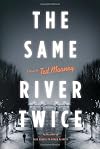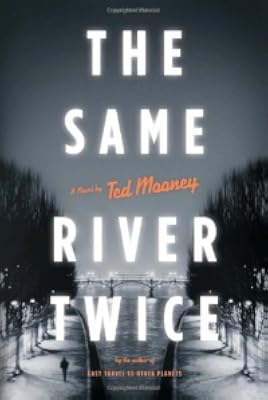
The Same River Twice
by Ted Mooney 
On This Page
Description
When Odile Mével, a French clothing designer, agrees to smuggle ceremonial May Day banners out of the former Soviet Union, she thinks she's trading a few days' inconvenience for a quick thirty thousand francs. Yet when she returns home to Paris to deliver the contraband to the American art expert behind this scheme, her fellow courier has disappeared, her apartment is ransacked for no discernible reason, and she has already set in motion a chain of events that will put those closest to her show more in jeopardy. show lessTags
Recommendations





Member Reviews
Ted Mooney has crafted an intricate narrative labyrinth of intersecting realities, visible, but more often invisible, in The Same River Twice. His character's perceptions of high-stress events unraveling within and around them in Paris and, particularly, along La Seine, on a boat named Nachtvlinder, become so blurred at times, so ambiguous, that surreality is perception (and vice versa) in Mooney's character's collective eyes.
The novel, on its surface, focuses on art smuggling, and the violent, reverberating consequences spreading out from the original high crime in waves of interpersonal disconnectedness and conflict and, ultimately, brutal betrayals, when one of the original smugglers mysteriously disappears. The smuggler's show more disappearance, however, involves a powerful secret that could literally change the world, and everyone from respected art dealers to the Russian Mafia to the Paris police in riot gear, are hot on his dubious trail.
The plot's as complexly convoluted as the catacombs of Paris, which play a vital role in the novel, the catacombs - be it underground rave sponsored by French government rebels from the local Arrondissement, or Mooney's subtle commentary on the underground-ecstasy-enthusiasts-as-metaphor for what's happening up above, in a different Paris darkness of perceptions true and/or false, when the lights of the Eifell Tower are turned off - and once your eyes adjust to the multi-hued darkness' of Mooney's impressive, Parisian underworlds and shadowy above-ground worlds (who exactly are the good guys and the bad guys, if any?, or are they all both good and bad?), filled with gorgeous prose and allusions adding nuanced layers of subtext, the careful reader will be glued to the book, searching for the hidden clues and secrets, which when they appear, seem so obvious that alighting upon the answers breeds a certain familiarity (I'm not joking) inducing déjà vu.
The characters? Max, the auteur, who, like a second narrator of sorts, stands outside the novel, filming the events of The Same River Twice as they occur, without a script; Odile, Max's wife, art smuggler on- the-side, the smuggler who doesn't disappear (or does she?); Turner, art dealer extraordinaire, in bed both literally and figuratively with simply too many of the wrong people; KuKushkin, full of vodka-fueled anecdotes whose sobering prescience makes him almost a fortune teller; are a complicated and crafty lot, all of them, and more too many to mention by name. How Mooney fit them all together so seamlessly and so distinctively into his fast-paced, riveting, plot-pops-off-the-page like the artsy book cover, novel, I don't dare try and explicate. show less
The novel, on its surface, focuses on art smuggling, and the violent, reverberating consequences spreading out from the original high crime in waves of interpersonal disconnectedness and conflict and, ultimately, brutal betrayals, when one of the original smugglers mysteriously disappears. The smuggler's show more disappearance, however, involves a powerful secret that could literally change the world, and everyone from respected art dealers to the Russian Mafia to the Paris police in riot gear, are hot on his dubious trail.
The plot's as complexly convoluted as the catacombs of Paris, which play a vital role in the novel, the catacombs - be it underground rave sponsored by French government rebels from the local Arrondissement, or Mooney's subtle commentary on the underground-ecstasy-enthusiasts-as-metaphor for what's happening up above, in a different Paris darkness of perceptions true and/or false, when the lights of the Eifell Tower are turned off - and once your eyes adjust to the multi-hued darkness' of Mooney's impressive, Parisian underworlds and shadowy above-ground worlds (who exactly are the good guys and the bad guys, if any?, or are they all both good and bad?), filled with gorgeous prose and allusions adding nuanced layers of subtext, the careful reader will be glued to the book, searching for the hidden clues and secrets, which when they appear, seem so obvious that alighting upon the answers breeds a certain familiarity (I'm not joking) inducing déjà vu.
The characters? Max, the auteur, who, like a second narrator of sorts, stands outside the novel, filming the events of The Same River Twice as they occur, without a script; Odile, Max's wife, art smuggler on- the-side, the smuggler who doesn't disappear (or does she?); Turner, art dealer extraordinaire, in bed both literally and figuratively with simply too many of the wrong people; KuKushkin, full of vodka-fueled anecdotes whose sobering prescience makes him almost a fortune teller; are a complicated and crafty lot, all of them, and more too many to mention by name. How Mooney fit them all together so seamlessly and so distinctively into his fast-paced, riveting, plot-pops-off-the-page like the artsy book cover, novel, I don't dare try and explicate. show less
I so fully expected to love The Same River Twice, that it took about half the book before I realised that actually, I don't.
That's not to say I didn't enjoy it. I did, but only mildly. I particularly appreciated the art theme throughout the book, and the way it was woven into the narrative. When we are in the presence of a painter, the action slows right down - stops even, and we become conscious of the colour and light in the scene before us. When we follow Max, the film maker, the action is tight and visual. We are made to look at the action as if it's in a frame. We read it like a film. The feeling and dynamic of the narrative changes to reflect the different art forms its characters create.
An LT reviewer I respect highly has said show more that the symbolism in this novel is of great depth, pointing to the idea of red herrings and to alternate endings. I guess this is what Ted Mooney meant to do, and evidently, to the truly erudite, he succeeded. To me, however, the symbolisim just seemed clunky. A male key character enters the house of the key female character. The narrative pauses to point out a dressmaker's dummy behind her, swathed in cloth. Immediately, the reader knows the two characters will either have sex, or else start thinking about it. Or, Max has been tracking down the people who have made alternate endings to his DVDs, and having found what is perhaps a clue, the narrative again pauses to show us a mother catch a balloon which has escaped from her son's fingers. I don't know. Perhaps it's clever. But it seemed rather forced to me.
Recently in LT, I loftily made a statement to the effect that an author's gender makes no difference to any reader's enjoyment of their work. I would like to publicly announce that my statement was utter rubbish. I take it back entirely. This is without doubt a 'blokey' book. The female characters are all externally attractive and otherwise enigmatic. The male characters are quick-thinking, quick-acting, and at the same time, everlastingly confused. There is an appeal to testosterone throughout the book which I found increasingly difficult to ignore.
I also found it slightly worrying that the main message of the book seemed to be to never examine the past, never ask questions of oneself or of others; to disclaim all responsibility for one's actions and simply act in the present. I waited for this to resolve - for Max and Odile to examine their relationship and question this philosophy, and for Max himself to reflect on his most questionable actions. But they never do. The final sentence of the book only reinforces that a lack of reflection and responsibility is an excellent thing. This is of course central to the novel, echoed in its title and the suggestion that if we try to go back and re-do a thing, we'll only find it's impossible. That we can't step into the same river twice - the water will always be different from what it was before.
An actual river is the central force of the story - we keep returning to it again and again. It's a place of inspiration, beauty, art - also a place of danger and violence, and a place to hide crime. Mooney is strong on motifs, but I found their effectiveness patchy; however I thought the river was a strong point of the novel.
As a genre novel, a thriller, my one complaint is that the stakes weren't raised high enough. Why was there so much emphasis on Max's much-loved daughter, if she is never put in danger? I kept waiting for a terrible moment when she would be under some kind of threat, where Max would have to make some kind of terrible choice... and it never came. The only time it comes close falls flat, leading to a pseudo-bonding moment between stepmother and stepdaughter, plus a few random friends.
This book is definitely not all bad. I'm focusing on the negatives because they took me so much by surprise - as I said, I expected to love this book. I'm worried about saying such bad things about it, since people whose opinions I think highly of seem to think this is a wonderful novel, of a depth and intelligence which completely escaped me. The fault is probably mine.
I'd like to add that the 13 year old daughter's voice is wonderfully authentic, and her young vulnerability and toughness combined are beautifully portrayed. Her presence brightened the book for me.
The language in general is excellent. The dialogue is tight, the narrative smooth. As genre fiction, this is extremely readable. Certainly, Ted Mooney is not Matthew Reilley - he is much more intelligent. But The Same River Twice did not feel like 'literature' to me. show less
That's not to say I didn't enjoy it. I did, but only mildly. I particularly appreciated the art theme throughout the book, and the way it was woven into the narrative. When we are in the presence of a painter, the action slows right down - stops even, and we become conscious of the colour and light in the scene before us. When we follow Max, the film maker, the action is tight and visual. We are made to look at the action as if it's in a frame. We read it like a film. The feeling and dynamic of the narrative changes to reflect the different art forms its characters create.
An LT reviewer I respect highly has said show more that the symbolism in this novel is of great depth, pointing to the idea of red herrings and to alternate endings. I guess this is what Ted Mooney meant to do, and evidently, to the truly erudite, he succeeded. To me, however, the symbolisim just seemed clunky. A male key character enters the house of the key female character. The narrative pauses to point out a dressmaker's dummy behind her, swathed in cloth. Immediately, the reader knows the two characters will either have sex, or else start thinking about it. Or, Max has been tracking down the people who have made alternate endings to his DVDs, and having found what is perhaps a clue, the narrative again pauses to show us a mother catch a balloon which has escaped from her son's fingers. I don't know. Perhaps it's clever. But it seemed rather forced to me.
Recently in LT, I loftily made a statement to the effect that an author's gender makes no difference to any reader's enjoyment of their work. I would like to publicly announce that my statement was utter rubbish. I take it back entirely. This is without doubt a 'blokey' book. The female characters are all externally attractive and otherwise enigmatic. The male characters are quick-thinking, quick-acting, and at the same time, everlastingly confused. There is an appeal to testosterone throughout the book which I found increasingly difficult to ignore.
I also found it slightly worrying that the main message of the book seemed to be to never examine the past, never ask questions of oneself or of others; to disclaim all responsibility for one's actions and simply act in the present. I waited for this to resolve - for Max and Odile to examine their relationship and question this philosophy, and for Max himself to reflect on his most questionable actions. But they never do. The final sentence of the book only reinforces that a lack of reflection and responsibility is an excellent thing. This is of course central to the novel, echoed in its title and the suggestion that if we try to go back and re-do a thing, we'll only find it's impossible. That we can't step into the same river twice - the water will always be different from what it was before.
An actual river is the central force of the story - we keep returning to it again and again. It's a place of inspiration, beauty, art - also a place of danger and violence, and a place to hide crime. Mooney is strong on motifs, but I found their effectiveness patchy; however I thought the river was a strong point of the novel.
As a genre novel, a thriller, my one complaint is that the stakes weren't raised high enough. Why was there so much emphasis on Max's much-loved daughter, if she is never put in danger? I kept waiting for a terrible moment when she would be under some kind of threat, where Max would have to make some kind of terrible choice... and it never came. The only time it comes close falls flat, leading to a pseudo-bonding moment between stepmother and stepdaughter, plus a few random friends.
This book is definitely not all bad. I'm focusing on the negatives because they took me so much by surprise - as I said, I expected to love this book. I'm worried about saying such bad things about it, since people whose opinions I think highly of seem to think this is a wonderful novel, of a depth and intelligence which completely escaped me. The fault is probably mine.
I'd like to add that the 13 year old daughter's voice is wonderfully authentic, and her young vulnerability and toughness combined are beautifully portrayed. Her presence brightened the book for me.
The language in general is excellent. The dialogue is tight, the narrative smooth. As genre fiction, this is extremely readable. Certainly, Ted Mooney is not Matthew Reilley - he is much more intelligent. But The Same River Twice did not feel like 'literature' to me. show less
Ted Mooney’s novel is essentially a mystery in the Victorian tradition, incorporating modern thriller elements and updated to the contemporary world of international art smuggling, movie making, and the Russian mafia. Max is a forty-something American in Paris, an independent movie maker going through an artistic crisis, having difficulties securing funding for his next project, and at something of a loss as to what that next project will be. Meanwhile he discovers that DVDs of his most well known movie have been pirated and are on sale illegally. He decides to investigate.
His second wife, Odile, some 10 years his junior, and a dressmaker, makes money on the side as a courier for an art dealer. On a mission to Moscow to collect old show more Soviet flags, her travelling companion Theirry mysteriously vanishes and does not reappear in Paris to collect his fee. On her return, her apartment has been ransacked, but nothing has been stolen. Fearing the worst, she returns to the art dealer who sent her to Moscow, to investigate.
These two separate plots gradually link up in the good old mystery tradition to embrace all aspects of Max and Odile’s life together as well as their friends and family and the people they encounter. There is plenty of sex and violence for those who prefer to read superficially, and some highly evocative descriptive writing conjuring up images of the Paris of Haneke, Atget and Brassai. The characters are well drawn, clearly distinguishable from each other, and even manifest a degree of inner complexity. There are moments of breathstopping beauty, poignancy and wit, and it is all handled with cool aplomb. On one level, it is a page-turner.
There is, however, more going on here than meets the eye. The novel is constructed with such ingenuity and careful attention to detail, all the parts and details fit together within the overall pattern so well, that the novel becomes symbolic of ....
Read the full review on The Lectern. show less
His second wife, Odile, some 10 years his junior, and a dressmaker, makes money on the side as a courier for an art dealer. On a mission to Moscow to collect old show more Soviet flags, her travelling companion Theirry mysteriously vanishes and does not reappear in Paris to collect his fee. On her return, her apartment has been ransacked, but nothing has been stolen. Fearing the worst, she returns to the art dealer who sent her to Moscow, to investigate.
These two separate plots gradually link up in the good old mystery tradition to embrace all aspects of Max and Odile’s life together as well as their friends and family and the people they encounter. There is plenty of sex and violence for those who prefer to read superficially, and some highly evocative descriptive writing conjuring up images of the Paris of Haneke, Atget and Brassai. The characters are well drawn, clearly distinguishable from each other, and even manifest a degree of inner complexity. There are moments of breathstopping beauty, poignancy and wit, and it is all handled with cool aplomb. On one level, it is a page-turner.
There is, however, more going on here than meets the eye. The novel is constructed with such ingenuity and careful attention to detail, all the parts and details fit together within the overall pattern so well, that the novel becomes symbolic of ....
Read the full review on The Lectern. show less
A stylish & atmospheric thriller with all the requisite elements for escapist winter reading: a glamorous setting in Paris, smart & idiosyncratic characters with cool jobs (filmmaking, fashion design), a plot involving the smuggling of art objects, the Russian mafia & mysterious women with tattoos ... even a bit of metaphysical speculation (Can one truly start over in life?) thrown in for good measure. In my opinion the ending fails to deliver on the promise of a surprising climactic scene, but overall I found this to be an enjoyable read, similar in some ways to William Gibson's Pattern Recognition/Spook Country/Zero History novels, but less oblique & challenging.
"You could not step twice into the same river; for other waters are ever show more flowing on to you."
--Heraclitus show less
"You could not step twice into the same river; for other waters are ever show more flowing on to you."
--Heraclitus show less
This is far and away the best recent fiction I've read in quite some time. It's a taut thriller that goes beyond genre into questions of the nature of reality, deja vu, the meaning of fairy tales, the nature of necessity and randomness, the nature of invention, the nature of trust - oh and the boat. Don't forget the boat.
There are a pair of protagonists, man and wife who share the most exciting adventure of their lives without knowing it. Half the story is told through the experiences of the wife while the other half is told through the experiences of her husband. Only at the very end do the two stories come together, but it is made apparent that neither of the protagonists, or the other characters in the story, know the entire story, show more only the reader is privileged in this way. I found this, at times to be somewhat maddening, that the two never sat down and discussed what was happening to them, but that was one of the points Mr. Mooney made - trust is most important.
One of the aggravating things about this novel, to me, and I think it must be my problem, more than the book, is the fact that this is essentially a hermetically sealed story with only modest, although sometimes painful interference from outside, and that mostly to advance the story. I quite often got the feeling that everything in the book leads to the same point. Each event is built upon something earlier and we see how these things eventually play into the story as it builds over time. I know, you're going to say that's what stories do, and you are right, but there is just something about how these elements are inserted and how they play into the story that make them seem too pat, too ready to hand, too necessary. Hence the study of the nature of necessity. Other than that, which frankly niggled at me during the entire read, I thought this was an excellent book.
Another aspect of the book I enjoyed was the way it moved from the inner world of art into the world of thugs, torture and death, with lack of trust being the cause of death to absolute trust being a killer as well. There is a lot to chew over in this book. I really enjoyed it, and that's not something I say about a lot of post-1960's writing.
I recommend this book to anyone. If you are looking for a page-turning thriller, this is it. If you want a decent entertainment, this is it, if your taste runs to the thoughtful and contemplative, well, believe it or not, this book is for you. Lots of action, lots of mayhem, lots of mystery, lots of depth. This book is for anyone interested in life beyond zombies. show less
There are a pair of protagonists, man and wife who share the most exciting adventure of their lives without knowing it. Half the story is told through the experiences of the wife while the other half is told through the experiences of her husband. Only at the very end do the two stories come together, but it is made apparent that neither of the protagonists, or the other characters in the story, know the entire story, show more only the reader is privileged in this way. I found this, at times to be somewhat maddening, that the two never sat down and discussed what was happening to them, but that was one of the points Mr. Mooney made - trust is most important.
One of the aggravating things about this novel, to me, and I think it must be my problem, more than the book, is the fact that this is essentially a hermetically sealed story with only modest, although sometimes painful interference from outside, and that mostly to advance the story. I quite often got the feeling that everything in the book leads to the same point. Each event is built upon something earlier and we see how these things eventually play into the story as it builds over time. I know, you're going to say that's what stories do, and you are right, but there is just something about how these elements are inserted and how they play into the story that make them seem too pat, too ready to hand, too necessary. Hence the study of the nature of necessity. Other than that, which frankly niggled at me during the entire read, I thought this was an excellent book.
Another aspect of the book I enjoyed was the way it moved from the inner world of art into the world of thugs, torture and death, with lack of trust being the cause of death to absolute trust being a killer as well. There is a lot to chew over in this book. I really enjoyed it, and that's not something I say about a lot of post-1960's writing.
I recommend this book to anyone. If you are looking for a page-turning thriller, this is it. If you want a decent entertainment, this is it, if your taste runs to the thoughtful and contemplative, well, believe it or not, this book is for you. Lots of action, lots of mayhem, lots of mystery, lots of depth. This book is for anyone interested in life beyond zombies. show less
A suspenceful and smooth read that slowly builds into a page turner. Tries to answer the question, "Can you really start over"?
A director, clothes designer, art dealer, actors and actresses, Russian Mafia, lawyers, anarchists, scientists, and children all combine in this book for a wonderful and interesting story.
At first I found it a little hard to get into the story but from the wonderful writing I kept giving it a chance. The characters are very well developed and the storyline is very smooth and easy to follow. I especially enjoyed some of the descriptive narrative about France and the people there. Once I got into the story about 70 pages in It was hard to put down. I would definitely recommend this as a good summer read.
At first I found it a little hard to get into the story but from the wonderful writing I kept giving it a chance. The characters are very well developed and the storyline is very smooth and easy to follow. I especially enjoyed some of the descriptive narrative about France and the people there. Once I got into the story about 70 pages in It was hard to put down. I would definitely recommend this as a good summer read.
This review was written for LibraryThing Member Giveaways.
Members
- Recently Added By
Published Reviews
ThingScore 100
STARRED REVIEW: Mooney (Easy Travel to Other Planets, 1981) returns with a rich, multilayered, powerfully unsettling novel. It succeeds on a number of different levels: as a page-turning mystery in which conceptual art meets the scientific vanguard of stem-cell research and as a meditation on the trusts and betrayals of a marriage, on truth and illusion and the relation of each to artistic show more creativity. A French designer named Odile finds herself paired with a stranger by an art dealer who has hired them to smuggle communist flags from Russia, with plans to market them in Paris as objects of art. The book barely touches on "the political ironies of selling communist artifacts in a venue so aggressively market-oriented," though the collapse of the Soviet Union has significant implications for the plot. Odile's American husband, a highly regarded avant-garde film director, also finds himself caught in a bit of intrigue, as copies of one his movies surface with an alternative ending he never shot. After Odile's smuggling partner disappears, she is threatened by Russians who suspect levels of conspiracy to which Odile has been oblivious. As allegiances shift and Max's new movie further blurs distinctions between life and art, Max discovers that his own impressions have become like "shards of a broken mirror, each reflecting one or two of the others but refusing to come together as a whole." But as this literary artist creates art about art, manipulating characters he has created, the whole comes together in a morally ambiguous manner that seems equally surprising, disturbing and inevitable.
"Paris is a small place," says more than one character, as the reader discovers just how small the city--and the artistic community and the world of international crime--can be. show less
"Paris is a small place," says more than one character, as the reader discovers just how small the city--and the artistic community and the world of international crime--can be. show less
added by tedmooney
"VERDICT: A taut and lively thriller that mingles the worlds of Paris and New York art collectors and filmmakers with a seamy and violent criminal underworld as it explores the nature of art, fate and inevitability. Recommended."
added by tedmooney
Lists

Art heist books at PPL
122 works; 1 member
Author Information

4+ Works 403 Members
Ted Mooney is a LibraryThing Author, an author who lists their personal library on LibraryThing.
Awards and Honors
Distinctions
Classifications
Statistics
- Members
- 109
- Popularity
- 298,500
- Reviews
- 12
- Rating
- (3.39)
- Languages
- English
- Media
- Paper, Ebook
- ISBNs
- 3
- ASINs
- 2