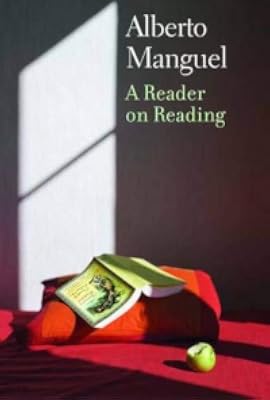
A Reader on Reading
by Alberto Manguel
On This Page
Description
In this major collection of his essays, Alberto Manguel, whom George Steiner has called "the Casanova of reading," argues that the activity of reading, in its broadest sense, defines our species. "We come into the world intent on finding narrative in everything," writes Manguel, "landscape, the skies, the faces of others, the images and words that our species create." Reading our own lives and those of others, reading the societies we live in and those that lie beyond our borders, reading show more the worlds that lie between the covers of a book are the essence of A Reader on Reading. The thirty-nine essays in this volume explore the crafts of reading and writing, the identity granted to us by literature, the far-reaching shadow of Jorge Luis Borges, to whom Manguel read as a young man, and the links between politics and books and between books and our bodies. The powers of censorship and intellectual curiosity, the art of translation, and those "numinous memory palaces we call libraries" also figure in this remarkable collection. For Manguel and his readers, words, in spite of everything, lend coherence to the world and offer us "a few safe places, as real as paper and as bracing as ink," to grant us room and board in our passage. show lessTags
Recommendations

Member Reviews
I do love Alberto Manguel reflections on reading, although I get accused of being too meta when friends and family catch me with his books. It does sound a bit absurd to say, “I’m reading a great book about reading books, called ‘A Reader on Reading’!” This book fits seamlessly in with Manguel’s other works on the topic, indeed several of the essays within this book are included in 'Into the Looking-glass Wood'. Certain passages are also familiar from 'A History of Reading'. These repetitions are not onerous, nonetheless I withhold the fifth star on the basis of not being completely new to me. Not that those essays I’d read before weren’t very much worthy of re-reading.
As with 'Into the Looking-glass Wood', quotations show more from Alice in Wonderland and Through the Looking-glass are used as a framing device for Manguel’s thoughts. These range over historical, social, cultural, and personal topics, sometimes with a narrow focus on a single author or incident. Each is beautifully crafted and thoughtful. ‘AIDS and the poet’ is especially powerful, ‘How Pinocchio Learned to Read’ especially memorable, and ‘Faking It’ especially funny. Having recently read 'Wicked Company', I was also delighted to learn an interesting snippet about the Enlightenment from ‘Candide in Sanssouci’.
I always emerge from Manguel’s books feeling vindicated in my love of books and delighted by his articulations of the joy and satisfaction of wide reading. I may spend plenty of time on the internet (not least browsing goodreads), but find that reading books opens my mind and generates ideas in a way that surfing the net does not. The two experiences are very different and I would definitely choose a library of books over my laptop, if I had to pick only one. Like me, Manguel does not dismiss the means that technology provide for access to literature and information, he merely defends books as having their own importance. They have not been superceded, merely supplemented. In fact, the internet has been a great boon to my personal search for new books to read. Being able to search library catalogues from home is fantastic! show less
As with 'Into the Looking-glass Wood', quotations show more from Alice in Wonderland and Through the Looking-glass are used as a framing device for Manguel’s thoughts. These range over historical, social, cultural, and personal topics, sometimes with a narrow focus on a single author or incident. Each is beautifully crafted and thoughtful. ‘AIDS and the poet’ is especially powerful, ‘How Pinocchio Learned to Read’ especially memorable, and ‘Faking It’ especially funny. Having recently read 'Wicked Company', I was also delighted to learn an interesting snippet about the Enlightenment from ‘Candide in Sanssouci’.
I always emerge from Manguel’s books feeling vindicated in my love of books and delighted by his articulations of the joy and satisfaction of wide reading. I may spend plenty of time on the internet (not least browsing goodreads), but find that reading books opens my mind and generates ideas in a way that surfing the net does not. The two experiences are very different and I would definitely choose a library of books over my laptop, if I had to pick only one. Like me, Manguel does not dismiss the means that technology provide for access to literature and information, he merely defends books as having their own importance. They have not been superceded, merely supplemented. In fact, the internet has been a great boon to my personal search for new books to read. Being able to search library catalogues from home is fantastic! show less
Alberto Manguel's new book of collected essays/lectures/&c., A Reader on Reading (Yale University Press, 2010) is every much a delight as his past collections have been, although I should warn the casual reader that not all of the pieces here are immediately connected to the act of reading (some are devoted more to philosophical discussions, political commentaries, or media criticism, for example).
But the majority of the essays here do touch on topics of biblio-interest. Manguel tackles the difficulties of cataloging in "Meanwhile, in Another Part of the Forest," saying "Subject indexes, literary genres, school compendiums, and thematic anthologies suggest to the reader merely one of a multitude of points of view, none comprehensive, show more none even grazing the breadth and depth of a mysterious piece of writings. Books refuse to sit quietly on shelves: Gulliver's Travels jumps from "Chronicles" to "Social Satire" to "Children's Literature" and will not be faithful to any of these labels (p. 27).
Manguel offers essays on false attributions to Borges and word games, a paean to the "full stop"; a "brief history of the page," in which Borges is credited with predicting the advent of the e-book, and Montaigne's marginalia are discussed (all of his marginalia were in French; he is quoted as saying "no matter what language is spoken by my books, I speak to them in my own"). Short histories of literary editors (a very different profession in North America, Manguel observes, than in the rest of the world) and translators are provided, and Manguel describes the moment when he realized that authors invent their narrators (while reading Treasure Island as a boy), offers up a selection of "Notes Towards the Definition of the Ideal Reader" (probably my favorite essay here). In "Saint Augustine's Computer," Manguel examines how reading processes are likely to change, as "certain genres now available mainly as codices will give way to other formats, better suited for their purpose." He even seems to predict the iPad, or something like it: "a single portable apparatus that will offer all these textual possibilities: displaying text, reciting, allowing for annotations and proposing playful modes of research ..."
As always, Manguel's writing is lovely: in the piece on the "testamentary works" of authors and artists ("a work for which all the rest must be seen as preparations or drafts, a culminating work, a crowning achievement") he concludes "Since we are not immortal, we have to content ourselves with a sampling, and therefore the choice of testamentary works is fully justified. As long as we remember that under the pomp and circumstance there is a rustle and a stirring, a vast, dark, rich forest full of fallen or discarded leaves." The twin essays "Notes Towards a Definition of the Ideal Reader" and "Notes Towards a Definition of the Ideal Library" are bibliophilic gold, and a piece about Manguel's personal library, "The Library at Home" (originally published in the New York Times) remains one of my very favorite Manguel essays.
Another good addition to the Manguel canon.
http://philobiblos.blogspot.com/2010/04/book-review-reader-on-reading.html show less
But the majority of the essays here do touch on topics of biblio-interest. Manguel tackles the difficulties of cataloging in "Meanwhile, in Another Part of the Forest," saying "Subject indexes, literary genres, school compendiums, and thematic anthologies suggest to the reader merely one of a multitude of points of view, none comprehensive, show more none even grazing the breadth and depth of a mysterious piece of writings. Books refuse to sit quietly on shelves: Gulliver's Travels jumps from "Chronicles" to "Social Satire" to "Children's Literature" and will not be faithful to any of these labels (p. 27).
Manguel offers essays on false attributions to Borges and word games, a paean to the "full stop"; a "brief history of the page," in which Borges is credited with predicting the advent of the e-book, and Montaigne's marginalia are discussed (all of his marginalia were in French; he is quoted as saying "no matter what language is spoken by my books, I speak to them in my own"). Short histories of literary editors (a very different profession in North America, Manguel observes, than in the rest of the world) and translators are provided, and Manguel describes the moment when he realized that authors invent their narrators (while reading Treasure Island as a boy), offers up a selection of "Notes Towards the Definition of the Ideal Reader" (probably my favorite essay here). In "Saint Augustine's Computer," Manguel examines how reading processes are likely to change, as "certain genres now available mainly as codices will give way to other formats, better suited for their purpose." He even seems to predict the iPad, or something like it: "a single portable apparatus that will offer all these textual possibilities: displaying text, reciting, allowing for annotations and proposing playful modes of research ..."
As always, Manguel's writing is lovely: in the piece on the "testamentary works" of authors and artists ("a work for which all the rest must be seen as preparations or drafts, a culminating work, a crowning achievement") he concludes "Since we are not immortal, we have to content ourselves with a sampling, and therefore the choice of testamentary works is fully justified. As long as we remember that under the pomp and circumstance there is a rustle and a stirring, a vast, dark, rich forest full of fallen or discarded leaves." The twin essays "Notes Towards a Definition of the Ideal Reader" and "Notes Towards a Definition of the Ideal Library" are bibliophilic gold, and a piece about Manguel's personal library, "The Library at Home" (originally published in the New York Times) remains one of my very favorite Manguel essays.
Another good addition to the Manguel canon.
http://philobiblos.blogspot.com/2010/04/book-review-reader-on-reading.html show less
Pinokyo'nun okumayı öğrendikten sonra bütün yapabileceği, ders kitabı laflarını papağan gibi tekrarlamaktır. Sayfadaki kelimeleri özümser ama hazmetmez: Kitaplar hakiki anlamda onun olmaz, çünkü hâlâ, maceralarının sonunda bile, onları kendine ve dünyaya ilişkin tecrübelerine uygulamaktan acizdir.
Deneyimin kitapları, kitapların kişisel deneyimi zenginleştirdiği ve dönüştürdüğü yaratıcı bir okuma nasıl olur? Okumalar Okuması tam da bu sorunun yanıtı. Che Guevara'dan Borges'e birçok tanıdık yüz, İlyada'dan Alice Harikalar Diyarında'ya kadar birçok kitap Manguel'in okumalarında, içten ve kışkırtıcı yorumlarında yeniden hayat buluyor.
Deneyimin kitapları, kitapların kişisel deneyimi zenginleştirdiği ve dönüştürdüğü yaratıcı bir okuma nasıl olur? Okumalar Okuması tam da bu sorunun yanıtı. Che Guevara'dan Borges'e birçok tanıdık yüz, İlyada'dan Alice Harikalar Diyarında'ya kadar birçok kitap Manguel'in okumalarında, içten ve kışkırtıcı yorumlarında yeniden hayat buluyor.
Alberto Manguel is the epitome of the erudite idealistic booklover. He ushers us into his library of ideas, knowing that his and our enjoyment of books, the reading, the collecting, the savouring, will be mutually enhanced by the sharing of ideas. He is one of those rare authors who make you feel that he is putting into words your own unformed thoughts. ”Because I loved books (which I collected with miserly passion) I felt the guilty shame of someone in love with a freak.” You recognise them on the page as your own, and are grateful for his immense skills of articulating what you didn’t know you thought, until you read them. And then he tells us so much more, he is showing us worlds, and he is our knowledgeable guide.
He doesn’t show more restrict his essays to books and libraries. They are about reading, about words, or Words, and their power. So his subjects are wide-ranging. He decries the falsity and hypocrisy of wordsmiths such as Maria Varga Llosa and his essays on Argentina’s dirty war. He chafes at the North American use of the editor in publishing. ”Before going out into the world, every writer of fiction in North America (and most of the British Commonwealth) acquires, as it were, a literary back-seat driver.” He thinks that this is because of the “mercantile fabric of American society. Because books must be saleable merchandise, experts must be employed to ensure that the products are profitably commercial. At its worst this unifying task produces mass-market romances; at its best it cuts Thomas Wolfe down to size.” As always, he has quotations to fit every need. When Graham Greene was asked to change the title of his novel Travels with My Aunt, his eight word telegram said, “Easier to change publisher than to change title.”
Delightful. show less
He doesn’t show more restrict his essays to books and libraries. They are about reading, about words, or Words, and their power. So his subjects are wide-ranging. He decries the falsity and hypocrisy of wordsmiths such as Maria Varga Llosa and his essays on Argentina’s dirty war. He chafes at the North American use of the editor in publishing. ”Before going out into the world, every writer of fiction in North America (and most of the British Commonwealth) acquires, as it were, a literary back-seat driver.” He thinks that this is because of the “mercantile fabric of American society. Because books must be saleable merchandise, experts must be employed to ensure that the products are profitably commercial. At its worst this unifying task produces mass-market romances; at its best it cuts Thomas Wolfe down to size.” As always, he has quotations to fit every need. When Graham Greene was asked to change the title of his novel Travels with My Aunt, his eight word telegram said, “Easier to change publisher than to change title.”
Delightful. show less
Alberto Manguel is the epitome of the erudite idealistic booklover. He ushers us into his library of ideas, knowing that his and our enjoyment of books, the reading, the collecting, the savouring, will be mutually enhanced by the sharing of ideas. He is one of those rare authors who make you feel that he is putting into words your own unformed thoughts. ”Because I loved books (which I collected with miserly passion) I felt the guilty shame of someone in love with a freak.” You recognise them on the page as your own, and are grateful for his immense skills of articulating what you didn’t know you thought, until you read them. And then he tells us so much more, he is showing us worlds, and he is our knowledgeable guide.
He doesn’t show more restrict his essays to books and libraries. They are about reading, about words, or Words, and their power. So his subjects are wide-ranging. He decries the falsity and hypocrisy of wordsmiths such as Maria Varga Llosa and his essays on Argentina’s dirty war. He chafes at the North American use of the editor in publishing. ”Before going out into the world, every writer of fiction in North America (and most of the British Commonwealth) acquires, as it were, a literary back-seat driver.” He thinks that this is because of the “mercantile fabric of American society. Because books must be saleable merchandise, experts must be employed to ensure that the products are profitably commercial. At its worst this unifying task produces mass-market romances; at its best it cuts Thomas Wolfe down to size.” As always, he has quotations to fit every need. When Graham Greene was asked to change the title of his novel Travels with My Aunt, his eight word telegram said, “Easier to change publisher than to change title.”
Delightful. show less
He doesn’t show more restrict his essays to books and libraries. They are about reading, about words, or Words, and their power. So his subjects are wide-ranging. He decries the falsity and hypocrisy of wordsmiths such as Maria Varga Llosa and his essays on Argentina’s dirty war. He chafes at the North American use of the editor in publishing. ”Before going out into the world, every writer of fiction in North America (and most of the British Commonwealth) acquires, as it were, a literary back-seat driver.” He thinks that this is because of the “mercantile fabric of American society. Because books must be saleable merchandise, experts must be employed to ensure that the products are profitably commercial. At its worst this unifying task produces mass-market romances; at its best it cuts Thomas Wolfe down to size.” As always, he has quotations to fit every need. When Graham Greene was asked to change the title of his novel Travels with My Aunt, his eight word telegram said, “Easier to change publisher than to change title.”
Delightful. show less
Alberto Manguel's "A Reader on Reading" was not quite what I expecting. I thought that it would be a collection of essays and reviews about various books and/or authors, with his usual interesting comments. Instead, this collection of essays covers a variety of topics-politics, current events, history, religion, mythology, e-books, and more. The essays do have some connection to books or literature, in some way. These essays were written from the late 1990s through 2010, when the book was published.
You learn that Manguel loves Lewis Carroll's Alice books (every section and chapter has a quote and illustration from one of the Alice books), he believes Homer was not a real person but created as necessity to fill in a gap (which saddens show more me), that during an emergency surgery that required a 10-day hospital stay his only book of choice was Don Quixote (which I still have not read, but certainly plan to), and that he hates "American Psycho" by Bret Ellis, preferring to throw it out rather than giving it away to someone (no plans to read that book!).
This is not a book to sit down and read cover-to-cover, plan to read the essays at different sittings and different times, a chapter here, a chapter there. I even re-read some of the chapters after I had already read the whole book because they should be savored, listened and paid attention to, and enjoyed.
Some of my favorite chapters include "The Blind Bookkeeper" (mostly about Homer), "The Secret Sharer", not about Joseph Conrad but about book editors (did you know that editors exist only in North America and the British Commonwealth? It is changing in some places, but in most of the rest of the world they have proof-readers to correct errors only, not to cut and change for commercial reasons), "Reading White for Black" (about translators), "Art and Blasphemy" (religion and books), "End of Reading", and, especially, "Perseverance of Truth" which is about truth in literature and what happens to those who tell it (look out Socrates). Sadly, the world is getting far worse since this was written, here in the United States, and elsewhere.
When reading (and re-reading) the essays, I suggest noting down chapters you like, pages that seem significant, underline phrases that inspire, anger, or interest you, and like Manguel, write in the margins! The essays will inspire you to read other books as well, as I have already re-read the Alice books after I finished it... show less
You learn that Manguel loves Lewis Carroll's Alice books (every section and chapter has a quote and illustration from one of the Alice books), he believes Homer was not a real person but created as necessity to fill in a gap (which saddens show more me), that during an emergency surgery that required a 10-day hospital stay his only book of choice was Don Quixote (which I still have not read, but certainly plan to), and that he hates "American Psycho" by Bret Ellis, preferring to throw it out rather than giving it away to someone (no plans to read that book!).
This is not a book to sit down and read cover-to-cover, plan to read the essays at different sittings and different times, a chapter here, a chapter there. I even re-read some of the chapters after I had already read the whole book because they should be savored, listened and paid attention to, and enjoyed.
Some of my favorite chapters include "The Blind Bookkeeper" (mostly about Homer), "The Secret Sharer", not about Joseph Conrad but about book editors (did you know that editors exist only in North America and the British Commonwealth? It is changing in some places, but in most of the rest of the world they have proof-readers to correct errors only, not to cut and change for commercial reasons), "Reading White for Black" (about translators), "Art and Blasphemy" (religion and books), "End of Reading", and, especially, "Perseverance of Truth" which is about truth in literature and what happens to those who tell it (look out Socrates). Sadly, the world is getting far worse since this was written, here in the United States, and elsewhere.
When reading (and re-reading) the essays, I suggest noting down chapters you like, pages that seem significant, underline phrases that inspire, anger, or interest you, and like Manguel, write in the margins! The essays will inspire you to read other books as well, as I have already re-read the Alice books after I finished it... show less
After leaving school, this being one of the few things school and I agreed on, I went into work, training as a comme chef, bypassing the higher education route for a fixed income and an escape from all things educational. So although my love of literature continued, even grew, it was without formal structure. In fact, it could quite easily be said that my route through literature was more of a paper chase, where one clue led to the next, or led me off on some strange/wild tangent – this solely depending on the degree of communication between myself and the last book read. Via this means, I discovered my path through the reading world, where one writer begat another, who begat another, who….., until, like some large shadow, this show more accumulation of the written word trailed behind me, to remain forever linked with some part of me, whether as a point in time, a recollection or, on a deeper level, as some elemental condition of who I am, and in the process became my personal library. This library, being the sum total of everything I’ve read.This lifetimes reading forms my key, my starting point, my guide and my level playing field, for everything I will read, and yet this is just one of the bibliotheca, a reader has at their disposal, and by reader I mean one such as myself, someone who believes books are:
not something you pick up between programmes;
as valid a form of nourishment as any protein/vitamin;
not merely entertainment (although it can be);
truth, even if the form taken is fiction.
So what are these other libraries? Well, apart from the obvious collection of books at home, there's the ones on my kindle app, the record of books read on my Bookdroid, on my Goodreads, My LibraryThing, even the record of books read this year featured on my blog.They all funnel into my personal library, and help to define me as a Reader.
“We come into the world intent on finding narrative in everything, in the landscape, in the skies, in the faces of others, and, of course, in the images and words that our species create”. So writes Alberto Manguel, in this fantastic, thought provoking joy of a book – A Reader on reading. He goes on to say, via the thirty-nine essays collected here, “ when the world becomes incomprensible….. when we feel unguided and bewildered, we seek a place in which comprehension (or faith in comprehension ) has been set down in words” and through the narratives of Jonah, Homer & Dante, and through topics ranging from Pinocchio to comics, from Borges to Che Guevara, and even Lewis Carroll's Alice, we are guided into the writer’s world. To Alberto Manguel, reading is a refuge, an escape route, reading is a compass that aids our discovery of the world and of ourselves. He argues that this most human of creative activities defines us, that at the core we are “Reading Animals” intent on reading our own lives and those of others.
http://parrishlantern.blogspot.co.uk/2011/03/personal-library.html show less
not something you pick up between programmes;
as valid a form of nourishment as any protein/vitamin;
not merely entertainment (although it can be);
truth, even if the form taken is fiction.
So what are these other libraries? Well, apart from the obvious collection of books at home, there's the ones on my kindle app, the record of books read on my Bookdroid, on my Goodreads, My LibraryThing, even the record of books read this year featured on my blog.They all funnel into my personal library, and help to define me as a Reader.
“We come into the world intent on finding narrative in everything, in the landscape, in the skies, in the faces of others, and, of course, in the images and words that our species create”. So writes Alberto Manguel, in this fantastic, thought provoking joy of a book – A Reader on reading. He goes on to say, via the thirty-nine essays collected here, “ when the world becomes incomprensible….. when we feel unguided and bewildered, we seek a place in which comprehension (or faith in comprehension ) has been set down in words” and through the narratives of Jonah, Homer & Dante, and through topics ranging from Pinocchio to comics, from Borges to Che Guevara, and even Lewis Carroll's Alice, we are guided into the writer’s world. To Alberto Manguel, reading is a refuge, an escape route, reading is a compass that aids our discovery of the world and of ourselves. He argues that this most human of creative activities defines us, that at the core we are “Reading Animals” intent on reading our own lives and those of others.
http://parrishlantern.blogspot.co.uk/2011/03/personal-library.html show less
Members
- Recently Added By
Lists

Books about Books
149 works; 23 members

infjsarah's wishlist
408 works; 2 members

Books Read in 2016
4,666 works; 199 members
Author Information

130+ Works 16,380 Members
Alberto Manguel is a Canadian writer, translator, editor, and critic. Born in Buenos Aires, he has since resided in Israel, Argentina, Europe, the South Pacific, and Canada.
Awards and Honors
Work Relationships
Common Knowledge
- Canonical title
- A Reader on Reading
- Original publication date
- 2010
- Epigraph
- "Give your evidence," said the King; "and don't be nervous, or I'll have you executed on the spot."
Alice's adventures in Wonderland, Chapter 11 - Dedication
- To Mavis Gallant,
always in search of the evidence. - Quotations
- Reading at its best may lead to reflection and questioning, and reflection and questioning may lead to objection and change. That, in any society, is a dangerous enterprise p.289
- Blurbers
- Gurria-Quintana, Angel; Conrad, Peter
Classifications
- Genres
- Nonfiction, Literature Studies and Criticism, General Nonfiction
- DDC/MDS
- 028.9 — Computer science, information & general works Library & information sciences Reading and use of other information media Character of reading in libraries
- LCC
- Z1003 .M2925 — Bibliography, Library Science and Information Resources General bibliography Biography of bibliographers
- BISAC
Statistics
- Members
- 565
- Popularity
- 52,431
- Reviews
- 14
- Rating
- (4.07)
- Languages
- 7 — Dutch, English, French, Italian, Portuguese, Spanish, Turkish
- Media
- Paper, Ebook
- ISBNs
- 13
- ASINs
- 3