On This Page
Description
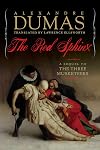
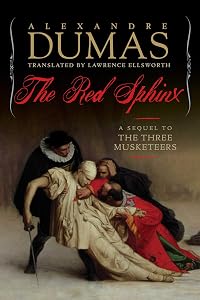
In 1844, Alexandre Dumas published The Three Musketeers, a novel so famous and still so popular today that it scarcely needs an introduction. Shortly thereafter he wrote a sequel, Twenty Years After. Later, toward the end of his career, Dumas wrote The Red Sphinx, another direct sequel to The Three Musketeers that begins a mere twenty days afterward. Picking up right where The Three Musketeers left off, The Red Sphinx continues the stories of Cardinal Richelieu, Queen Anne, and King Louis show more XIII-and introduces a charming new hero, the Comte de Moret, a real historical figure from the period. Dumas wrote seventy-five chapters of The Red Sphinx, but never quite finished it and the novel languished for almost a century. While Dumas never completed the book, he had earlier written a separate novella, The Dove, that recounts the final adventures of Moret and Cardinal Richelieu. Now for the first time in one cohesive narrative, The Red Sphinx and The Dove make a complete and satisfying storyline-a rip-roaring novel of historical adventure, heretofore unknown to English-language readers, by the great Alexandre Dumas, king of the swashbucklers. show lessTags
Recommendations












































Member Reviews
I first got excited about Dumas, who was introduced to me as a young teenager by my French speaking mom. I was enthralled by the Count of Monte Cristo and then by the Musketeer series. After studying French in my first year in college, I even managed to read The three Musketeers in in the original. As I grew older I consigned Dumas to the young adult category, mostly annoyed by how much Hollywood tried to exploit the heroes of my youth.
Imagine my surprise and delight when I learned about how several modern translators had undertaken re-doing the Dumas oeuvre. The first of these translation I read was Robin Buss Penguin Classics translation of The Count. My mind was blown. Not only did I discover Dumas was a master craftsman, perhaps show more creator and certainly innovator of many modern “genres” (romance including LGBTQ variants, historical, adventure, mystery - The Count includes all of these), he was in fact a truly great writer who had much to say about the human condition. Moreover, he had a very modern style and sensibility, and unlike the old English translations, his books are indeed timeless classics.
I thoroughly enjoyed Ellsworth’s Three Musketeers translation, and he masterfully succeeds, like Buss, in bringing out the best of Dumas, including his very adult approach to human affairs, not shying away from the often very dark side of his characters—for example, his description of D’Artagnan’s rape of Milady, something that I suspect was purposefully obfuscated in the earlier translations.
I decided to continue reading the Musketeers series in the “historical” order and finally got around to reading this “second” volume in the series. I was a bit misled by Ellsworth introduction. The book itself is enthralling and fascinating. That Dumas could so masterfully make the “villainous” Richelieu from the first volume into the hero of this work, is a tribute to his skills. Masterful precisely because it is clear all the characters are the same, just Dumas is expanding our view of them, making us reconsider previous judgements because humans are that complex and multi-sided. It also reminds us that we need to question the motives and our judgement of all the characters, including the supposedly heroic and noble Moret and his “undying love” for Isabelle.
Which leads to my biggest critique of the book. The ending Ellsworth decided to translate and tack on was absolutely awful. Pure kitsch! Sure Dumas manages to keep you on the edge of your seat, but he does so in the way a slasher movie makes you jump—viz. silly and totally unrealistic manipulations. I had to skim through it, because I found it barely readable! Unlike Ellsworth, I am convinced Dumas could have easily come up with a far better ending, and I disagree he stopped writing because “he already had an ending.” I am sure he himself realized what utter muck “The Dove” was. More likely he stopped writing because he couldn’t find another print outlet willing to pick up the series. That happens all the time in the TV world and Dumas’ serialization of his novels is the exact equivalent in his time! Think of it like Hannibal ending after season 3! Season 4 would likely be a great watch, but there was no venue willing to pick it up at the time.
So my overall rating for this book is 3.5 scratching at a 4. I would have preferred the book without the tacked on novella. It’s definitely not Dumas’ greatest work, but it’s a fun read (and even includes gay romance—perhaps the first instance of that genre, another Dumas innovation!) show less
Imagine my surprise and delight when I learned about how several modern translators had undertaken re-doing the Dumas oeuvre. The first of these translation I read was Robin Buss Penguin Classics translation of The Count. My mind was blown. Not only did I discover Dumas was a master craftsman, perhaps show more creator and certainly innovator of many modern “genres” (romance including LGBTQ variants, historical, adventure, mystery - The Count includes all of these), he was in fact a truly great writer who had much to say about the human condition. Moreover, he had a very modern style and sensibility, and unlike the old English translations, his books are indeed timeless classics.
I thoroughly enjoyed Ellsworth’s Three Musketeers translation, and he masterfully succeeds, like Buss, in bringing out the best of Dumas, including his very adult approach to human affairs, not shying away from the often very dark side of his characters—for example, his description of D’Artagnan’s rape of Milady, something that I suspect was purposefully obfuscated in the earlier translations.
I decided to continue reading the Musketeers series in the “historical” order and finally got around to reading this “second” volume in the series. I was a bit misled by Ellsworth introduction. The book itself is enthralling and fascinating. That Dumas could so masterfully make the “villainous” Richelieu from the first volume into the hero of this work, is a tribute to his skills. Masterful precisely because it is clear all the characters are the same, just Dumas is expanding our view of them, making us reconsider previous judgements because humans are that complex and multi-sided. It also reminds us that we need to question the motives and our judgement of all the characters, including the supposedly heroic and noble Moret and his “undying love” for Isabelle.
Which leads to my biggest critique of the book. The ending Ellsworth decided to translate and tack on was absolutely awful. Pure kitsch! Sure Dumas manages to keep you on the edge of your seat, but he does so in the way a slasher movie makes you jump—viz. silly and totally unrealistic manipulations. I had to skim through it, because I found it barely readable! Unlike Ellsworth, I am convinced Dumas could have easily come up with a far better ending, and I disagree he stopped writing because “he already had an ending.” I am sure he himself realized what utter muck “The Dove” was. More likely he stopped writing because he couldn’t find another print outlet willing to pick up the series. That happens all the time in the TV world and Dumas’ serialization of his novels is the exact equivalent in his time! Think of it like Hannibal ending after season 3! Season 4 would likely be a great watch, but there was no venue willing to pick it up at the time.
So my overall rating for this book is 3.5 scratching at a 4. I would have preferred the book without the tacked on novella. It’s definitely not Dumas’ greatest work, but it’s a fun read (and even includes gay romance—perhaps the first instance of that genre, another Dumas innovation!) show less
This novel is not widely known, apparently it was only published as a newspaper serial in France until it appeared in book form in 1948 under the title “Le sphinx rouge”. There must have been books based on the serial elsewhere, since Project Gutenberg digitised an edition from 1866 published in New York. It would be interesting to know if it is a complete text, since the action jumps forward abruptly several times.
The eponymous hero is a natural son of king Henri IV who arrives in Paris and immediately gets embroiled in the court intrigues: the Queen and the Queen Mother conspire against Richelieu, the king’s brother has ambitions for the throne, while Louis XIII sulks and broods. And all the time it is the hand of Richelieu, the show more red sphinx of the new title, that safely steers the ship of state between dangerous rocks and shores.
There’s little adventure and romance, and much European politics instead as Richelieu goes to war in Italy against the backdrop of the Thirty Years’ War raging in the German territories.
The striking thing about this book is the nationalist fervour of Dumas, he paints Richelieu in the rosiest colours, while the Spanish, Italian and German kings and princes show all the vices known to man. He looks back on the events of 1630 with the prejudices of the 1860s and it often strikes a jarring note. When Richelieu uses mercenaries, it is clever strategy, when the others do, it’s banditry. Etcetera, etcetera, etcetera.
The books ends abruptly with all affairs (political and romantic) unresolved.
Still, there are some truly “Dumasian” moments, such as a swordfight conducted from sedan chairs. I can just imagine what Richard Lester would have done with a scene like that. show less
The eponymous hero is a natural son of king Henri IV who arrives in Paris and immediately gets embroiled in the court intrigues: the Queen and the Queen Mother conspire against Richelieu, the king’s brother has ambitions for the throne, while Louis XIII sulks and broods. And all the time it is the hand of Richelieu, the show more red sphinx of the new title, that safely steers the ship of state between dangerous rocks and shores.
There’s little adventure and romance, and much European politics instead as Richelieu goes to war in Italy against the backdrop of the Thirty Years’ War raging in the German territories.
The striking thing about this book is the nationalist fervour of Dumas, he paints Richelieu in the rosiest colours, while the Spanish, Italian and German kings and princes show all the vices known to man. He looks back on the events of 1630 with the prejudices of the 1860s and it often strikes a jarring note. When Richelieu uses mercenaries, it is clever strategy, when the others do, it’s banditry. Etcetera, etcetera, etcetera.
The books ends abruptly with all affairs (political and romantic) unresolved.
Still, there are some truly “Dumasian” moments, such as a swordfight conducted from sedan chairs. I can just imagine what Richard Lester would have done with a scene like that. show less
Also known as the The Comte de Moret.
This is a wonderful historical fiction story of Kings and Queens, French nobility, espionage, conspiracy, political maneuverings, love, and war. I took away half a star for 2 reasons. 1) There is not a musketeer in sight in this story, much less D'artagnan, Athos, Porthos, or Aramis. 2) This story is not completed. It has an ending, which I will touch on later in the review, but it is not complete.
The Three Musketeers takes place from 1625-1628. The Red Sphinx starts 20 days later and covers from 1628-1632 and I believe with the intention to cover 1633.
Many of the same characters are present in The Red Sphinx, most notably King Louis XIII, Queen Anne of Austria, and Cardinal Richelieu. The story show more follows Cardinal Richelieu, who was the antagonist in The Three Musketeers, who is now the protagonist, wrestling power away from those who hate the King and empowering himself, and also follows the Comte de Moret, who is King Louis XIII half brother. The actions of the Comte de Moret is not well know during this time, so this is the majority of the fiction in this mainly accurate and enthralling historical fiction tale.
But Dumas left this work unfinished. However, 15 years before starting The Red Sphinx, Dumas published The Dove, which is a novella that takes place in 1638 featuring the Comte de Moret and added at the end of The Red Sphinx. This novella is written as letters between the two characters and describes events that happened after the events of The Red Sphinx, creating a nice ending to an unfinished story. It is possible that Dumas never finished the work because of difficulty in tying the events of The Red Sphinx to already published story The Dove.
I loved that a list of characters with detailed descriptions are included at the end of this book. The descriptions comment on how accurate Dumas portrayed the characters and if there are any historical inaccuracies in their tale.
The book includes a Note from the Translator and a History of Publication that I also found interesting.
My favorite part of the story, which I love about all of Dumas stories that I have read, there are no good guys and bad guys. The three musketeers in the first story are the protagonists, but they are deeply flawed. The same with the protagonists of The Red Sphinx. Dumas clearly admires Cardinal Richelieu but his flaws are also on display. He is the antagonist of one story and protagonist in another. In his stories, no matter what side the character is fighting for, Dumas identifies good guys vs bad guys as men with honor and those without.
I love these real, historical characters and stories. I was so happy when I learned of The Red Sphinx because the story continued but I am sad once again that the story has ended. show less
This is a wonderful historical fiction story of Kings and Queens, French nobility, espionage, conspiracy, political maneuverings, love, and war. I took away half a star for 2 reasons. 1) There is not a musketeer in sight in this story, much less D'artagnan, Athos, Porthos, or Aramis. 2) This story is not completed. It has an ending, which I will touch on later in the review, but it is not complete.
The Three Musketeers takes place from 1625-1628. The Red Sphinx starts 20 days later and covers from 1628-1632 and I believe with the intention to cover 1633.
Many of the same characters are present in The Red Sphinx, most notably King Louis XIII, Queen Anne of Austria, and Cardinal Richelieu. The story show more follows Cardinal Richelieu, who was the antagonist in The Three Musketeers, who is now the protagonist, wrestling power away from those who hate the King and empowering himself, and also follows the Comte de Moret, who is King Louis XIII half brother. The actions of the Comte de Moret is not well know during this time, so this is the majority of the fiction in this mainly accurate and enthralling historical fiction tale.
But Dumas left this work unfinished. However, 15 years before starting The Red Sphinx, Dumas published The Dove, which is a novella that takes place in 1638 featuring the Comte de Moret and added at the end of The Red Sphinx. This novella is written as letters between the two characters and describes events that happened after the events of The Red Sphinx, creating a nice ending to an unfinished story. It is possible that Dumas never finished the work because of difficulty in tying the events of The Red Sphinx to already published story The Dove.
I loved that a list of characters with detailed descriptions are included at the end of this book. The descriptions comment on how accurate Dumas portrayed the characters and if there are any historical inaccuracies in their tale.
The book includes a Note from the Translator and a History of Publication that I also found interesting.
My favorite part of the story, which I love about all of Dumas stories that I have read, there are no good guys and bad guys. The three musketeers in the first story are the protagonists, but they are deeply flawed. The same with the protagonists of The Red Sphinx. Dumas clearly admires Cardinal Richelieu but his flaws are also on display. He is the antagonist of one story and protagonist in another. In his stories, no matter what side the character is fighting for, Dumas identifies good guys vs bad guys as men with honor and those without.
I love these real, historical characters and stories. I was so happy when I learned of The Red Sphinx because the story continued but I am sad once again that the story has ended. show less
The subtitle reads “A Sequel to The Three Musketeers”, but it’s a sequel in chronology only; Athos, Porthos, Aramis and D’Artagnan make no appearance. Instead the protagonists are the Comte de Moret (illegitimate son of Henri IV) and Cardinal Richelieu. Some historical background for both the novel and its topic is in order; The Three Musketeers was written in 1844, with France under the Orleansist monarchy; Louis-Phillipe I was conservative as far as European politics were concerned. The Cardinal Richelieu of The Three Musketeers schemes to overthrow Queen Anne (Anne of Austria), and the Musketeers go to her rescue, but Dumas never explains why Richelieu might want to do this. The Red Sphinx came out in 1865 (mostly; it was show more never finished, since the magazine publishing it as a serial folded). In 1865 Napoleon III was Emperor of France and the country was more aggressive and expansionist; Napoleon III had already fought against Russia in the Crimea and Austria-Hungary in Italy, and greatly expanded the French colonial empire. Thus in The Red Sphinx, Cardinal Richelieu is portrayed as constantly struggling to defend France against foreign enemies – notably the Habsburgs, personified by Anne of Austria, Marie de Medici (the Queen Mother), and King Louis XIII’s brother, Gaston, who are here the schemers rather than the Cardinal.
Although the Comte de Moret gets a good chunk of the novel, his character is not as well developed as Richelieu’s. Dumas plays pretty fast and loose with historical records, placing de Moret at some events without any evidence he was actually there (although, to be fair, there isn’t any evidence he wasn’t there either). He comes across as a generic 17th century swashbuckler, elegantly dressed, scrupulously polite, and romancing every lady he comes across. The ending is rather unsatisfactory, but that’s not translator Lawrence Ellsworth’s fault; Dumas never finished The Red Sphinx, leaving it about 9/10 complete. However, he had previously written a novella, The Dove, that picked up the story of the Comte de Moret sometime after the events in The Red Sphinx. Ellsworth appends this novella (with the note that historicity is quite doubtful).
A large book, 800+ pages; Dumas was getting paid by the word. Still, it reads fairly fast. Contemporary engravings of the historical characters but with the disadvantage that none is identified. A handy appendix with a list of historical people portrayed; I suggest reading this first since, as usual, Dumas has lots of characters. show less
Although the Comte de Moret gets a good chunk of the novel, his character is not as well developed as Richelieu’s. Dumas plays pretty fast and loose with historical records, placing de Moret at some events without any evidence he was actually there (although, to be fair, there isn’t any evidence he wasn’t there either). He comes across as a generic 17th century swashbuckler, elegantly dressed, scrupulously polite, and romancing every lady he comes across. The ending is rather unsatisfactory, but that’s not translator Lawrence Ellsworth’s fault; Dumas never finished The Red Sphinx, leaving it about 9/10 complete. However, he had previously written a novella, The Dove, that picked up the story of the Comte de Moret sometime after the events in The Red Sphinx. Ellsworth appends this novella (with the note that historicity is quite doubtful).
A large book, 800+ pages; Dumas was getting paid by the word. Still, it reads fairly fast. Contemporary engravings of the historical characters but with the disadvantage that none is identified. A handy appendix with a list of historical people portrayed; I suggest reading this first since, as usual, Dumas has lots of characters. show less
Set in the Paris of Louis XIII and the Three Musketeers this novel starts 20 days after the end of the more popular novel but the magic was gone. Dealing with the Great cardinal it was a late work, and was originally written as a serial. Consequently there are a lot of false climaxes, and a good deal of court anecdotes that do little to advance the action. Originally, titled "Le Comte de Moret", it was unfinished, and Mr. Ellesworth has stapled to the unfinished novel a novella written fifteen years earlier entitled The Dove" that gives an end to the love interests. A thick book, but only of interest to the Dumas completists among us.
The Red Sphinx follows on from the Three Musketeers, with the focus on Cardinal Richeliue, and one Comte de Moret, illegitimate brother of King Louis XIII of France (1620s onwards).
I took a little while to read this one as I had to cast my mind back to the pivotal characters from the Three Musketeers and took a crash refresher course in French history.
Having read a lot of Dumas' I was eager to read this one. It is one I might consider adding to my own personal library as one can never have too much swash and buckle.
I took a little while to read this one as I had to cast my mind back to the pivotal characters from the Three Musketeers and took a crash refresher course in French history.
Having read a lot of Dumas' I was eager to read this one. It is one I might consider adding to my own personal library as one can never have too much swash and buckle.
Did not enjoy this book. I'm not sure that if Dumas had finished it, I would have liked it more. It was about 30% digression and maybe 65% narrative to support about 5% action. That's not a good ratio for a book that is advertized as "a swashbuckling adventure". Nor is it a "sequel to The Three Musketeers" in anything other than a chronological sense. None of the 4 heroes are mentioned in this book.
The copy I read included "The Dove", which I did not read.
The copy I read included "The Dove", which I did not read.
Members
- Recently Added By
Author Information

1,609+ Works 98,567 Members
Series

Common Knowledge
- Original title
- Le Sphinx rouge
- Alternate titles
- Le comte de Moret
- Original publication date
- 1865-1866
- People/Characters
- Cardinal de Richelieu; Comte de Moret; Duc de Montmorency; Maréchal de Bassompierre; Louis XIII, Roi de France; Marie de Médicis, Reine de France (show all 10); Isabelle de Lautrec; Madame de Fargis; Gaston d’Orléans, Monsieur; Anne d'Autriche, Reine de France
- First words
- Toward the end of the year of our Lord 1628, the traveler who came, for business or pleasure, to spend a few days in the capital of what was poetically called the Realm of the Lilies could depend on hospitality, with or witho... (show all)ut a letter of introduction, at the Inn of the Painted Beard.
- Last words
- (Click to show. Warning: May contain spoilers.)Was she just noticing it now, or did she suddenly wish for a reason to find a resemblance between Richelieu’s messenger and the former ambassador of the King of England?
Classifications
- Genres
- Fiction and Literature, General Fiction, Historical Fiction
- DDC/MDS
- 843.7 — Literature & rhetoric French Literature French fiction Constitutional monarchy 1815–48
- LCC
- PQ2227 — Language and Literature French, Italian, Spanish and Portuguese literatures French literature Modern literature 19th century
- BISAC
Statistics
- Members
- 218
- Popularity
- 149,619
- Reviews
- 8
- Rating
- (3.24)
- Languages
- 5 — English, Finnish, French, Norwegian (Bokmål), Swedish
- Media
- Paper, Audiobook, Ebook
- ISBNs
- 16
- ASINs
- 4