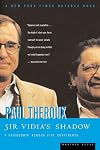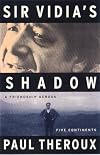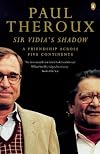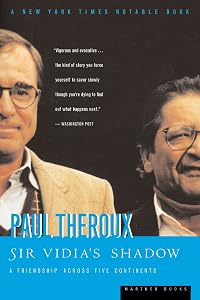
Sir Vidia's Shadow: A Friendship Across Five Continents
by Paul Theroux
On This Page
Description
This heartfelt and revealing account of Paul Theroux's thirty-year friendship with the legendary V. S. Naipaul is an intimate record of a literary mentorship that traces the growth of both writers' careers and explores the unique effect each had on the other. Built around exotic landscapes, anecdotes that are revealing, humorous, and melancholy, and three decades of mutual history, this is a personal account of how one develops as a writer and how a friendship waxes and wanes between two men show more who have set themselves on the perilous journey of a writing life. show lessTags
Recommendations









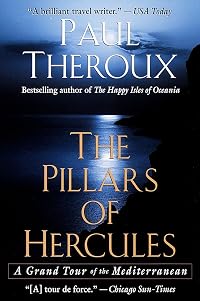
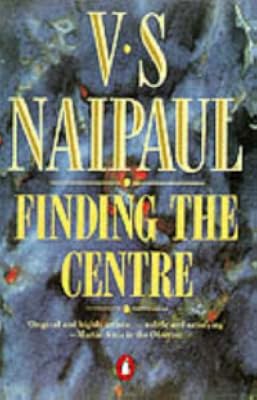
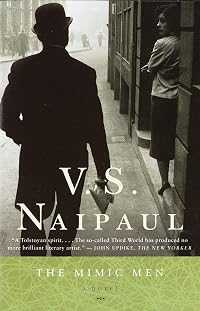
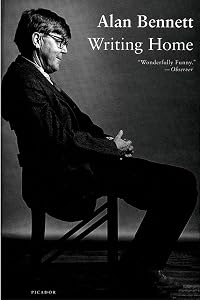





Member Reviews
V S Naipaul was much admired as a writer, but the clarity of thought and uncompromising outspokenness that usually made him so interesting to read seem to have made him a very difficult person to get on with in daily life. He didn’t have any tolerance for people who failed to live up to his — sometimes rather arbitrary — standards, he had a great sense of his own importance, and he is often said to have behaved badly to people close to him, including his first wife Pat Hale, his long-term lover Margaret Murray Gooding, and his brother Shiva.
The young American writer Paul Theroux met Naipaul in Uganda in 1966 when they were both at the university in Kampala, Theroux teaching English Lit (and staying out of the way of the Vietnam show more draft after being thrown out of the Peace Corps) and Naipaul in Africa for a few months as a visiting writer. Theroux was given the responsibility of showing the Naipauls around, and he soon became friends with both of them, with Naipaul uncharacteristically taking the time to mentor Theroux as a writer. This book describes the course of their friendship over three decades. It isn‘t the usual kind of respectful memoir of “the great writer who mentored me” — Theroux makes a point of telling us about Naipaul’s faults and bad behaviour, whilst stressing how much the continued friendship and the feedback they were able to give each other about their respective work in progress mattered to him. It’s fascinating to follow his analysis of how we can care very deeply about another person despite their very obvious faults, as well as his speculation about how much Naipaul’s character was influenced by his experience of racism as a Caribbean immigrant to Britain in the 1950s and by a sense of Brahmin separateness he might have retained from his family background.
There’s a lot of lively description of their adventures in Africa and some amusing snippets about subsequent encounters in London and at the Naipaul’s country cottage on Stephen Tennant’s estate in Wiltshire (including a gloriously awful lunch party where the guests included Justin Jebb and Lady Antonia Fraser), so you could probably still read this as an entertaining novel even if you aren’t especially interested in either Naipaul or Theroux as writers.
The friendship ended in 1997 — Theroux blames the breach on Naipaul’s second wife, Nadira Alvi, who Is very much the villain of the book, but of course that’s his side of the story. Theroux was obviously very fond of Pat, and not inclined to give her successor much of a welcome. We don’t know what else might have been going on. show less
The young American writer Paul Theroux met Naipaul in Uganda in 1966 when they were both at the university in Kampala, Theroux teaching English Lit (and staying out of the way of the Vietnam show more draft after being thrown out of the Peace Corps) and Naipaul in Africa for a few months as a visiting writer. Theroux was given the responsibility of showing the Naipauls around, and he soon became friends with both of them, with Naipaul uncharacteristically taking the time to mentor Theroux as a writer. This book describes the course of their friendship over three decades. It isn‘t the usual kind of respectful memoir of “the great writer who mentored me” — Theroux makes a point of telling us about Naipaul’s faults and bad behaviour, whilst stressing how much the continued friendship and the feedback they were able to give each other about their respective work in progress mattered to him. It’s fascinating to follow his analysis of how we can care very deeply about another person despite their very obvious faults, as well as his speculation about how much Naipaul’s character was influenced by his experience of racism as a Caribbean immigrant to Britain in the 1950s and by a sense of Brahmin separateness he might have retained from his family background.
There’s a lot of lively description of their adventures in Africa and some amusing snippets about subsequent encounters in London and at the Naipaul’s country cottage on Stephen Tennant’s estate in Wiltshire (including a gloriously awful lunch party where the guests included Justin Jebb and Lady Antonia Fraser), so you could probably still read this as an entertaining novel even if you aren’t especially interested in either Naipaul or Theroux as writers.
The friendship ended in 1997 — Theroux blames the breach on Naipaul’s second wife, Nadira Alvi, who Is very much the villain of the book, but of course that’s his side of the story. Theroux was obviously very fond of Pat, and not inclined to give her successor much of a welcome. We don’t know what else might have been going on. show less
In this memoir, Theroux looks at his life through the lens of his 30-year friendship with fellow author V.S. (Vidia) Naipaul. The book is also one of Theroux’s travel writings and a treatise on what it means to be a writer. It is a book full of wonderful descriptions, scenes, thoughts, and meaning.
Throughout, Theroux describes an unmooring needed to observe and write, his mostly via travel and Naipaul’s due to lack of belonging to any particular culture. The artist Andrew Wyeth is an example of one who did not ever physically leave home, yet was deeply observant of life and the human experience. Wyeth did, though, unmoor himself from the artist father that he loved deeply, his work was a rejection and surpassing of his father’s show more work.
At its essence, this book is about that unmooring, the story of a son coming to terms with his relationship to his “father.”
The friendship began in Uganda when Theroux was a young man longing to be a writer. Naipaul believed in him, challenged him, demanded of him, and gave him what he needed to become the writer he became. Theroux doesn’t realize he has outgrown the relationship until Naipaul rejects him, and thereby frees him. And then Theroux writes this book, describing his journey in Vidia’s shadow, finally voicing his own reality.
Theroux closes with: “I was dazed, because I was liberated at last. I saw how the end of a friendship was the start of an understanding. He had made me his by choosing me; his rejection of me meant I was on my own, out of his shadow. He had freed me, he had opened my eyes. . . “
This book opened with the ending, as well: “It is a good thing that time is a light, because so much of life is mumbling shadows and the future is just silence and darkness. But time passes, time’s torch illuminates, it finds connections, it makes sense of confusion, it reveals the truth.” show less
Throughout, Theroux describes an unmooring needed to observe and write, his mostly via travel and Naipaul’s due to lack of belonging to any particular culture. The artist Andrew Wyeth is an example of one who did not ever physically leave home, yet was deeply observant of life and the human experience. Wyeth did, though, unmoor himself from the artist father that he loved deeply, his work was a rejection and surpassing of his father’s show more work.
At its essence, this book is about that unmooring, the story of a son coming to terms with his relationship to his “father.”
The friendship began in Uganda when Theroux was a young man longing to be a writer. Naipaul believed in him, challenged him, demanded of him, and gave him what he needed to become the writer he became. Theroux doesn’t realize he has outgrown the relationship until Naipaul rejects him, and thereby frees him. And then Theroux writes this book, describing his journey in Vidia’s shadow, finally voicing his own reality.
Theroux closes with: “I was dazed, because I was liberated at last. I saw how the end of a friendship was the start of an understanding. He had made me his by choosing me; his rejection of me meant I was on my own, out of his shadow. He had freed me, he had opened my eyes. . . “
This book opened with the ending, as well: “It is a good thing that time is a light, because so much of life is mumbling shadows and the future is just silence and darkness. But time passes, time’s torch illuminates, it finds connections, it makes sense of confusion, it reveals the truth.” show less
A very nice hatchet job by Theroux on his former friend. I like the way Theroux writes. His books on travel have let me on many wonderful adventures. I found his fiction not as interesting for some reason although I did like his short stories. This book somehow falls between the thin line of memoir of a friendship and gossip.
The fact that the author put up with the world's most famous curmudgeon for nearly 30 year is telling something. Paul Theroux treated Naipaul as a mentor of sorts, always living in his shadow, despite the fact that he always had to pick up the lunch and dinner tabs. After all this closeness, the bridge is finally burnt when Naipaul fails to even acknowledge the author's presence on a bright and sunny london day.
The fact that the author put up with the world's most famous curmudgeon for nearly 30 year is telling something. Paul Theroux treated Naipaul as a mentor of sorts, always living in his shadow, despite the fact that he always had to pick up the lunch and dinner tabs. After all this closeness, the bridge is finally burnt when Naipaul fails to even acknowledge the author's presence on a bright and sunny london day.
I doubt that Paul Theroux's story of the trajectory of his friendship with V.S. Naipaul would please Sir Vidia, but I found it a remarkable tale, perhaps more revealed about Paul Theroux than about V.S. Naipaul.
Ratings
Members
- Recently Added By
Published Reviews
It would be overmuch to say Theroux sighed with relief at the end; yet, undeniably, there is a sense of liberation. This friendship is no easy subject for portraiture—oblique, intuitive, unspoken, irrational as it often is. Theroux does his best to explicate, filling this memoir with telling incidents, blending passion with dispassion, writing with elegance. As for Naipaul: “Never give show more anyone a second chance.” show less
added by John_Vaughan
Lists

Best Autobiographies and Memoirs
370 works; 67 members
Author Information

117+ Works 32,445 Members
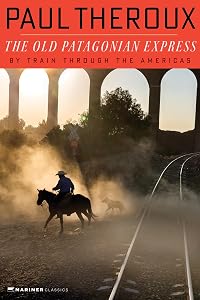
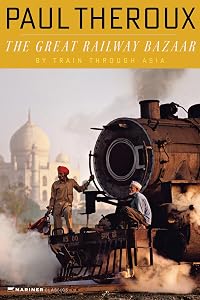
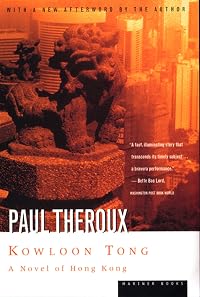
Paul Edward Theroux was born on April 10, 1941 in Medford, Massachusetts and is an acclaimed travel writer. After attending the University of Massachusetts Amherst he joined the Peace Corps and taught in Malawi from 1963 to 1965. He also taught in Uganda at Makerere University and in Singapore at the University of Singapore. Although Theroux has show more also written travel books in general and about various modes of transport, his name is synonymous with the literature of train travel. Theroux's 1975 best-seller, The Great Railway Bazaar, takes the reader through Asia, while his second book about train travel, The Old Patagonian Express (1979), describes his trip from Boston to the tip of South America. His third contribution to the railway travel genre, Riding the Iron Rooster: By Train Through China, won the Thomas Cook Prize for best literary travel book in 1989. His literary output also includes novels, books for children, short stories, articles, and poetry. His novels include Picture Palace (1978), which won the Whitbread Award and The Mosquito Coast (1981), which won the James Tait Black Memorial Prize. Theroux is a fellow of both the British Royal Society of Literature and the Royal Geographic Society. His title Lower River made The New York Times Best Seller List for 2012. Currently his 2015 book, Deep South , is a bestseller. (Bowker Author Biography) Paul Theroux is the distinguished author of numerous award-winning books, including "The Mosquito Coast," "Kowloon Tong," & "Half Moon Street." (Publisher Provided) show less
Common Knowledge
- Original title
- Sir Vidia's Shadow. A Friendship Across Five Continents
- Original publication date
- 1998
- People/Characters
- Paul Theroux; V. S. Naipaul
Classifications
Statistics
- Members
- 407
- Popularity
- 76,255
- Reviews
- 6
- Rating
- (3.97)
- Languages
- Dutch, English, Spanish
- Media
- Paper, Audiobook, Ebook
- ISBNs
- 14
- UPCs
- 2
- ASINs
- 6