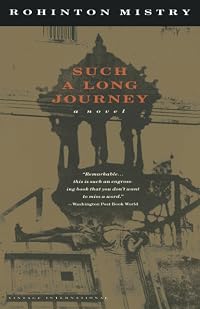
Such a Long Journey
by Rohinton Mistry
On This Page
Description
It is Bombay in 1971, the year India went to war over what was to become Bangladesh. A hard-working bank clerk, Gustad Noble is a devoted family man who gradually sees his modest life unravelling. His young daughter falls ill; his promising son defies his father’s ambitions for him. He is the one reasonable voice amidst the ongoing dramas of his neighbours. One day, he receives a letter from an old friend, asking him to help in what at first seems like an heroic mission. But he soon finds show more himself unwittingly drawn into a dangerous network of deception. Compassionate, and rich in details of character and place, this unforgettable novel charts the journey of a moral heart in a turbulent world of change. show lessTags
Recommendations










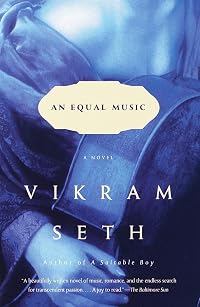
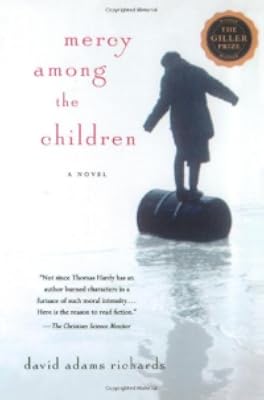
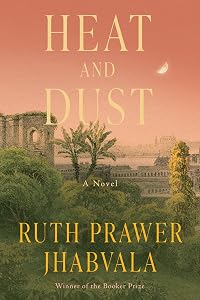
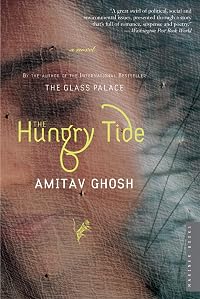
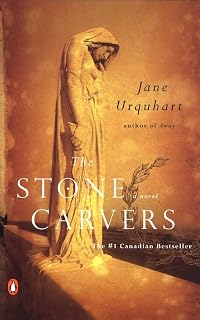
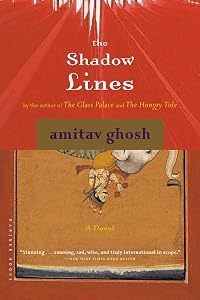

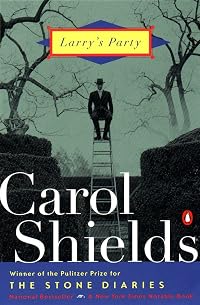


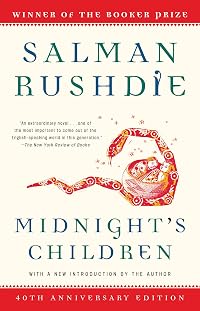






Member Recommendations

Member Reviews
This is Rohinton Mistry's first novel published in 1991 and shortlisted for the Booker prize of that year. It is the story of a community living in and around an old block of flats in Bombay(Mumbai). Gustad Noble and his family struggle to keep pace with the rising cost of living brought about by the corrupt government of Indira Gandhi and the war with Pakistan in 1971. Tensions within his family combine with illness and a corrosion of the society around him to test his strength and humanity.
Gustad gets involved in a plot to fund freedom fighters in East Pakistan, through his friendship with a member of the Indian secret service. While this storyline places Gustad at risk and adds tension to the story I found it the least successful show more part of the novel. It is the characters in and around Khodadad Building that bring this novel to life. There are some marvellous portraits drawn by Mistry; Tehmal the mentally impaired youth that only Gustade can understand, Dinshawji, Gustads work colleague fighting a terminal illness with humour and high spirits, Peerbhoy the Paanwalla dispensing paan and tall stories outside the local brothel, Miss Kalpitia a Miss Haversham like figure who casts spells for and on the inhabitants of the Building. Many more characters provide a rich tapestry of Indian urban life and are expertly woven into the plot.
Gustad's family are Zoroastrians and Mistry gives us a peek into the religious life of the family: the funerals and the towers of silence, the prayers and the ritual of kusti and how they fit into a society where they are in a minority. This is such a well written book full of atmosphere and character development. Mistry brilliantly shows us the proud Gustad bearing up to the challenges that threaten to tear him apart and becoming more human in the process. Through all the adversity Mistry gives his characters dignity and hope. There is an optimism that despite all of the things happening to them, which are beyond their control and which show no sign of changing for the better, the characters in the story will get through it all and India will endure.
This excellent novel with its superb characters and descriptions of Indian urban life deserves to be read especially if you have enjoyed A fine balance
This is every bit as good show less
Gustad gets involved in a plot to fund freedom fighters in East Pakistan, through his friendship with a member of the Indian secret service. While this storyline places Gustad at risk and adds tension to the story I found it the least successful show more part of the novel. It is the characters in and around Khodadad Building that bring this novel to life. There are some marvellous portraits drawn by Mistry; Tehmal the mentally impaired youth that only Gustade can understand, Dinshawji, Gustads work colleague fighting a terminal illness with humour and high spirits, Peerbhoy the Paanwalla dispensing paan and tall stories outside the local brothel, Miss Kalpitia a Miss Haversham like figure who casts spells for and on the inhabitants of the Building. Many more characters provide a rich tapestry of Indian urban life and are expertly woven into the plot.
Gustad's family are Zoroastrians and Mistry gives us a peek into the religious life of the family: the funerals and the towers of silence, the prayers and the ritual of kusti and how they fit into a society where they are in a minority. This is such a well written book full of atmosphere and character development. Mistry brilliantly shows us the proud Gustad bearing up to the challenges that threaten to tear him apart and becoming more human in the process. Through all the adversity Mistry gives his characters dignity and hope. There is an optimism that despite all of the things happening to them, which are beyond their control and which show no sign of changing for the better, the characters in the story will get through it all and India will endure.
This excellent novel with its superb characters and descriptions of Indian urban life deserves to be read especially if you have enjoyed A fine balance
This is every bit as good show less
Update April 2016: I noticed, in connection with the banning of Naipaul's An Area of Darkness in India, that the University of Mumbai banned this book with alacrity upon the threat of violence from a rightwing political group looking for attention. All over the world free speech is being eroded in universities, ironically from both the left side of the divide and the right. It is something both sides apparently agree upon, that people should only be allowed to say what their side wants to hear. So in the end, what is the difference between a criminal group of thugs in India arguing for the banning of a book and those of quite a different political stance who recently fought to stop Germaine Greer, a noted public speaker and thinker for show more 50 years, from appearing on university soil?
You can find Mistry's own reaction to this here: http://www.thehindu.com/news/national/rohinton-mistry-protests-withdrawal-of-boo...
I quote from it:
“As for the grandson of the Shiv Sena leader, the young man who takes credit for the whole pathetic business, who admits to not having read the book, just the few lines that offend him and his bibliophobic brethren, he has now been inducted into the family enterprise of parochial politics, anointed leader of its newly minted “youth wing.” What can — what should — one feel about him? Pity, disappointment, compassion? Twenty years old, in the final year of a B.A. in history, at my own Alma Mater, the beneficiary of a good education, he is about to embark down the Sena's well-trodden path, to appeal, like those before him, to all that is worst in human nature.
“Does he have to? No. He is clearly equipped to choose for himself. He could lead, instead of following, the old regime. He could say something radical — that burning and banning books will not feed one hungry soul, will not house one homeless person nor will it provide gainful employment to anyone [unless one counts those hired to light bonfires], not in Mumbai, not in Maharashtra, not anywhere, not ever.
“He can think independently, and he can choose. And since he is drawn to books, he might want to read, carefully this time, from cover to cover, a couple that would help him make his choice. Come to think of it, the Vice-Chancellor, too, may find them beneficial. First, Conrad's Heart of Darkness, in order to consider the options: step back from the abyss, or go over the edge. Next, the Nobel laureate Rabindranath Tagore's Gitanjali. And I would urge particular attention to this verse: ‘Where the mind is without fear and the head is held high; Where knowledge is free; Where the world has not been broken up into fragments by narrow domestic walls;...Into that heaven of freedom, my Father, let my country awake'.”
----------------------------
I know quite a bit about India in the period in which this is set - but only at a very micro, rural level. This is an urban middle-class story set against the backdrop of the period of war with Pakistan, a world I really only started discovering through Mistry's books. For the colour of life in the city, the stench of it, its cheapness, its noise, its horrifying poverty-strickenness, its cruelty, this book can be thoroughly recommended. To watch the small attempts to rise above these circumstances, to escape to something better is distressing...
rest here:
https://alittleteaalittlechat.wordpress.com/2015/05/31/such-a-long-journey-by-ro... show less
Rohinton Mistry’s Such a Long Journey is one of those remarkable confluences of astonishingly beautiful writing, tightly crafted plot, and fully-developed characterization. The work is neither pretentious nor formulaic. And although there is no major crisis that takes place, no earth-shattering destruction of place or person, there is a sustained tension throughout the novel that keeps you reading, that draws you into the life of the main protagonist, Gustad Noble.
The novel is set during the rule of Indira Gandhi, and is a damning indictment of both her government and American foreign policy of the time. The journey is both a physical and metaphorical one, of Gustad’s bedside visitation of a friend he thought had betrayed him, and show more of Gustad’s eventual realization that there are few absolutes in life beyond that of death, that for every face there are a myriad of facets.
There are several subtle but poignant metaphors woven throughout this narrative, the most memorable being the character of Tehmul, who is a physically and mentally disabled man with the character of a boy, and it is this pull of the innocent versus the carnal that mirrors much of the political and social turmoil of the novel.
Although short-listed for the 1991 Booker Prize, Such a Long Journey was pulled from the University of Mumbai’s English curriculum because of protests from the family of Hindu nationalist, Bal Thackeray – yet one more example in the world of unenlightened people nurturing fear-mongering.
I’d urge you to read Such a Long Journey. It is a story that will nestle in your psyche and remain. show less
The novel is set during the rule of Indira Gandhi, and is a damning indictment of both her government and American foreign policy of the time. The journey is both a physical and metaphorical one, of Gustad’s bedside visitation of a friend he thought had betrayed him, and show more of Gustad’s eventual realization that there are few absolutes in life beyond that of death, that for every face there are a myriad of facets.
There are several subtle but poignant metaphors woven throughout this narrative, the most memorable being the character of Tehmul, who is a physically and mentally disabled man with the character of a boy, and it is this pull of the innocent versus the carnal that mirrors much of the political and social turmoil of the novel.
Although short-listed for the 1991 Booker Prize, Such a Long Journey was pulled from the University of Mumbai’s English curriculum because of protests from the family of Hindu nationalist, Bal Thackeray – yet one more example in the world of unenlightened people nurturing fear-mongering.
I’d urge you to read Such a Long Journey. It is a story that will nestle in your psyche and remain. show less
This novel about family relationships, friendship, and the benefits and dangers of loyalty is set in 1971 Bombay, during the brutal Bangladeshi Liberation War and President Indira Gandhi's increasingly corrupt and repressive rule. The central character is Gustad Noble, a proud and respected middle aged bank clerk, who lives with his wife and three children in an apartment complex in a crumbling middle class neighborhood. Despite an outward appearance of stability, the Noble's domestic calm has been disrupted by the decision of Sohrab, the eldest child, to forego a scholarship to the prestigious Indian Institute of Technology, which would likely ensure his and the family's financial stability, and a serious illness that has afflicted show more Roshan, the youngest child and only daughter of the family. Gustad also remains hurt by the decision of his best friend and beloved neighbor, Major Jimmy Bilimoria, to leave the Khodadad Building where they lived suddenly and without warning one year earlier. Jimmy's absence has left a large void in Gustad's life, particularly at a time when he faces trouble within and outside of home.
One day Gustad receives a mysterious letter from Jimmy. The Major has joined the Indian Secret Service, and he asks Gustad to grant him a very important favor. After he deliberates on it and consults his family, Gustad agrees to help Jimmy. However, once he realizes what Jimmy has asked him to do he soon realizes that his friend has put him, his family and his career in danger. He is caught between a rock and a hard place, as Jimmy's colleagues make it clear that he may suffer repercussions from them if he doesn't fulfill Jimmy's request, which adds more stress and uncertainty to his already troubled life.
Although I found Such a Long Journey to be a well written novel, filled with interesting characters, I didn't enjoy it nearly as well as I did his two other novels, A Fine Balance and Family Matters. Several key characters, particularly Sohrab and Dilnavaz, Gustad's wife, were thinly portrayed, Sohrab's decision to forgo his scholarship to IIT remained a mysterious one, given the lack of opportunities for young men with BA degrees in India, and the story ended in an abrupt and unsatisfying manner. I'm still glad that I read it, and I would recommend it, but mainly to those who have already read his previous books. show less
One day Gustad receives a mysterious letter from Jimmy. The Major has joined the Indian Secret Service, and he asks Gustad to grant him a very important favor. After he deliberates on it and consults his family, Gustad agrees to help Jimmy. However, once he realizes what Jimmy has asked him to do he soon realizes that his friend has put him, his family and his career in danger. He is caught between a rock and a hard place, as Jimmy's colleagues make it clear that he may suffer repercussions from them if he doesn't fulfill Jimmy's request, which adds more stress and uncertainty to his already troubled life.
Although I found Such a Long Journey to be a well written novel, filled with interesting characters, I didn't enjoy it nearly as well as I did his two other novels, A Fine Balance and Family Matters. Several key characters, particularly Sohrab and Dilnavaz, Gustad's wife, were thinly portrayed, Sohrab's decision to forgo his scholarship to IIT remained a mysterious one, given the lack of opportunities for young men with BA degrees in India, and the story ended in an abrupt and unsatisfying manner. I'm still glad that I read it, and I would recommend it, but mainly to those who have already read his previous books. show less
This is the lovely family story of a Mumbai Parsi family, father Gustad, mother Dilnavaz, and their three children, Sohrab, Darius, and Roshan. Gustad works in a bank, and over the course of the book the family goes through various family problems: Sohrab refuses to go to a prestigious technical college even though he has won a place there, opting instead for a liberal arts education; Darius is pursuing a girl from a family Gustad is feuding with; Roshan has been sick off and on with a mysterious illness. Then Gustad's friend Major Bilimoria asks him to do a favor which might involve him in some government corruption and illegalities.
This was Mistry's first book and it shows. I had high expectations after so recently rereading A Fine show more Balance, and this book definitely suffers in comparison. It sometimes wanders and feels without focus. Nevertheless, Gustad is a wonderful character, and I enjoyed visiting with this family a while. As a bonus there's a fair amount of information about the Parsi culture here. So it's a worthwhile read.
3 Stars show less
This was Mistry's first book and it shows. I had high expectations after so recently rereading A Fine show more Balance, and this book definitely suffers in comparison. It sometimes wanders and feels without focus. Nevertheless, Gustad is a wonderful character, and I enjoyed visiting with this family a while. As a bonus there's a fair amount of information about the Parsi culture here. So it's a worthwhile read.
3 Stars show less
A complex, fascinating family story with layered examinations of political corruption, violence, betrayals, scapegoating and more. I particularly enjoyed learning a bit more about life for India's Parsi minority, and thought this novel, written in the early 1990s about the early 1970s, was somewhat prescient in referencing the rise of Hindu nationalism in India. I intend to read all of Mistry's novels.
This is human drama of the most poignant variety. It starts as a family drama but then gradually encompasses the neighborhood and, you can say, the whole country. As a family drama, it is sure to resonate with any family in any country, one could relate to it on a very personal level. As a sociopolitical drama, it brings to harsh light the inadequacies and faults of Indian politics and society. When I was in India in 1970s (the time described in the book) I saw things from a very different perspective - politically and socially, plus I was too young to understand anything in a proper way. So this novel opened my eyes on a lot of things.
The story begins with the protagonist Gustad Noble, a Parsi (a minority in India), finding himself in show more such emotional turmoil that the saying "When it rains in pours" would be perfect to describe the situation. The turmoil escalates with every page and reaches a powerful denouement at the end of the book - a climax that is not just a family drama any more but something much, much larger. Rohinton Mistry is a very talented writer whose other novel, "A Fine Balance" made an great impression on me. "Such a Long Journey" may not be of the same caliber, but it's still a very worthy read. show less
The story begins with the protagonist Gustad Noble, a Parsi (a minority in India), finding himself in show more such emotional turmoil that the saying "When it rains in pours" would be perfect to describe the situation. The turmoil escalates with every page and reaches a powerful denouement at the end of the book - a climax that is not just a family drama any more but something much, much larger. Rohinton Mistry is a very talented writer whose other novel, "A Fine Balance" made an great impression on me. "Such a Long Journey" may not be of the same caliber, but it's still a very worthy read. show less
Members
- Recently Added By
Lists

The Best of Canadian Literature
235 works; 33 members

All Things India
95 works; 21 members
Booker Prize
491 works; 62 members
Booker Prize Shortlist: Titles Read
103 works; 10 members

Governor General of Canada's English Fiction Awards
89 works; 3 members

New Canadian Library
191 works; 7 members

CBC's Great Canadian Reading List
149 works; 5 members

Man Booker Prize Longlist 1991
6 works; 2 members

2026 Reading List
50 works; 1 member
Author Information

10+ Works 15,309 Members
Rohinton Mistry was born in Bombay in 1952 and immigrated to Canada in 1975. He began writing stories in 1983 while a student at the University of Toronto. His books recount everyday life in India. Titles include Tales From Firozsha Baag, a collection of short stories, and A Fine Balance, a novel. Mistry's first novel, Such a Long Journey, show more received several awards, including the Governor General's Award and the Commonwealth Writers Prize for Best Book. It was also shortlisted for the Booker Prize and for the Trillium Award. (Bowker Author Biography) show less
Awards and Honors
Series
Belongs to Publisher Series
Work Relationships
Has the adaptation
Common Knowledge
- Canonical title
- Such a Long Journey
- Original title
- Such a Long Journey
- Original publication date
- 1991
- Important places
- Bombay, India; India
- Related movies
- Such a Long Journey (1998 | IMDb)
- Epigraph
- He assembled the aged priests and put questions to them concerning the kings who had once possessed the world. 'How did they,' he inquired, 'hold the world in the beginning, and why is it that it has been left to us in such a... (show all) sorry state? And how was it that they were able to live free or care during the days of their heroic labours?"
-Firdausi, Shah-Nama
A cold coming we had of it,
Just the worst time of year
For a journey, and such a long journey...
-T.S. Eliot, 'Journey of the Magi'
And when old words die out on the tongue, new
melodies break forth from the heart; and where the
old tracks are lost, new country is revealed with its wonders.
-Rabindranath Tagore, Gitanjali - Dedication
- For Freny
- First words
- The first light of morning barely illuminated the sky as Gustad Noble faced eastward to offer his orisons to Ahura Mazda.
- Quotations
- That bloody Bilimoria. After the shameless way he had behaved, he had a nerve, writing now asking for a favour as if nothing had happened. He could wait till his dying day for a reply
he wished for all the nights in his sons' and daughter's lives to be filled with peace and tranquillity
He felt what? an intense joy? or sadness? Did it matter? Like the sonata. Or dawn in the old days, the rising sun, its rays spilling happy golden tears into the compound, the sparrows chirping in the solitary tree - Last words
- (Click to show. Warning: May contain spoilers.)As the first sheet tore away, a frightened moth flew out and circled the room
Classifications
- Genres
- Fiction and Literature, General Fiction, Historical Fiction
- DDC/MDS
- 813.54 — Literature & rhetoric American literature in English American fiction in English 1900-1999 1945-1999
- LCC
- PR9199.3 .M494 .S84 — Language and Literature English English Literature English literature: Provincial, local, etc.
- BISAC
Statistics
- Members
- 1,748
- Popularity
- 12,594
- Reviews
- 29
- Rating
- (3.90)
- Languages
- 10 — Danish, English, French, German, Hindi, Italian, Norwegian (Bokmål), Russian, Spanish, Swedish
- Media
- Paper, Audiobook, Ebook
- ISBNs
- 41
- ASINs
- 14