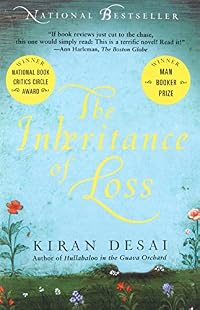
The Inheritance of Loss
by Kiran Desai
There is 1 current discussion about this work.
On This Page
Description
In a crumbling, isolated house at the foot of Mount Kanchenjunga in the Himalayas lives an embittered judge who wants only to retire in peace, when his orphaned granddaughter, Sai, arrives on his doorstep. The judge's cook watches over her distractedly, for his thoughts are often on his son, Biju, who is hop-scotching from one gritty New York restaurant to another. Kiran Desai's brilliant novel, published to huge acclaim, is a story of joy and despair. Her characters face numerous choices show more that majestically illuminate the consequences of colonialism as it collides with the modern world. show lessTags
Recommendations

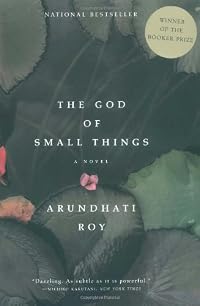
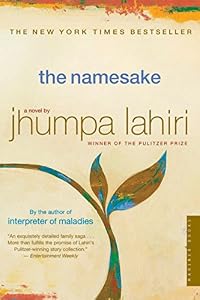






































Member Recommendations





CGlanovsky Non-linear storytelling. Post-colonial novel. Deals with a period of political unrest.

jayne_charles Both have stunning writing making up for absence of plot, and common ground in terms of the immigrant experience in New York
Member Reviews
A story of immigrants, the Old World and the New World. Each Indian character we meet is powerless in the face of empires: the apex power of 1980s America and the declined but still culturally formidable power of the British Empire.
Each has a reason to hold themselves part from their countrymen and their peers. But where the novel threatens to slip into satire and absurdity, Desai steers it back to pathos. When Biju, the lowly cook's son made "good" in America (where he really works a sequence of low paying and unrewarding jobs as an undocumented immigrant), finds himself returned to his homeland, he stands two unnamed fellow travellers, who share a moment with a similar traveler that summarizes the entire novel:
"'Each time you come show more back you think something must have changed, but it's always the same.'
'That's right,' said the other man. 'You don't like to say it but you have to. Some countries don't get ahead for a reason.'"
The characters of this little tragedy seem to blame each other, but we can see that they never stood a chance against the wealth, weapons, and allure of the West. show less
Each has a reason to hold themselves part from their countrymen and their peers. But where the novel threatens to slip into satire and absurdity, Desai steers it back to pathos. When Biju, the lowly cook's son made "good" in America (where he really works a sequence of low paying and unrewarding jobs as an undocumented immigrant), finds himself returned to his homeland, he stands two unnamed fellow travellers, who share a moment with a similar traveler that summarizes the entire novel:
"'Each time you come show more back you think something must have changed, but it's always the same.'
'That's right,' said the other man. 'You don't like to say it but you have to. Some countries don't get ahead for a reason.'"
The characters of this little tragedy seem to blame each other, but we can see that they never stood a chance against the wealth, weapons, and allure of the West. show less
DNF. All icing no cake. Frequently lovely writing, very high craftsmanship, but lacking any momentum at all. Most of the novel plays out like a lazy memory, which needed a bit more energy to get going - and all the well-observed details in the world can't save a non-existent plot.
Between 1986 and 1988, the demand for a separate state of Gorkhaland and Kamtapur based on ethnic lines grew strong. Riots between the Gorkha National Liberation Front (GNLF) and the West Bengal government reached a stand-off after a forty-day strike. The town was virtually under siege, and the state government called in the Indian army to maintain law and order. This led to the formation of the Darjeeling Gorkha Hill Council, a body that was given semi-autonomous powers to govern the Darjeeling district, except the area under the Siliguri subdivision. Since 2007, the demand for a separate Gorkhaland state has been revived by the Gorkha Janmukti Morcha and its supporters in the Darjeeling hills. The Kamtapur People's Party and its show more supporters' movement for a separate Kamtapur state covering North Bengal have gained momentum. (from Wikipedia)
[The Inheritance of Loss] by Kiran Desai
Kalimpong an Indian Hill station and it's surrounds form the backdrop to Desia's 2006 Man Booker prize winning novel, with the riots in the 1980's resulting from agitation by the Gorkha National Liberation Front forming a centre piece for the story. It's strength lies in its portrayal of life in a post colonial India town, which is home to a number of nationalities and conscious of its history as a crossroads for Tibetan refugees and Chinese incursions. It's weakness lies in a sort of cut and paste structure that does not serve well its central story line which does not come across as strongly as it might have done.
The inheritance of loss is a loss of identity and the themes running through this novel are of individuals struggling to come to terms with displacement of one sort or another. A retired Indian judge who has never recovered from his education in England and the resulting alienation he feels when returning to India is set against the story of his cook's son who is desperately trying to make his way as an illegal immigrant in the United States of America. The colourful elderly residents around Kalimpong; Noni and Lola, Uncle Potty and father Booty are foreigners in a country they have made their home and there is a sense of them clinging onto a life that threatens to be swept away by the Nationalists movement. These people are out of place and out of time, but their situation is in some respects similar to the younger generation; Sai the judges granddaughter and her boyfriend Gyan who being Nepalese is caught up in a struggle that he barely understands and of course Biju the cook's son trying to figure out just what he is doing in the USA.
Desai places the reader convincingly in the crumbling houses and crumbling lives of the community in Kalimpong. The hill station with it's beautiful flora and breath taking views of the Himalayas is contrasted with downtown scruffiness and abject poverty on its outskirts. Her characters are well drawn, but she laughs at them perhaps a little too cruelly at times, these are people that deserve our sympathy a little more than Desai allows us to have for them. I get the feeling she is looking down on her characters rather than looking through them and her superior attitude grates on me a little. Desai is not above having a swipe at other authors writing about India; V S Naipaul for instance and those English writers whose impressions "did not correspond with the truth."
Taking everything into consideration I think Desai's novel is a success, because of her characterisation and her insight into her themes of alienation in a post colonial world. She writes well enough sprinkling her text with Indian and Anglo-Indian expressions that lend it all some authenticity. However I am not entirely convinced with the novel's structure, the continual breaking up of the text into short sections within a chapter makes that cut and paste feeling all too apparent, there are bits pasted in that might have been better to leave out. In my opinion the novel lacks a heart and so I would rate it at 3.5 stars. show less
[The Inheritance of Loss] by Kiran Desai
Kalimpong an Indian Hill station and it's surrounds form the backdrop to Desia's 2006 Man Booker prize winning novel, with the riots in the 1980's resulting from agitation by the Gorkha National Liberation Front forming a centre piece for the story. It's strength lies in its portrayal of life in a post colonial India town, which is home to a number of nationalities and conscious of its history as a crossroads for Tibetan refugees and Chinese incursions. It's weakness lies in a sort of cut and paste structure that does not serve well its central story line which does not come across as strongly as it might have done.
The inheritance of loss is a loss of identity and the themes running through this novel are of individuals struggling to come to terms with displacement of one sort or another. A retired Indian judge who has never recovered from his education in England and the resulting alienation he feels when returning to India is set against the story of his cook's son who is desperately trying to make his way as an illegal immigrant in the United States of America. The colourful elderly residents around Kalimpong; Noni and Lola, Uncle Potty and father Booty are foreigners in a country they have made their home and there is a sense of them clinging onto a life that threatens to be swept away by the Nationalists movement. These people are out of place and out of time, but their situation is in some respects similar to the younger generation; Sai the judges granddaughter and her boyfriend Gyan who being Nepalese is caught up in a struggle that he barely understands and of course Biju the cook's son trying to figure out just what he is doing in the USA.
Desai places the reader convincingly in the crumbling houses and crumbling lives of the community in Kalimpong. The hill station with it's beautiful flora and breath taking views of the Himalayas is contrasted with downtown scruffiness and abject poverty on its outskirts. Her characters are well drawn, but she laughs at them perhaps a little too cruelly at times, these are people that deserve our sympathy a little more than Desai allows us to have for them. I get the feeling she is looking down on her characters rather than looking through them and her superior attitude grates on me a little. Desai is not above having a swipe at other authors writing about India; V S Naipaul for instance and those English writers whose impressions "did not correspond with the truth."
Taking everything into consideration I think Desai's novel is a success, because of her characterisation and her insight into her themes of alienation in a post colonial world. She writes well enough sprinkling her text with Indian and Anglo-Indian expressions that lend it all some authenticity. However I am not entirely convinced with the novel's structure, the continual breaking up of the text into short sections within a chapter makes that cut and paste feeling all too apparent, there are bits pasted in that might have been better to leave out. In my opinion the novel lacks a heart and so I would rate it at 3.5 stars. show less
In a house which shows little sign of its former glory, at the foot of Mount Kanchenjunga, lives a judge, his granddaughter and their cook. The judge has retreated here to spend the rest of his days alone (with his beloved dog, Mutt) trying to forget about his disappointing past. His granddaughter Sai is brought to her grandfather after the parents she barely knew died in Russia so there was no money to keep her in boarding school (“a westernized Indian brought up by English nuns, an estranged Indian living in India”), and now she has fallen in love with her science tutor, Gyan. The cook, Nandu, has pinned all his hopes on the son, Biju, whom he sent to America where Nandu thinks he is finding fame and fortune, while Biju is simply show more moving from one depressing, exploiting, illegal job to another. The novel follows these characters, and introduces a number of others at a moment when identity, nationality and loyalty are all called into question as an Indian-Nepali insurgency erupts in their mountain town.
It is, in many ways, a bitter, acerbic novel and I found the narrative flow flagged a bit at the beginning, but through it, Desai explores the realities of globalization, multiculturalism, economic inequality, fundamentalism, and terrorist violence.
Desai begins her novel with a quote from a poem by Borges in which he says, “I observe the ambitious and would like to understand them./Their day is greedy as a lariat in the air.” A lariat thrown in the air aims to ensare something, to restrain it, to turn it to the thrower’s control. So do many of the characters in this novel have greedy days through which they try to change themselves or their circumstances or push their children to do so; indeed for many this is the continuous circumstance of their lives but in this story happy endings are rare.
Borges: “Time is living me./More silent than my shadow, I pass through the lofty covetous multitude./They are indispensable, singular, worthy of tomorrow. My name is someone and anyone./I walk slowly, like one who comes from so far away he doesn’t expect to arrive.” Despite the multitude and often, from the perspective of the “other” an inability to distinguish among them, and despite the commonality of experience and desires, everyone is an individual and has an individual story and life. In Desai’s novel, many “walk” slowly not because they will not just not arrive; but because social, economic, political forces and influences and powers will ensure no arrival as in any real changes in lives or circumstances and if there is change, it will likely be, more often than not, negative.
This is a novel about physical, social and emotional displacements and migrations: Biju emigrates to the USA to seek fame and fortune along with countless others but finds that he can’t deny his patrimony, his home; Sai is an Indian woman raised by nuns who fits in neither culture but is moving towards maturity and a better understanding of herself; the judge is migrating backwards, living with the bitterness of his professional and personal lives against the gleaming promise they once held; Father Booty is forced to migrate from his home because, as a privileged foreigner, he took too much for granted; Uncle Potty is left, but his world is disappearing around him and he will not survive the change; Noni and Lola live in a comfortable, artificial cocoon of Englishness but with the smallest tear the fabric unravels and no one in authority will protect them…all authority is corrupt and will not protect Indians unless substantially bribed, so why lift a finger for two anachronisms; Gyan has no idea where he is going emotionally, socially, or politically, but he does discover the age-old truth of pushing against the “other” to define oneself: “Yes, he owed much to his rejection of Sai. The chink she had provided into another world gave him just enough room to kick; he could work against her, define the conflict in his life that he felt all along but in a cotton-wooly way. In pushing her way, an energy was born, a purpose whittled. He wouldn’t sweetly reconcile”.
This novel is also about how a crisis illuminates the gulf in friendship between races and social classes even when there is a patina of understanding and acceptance. Lola and Noni quickly learn how unwelcome they are when times get tough and food is hard to buy; any willing to take the risk will only do so surreptitiously to protect themselves; when he tries to avoid deportation, Father Booty discovers that any friends with influence look the other way or plead impotence. The judge had lived together with Nandu, the cook (whose name we only discover at the end of the novel), “for more years than they had with anyone else, practically in the same room, closer to each other than to any other human being and—nothing, zero, no understanding.”
Desai depicts a society of violence and corruption with no accountability: nothing happens to the police officers who beat and blind a man who manifestly has nothing to do with a theft that he is accused of. Nor does she hold out much hope for real change in society:
“The men sat unbedding their rage, learning, as everyone does in this country, at one time or another, that old hatreds are endlessly retrievable. And they had disinterred it, they found the hate pure, purer than it could ever have been before, because the grief of the past was gone. Just the fury remained, distilled, liberating. It was theirs by birthright, it could take them so high, it was a drug. They sat feeling elevated, there on the narrow wood benches, stamping their cold feet on the earth floor.”
But nothing will, or can change: “There was no system to soothe the unfairness of things; justice was without scope; it might snag the stealer of chickens, but great evasive crimes would have to be dismissed because, if identified and netted, they would bring down the entire structure of so-called civilization. For crimes that took place in those intimate spaces between two people without a witness, for these crimes the guilty would never pay. There was no religion and no government hat would relieve the hell.”
The sense of injustice is real, but even a change in government or power relations will not change anything: “The patriotism was false, he suddenly felt as he marched; it was surely just frustration—the leaders harnessing the natural irritations and disdain of adolescence for cynical ends; for their own hope in attaining the same power as government officials held now, the same ability to award local businessmen deals in exchange for bribes, for the ability to give jobs to their relatives, places to their children in schools, cooking gas connections…”
Is Desai suggesting that Indians in particular are doomed not to succeed as immigrants in a new land because they cannot divest themselves of this patrimony of caste and corruption and a sense of inferiority abroad? Biju is increasingly unhappy in America and all the Indians he meets are similarly living on the edge illegally or, the more successful ones, exploiting other Indians and cheating customers His friend Saeed Saeed from Zanzibar is similarly poor and without connections, but he lives in himself and seizes his opportunities. As he says to Biju: “Now, you are here, you are not back home. Anything you want, you try and you can do.” While Saeed was collecting shoes, “Biju had been cultivating self-pity”.
The only characters who achieve some degree of happiness in the end are Nandu and Biju when the latter returns home, having been robbed of everything he tried to bring back from America, stumbling in the dark and into his father’s embrace in a woman’s nightdress because all his clothes were also stolen. But this is the point: the material and spiritual rewards that all seek in the nirvana that is supposedly the west and especially the USA are false gods: “Biju stood there in that dusty tepid soft sari night. Sweet drabness of home—he felt everything shifting and clicking into place around him, felt himself slowly shrink back to size, the enormous anxiety of being a foreigner ebbing—that unbearable arrogance and shame of the immigrant. Nobody paid attention to him here and if they said anything at all, their words were easy, unconcerned. He looked about and for the first time in God knows how long, his vision unblurred and he found that he could see clearly.”
This is a complex novel. In the closing embrace of father and son, Desai seems to say that in the end, aside from cast and corruption and society and classes and races and history, it is relationships among people and family that count. Because everything , in the final analysis, affects individuals on their individual trajectories of life. Interestingly, I read an interview with Desai where she said of Salman Rushdie, “We owe him…his insistence that history is always someone’s story.” I think Desai does the same in examining the lives of her characters as they are buffeted by life and events.
Some lessons are learned: Sai finally realizes: “Life wasn’t single in its purpose….or even in its direction…The simplicity of what she’d been taught wouldn’t hold. Never again could she think there was but one narrative and that his narrative belonged only to herself, that she might create her own tiny happiness and live safely within it.” This is not life and this is one of the things that Desai explores and illustrates in this novel. show less
It is, in many ways, a bitter, acerbic novel and I found the narrative flow flagged a bit at the beginning, but through it, Desai explores the realities of globalization, multiculturalism, economic inequality, fundamentalism, and terrorist violence.
Desai begins her novel with a quote from a poem by Borges in which he says, “I observe the ambitious and would like to understand them./Their day is greedy as a lariat in the air.” A lariat thrown in the air aims to ensare something, to restrain it, to turn it to the thrower’s control. So do many of the characters in this novel have greedy days through which they try to change themselves or their circumstances or push their children to do so; indeed for many this is the continuous circumstance of their lives but in this story happy endings are rare.
Borges: “Time is living me./More silent than my shadow, I pass through the lofty covetous multitude./They are indispensable, singular, worthy of tomorrow. My name is someone and anyone./I walk slowly, like one who comes from so far away he doesn’t expect to arrive.” Despite the multitude and often, from the perspective of the “other” an inability to distinguish among them, and despite the commonality of experience and desires, everyone is an individual and has an individual story and life. In Desai’s novel, many “walk” slowly not because they will not just not arrive; but because social, economic, political forces and influences and powers will ensure no arrival as in any real changes in lives or circumstances and if there is change, it will likely be, more often than not, negative.
This is a novel about physical, social and emotional displacements and migrations: Biju emigrates to the USA to seek fame and fortune along with countless others but finds that he can’t deny his patrimony, his home; Sai is an Indian woman raised by nuns who fits in neither culture but is moving towards maturity and a better understanding of herself; the judge is migrating backwards, living with the bitterness of his professional and personal lives against the gleaming promise they once held; Father Booty is forced to migrate from his home because, as a privileged foreigner, he took too much for granted; Uncle Potty is left, but his world is disappearing around him and he will not survive the change; Noni and Lola live in a comfortable, artificial cocoon of Englishness but with the smallest tear the fabric unravels and no one in authority will protect them…all authority is corrupt and will not protect Indians unless substantially bribed, so why lift a finger for two anachronisms; Gyan has no idea where he is going emotionally, socially, or politically, but he does discover the age-old truth of pushing against the “other” to define oneself: “Yes, he owed much to his rejection of Sai. The chink she had provided into another world gave him just enough room to kick; he could work against her, define the conflict in his life that he felt all along but in a cotton-wooly way. In pushing her way, an energy was born, a purpose whittled. He wouldn’t sweetly reconcile”.
This novel is also about how a crisis illuminates the gulf in friendship between races and social classes even when there is a patina of understanding and acceptance. Lola and Noni quickly learn how unwelcome they are when times get tough and food is hard to buy; any willing to take the risk will only do so surreptitiously to protect themselves; when he tries to avoid deportation, Father Booty discovers that any friends with influence look the other way or plead impotence. The judge had lived together with Nandu, the cook (whose name we only discover at the end of the novel), “for more years than they had with anyone else, practically in the same room, closer to each other than to any other human being and—nothing, zero, no understanding.”
Desai depicts a society of violence and corruption with no accountability: nothing happens to the police officers who beat and blind a man who manifestly has nothing to do with a theft that he is accused of. Nor does she hold out much hope for real change in society:
“The men sat unbedding their rage, learning, as everyone does in this country, at one time or another, that old hatreds are endlessly retrievable. And they had disinterred it, they found the hate pure, purer than it could ever have been before, because the grief of the past was gone. Just the fury remained, distilled, liberating. It was theirs by birthright, it could take them so high, it was a drug. They sat feeling elevated, there on the narrow wood benches, stamping their cold feet on the earth floor.”
But nothing will, or can change: “There was no system to soothe the unfairness of things; justice was without scope; it might snag the stealer of chickens, but great evasive crimes would have to be dismissed because, if identified and netted, they would bring down the entire structure of so-called civilization. For crimes that took place in those intimate spaces between two people without a witness, for these crimes the guilty would never pay. There was no religion and no government hat would relieve the hell.”
The sense of injustice is real, but even a change in government or power relations will not change anything: “The patriotism was false, he suddenly felt as he marched; it was surely just frustration—the leaders harnessing the natural irritations and disdain of adolescence for cynical ends; for their own hope in attaining the same power as government officials held now, the same ability to award local businessmen deals in exchange for bribes, for the ability to give jobs to their relatives, places to their children in schools, cooking gas connections…”
Is Desai suggesting that Indians in particular are doomed not to succeed as immigrants in a new land because they cannot divest themselves of this patrimony of caste and corruption and a sense of inferiority abroad? Biju is increasingly unhappy in America and all the Indians he meets are similarly living on the edge illegally or, the more successful ones, exploiting other Indians and cheating customers His friend Saeed Saeed from Zanzibar is similarly poor and without connections, but he lives in himself and seizes his opportunities. As he says to Biju: “Now, you are here, you are not back home. Anything you want, you try and you can do.” While Saeed was collecting shoes, “Biju had been cultivating self-pity”.
The only characters who achieve some degree of happiness in the end are Nandu and Biju when the latter returns home, having been robbed of everything he tried to bring back from America, stumbling in the dark and into his father’s embrace in a woman’s nightdress because all his clothes were also stolen. But this is the point: the material and spiritual rewards that all seek in the nirvana that is supposedly the west and especially the USA are false gods: “Biju stood there in that dusty tepid soft sari night. Sweet drabness of home—he felt everything shifting and clicking into place around him, felt himself slowly shrink back to size, the enormous anxiety of being a foreigner ebbing—that unbearable arrogance and shame of the immigrant. Nobody paid attention to him here and if they said anything at all, their words were easy, unconcerned. He looked about and for the first time in God knows how long, his vision unblurred and he found that he could see clearly.”
This is a complex novel. In the closing embrace of father and son, Desai seems to say that in the end, aside from cast and corruption and society and classes and races and history, it is relationships among people and family that count. Because everything , in the final analysis, affects individuals on their individual trajectories of life. Interestingly, I read an interview with Desai where she said of Salman Rushdie, “We owe him…his insistence that history is always someone’s story.” I think Desai does the same in examining the lives of her characters as they are buffeted by life and events.
Some lessons are learned: Sai finally realizes: “Life wasn’t single in its purpose….or even in its direction…The simplicity of what she’d been taught wouldn’t hold. Never again could she think there was but one narrative and that his narrative belonged only to herself, that she might create her own tiny happiness and live safely within it.” This is not life and this is one of the things that Desai explores and illustrates in this novel. show less
This is a beautifully written book. She addresses themes of colonialism and poverty in a way that I found to be very effective. Had I known these among the dominant themes in the book, I probably wouldn't have read it, not having much stomach for social justice in my fiction. (I need to escape, dammit!) But, I saw it two shelves above the book I had come for at the library, recognized the title, and impulsively checked it out.
These threads were a natural part of the story telling, of the intersecting lives of the characters in their community. I think that it worked so well, strangely, because the story is told from the point of view of the upper class protagonists who stand to lose the most and gain nothing from the upheaval around show more them. Many stories like this are told from the point of view of the underdog. But, here, you see that nothing is so clear cut, even if the "rich" are unjustly occupying that status.
The other themes are just as compelling and integral -- personal identity, relationship, l-o-v-e (romantic and filial). The geography/landscape is also an important/compelling character/mirror.
So, a good book. Guess that's why it won the Booker Prize. show less
These threads were a natural part of the story telling, of the intersecting lives of the characters in their community. I think that it worked so well, strangely, because the story is told from the point of view of the upper class protagonists who stand to lose the most and gain nothing from the upheaval around show more them. Many stories like this are told from the point of view of the underdog. But, here, you see that nothing is so clear cut, even if the "rich" are unjustly occupying that status.
The other themes are just as compelling and integral -- personal identity, relationship, l-o-v-e (romantic and filial). The geography/landscape is also an important/compelling character/mirror.
So, a good book. Guess that's why it won the Booker Prize. show less
It was an awful thing, the downing of a proud man. He might kill the witness.
I was in the midst of my pre-reviewing laze that consists of gathering up thoughts and quotes and semi-but-not-really-pigeonholing-various-things when without warning the word 'satire' reared its head. It's not a word I get along with, what with its all too frequent usage as a blockade, a safety blanket, a "but it's a satire so I can say anything I want?!?!" that guarantees neither quality nor even simple entertainment, but if there's one example that I'll accept with nary a quibble, it's Swift's [A Modest Proposal]. It's a piece that makes you laugh while questioning while you're laughing because you are also crying but not nearly as much as you should be show more while also recognizing the logic that is only the extension of a present day condition that seems practical and common sensical until it isn't because now you're
One day the Indian girls hoped to be gentry, but right now, despite being unwelcome in the neighborhood, they were in the student stage of vehemently siding with the poor people who wished them gone.
So it's a satire of immigration and all its ways of the Dream, an entity so bloated by desperate whispers and Hollywood explosions and in the case of India postcolonialism/racism/previous cash cow (oh the double entendre) of the ultimate White Man's Burden Spiel that anyone expecting something along the lines of narrative flow is going to have issues. In cowboy tropes you'd call it "gritty", but despite the shit and boogers and homeless mental illness and abject poverty without a single shred of sentiment and socially encouraged rape there's no time for macho solipsism when there's lampooning of every single privilege to be done. Granted, there is some but how you feel about it by the end will tell you more about yourself than you are comfortable with imagining.
Saeed, he relished the whole game, the way the country flexed his wits and rewarded him; he charmed it, cajoled it, cheated it, felt great tenderness and loyalty toward it. When it came time, he who had jigged open every back door, he who had, with photocopier, Wite-Out, and paper cutter, spectacularly sabotaged the system (one skilled person at the photocopy machine, he assured Biju, could bring America to its knees), he would pledge emotional allegiance to the flag with tears in his eyes and conviction in his voice. The country recognized something in Saeed, he in it, and it was a mutual love affair. Ups and downs, sometimes more sour than sweet, maybe, but nonetheless, beyond anything the INS could imagine, it was an old-fashioned romance.
On the scale of [The Namesake] to [The God of Small Things] this matches quite nicely within the rating disparities (four stars in the range from two to five) because of its embrace of both horror and happiness. It's also hilarious, which goes a long way in touching on Big Issues that really do need to be considered without being sucked in. As Shaw/Chaplin/Wilde/some dead white guy (the assumption of course but maybe it's wrong) reputedly said, make them laugh, else they'll kill you. It seems to have worked out well in the case of the Booker, but as for the ratings...eh. I'll settle for poking them with a stick.
Just ordinary humans in ordinary opaque boiled-egg light, without grace, without revelation, composite of contradictions, easy principles, arguing about what they half believed in or even what they didn't believe in at all, desiring comfort as much as raw austerity, authenticity as much as playacting, desiring coziness of family as much as to abandon it forever.
Yes, there's life affirmation and critical theories and a multifarious web of Srs Bzns, but it made me laugh, and it didn't even need a single
Seemingly poking at every sore spot in the Indian diaspora, Kiran Desai follows about a year in the lives of residents of Kalimpong, India, which is near the Nepal border and in view of the great mountain, Kanchenjunga. The Inheritance of Loss deals with the universal themes of the importance of family and the dangers of materialism, but its most important aspect to me is the description it provides of the development of modern India through flashbacks in the lives of the main characters, particularly focusing on the consequences of immigration to Britain and the U.S., as well as the Nepalese separatist movement of the 1980s. Ms. Desai's writing is confident and well-researched, and the dialogue is clever and interesting. I listened to show more the CD audiobook version, which is narrated by Meera Simhan, who does an astounding job with the many accents of the characters. show less
Members
- Recently Added By
Lists

1001 Books You Must Read Before You Die
1,448 works; 1,132 members

Best 21st Century Books (So Far)
670 works; 86 members

Favourite Women's Prize for Fiction, Orange & Bailey's Prize contenders
132 works; 52 members

Booker Prize
491 works; 62 members

Best of World Literature
431 works; 51 members

All Things India
95 works; 21 members

Female Author
1,235 works; 67 members

Recommend the 20 best books you've read in the last five years
2,168 works; 606 members

Best Family Stories
241 works; 22 members
Literature About Social Class
134 works; 19 members
Booker Prize Shortlist: Titles Read
103 works; 10 members

Unread books
1,063 works; 84 members

The Immigrant's Stories
74 works; 18 members

Top Five Books of 2018
802 works; 265 members

Asia
178 works; 7 members
Contemporary Fiction
109 works; 7 members

Most Popular Books Tagged India
36 works; 5 members

Man Booker Prize Longlist 2006
19 works; 2 members

New Authors to Read
21 works; 3 members

Books Read in 2022
5,164 works; 111 members

Indian Diaspora
42 works; 2 members

Shelf 101
60 works; 1 member

Sense of place
156 works; 13 members
Not the NYT list of top 100 21st century books
100 works; 6 members

BBC World Book Club
261 works; 5 members

to get
244 works; 2 members

Florida
366 works; 3 members

AP Lit
363 works; 6 members

My TBR
371 works; 3 members

Library List - Pulitzer Adjacent
39 works; 1 member

Tagged by Tim or Meh!
91 works; 9 members
Talk Discussions
Current Discussions
1001 Group Read: January,2012--The Inheritance of Loss in 1001 Books to read before you die (September 2025)
Author Information

5+ Works 9,313 Members
Some Editions
Awards and Honors
Awards
Distinctions
Notable Lists
Series
Belongs to Publisher Series
Otavan kirjasto (188)
Common Knowledge
- Canonical title*
- De erfenis van het verlies
- Original title
- The Inheritance of Loss
- Original publication date
- 2006 (Engels) (Engels); 2006 (Nederlands) (Nederlands)
- People/Characters
- Sai; Jumubhai Patel (The Judge); Gyan; The Cook; Biju; Mutt (the dog) (show all 11); Saeed Saeed; Lola; Noni; Father Booty; Uncle Potty
- Important places
- Kalimpong; India; Himalayas; Kangchenjunga; New York, New York, USA; Cambridge, Cambridgeshire, England, UK
- Epigraph
- Boast of Quietness
Writings of light assault the darkness, more prodigious than meteors.
The tall unknowable city takes over the countryside.
Sure of my life and my death, I observe the ambitious and would... (show all) like to understand them.
Their day is greedy as a lariat in the air.
Their night is a rest from the rage within steel, quick to attack.
They speak of humanity.
My humanity is in feeling we are all voices of the same poverty.
They speak of homeland.
My homeland is the rhythm of a guitar, a few portraits, an old sword, the willow grove's visible prayer as evening falls.
Time is living me.
More silent than my shadow, I pass through the loftily covetous multitude.
They are indispensable, singular, worthy of tomorrow.
My name is someone and anyone.
I walk slowly, like one who comes from so far away he doesn't expect to arrive.
-Jorge Luis Borges - Dedication
- To my mother with so much love
- First words
- All day, the colours had been those of dusk, mist moving like a water creature across the great flanks of mountains possessed of ocean shadows and depths.
- Quotations
- An accident, they said, and there was nobody to blame - it was just fate in the way fate has of providing the destitute with a greater quota of accidents for which nobody can be blamed.
Just ordinary humans in ordinary opaque boiled-egg light, without grace, without revelation, composite of contradictions, easy principles, arguing about what they half believed in or even what they didn't believe in at all, d... (show all)esiring comfort as much as raw austerity, authenticity as much as playacting, desiring coziness of family as much as to abandon it forever.
...and he felt a flash of jealousy as do friends when they lose another to love, especially those who have understood that friendship is enough, steadier, healthier, easier on the heart. Something that always added and never... (show all) took away. (Ch 39) - Last words
- (Click to show. Warning: May contain spoilers.)All you needed to do was to reach out and pluck it.
- Publisher's editor
- Bingham, Joan
- Blurbers
- Shteyngart, Gary; Shriver, Lionel; Lee, Hermione; Cheuse, Alan; Mishra, Pankaj; Harleman, Ann (show all 17); Berman, Jenifer; Mehta, Suketu; Goldman, Francisco; Kirshenbaum, Binnie; Feldman, Jenny; Rifkind, Donna; Roy, Sandip; Kehe, Marjorie; Deutsch, Stephanie; Schwartz, Missy; Rushdie, Salman
- Original language*
- Engels
*Some information comes from Common Knowledge in other languages. Click "Edit" for more information.
Classifications
Statistics
- Members
- 7,520
- Popularity
- 1,526
- Reviews
- 205
- Rating
- (3.41)
- Languages
- 23 — Catalan, Czech, Danish, Dutch, English, Estonian, Finnish, French, German, Hebrew, Icelandic, Italian, Japanese, Marathi, Norwegian (Bokmål), Polish, Portuguese, Romanian, Serbian, Slovenian, Spanish, Swedish, Turkish
- Media
- Paper, Audiobook, Ebook
- ISBNs
- 73
- ASINs
- 26