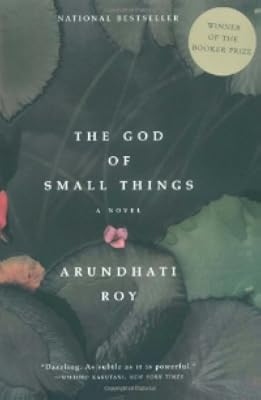
The God of Small Things
by Arundhati Roy
On This Page
Description
WINNER OF THE MAN BOOKER PRIZE • NEW YORK TIMES BESTSELLER • An affluent Indian family is forever changed by one fateful day in 1969, from the author of The Ministry of Utmost Happiness “[ The God of Small Things ] offers such magic, mystery, and sadness that, literally, this reader turned the last page and decided to reread it. Immediately. It’s that haunting.”— USA Today Compared favorably to the works of Faulkner and Dickens, Arundhati Roy’s modern classic show more is equal parts powerful family saga, forbidden love story, and piercing political drama. The seven-year-old twins Estha and Rahel see their world shaken irrevocably by the arrival of their beautiful young cousin, Sophie. It is an event that will lead to an illicit liaison and tragedies accidental and intentional, exposing “big things [that] lurk unsaid” in a country drifting dangerously toward unrest. Lush, lyrical, and unnerving, The God of Small Things is an award-winning landmark that started for its author an esteemed career of fiction and political commentary that continues unabated. show lessTags
Recommendations






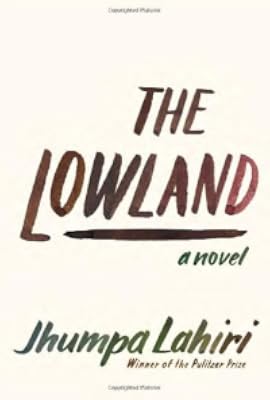
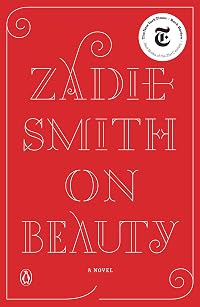
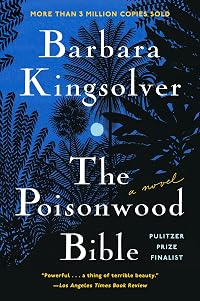


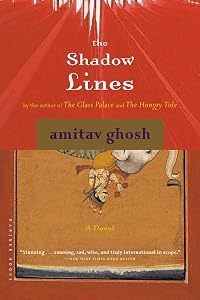

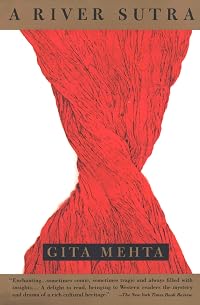
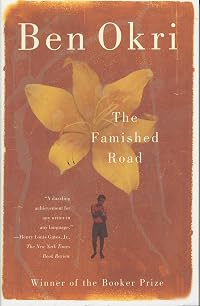
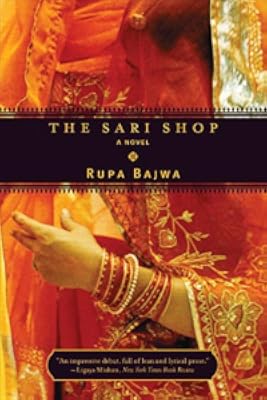
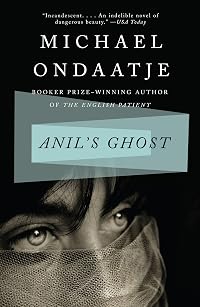
Member Recommendations
by anonymous user


Member Reviews
Arundahti Roy created a stellar work of literature in one go with this novel, realizing every writer's dream. Reading its opening pages I withheld my praise, knowing these would be the most polished but could she keep it up? She could, and she excelled them. All the hallmarks extolled by modern literature are masterfully incorporated: the slow reveals through deftness with time, the playfulness of language, the wonders of description and astute metaphor, the depth of characters, the slow unravelling of captivating mystery, and the fascinating insights into human nature. The novel takes place in India and has all the foreign-to-me hallmarks of that culture, but it could have happened next door to me for the humanity it captures.
It's a show more rare book these days that doesn't tire me at any point, but the inventiveness just kept drawing me on and on. The novel is half told in a straightforward manner, half imbued with Rahel's imaginings and thought process that places a sort of obscuring overlay across the scenes. Seeing the full picture unveils a kind of red herring that bothers me, but I can also appreciate what purpose it served in demonstrating my own biases and assumptions. If I were a re-reader, this novel would be a prime candidate. show less
It's a show more rare book these days that doesn't tire me at any point, but the inventiveness just kept drawing me on and on. The novel is half told in a straightforward manner, half imbued with Rahel's imaginings and thought process that places a sort of obscuring overlay across the scenes. Seeing the full picture unveils a kind of red herring that bothers me, but I can also appreciate what purpose it served in demonstrating my own biases and assumptions. If I were a re-reader, this novel would be a prime candidate. show less
Reading this was unlike any reading experience I've ever had.
The story isn't told so much as it is poured into a basin, wholly but slowly, so as not to produce any waves or splashes. And I didn't so much "enjoy reading" as I was compelled to keep diving in and around and through it, even though I knew for sure I was not heading for anything remotely resembling a happy ending at the bottom of the bowl.
Glorious writing. Beautifully complex structure. Tragic, Disturbing, Human-Love Story.
The story isn't told so much as it is poured into a basin, wholly but slowly, so as not to produce any waves or splashes. And I didn't so much "enjoy reading" as I was compelled to keep diving in and around and through it, even though I knew for sure I was not heading for anything remotely resembling a happy ending at the bottom of the bowl.
Glorious writing. Beautifully complex structure. Tragic, Disturbing, Human-Love Story.
... of a viable die-able age ...
The flow of time is broken,
the storyline is not really a line,
it branches off, jumps across oceans
and generations, it curves back and
like a snake devours its tail.
Pieces fit together perfectly in this
picture-puzzle, linked, interconnected
by an intricate design of threads -
phrases reaching out through time,
penetrating from one page to the next
and finally breaking out of the paperback confines
to stay in the back of this reader's mind
coming to life sporadically long after
the book is read and buried on the shelf.
No, the book is not really a puzzle,
the tragic end is known, predicted,
guessed in the beginning.
With the outcome determined,
the story grows within,
each life governed by the laws
of 'who should love show more who and how much',
the rules eventually broken by love itself,
which knows neither boundaries nor laws. show less
The flow of time is broken,
the storyline is not really a line,
it branches off, jumps across oceans
and generations, it curves back and
like a snake devours its tail.
Pieces fit together perfectly in this
picture-puzzle, linked, interconnected
by an intricate design of threads -
phrases reaching out through time,
penetrating from one page to the next
and finally breaking out of the paperback confines
to stay in the back of this reader's mind
coming to life sporadically long after
the book is read and buried on the shelf.
No, the book is not really a puzzle,
the tragic end is known, predicted,
guessed in the beginning.
With the outcome determined,
the story grows within,
each life governed by the laws
of 'who should love show more who and how much',
the rules eventually broken by love itself,
which knows neither boundaries nor laws. show less
"A few dozen hours can affect the outcomes of whole lifetimes...Little events...suddenly become the bleached bones of a story", 1 April 2017
This review is from: The God of Small Things (Paperback)
Set in Kerala, Southern India, in the 1970s and today, this is a totally original work. 31 year old Rahel is returning to her childhood home - to her aunt 'Baby' Kochamma and the twin brother she has not seen for many years.
From the first page the reader realises this is a work of masterful prose; Roy's descriptions bring the rank and humid village and its river to life.
"Outside the rain had stopped. The grey sky curdled and the clouds resolved themselves into little lumps like substandard mattress stuffing."
There is a childhood tragedy which show more somehow had lasting implications for the whole family, but this is only slowly revealed in all its detail, as the narrative shifts backwards and forwards. There are moments of great humour as we see the world through the eight-year-old twins' eyes; also of heartbreak, as their lives are ruined forever by an accident and by the malice of the adults around them.
Although it's masterly writing, maybe it leaves the reader more impressed than emotionally touched, but still a great novel. show less
This review is from: The God of Small Things (Paperback)
Set in Kerala, Southern India, in the 1970s and today, this is a totally original work. 31 year old Rahel is returning to her childhood home - to her aunt 'Baby' Kochamma and the twin brother she has not seen for many years.
From the first page the reader realises this is a work of masterful prose; Roy's descriptions bring the rank and humid village and its river to life.
"Outside the rain had stopped. The grey sky curdled and the clouds resolved themselves into little lumps like substandard mattress stuffing."
There is a childhood tragedy which show more somehow had lasting implications for the whole family, but this is only slowly revealed in all its detail, as the narrative shifts backwards and forwards. There are moments of great humour as we see the world through the eight-year-old twins' eyes; also of heartbreak, as their lives are ruined forever by an accident and by the malice of the adults around them.
Although it's masterly writing, maybe it leaves the reader more impressed than emotionally touched, but still a great novel. show less
The God of Small Things is exquisite. Arundhati Roy doesn’t just tell a story, her descriptions are so evocative that the words seem to pop off the pages and all the tastes, smells, sounds, suns and monsoon rains of India that run through her prose are tangible. This is a very clever book, in a non-pretentious way. The story is told through a non-linear narrative between 1969 and 1993 and spans four generations of a family. Twins Rahel and Estha are the main protagonists, (although the world is seen largely from Rahel’s perspective) We are told about two major events in chapter one that shape the entire story and by gaining this knowledge so early it creates a sense of dread that enormously impacts how this book is read. This is a show more tale of fate and how quickly innocence can be lost, how far reaching the things we say or don’t say can be, the impact of who we love or don’t love and how much or how little has on those around us, who we blame for our grief, who suffers the consequences of the actions of others and how the blameless end up becoming the blamed. I love this book, it’s beautiful, sad, witty and soulful. What it isn’t is a light read, it’s traumatic, graphic and so haunting that it will stay with you long after you have finished reading the final words of the last sentence. show less
“Perhaps it’s true that things can change in a day. That a few dozen hours can affect the outcome of whole lifetimes. And that when they do, those few dozen hours, like the salvaged remains of a burned house—the charred clock, the singed photograph, the scorched furniture—must be resurrected from the ruins and examined. Preserved. Accounted for. Little events, ordinary things, smashed and reconstituted. Imbued with new meaning. Suddenly they become the bleached bones of a story.” – Arundhati Roy, The God of Small Things
Beautifully written tragedy about the long-term impact of childhood trauma and an indictment of classism in India. Set initially in 1969 (and looking back twenty-three years later) in the village of Ayemenem, show more state of Kerala, the family story revolves around the lives of fraternal twins, a boy, Estha, and a girl, Rehal. They live with their divorced mother, Ammu, Grandaunt Baby Kochamma, Uncle Chacko, and grandparents, Mammachi and Pappachi. Their family runs a pickle factory. Cousin Sophie Mol and her mother arrive from England for a visit, and their lives change forever. The classism story centers around Velutha, a carpenter and pickle factory worker, whose family is descended from Paravan, a caste formerly labeled as “untouchable.” Though officially the caste system has been abolished, the unwritten “love laws” of society are still practiced, and relationships between those of different castes are considered taboo. Dire consequences are meted out for crossing social boundaries.
Roy tackles some heavy themes, including marginalization, domestic violence, sexism, child molestation, gender bias, patriarchy, and oppression of the weak. The story moves fluidly backward and forward through time, providing insight into what has happened and foreshadowing events to come. Foreboding is present from the beginning. Something traumatic has happened, and the reader is aware that more sorrow and pain lies ahead. The reader knows what will happen but does not know how. The poetic writing evokes vivid scenes, images from a child’s point of view, emphasizing the small details children tend to notice. The adult perspectives are covered through a third person omniscient narration, providing the backstory, motivations, and complexities of the characters. The author experiments with language using inventive phrasing, and imbues poetic rhythm into the writing, bringing the story to life. The language, tone, and style shift appropriately and effectively to convey an adult’s mature viewpoints versus a child’s more naïve impressions. The narrative moves seamlessly between lush descriptions of an idyllic landscape to the ugliness of social stigma.
I found it a deeply touching story of love, fear, cruelty, guilt, mortality, loss of innocence, and rebellion. This book is a prime example of well-crafted social commentary, which makes a point while focusing on the story at hand. It is also a multi-generational family saga depicting India’s cultural complexities, political climate of the time, and assortment of religions. Hope for the future is shown by the decreasing influence of traditions and societal mores on each subsequent generation. It will appeal to readers of literary tragedies, or those who appreciate evocative prose with a fluidly flowing non-sequential timeline. This book won the Booker Prize in 1997. show less
Beautifully written tragedy about the long-term impact of childhood trauma and an indictment of classism in India. Set initially in 1969 (and looking back twenty-three years later) in the village of Ayemenem, show more state of Kerala, the family story revolves around the lives of fraternal twins, a boy, Estha, and a girl, Rehal. They live with their divorced mother, Ammu, Grandaunt Baby Kochamma, Uncle Chacko, and grandparents, Mammachi and Pappachi. Their family runs a pickle factory. Cousin Sophie Mol and her mother arrive from England for a visit, and their lives change forever. The classism story centers around Velutha, a carpenter and pickle factory worker, whose family is descended from Paravan, a caste formerly labeled as “untouchable.” Though officially the caste system has been abolished, the unwritten “love laws” of society are still practiced, and relationships between those of different castes are considered taboo. Dire consequences are meted out for crossing social boundaries.
Roy tackles some heavy themes, including marginalization, domestic violence, sexism, child molestation, gender bias, patriarchy, and oppression of the weak. The story moves fluidly backward and forward through time, providing insight into what has happened and foreshadowing events to come. Foreboding is present from the beginning. Something traumatic has happened, and the reader is aware that more sorrow and pain lies ahead. The reader knows what will happen but does not know how. The poetic writing evokes vivid scenes, images from a child’s point of view, emphasizing the small details children tend to notice. The adult perspectives are covered through a third person omniscient narration, providing the backstory, motivations, and complexities of the characters. The author experiments with language using inventive phrasing, and imbues poetic rhythm into the writing, bringing the story to life. The language, tone, and style shift appropriately and effectively to convey an adult’s mature viewpoints versus a child’s more naïve impressions. The narrative moves seamlessly between lush descriptions of an idyllic landscape to the ugliness of social stigma.
I found it a deeply touching story of love, fear, cruelty, guilt, mortality, loss of innocence, and rebellion. This book is a prime example of well-crafted social commentary, which makes a point while focusing on the story at hand. It is also a multi-generational family saga depicting India’s cultural complexities, political climate of the time, and assortment of religions. Hope for the future is shown by the decreasing influence of traditions and societal mores on each subsequent generation. It will appeal to readers of literary tragedies, or those who appreciate evocative prose with a fluidly flowing non-sequential timeline. This book won the Booker Prize in 1997. show less
A lyrical, mysterious tale of misunderstanding and pain, echoing through the years. At its dark heart, it demonstrates how small things can have multiple and major consequences, meaning that everything can change in a single day. "Anything can happen to anyone. It's best to be prepared." - and these fears trigger tragedy.
It is set in Kerala (southern India) in 1969 (when twins Rahel (girl) and Estha (boy) are aged 7) and 23 years later, when the twins return to the family home. As the narrative switches periods, hints become clearer and eventually become facts: you know bad things will happen, but it's not initially clear who will be the perpetrators. There is beauty, but always brooding menace of nastiness to come, or echoes of trauma show more long ago.
Caste, communism, Conrad's "Heart of Darkness", "The Sound of Music", whom to love (and how), and insects (especially moths) are common threads.
THE FAMILY
They are affluent, educated, Anglophile, Syrian Christians. The grandfather (Pappachi) was the Imperial Entomologist and in later years his wife (Mammachi) and their son (Chacko) started a pickle factory (a pickle factory is also significant in Rushdie's Midnight's Children). Their daughter, Ammu, is the divorced mother of the twins, and has "the infinite tenderness of motherhood and the reckless rage of a suicide bomber". The twins' great aunt (Baby Kochamma) lives there as well. She is a bitter woman, who loved, but never had, Father Mulligan, so retreats into false piety. She seeks and relishes opportunities to gloat at the misdemeanours and misfortunes of others: on hearing of scandal, "She set sail at once. A ship of goodness ploughing through a sea of sin".
The big event is when Chacko's English ex wife (Margaret) is widowed and she brings Chacko's 9 year old daughter (Sophie Mol) to visit.
The other key character is Velutha (son of Vellya Paapen), a clever untouchable, a couple of years younger than Ammu. The family pay for his education and he becomes indispensable at the factory for maintaining the machines, though carpentry is his true skill. There is also Kochu Maria, a house servant, who becomes more like Baby Kochamma's companion in later years.
TWINSHIP
The powerful bond of "two-egg" twins is essential to the story: "In those early amorphous years when memory had only just begun... Estha and Rahel thought of themselves together as Me, and separately, individually, as We or Us... a rare breed of Siamese twins, physically separate, but with joint identities."
However, they spend the years between the two time periods living apart, and that, inevitably, changes things. When returning as an adult, "now she thinks of Estha and Rahel as Them... Edges, Borders, Boundaries, Brinks and Links have appeared." They are now "A pair of actors... stumbling through their parts, nursing someone else's sorrow", and realising, too late, "You're not the Sinners. You're the Sinned Against."
GHOSTS
The family is founded on preservation: first of insects, then of Paradise Pickles and Preserves, and always of reputation. However, ghosts are everywhere, mainly in the memories of the dead and the ramifications of their deaths, but also in other forms of loss: opportunities, love, names (the twins are without a surname when their parents split) and even the power of speech. "Silence hung in the air like a secret loss."
Sophie Mol's death is mentioned on page 4, and although its significance is constantly referred to, the details are only revealed very near the end. Her death "stepped softly around the house... like a quiet thing in socks" and "sometimes the memory of death lives... much longer than the life it purloined". Eventually "Sophie Mol became a Memory, while The Loss of Sophie Mol grew robust and alive. Like a fruit in season. Every season."
Those left behind experience "Not death. Just the end of living."
The family home descends into dilapidation. Baby Kochamma, once an skilled gardener, lets her plants wither or go wild, while she devotes her life to vicariously living the lives of ghosts she sees on satellite TV.
There is also an abandoned house across the river that the twins nickname The History House. There are many explicit comparisons with The Heart of Darkness: it was the home of Kari Saipu, and Englishman who "went native" and "captured dreams and redreamed them". Eventually, he shot himself when his young lover was taken away.
BETRAYAL AND THE DEATH OF LOVE
There are violent relationships, broken relationships (not necessarily the same) and unrequited love, but it is, of course, the children who suffer most.
The twins are raised by their loving but strict mother, but they are haunted by a fear that she will cease to love them. Their "willingness to love people who didn't really love them... was as though the window through which their father disappeared had been kept open for anyone." After Sophie Mol's death, when everything changes,Ammu is sent away, Estha is sent to his father, and Rahel is left behind to be raised by her uncle and grandparents, who "provided the care (food, clothes, fees) but withdrew the concern".
There are other forms and instances of betrayal and lies, sometimes to keep up appearances, and sometimes for selfish ends.
CROSSING BOUNDARIES - OF LOVE AND OTHER THINGS
Taboos are many in a society ruled by caste (as well as class and religion), but the family's problems with classification are first highlighted in relation to jams and jellies, and the fact that banana jam was illegal as if fitted neither category. "They all broke the rules. They all crossed into forbidden territory. They all tampered with the laws that lay down who should be loved and how. And how much." And by whom.
Gradually, "Estha and Rahel learned how history negotiates its terms and collects its dues from those who break its laws." "History used the back verandah to negotiate its terms and collect its dues. Estha would keep the receipt for the dues that Velutha paid." When pressed by an adult to lie about something significant, "Childhood tiptoed out. Silence slid in like a bolt. Someone switched off the light and Velutha disappeared."
There is also confusion and hypocrisy around some of the power relationships, e.g. a wealthy communist landlord and factory owner with "a Marxist mind and feudal libido", and of course, the different levels of sexual freedom permitted for men and women.
SMALL THINGS: MOTHS AND BUTTERFLIES
The whole story is really a demonstration of The Butterfly Effect, although it's moths that are mentioned explicitly (Pappachi discovered a new variety of moth, but wasn't recognised for it).
"It was the kind of time in the life of a family when something happens to nudge its hidden morality from its resting place and make it bubble to the surface and float for a while in clear view."
There are many other Small Things:
* "The God of Loss. The God of Small Things."
* Ammu telling Rahel "When you hurt people they begin to love you less", a throwaway line that grows, festers and twists within until it changes the lives of everyone.
* Ammu is "Someone Small who has been bullied all their lives by Someone Big".
* At big moments "only the Small Things are ever said".
* A couple who know they have no future, so "instinctively they stick to the Small Things"
* Filth and decay, of which there is much 23 years later, is an accumulation of small things.
PORTMANTEAUS
A distinctive feature of the writing is the large number of portmanteau coinages. Most are pairs of adjectives or adjective plus noun: sourmetal, oldfood, fishswimming, chinskin, deadlypurposed, longago, suddenshutter, sharksmile, orangedrinks, steelshrill, suddenshutter, stickysweet. However, things like cuff-links are written with a hyphen. Cuff-links also hint at an explanation: when the young twins are told they are "'to link cuffs together'... they were thrilled by this morsel of logic... and gave them an inordinate (if exaggerated) satisfaction, and a real affection for the English language."
QUOTES
* "Dissolute bluebottles hum vacuously in the fruity air. Then they stun themselves against clear windowpanes and die, flatly baffled in the sun."
* "The nights are clear but suffused with sloth and sullen expectation" and in monsoon season "short spells of sharp, glittering sunshine that thrilled children snatch to play with."
* "Over time he had acquired the ability to blend into the background... [he] occupied very little space in the world."
* "Once the quietness arrived, it... enfolded him in its swampy arms... It sent its stealthy, suckered tentacles... hoovering the knolls and dells of his memory, dislodging old sentences, whisking them off the tip of his tongue. It stripped his thoughts of the words that described them and left them pared and naked."
* "Gulf-money houses build by [people] who worked hard but unhappily in faraway places... the resentful older houses tinged green with envy, cowering in their private driveways."
* "drifted into marriage like a passenger drifts towards an unoccupied chair in an airport lounge."
* "Her eyes spread like butter behind her thick glasses."
* He walked away "like a high-stepping camel with an appointment to keep."
* "Rahel tried to say something. It came out jagged. Like a piece of tin."
* "twinkled was a word with crinkled, happy edges."
* The weight of obligation "widened his smile and bent his back".
* The things that can't be forgotten "sit on dusty shelves like stuffed birds, with baleful sideways starting eyes".
* "Silverfish tunnelled through the pages, burrowing arbitrarily from species to species, turning organised information into yellow lace."
* "The ants made a faint crunchy sound as life left them. Like an elf eating toast."
* An adult playing with children "Instinctively colluding in the conspiracy of their fiction".
* "Insanity hovered close at hand, like an eager waiter at an expensive restaurant."
* "resting under the skin of her dreams"
* The "transparent" kiss of a child "unclouded by passion or desire... that demanded no kiss-back. Not a cloudy kiss full of questions."
* "The great stories are the ones you have heard and want to hear again. The ones you can enter anywhere and inhabit comfortably."
* "She was too young to realise that what she assumed was her love for Chacko was actually a tentative, timorous acceptance of herself."
THANKS
I should add that I am really grateful to Steve whose excellent review, and comments beneath, persuaded me to pick up this book asap, rather than let it languish on my shelves any longer. His review is here: https://www.goodreads.com/review/show/290519826 show less
It is set in Kerala (southern India) in 1969 (when twins Rahel (girl) and Estha (boy) are aged 7) and 23 years later, when the twins return to the family home. As the narrative switches periods, hints become clearer and eventually become facts: you know bad things will happen, but it's not initially clear who will be the perpetrators. There is beauty, but always brooding menace of nastiness to come, or echoes of trauma show more long ago.
Caste, communism, Conrad's "Heart of Darkness", "The Sound of Music", whom to love (and how), and insects (especially moths) are common threads.
THE FAMILY
They are affluent, educated, Anglophile, Syrian Christians. The grandfather (Pappachi) was the Imperial Entomologist and in later years his wife (Mammachi) and their son (Chacko) started a pickle factory (a pickle factory is also significant in Rushdie's Midnight's Children). Their daughter, Ammu, is the divorced mother of the twins, and has "the infinite tenderness of motherhood and the reckless rage of a suicide bomber". The twins' great aunt (Baby Kochamma) lives there as well. She is a bitter woman, who loved, but never had, Father Mulligan, so retreats into false piety. She seeks and relishes opportunities to gloat at the misdemeanours and misfortunes of others: on hearing of scandal, "She set sail at once. A ship of goodness ploughing through a sea of sin".
The big event is when Chacko's English ex wife (Margaret) is widowed and she brings Chacko's 9 year old daughter (Sophie Mol) to visit.
The other key character is Velutha (son of Vellya Paapen), a clever untouchable, a couple of years younger than Ammu. The family pay for his education and he becomes indispensable at the factory for maintaining the machines, though carpentry is his true skill. There is also Kochu Maria, a house servant, who becomes more like Baby Kochamma's companion in later years.
TWINSHIP
The powerful bond of "two-egg" twins is essential to the story: "In those early amorphous years when memory had only just begun... Estha and Rahel thought of themselves together as Me, and separately, individually, as We or Us... a rare breed of Siamese twins, physically separate, but with joint identities."
However, they spend the years between the two time periods living apart, and that, inevitably, changes things. When returning as an adult, "now she thinks of Estha and Rahel as Them... Edges, Borders, Boundaries, Brinks and Links have appeared." They are now "A pair of actors... stumbling through their parts, nursing someone else's sorrow", and realising, too late, "You're not the Sinners. You're the Sinned Against."
GHOSTS
The family is founded on preservation: first of insects, then of Paradise Pickles and Preserves, and always of reputation. However, ghosts are everywhere, mainly in the memories of the dead and the ramifications of their deaths, but also in other forms of loss: opportunities, love, names (the twins are without a surname when their parents split) and even the power of speech. "Silence hung in the air like a secret loss."
Sophie Mol's death is mentioned on page 4, and although its significance is constantly referred to, the details are only revealed very near the end. Her death "stepped softly around the house... like a quiet thing in socks" and "sometimes the memory of death lives... much longer than the life it purloined". Eventually "Sophie Mol became a Memory, while The Loss of Sophie Mol grew robust and alive. Like a fruit in season. Every season."
Those left behind experience "Not death. Just the end of living."
The family home descends into dilapidation. Baby Kochamma, once an skilled gardener, lets her plants wither or go wild, while she devotes her life to vicariously living the lives of ghosts she sees on satellite TV.
There is also an abandoned house across the river that the twins nickname The History House. There are many explicit comparisons with The Heart of Darkness: it was the home of Kari Saipu, and Englishman who "went native" and "captured dreams and redreamed them". Eventually, he shot himself when his young lover was taken away.
BETRAYAL AND THE DEATH OF LOVE
There are violent relationships, broken relationships (not necessarily the same) and unrequited love, but it is, of course, the children who suffer most.
The twins are raised by their loving but strict mother, but they are haunted by a fear that she will cease to love them. Their "willingness to love people who didn't really love them... was as though the window through which their father disappeared had been kept open for anyone." After Sophie Mol's death, when everything changes,
There are other forms and instances of betrayal and lies, sometimes to keep up appearances, and sometimes for selfish ends.
CROSSING BOUNDARIES - OF LOVE AND OTHER THINGS
Taboos are many in a society ruled by caste (as well as class and religion), but the family's problems with classification are first highlighted in relation to jams and jellies, and the fact that banana jam was illegal as if fitted neither category. "They all broke the rules. They all crossed into forbidden territory. They all tampered with the laws that lay down who should be loved and how. And how much." And by whom.
Gradually, "Estha and Rahel learned how history negotiates its terms and collects its dues from those who break its laws." "History used the back verandah to negotiate its terms and collect its dues. Estha would keep the receipt for the dues that Velutha paid." When pressed by an adult to lie about something significant, "Childhood tiptoed out. Silence slid in like a bolt. Someone switched off the light and Velutha disappeared."
There is also confusion and hypocrisy around some of the power relationships, e.g. a wealthy communist landlord and factory owner with "a Marxist mind and feudal libido", and of course, the different levels of sexual freedom permitted for men and women.
SMALL THINGS: MOTHS AND BUTTERFLIES
The whole story is really a demonstration of The Butterfly Effect, although it's moths that are mentioned explicitly (Pappachi discovered a new variety of moth, but wasn't recognised for it).
"It was the kind of time in the life of a family when something happens to nudge its hidden morality from its resting place and make it bubble to the surface and float for a while in clear view."
There are many other Small Things:
* "The God of Loss. The God of Small Things."
* Ammu telling Rahel "When you hurt people they begin to love you less", a throwaway line that grows, festers and twists within until it changes the lives of everyone.
* Ammu is "Someone Small who has been bullied all their lives by Someone Big".
* At big moments "only the Small Things are ever said".
* A couple who know they have no future, so "instinctively they stick to the Small Things"
* Filth and decay, of which there is much 23 years later, is an accumulation of small things.
PORTMANTEAUS
A distinctive feature of the writing is the large number of portmanteau coinages. Most are pairs of adjectives or adjective plus noun: sourmetal, oldfood, fishswimming, chinskin, deadlypurposed, longago, suddenshutter, sharksmile, orangedrinks, steelshrill, suddenshutter, stickysweet. However, things like cuff-links are written with a hyphen. Cuff-links also hint at an explanation: when the young twins are told they are "'to link cuffs together'... they were thrilled by this morsel of logic... and gave them an inordinate (if exaggerated) satisfaction, and a real affection for the English language."
QUOTES
* "Dissolute bluebottles hum vacuously in the fruity air. Then they stun themselves against clear windowpanes and die, flatly baffled in the sun."
* "The nights are clear but suffused with sloth and sullen expectation" and in monsoon season "short spells of sharp, glittering sunshine that thrilled children snatch to play with."
* "Over time he had acquired the ability to blend into the background... [he] occupied very little space in the world."
* "Once the quietness arrived, it... enfolded him in its swampy arms... It sent its stealthy, suckered tentacles... hoovering the knolls and dells of his memory, dislodging old sentences, whisking them off the tip of his tongue. It stripped his thoughts of the words that described them and left them pared and naked."
* "Gulf-money houses build by [people] who worked hard but unhappily in faraway places... the resentful older houses tinged green with envy, cowering in their private driveways."
* "drifted into marriage like a passenger drifts towards an unoccupied chair in an airport lounge."
* "Her eyes spread like butter behind her thick glasses."
* He walked away "like a high-stepping camel with an appointment to keep."
* "Rahel tried to say something. It came out jagged. Like a piece of tin."
* "twinkled was a word with crinkled, happy edges."
* The weight of obligation "widened his smile and bent his back".
* The things that can't be forgotten "sit on dusty shelves like stuffed birds, with baleful sideways starting eyes".
* "Silverfish tunnelled through the pages, burrowing arbitrarily from species to species, turning organised information into yellow lace."
* "The ants made a faint crunchy sound as life left them. Like an elf eating toast."
* An adult playing with children "Instinctively colluding in the conspiracy of their fiction".
* "Insanity hovered close at hand, like an eager waiter at an expensive restaurant."
* "resting under the skin of her dreams"
* The "transparent" kiss of a child "unclouded by passion or desire... that demanded no kiss-back. Not a cloudy kiss full of questions."
* "The great stories are the ones you have heard and want to hear again. The ones you can enter anywhere and inhabit comfortably."
* "She was too young to realise that what she assumed was her love for Chacko was actually a tentative, timorous acceptance of herself."
THANKS
I should add that I am really grateful to Steve whose excellent review, and comments beneath, persuaded me to pick up this book asap, rather than let it languish on my shelves any longer. His review is here: https://www.goodreads.com/review/show/290519826 show less
Members
- Recently Added By
Published Reviews
ThingScore 75
If Ms. Roy is sometimes overzealous in foreshadowing her characters' fate, resorting on occasion to darkly portentous clues, she proves remarkably adept at infusing her story with the inexorable momentum of tragedy. She writes near the beginning of the novel that in India, personal despair ''could never be desperate enough,'' that ''it was never important enough'' because ''worse things had show more happened'' and ''kept happening.'' Yet as rendered in this remarkable novel, the ''relative smallness'' of her characters' misfortunes remains both heartbreaking and indelible. show less
added by Shortride
Lists

The Guardian's 1000 Novels Everyone Must Read
1,005 works; 551 members

1001 Books You Must Read Before You Die
1,448 works; 1,133 members
BBC Big Read
191 works; 46 members

Best Contemporary Literary Fiction (Around the Last 30 Years)
388 works; 123 members
Favourite Booker Prize contenders
73 works; 21 members

Best of World Literature
435 works; 52 members
Booker Prize
491 works; 62 members

Favourite Books
1,819 works; 316 members

Unread books
1,063 works; 82 members

Female Author
1,234 works; 67 members
20th Century Literature
1,161 works; 54 members

Magic Realism
371 works; 51 members

All Things India
95 works; 21 members

Recommend the 20 best books you've read in the last five years
2,168 works; 606 members
BBC's 100 Novels That Shaped Our World
100 works; 22 members
Best Family Stories
241 works; 22 members
Booker Prize Shortlist: Titles Read
103 works; 10 members

magic realism novels
44 works; 11 members

Best family sagas
244 works; 34 members

Top Five Books of 2020
982 works; 348 members

50 Books from the Past 50 Years
50 works; 8 members

Literature by People of Color
81 works; 9 members

1,001 BYMRBYD Concensus
723 works; 27 members

This is the Canon: Decolonize Your Bookshelf in 50 Books
51 works; 5 members

Blue Pyramid 1,276 Best Books of All Time
1,248 works; 32 members

Contemporary Fiction
109 works; 7 members

Books with Twins
175 works; 12 members
Elena Ferrante's 40 favourite books by female authors
40 works; 10 members

Top Five Books of 2017
757 works; 230 members

Childhood: Books for or about children in different cultures around the wor
345 works; 18 members

1990s
309 works; 17 members

BBC Radio 4 Bookclub
341 works; 13 members
Man Booker Prize Longlist 1997
6 works; 2 members

Big Jubilee List
70 works; 3 members

Books Read in 2014
2,343 works; 89 members
Asia
178 works; 7 members

Top 50 Favourite Books
50 works; 2 members

Carole's List
445 works; 13 members

The Guardian's best novels in English: Readers' alternative list
15 works; 2 members

Most Depressing Books
69 works; 16 members
First Novels
373 works; 17 members

Maybe This Year? Books to Look Forward To
412 works; 9 members

Speculative Fiction from around the World
610 works; 18 members
Overdue Podcast
808 works; 9 members
Books Featured on Readers' Review of the Diane Rehm Show
161 works; 8 members

Secrets Books
94 works; 3 members

Books Read in 2022
5,226 works; 115 members

Reading Globally
136 works; 16 members

Books Read in 2025
4,128 works; 98 members

Retrospective of 20th- and 21st-century literature
154 works; 1 member

Tonikat reading completed on Librarything journals
329 works; 2 members
The Complete Rory Gilmore Reading List
506 works; 5 members
Widely acclaimed, one book per year
105 works; 3 members

el
1,139 works; 1 member

.
396 works; 1 member
Library List - Pulitzer Adjacent
40 works; 1 member

Books Read in 2026
2,042 works; 68 members

Recommended Reading : 600 Classics Reviewed, Editors of Salem Press, 2015
634 works; 6 members

Florida's Book Bans and Challenges
311 works; 4 members

BBC World Book Club
265 works; 5 members

Required Reading Summer Reading 23
16 works; 2 members

Mustich's 1000 Books to Read Before You Die: A Life Changing List
1,001 works; 20 members
AP Lit
363 works; 6 members

Global Reads: Books Set in South Asia
30 works; 3 members
Recent Aquisitions
2 works; 1 member

Contemporary Fiction
17 works; 2 members

Books Tagged Abuse
152 works; 4 members

le donne raccontano
116 works; 1 member
Penguin Random House
458 works; 4 members

World Book Club (BBC World Service)
212 works; 1 member
Most Popular Books Tagged India
36 works; 5 members
Author Information

59+ Works 29,594 Members
Suzanna Arundhati Roy, 1961 - Suzanna Roy was born November 24, 1961. Her parents divorced and she lived with her mother Mary Roy, a social activist, in Aymanam. Her mother ran an informal school named Corpus Christi and it was there Roy developed her intellectual abilities, free from the rules of formal education. At the age of 16, she left home show more and lived on her own in a squatter's colony in Delhi. She went six years without seeing her mother. She attended Delhi School of Architecture where she met and married fellow student Gerard Da Cunha. Neither had a great interest in architecture so they quit school and went to Goa. They stayed there for seven months and returned broke. Their marriage lasted only four years. Roy had taken a job at the National Institute of Urban Affairs and, while cycling down a road; film director Pradeep Krishen offered her a small role as a tribal bimbo in Massey Saab. She then received a scholarship to study the restoration of monuments in Italy. During her eight months in Italy, she realized she was a writer. Now married to Krishen, they planned a 26-episode television epic called Banyan Tree. They didn't shoot enough footage for more than four episodes so the serial was scrapped. She wrote the screenplay for the film In Which Annie Gives It Those Ones and Electric Moon. Her next piece caused controversy. It was an article that criticized Shekar Kapur's film Bandit Queen, which was about Phoolan Devi. She accused Kapur of misrepresenting Devi and it eventually became a court case. Afterwards, finished with film, she concentrated on her writing, which became the novel "A God of Small Things." It is based on what it was like growing up in Kerala. The novel contains mild eroticism and again, controversy found Roy having a public interest petition filed to remove the last chapter because of the description of a sexual act. It took Roy five years to write "A God of Small Things" and was released April 4, 1997 in Delhi. It received the Booker prize in London in 1997 and has topped the best-seller lists around the world. Roy is the first non-expatriate Indian author and the first Indian woman to win the Booker prize. (Bowker Author Biography) show less
Some Editions
Awards and Honors
Awards
Distinctions
Notable Lists
Series
Belongs to Publisher Series
Work Relationships
Is contained in
Has as a reference guide/companion
Has as a commentary on the text
Has as a student's study guide
Common Knowledge
- Canonical title*
- Der Gott der kleinen Dinge
- Original title
- The God of Small Things
- Original publication date
- 1997
- People/Characters
- Baby Kochamma; Rahel; Esthappen; Velutha; Ammu; Sophie Mol (show all 8); Chacko; Margaret Kochamma
- Important places
- Ayemenem, India; Kerala
- Epigraph
- Never again will a single story be told as though it's the only one.
John Berger - Dedication
- For Mary Roy, who grew me up. Who taught me to say "excuse me" before interrupting her in Public. Who loved me enough to let me go.
For LKC, who, like me, survived. - First words
- May in Ayemenem is a hot, brooding month.
Maj je v Ajemenemu vroč, morast mesec. - Quotations
- "D'you know what happens when you hurt people? When you hurt people, they begin to love you less. That's what careless words do. They make people love you a little less."
"Just ignore her," Ammu said. "She's just trying to attract attention."
Ammu too was wrong. Rahel was trying to not attract the attention that she deserved.
Rahel looked around her and saw that she was in a Play. But she had only a small part.
She was just the landscape. A flower perhaps. Or a tree.
A face in the crowd. A Townspeople.
Heaven opened and the water hammered down, reviving the reluctant old well, greenmossing the pigless pigsty, carpet bombing still, tea-coloured puddles the way memory bombs still, tea-coloured minds.
Rahel drifted into marriage like a passenger drifts towards an unoccupied chair in an airport lounge. With a Sitting Down sense.
Because Worse Things had happened. In the country that she came from, poised forever between the terror of war and the horror of peace, Worse Things kept happening.
He had young Baby Kochamma's aching heart on a leash, bumping behind him lurching over leaves and small stones. Bruised and almost broken.
To Ammu her twins seemed like a pair of small bewildered frogs engrossed in each other's company, lolloping arm in arm down a highway full of hurtling traffic. Entirely oblivious of what trucks can do to frogs.
He drove the thought away angrily. It returned and sat outside his skull. Like a dog.
[...] these were only history's henchmen. Sent to square the books and collect their dues from those who broke its laws. Impelled by feelings that were primal yet paradoxically wholly impersonal. Feelings of contempt born fro... (show all)m inchoate, unacknowledged fear – civilization's fear of nature, men's fear of women, power's fear of powerlessness.
Quite sane in the way she left huge tracts of darkness veiled. Un-remembered.
It wasn't what lay at the end of her road that frightened Ammu as much as the nature of the road itself
She was twenty-seven that year, and in the pit of her stomach she carried the cold knowledge that for her, life had been lived. She had had one chance. She made a mistake. She married the wrong man. - Last words
- (Click to show. Warning: May contain spoilers.)Tomorrow.
- Publisher's editor
- Godoff, Ann
- Blurbers
- Kakutani, Michiko; Updike, John
- Original language
- English
- Canonical DDC/MDS
- 828.99353
*Some information comes from Common Knowledge in other languages. Click "Edit" for more information.
Classifications
- Genres
- General Fiction, Fiction and Literature
- DDC/MDS
- 828.99353 — Literature & rhetoric English & Old English literatures English miscellaneous writings English miscellaneous writings 1900- Non-American English language literature outside Britain (option) New Zealand, Australia, India, South Africa India Fiction
- LCC
- PR9499.3 .R59 .G63 — Language and Literature English English Literature English literature: Provincial, local, etc.
- BISAC
Statistics
- Members
- 21,720
- Popularity
- 251
- Reviews
- 407
- Rating
- (3.87)
- Languages
- 34 — Bosnian, Bulgarian, Catalan, Chinese, Danish, Dutch, English, Estonian, Finnish, French, German, Greek, Hindi, Hungarian, Icelandic, Indonesian, Italian, Latvian, Lithuanian, Malayalam, Marathi, Norwegian (Bokmål), Norwegian, Farsi/Persian, Polish, Portuguese, Romanian, Russian, Serbian, Slovenian, Spanish, Swedish, Turkish, Urdu
- Media
- Paper, Audiobook, Ebook
- ISBNs
- 195
- ASINs
- 61