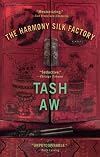
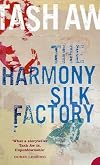
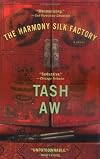
The Harmony Silk Factory
by Tash Aw
On This Page
Description
A brilliant novel from a genuinely exciting new voice in British fiction. A novel for anyone who enjoyed The English Patient.Set in Malaysia in the 1930s and 40s, with the rumbling of the Second World War in the background and the Japanese about to invade, The Harmony Silk Factory is the story of four people: Johnny, an infamous Chinaman -- a salesman, a fraudster, possibly a murderer -- whose shop house, The Harmony Silk Factory, he uses as a front for his illegal businesses; Snow Soong, show more the beautiful daughter of one of the Kinta Valley's most prominent families, who dies giving birth to one of the novel's narrators; Kunichika, a Japanese officer who loves Snow too; and an Englishman, Peter Wormwood, who went to Malaysia like many English but never came back, who also loved Snow to the end of his life. A journey the four of them take into the jungle has a devastating effect on all of them, and brilliantly exposes the cultural tensions of the era.Haunting, highly original, The Harmony Silk Factory is suspenseful to the last page. It will be one of the most talked about and admired novels of 2005. show lessTags
Recommendations






Member Reviews
Tash Aw's triple portrait of the Malaysian entrepeneur/communist/criminal Johnny Lim is clever and very well written.
While it consists of three portraits of Johnny, the story is just as much about the three narrators, their relations and their perceptions of the main character as it is about Johnny himself.
Its main weakness is that it lacks a proper conclusion and that the story and the prose in the third part are less interesting than those of the other two parts, which makes the end a little disappointing.
Still looking forward to reading more from this author as he perfects his craft though!
While it consists of three portraits of Johnny, the story is just as much about the three narrators, their relations and their perceptions of the main character as it is about Johnny himself.
Its main weakness is that it lacks a proper conclusion and that the story and the prose in the third part are less interesting than those of the other two parts, which makes the end a little disappointing.
Still looking forward to reading more from this author as he perfects his craft though!
Joseph Conrad, W. Somerset Maugham, and Anthony Burgess have shaped our perceptions of Malaysia. In Tash Aw, we now have an authentic Malaysian voice that remaps this literary landscape. The Harmony Silk Factory traces the story of textile merchant Johnny Lim, a Chinese peasant living in British Malaya in the first half of the twentieth century. Johnny's factory is the most impressive structure in the region, and to the inhabitants of the Kinta Valley Johnny is a hero—a Communist who fought the Japanese when they invaded, ready to sacrifice his life for the welfare of his people. But to his son, Jasper, Johnny is a crook and a collaborator who betrayed the very people he pretended to serve, and the Harmony Silk Factory is merely a show more front for his father's illegal businesses. This debut novel from Tash Aw gives us an exquisitely written look into another culture at a moment of crisis. The Harmony Silk Factory won the 2005 Whitbread First Novel Award and also made it to the 2005 Man Booker longlist. show less
Three narrators tell the story from their own perspective, always an interesting slant on the novel structure, as it gives readers an opportunity to gain a wider view and understand that there is always more than one way to understand a story. It helps the reader think through how people create their own narrative which is their own truth, but not necessarily the narrative shared by others at the same events. Good strong characters and well put together.
A story set in Malaysia before the second unpleasantness told through the voices of three of the participants. I found the first two parts interesting but the style adopted for the third was so (intentionally) pretentious that I got really quite irritated by it.
On the whole though, a decent, mostly enjoyable read with a realistic take on the different ways the people involved in a incident have different perceptions of each other and what was going on around them.
On the whole though, a decent, mostly enjoyable read with a realistic take on the different ways the people involved in a incident have different perceptions of each other and what was going on around them.
The Harmony Silk Factory starts out very well, and Aw's crisp prose made the first of the book's three sections hum along. I was really intrigued by its setting, about which I know little—Malaysia during and after the Second World War. I was alternately engrossed and enraged by it—the book is a page turner, but I had predicted the denouement before I'd met half of the characters and there are some very clichéd elements here. I found the second section melodramatic, and the protagonist of the third section I didn't believe in as a real person. As a first novel, this really is very good, but I enjoyed Harmony Silk Factory more for the promise Aw shows as a developing writer than for the book as a self-contained entity.
The story of Johnny Lim, a man of many faces, told by four different narrators. The writing matches the setting, lush and rich. The characters are totally absorbing. The plot is not the essence of this book, rather it carries along the characters who reveal themselves more than they do Johnny, the subject of their thoughts but the most mysterious character in the book. It's not until the final narrator has his say that you can really piece together Johnny's true self.
This has piqued my interest in Tash Aw, I wouldn't hesitate to pick up another of his novels.
This has piqued my interest in Tash Aw, I wouldn't hesitate to pick up another of his novels.
This is the story of Johnny Lim, a textile merchant, Communist and possible gangster. There are three narrators, Jaspar, Johnny's son, who has researched his father's life, and as a grown man is looking at his father's life in the 1940s, shortly before Jaspar's birth; Snow, Johnny's wife, whose narrative is in diary form, written at the time of the events which she describes; and Peter, Johnny's former best friend, who writes as an old man recounting the events. All three narratives at times describe the same events, from differing points of view.
The book centres around a trip taken by Snow, Johnny, Peter, an ex-pat English business man named Frederick Honey, and an enigmatic Japanese professor named Kunichika, when they voyage to the show more legendary Seven Maidens island. The imminent invasion of Malaysia by the Japanese forms a backdrop to the story.
I really enjoyed the book. Each narrator has his or her own unique character, and their telling of the story sometimes differs depending on their own perception of the situations they find themselves in. Interestingly (and I imagine deliberately on the part of the author), the reader never actually gets to know Johnny very well, as he is described according to the point of view of the narrator. Whereas Jaspar sees his father as an evil man, Snow and Peter describe a man who seems at odds with Jaspar's opinion (or course, Jaspar is also relying on sources for his research which probably differ in reliability, and both Snow and Peter are swayed by their own feelings about Johnny).
The story is less about the plot, and more about the characters themselves. For me, the most interesting character was Snow, perhaps because her story was being written as events unfolded.
All in all, this was a very enjoyable book. It is Tash Aw's first novel, and I would definitely read more by him. show less
The book centres around a trip taken by Snow, Johnny, Peter, an ex-pat English business man named Frederick Honey, and an enigmatic Japanese professor named Kunichika, when they voyage to the show more legendary Seven Maidens island. The imminent invasion of Malaysia by the Japanese forms a backdrop to the story.
I really enjoyed the book. Each narrator has his or her own unique character, and their telling of the story sometimes differs depending on their own perception of the situations they find themselves in. Interestingly (and I imagine deliberately on the part of the author), the reader never actually gets to know Johnny very well, as he is described according to the point of view of the narrator. Whereas Jaspar sees his father as an evil man, Snow and Peter describe a man who seems at odds with Jaspar's opinion (or course, Jaspar is also relying on sources for his research which probably differ in reliability, and both Snow and Peter are swayed by their own feelings about Johnny).
The story is less about the plot, and more about the characters themselves. For me, the most interesting character was Snow, perhaps because her story was being written as events unfolded.
All in all, this was a very enjoyable book. It is Tash Aw's first novel, and I would definitely read more by him. show less
Members
- Recently Added By
Lists

Booker Prize
491 works; 62 members

Man Booker Prize Longlist 2005
17 works; 3 members

My E-Book Collection - Opinions Welcome
92 works; 10 members

Biggest Disappointments
606 works; 168 members

Global Reads: Books Set in East Asia
139 works; 12 members
Author Information

11+ Works 2,119 Members
Awards and Honors
Series
Belongs to Publisher Series
Common Knowledge
- Canonical title*
- Le tristement célèbre Johnny Lim
- Original title
- The Harmony Silk Factory
- Original publication date
- 2005
- People/Characters
- Johnny Lim; Snow Soong; Peter Wormwood; Mamoru Kunichika; Frederick Honey; Jasper Lim
- Important places
- Malaysia
- Dedication
- For my parents
- First words
- The Harmony Silk factory is the name of the shophouse my father bought in 1942 as a front for his illegal businesses.
- Blurbers
- Lessing, Doris
*Some information comes from Common Knowledge in other languages. Click "Edit" for more information.
Classifications
Statistics
- Members
- 893
- Popularity
- 30,348
- Reviews
- 28
- Rating
- (3.23)
- Languages
- 11 — Chinese, Czech, Danish, Dutch, English, Finnish, French, German, Italian, Portuguese, Spanish
- Media
- Paper, Audiobook, Ebook
- ISBNs
- 33
- ASINs
- 5