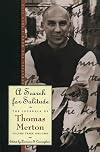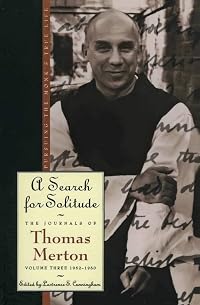
A Search for Solitude: Pursuing the Monk's True Life (The Journals of Thomas Merton, vol.3)
by Thomas Merton
The Journals of Thomas Merton (v.3 1952-1960)
On This Page
Description
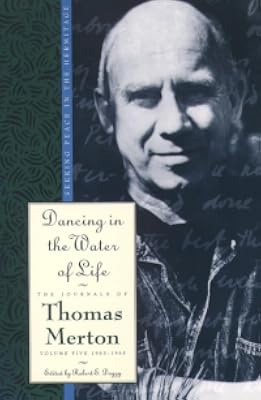
By 1952, Thomas Merton's renown as the bestselling author of The Seven Storey Mountain was well established. During the years illuminated by this third volume of his private journals, Merton struggled to reconcile his celebrity with his desire for a life of hermetic silence and contemplation. Already at the Abbey of Gethsemani for over a decade, Merton was beginning to grow impatient with the strictures and shortcomings of conventional monastic life. Here he chronicles the search for a more show more authentic experience of the divine and of community that led him to explore Zen, existentialism, and the exciting developments in Latin American Christianity and literature, which informed his own Catholic spirituality and his views of the great intellectual debates of his time. Merton's private writing combines a poet's eye for the beauty of nature - in the woods and fields of the Abbey - as well as a fiction writer's instinct for the idiosyncracies of his brethren, the rhythms and tediums of regular observance, the strengths of the monastery and its weaknesses. It is, however, Merton's restless, compelling, unvarnished reflections on the question of what it means to be a monk in his own time that gives this journal its most lasting value, paying homage to monasticism and instructing all who value the contemplative life. show lessTags
Recommendations



















Member Reviews
This third volume of Merton's journals, like the first two, is full of insight into his life and work. Readers will be grateful that, when it came to his journals, Merton's Trappist silence did not leave him speechless. In a 1956 entry, he notes that he had "always wanted to write about everything"-not to write a book that "covers everything" or contains everything, but "a book in which everything can go." The journals accomplish this largely by avoiding what he refers to (in a 1958 entry) as "the apostolate of alienation and hatred," a "mania for making everyone else like oneself." Merton's great gift, which shines through in the bits and pieces of his journals even more than in his finished work, is an ability to listen and respond to show more a world in which everything does go. Cunningham notes in his introduction that Merton's journals are full of reflection on what it means to be a monk. In this volume, as in volume two, this reflection plays a major role in shaping his discernment of the world and his place in it. These journals provide marvelous insights into Merton's reading of history: "everybody falsifies history," he writes. "You have to seek truths laboriously by pitting one lie against another-or many half-truths together-until you can make your own mendacious guess as to what the truth was." And they provide a running commentary on Merton's literary influences-what he was reading, with whom he was corresponding and speaking. Of particular interest are his relationship with Ernesto Cardenal and his growing familiarity with Zen. This volume maintains the high standards established in the first two and will leave readers anxiously anticipating the remaining four. show less
Ratings
Members
- Recently Added By
Author Information

397+ Works 38,287 Members
Born in France, Thomas Merton was the son of an American artist and poet and her New Zealander husband, a painter. Merton lost both parents before he had finished high school, and his younger brother was killed in World War II. Something of the ephemeral character of human endeavor marked all his works, deepening the pathos of his writings and show more drawing him close to Eastern, especially Buddhist, forms of monasticism. After an initial education in the United States, France, and England, he completed his undergraduate degree at Columbia University. His parents, nominally friends, had given him little religious guidance, and in 1938, he converted to Roman Catholicism. The following year he received an M.A. from Columbia University and in 1941, he entered Gethsemani Abbey in Kentucky, where he remained until a short time before his death. His working life was spent as a Trappist monk. At Gethsemani, he wrote his famous autobiography, "The Seven Storey Mountain" (1948); there he labored and prayed through the days and years of a constant regimen that began with daily prayer at 2:00 a.m. As his contemplative life developed, he still maintained contact with the outside world, his many books and articles increasing steadily as the years went by. Reading them, it is hard to think of him as only a "guilty bystander," to use the title of one of his many collections of essays. He was vehement in his opposition to the Vietnam War, to the nuclear arms race, to racial oppression. Having received permission to leave his monastery, he went on a journey to confer with mystics of the Hindu and Buddhist traditions. He was accidentally electrocuted in a hotel in Bangkok, Thailand, on December 10, 1968. (Bowker Author Biography) show less
All Editions
Series

Common Knowledge
- Original publication date
- 1996
- People/Characters
- Thomas Merton
Classifications
- Genres
- Religion & Spirituality, Nonfiction, Biography & Memoir
- DDC/MDS
- 271.12502 — Religion History of Christianity Religious congregations and orders in church history Benedictines Cistercians Trappists
- LCC
- BX4705 .M542 .A3 — Philosophy, Psychology and Religion Christian Denominations Christian Denominations Catholic Church Biography and portraits Individual
- BISAC
Statistics
- Members
- 224
- Popularity
- 146,404
- Reviews
- 1
- Rating
- (4.00)
- Languages
- English
- Media
- Paper, Ebook
- ISBNs
- 3
- ASINs
- 5