
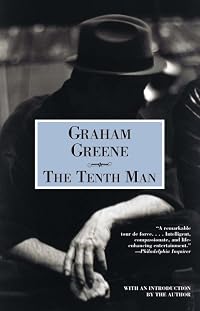
The Tenth Man
by Graham Greene 
On This Page
Description
Ingram An utterly gripping story of a wealthy French lawyer being held prisoner by the Germans during World War II. The lawyer is chosen by the soldiers to die, but instead he makes a cowardly trade for his life--one that he will have to pay for even as a free man.Tags
Recommendations





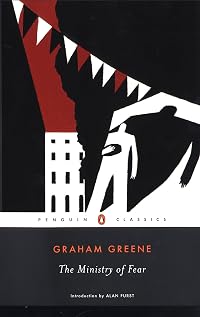

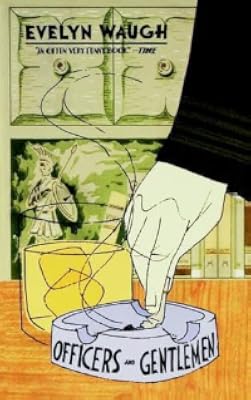

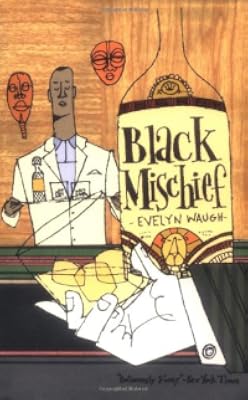


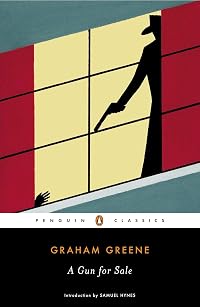











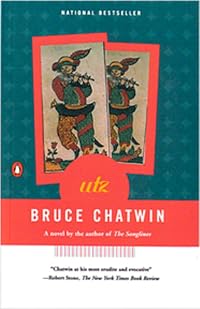

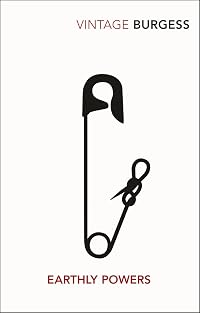
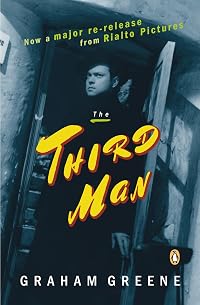
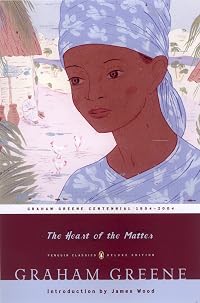
Member Recommendations
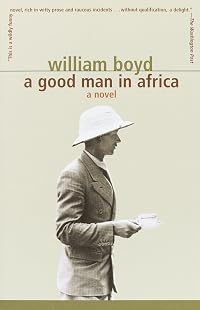
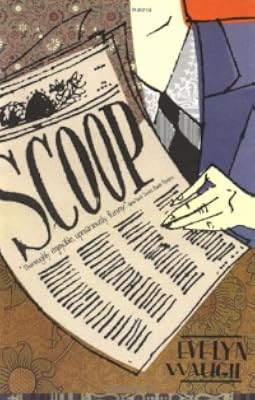
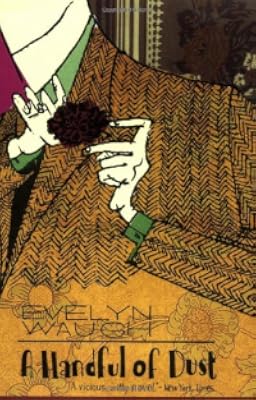
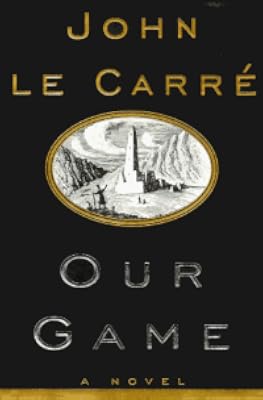
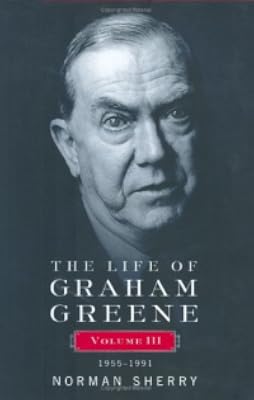
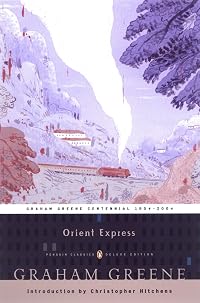
g026r Another unfilmed screenplay by Greene that was lost for a significant period of time.
Member Reviews
Imagine that you are a prisoner of war who has just lost a bizarre lottery that has condemned you to face a firing squad in the morning. What would you pay to have one of your fellow prisoners take your place? Now, imagine to your surprise that someone has accepted the offer to die instead of you at the cost of everything you own in the world. How do you reconcile the tremendous guilt and sense of loss that you would feel? Assuming that you survive the ordeal and are finally released from prison, what would you then do to regain your old way of life?
In The Tenth Man, Graham Greene tells the story of Jean-Louis Chavel, a French lawyer and property owner who is imprisoned by the Germans at the beginning of the Second World War. Greene show more excelled at the delving into the minds of his characters as a way of developing complex and intriguing storylines and this taut volume is no different in that regard. In an introductory essay, the author tells us that this tale was originally developed as a film treatment, but then forgotten for almost 40 years before being published as a stand-alone novella. The story certainly reads like the script of a fast-paced thriller, with the harrowing prison scenes and the events that transpire when Chavel returns to his former home leading to a surprising climax. It is a brief but gripping book and definitely one that any fan of the author will devour. show less
In The Tenth Man, Graham Greene tells the story of Jean-Louis Chavel, a French lawyer and property owner who is imprisoned by the Germans at the beginning of the Second World War. Greene show more excelled at the delving into the minds of his characters as a way of developing complex and intriguing storylines and this taut volume is no different in that regard. In an introductory essay, the author tells us that this tale was originally developed as a film treatment, but then forgotten for almost 40 years before being published as a stand-alone novella. The story certainly reads like the script of a fast-paced thriller, with the harrowing prison scenes and the events that transpire when Chavel returns to his former home leading to a surprising climax. It is a brief but gripping book and definitely one that any fan of the author will devour. show less
"He envied Jules: to have been able to remain ‘correct’: to have saved his self-respect by small doses of rudeness or inattention. But for him— to have remained correct would have meant death."
The Tenth Man is not just a story but a moral experiment: A group of prisoners of war are told that as punishment for the killing of occupying forces by the local resistance movement, one in ten prisoners would be executed. It is up to the prisoners to draw lots.
From this Greene develops a tale of moral conflict, perceptions of heroism and cowardice, of pretense and being true to character, and it all starts, not with the draw, but with one of the chosen offering to buy his life in exchange for all his possessions.
I really enjoyed the show more premise of the story and - needless to say - Greene's writing. However, the introduction of the love story and ending of the book left me wanting more of a development of the original dilemma - Chavel having to deal with his conscience - rather than focusing the story on the ensuing love triangle and resolving all the issues in a rather convenient manner. Not that Greene does not often chose to resolve his characters' conflicts in the same manner, but in this book in particular, I felt the story itself would have offered a less clean-cut conclusion.
However, this story was written around the same time as the The Third Man, and Greene intended it to work as a screenplay, in which case a more ambiguous ending would not have worked. At least not if he needed to sell the story to a film studio.
Having read Greene's novels there is a distinct difference between early works written for film and later works, many of which were eventually turned into films. The early works, The Tenth Man included, tend to be limited in developing characters and ideas, whereas the later ones thrive on both and allow Greene's writing to develop another dimension.
"The paper lay on the floor beside him, scrawled over with almost illegible writing. He never knew that his signature read only Jean-Louis Ch … which stood of course as plainly for Charlot as for Chavel. A crowning justice saw to it that he was not troubled. Even a lawyer’s meticulous conscience was allowed to rest in peace." show less
The Tenth Man is not just a story but a moral experiment: A group of prisoners of war are told that as punishment for the killing of occupying forces by the local resistance movement, one in ten prisoners would be executed. It is up to the prisoners to draw lots.
From this Greene develops a tale of moral conflict, perceptions of heroism and cowardice, of pretense and being true to character, and it all starts, not with the draw, but with one of the chosen offering to buy his life in exchange for all his possessions.
I really enjoyed the show more premise of the story and - needless to say - Greene's writing. However, the introduction of the love story and ending of the book left me wanting more of a development of the original dilemma - Chavel having to deal with his conscience - rather than focusing the story on the ensuing love triangle and resolving all the issues in a rather convenient manner. Not that Greene does not often chose to resolve his characters' conflicts in the same manner, but in this book in particular, I felt the story itself would have offered a less clean-cut conclusion.
However, this story was written around the same time as the The Third Man, and Greene intended it to work as a screenplay, in which case a more ambiguous ending would not have worked. At least not if he needed to sell the story to a film studio.
Having read Greene's novels there is a distinct difference between early works written for film and later works, many of which were eventually turned into films. The early works, The Tenth Man included, tend to be limited in developing characters and ideas, whereas the later ones thrive on both and allow Greene's writing to develop another dimension.
"The paper lay on the floor beside him, scrawled over with almost illegible writing. He never knew that his signature read only Jean-Louis Ch … which stood of course as plainly for Charlot as for Chavel. A crowning justice saw to it that he was not troubled. Even a lawyer’s meticulous conscience was allowed to rest in peace." show less
From humble origins – a short, perfunctory film treatment which was forgotten about for decades – we find a fine little thriller from Graham Greene. A group of thirty French prisoners during the Nazi occupation are scheduled for decimation: one in every ten is to be executed as an example to the Resistance. The men draw lots, and one of the three condemned – a wealthy man – bargains away all his money and property for someone to take his place. The second part of the novella comes after the liberation of the country and sees the reprieved man returning to his old property under a pseudonym to take stock of the unintended consequences for the now-wealthy family of the man who took his place.
It is a fascinating conceit for a story show more and Greene constructs a more-than-adequate approximation of it. Readers should rest assured that despite its origin it is well-written: at no point do you feel like you've been sold something shoddy under false pretences just because it has Graham Greene's name attached. It manages to touch upon a great many themes, including class (one of the other condemned men queries why the wealthy man should be allowed to buy his life back when they cannot), war guilt and the loss of identity ("At the end of a war all our portraits are out of date" (pg. 127)), and the relative merits of money vs. an intact family (the condemned man's family, despite their new wealth, would surely prefer their brother/son back).
Alas, none of these themes are ever explored with the vigour that the reader desires, due to the story's length and its discarding by the studio and the author. Ironically, given that it is a film treatment which finally saw the light of day in print form, this would look great on the screen. Regardless, there are many tangents for the reader to pursue, and beneath it all is a well-wrought story with good characters. The potential of this story deserves far better than it got. show less
It is a fascinating conceit for a story show more and Greene constructs a more-than-adequate approximation of it. Readers should rest assured that despite its origin it is well-written: at no point do you feel like you've been sold something shoddy under false pretences just because it has Graham Greene's name attached. It manages to touch upon a great many themes, including class (one of the other condemned men queries why the wealthy man should be allowed to buy his life back when they cannot), war guilt and the loss of identity ("At the end of a war all our portraits are out of date" (pg. 127)), and the relative merits of money vs. an intact family (the condemned man's family, despite their new wealth, would surely prefer their brother/son back).
Alas, none of these themes are ever explored with the vigour that the reader desires, due to the story's length and its discarding by the studio and the author. Ironically, given that it is a film treatment which finally saw the light of day in print form, this would look great on the screen. Regardless, there are many tangents for the reader to pursue, and beneath it all is a well-wrought story with good characters. The potential of this story deserves far better than it got. show less
From 2010 — I absolutely loved this little book of just under 120 pages. Originally written as a movie script for MGM in 1944 and then forgotten, the manuscript was found again in 1983 and published in its present form. The story takes place in France during and immediately following WWII. In the opening chapter, a German officer informs a group of thirty prisoners that they must choose three men among their ranks to be executed the following morning. The men decide to draw for it, and when Jean-Louis Chavel, a rich and unpopular lawyer finds he's picked a piece of paper marking him for execution, he offers to give away all his possessions, including his family's country house, to the person who'll accept to take his place. The bulk show more of the story centres around Chavel once he is released, penniless, unable to find work and irresistibly drawn to the home of his ancestors, now occupied by the dead man's remaining family. This story was both fascinating and profound, touching on issues of identity, morality, courage and redemption. It was my introduction to Graham Greene, an author whose work I’ve long wanted to read and which I'll be sure to seek out. show less
This novella by Graham Greene was written in 1944 (first conceived in 1938) as a screen play that was somehow discarded and lost in the MGM archives. Greene was unable to make a living from writing books and took a contract with MGM to write screenplays, and before the main story, the book includes a couple of screen sketches. In 1983, the story was found and MGM sold the rights to a publisher, hence this book.
Reading other's unfinished work is a great learning experience, and it is useful to see how the plot and structure of creative writing emerges from different authors. Scott Fitzgerald's The Last Tycoon is a book I wish I had read while writing my PhD - the thought process is clear, but the details are still being threshed out. show more Seeing how Fitzgerald did this has left a powerful impression on me.
In the first part of Greene's book, he tells the story of what he was doing before and after the war, and how the story came about. He then introduces two film sketches that remained unfinished. It is interesting that in just a few pages, the outline of a movie appears. Greene added the film sketches because he had largely forgotten about The Tenth Man, thinking it was only (p. 10):
The main text, The Tenth Man, reads as a complete novella - there is certainly nothing undeveloped there. But the introduction sets out how the novella began as a few sentences outlining an idea. The two film sketches, which are incomplete, provide a bridge to Greene's process from a few sentences to a complete story.
As for the story, the cover blurb says it all: a rich man in a German prison draws lots to see who will die. (The Germans are going to execute 1 in 10 prisoners, and the prisoners have to decide who it will be.) The rich man loses, but offers all of his wealth to stay alive. Another prisoner, thinking of his family, takes up the rich man's offer.
I recall from reading Hemingway's letters and various articles how he developed a story out of a simple idea. For example, The Sun Also Rises is a story to answer the question, What would happen if your penis was shot off during the war? Greene's story follows a similar process: What would it be like to pay somebody else to die for you, if you gave up everything to live?
The story isn't so much Faustian, for the poor prisoner insists that the rich man sticks to the deal (after the rich man has an attack of conscience), and there is much more to the story after that.
In many ways, it addresses questions of life and death, and whether we control our fate or whether it matters or not. Or indeed, if we think we can thwart destiny, think again. Maybe the moral of the story is amor fati?
I've been reading and thinking a lot about death lately, especially the idea that all fear can be reduced to a fear of death, and, because we all die, there is nothing to be afraid of - it is a given. Perhaps it is not a topic Australians discuss in any philosophical sense, unlike what I have read by the Stoics, Albert Camus or what is explored in Mexico's Festival of the Dead.
I think this aversion to thinking about death is philosophically limiting. But rather than Camus, which might be a little confronting for the uninitiated, Graham Greene deals with the topic in a way that makes it hard not to reflect on one's values, the purpose of life, and, I suppose, that death accompanies life.
It is certainly macabre, but there is much to learn from this novella. The story was made into a TV movie starring Sir Anthony Hopkins in 1988. show less
Reading other's unfinished work is a great learning experience, and it is useful to see how the plot and structure of creative writing emerges from different authors. Scott Fitzgerald's The Last Tycoon is a book I wish I had read while writing my PhD - the thought process is clear, but the details are still being threshed out. show more Seeing how Fitzgerald did this has left a powerful impression on me.
In the first part of Greene's book, he tells the story of what he was doing before and after the war, and how the story came about. He then introduces two film sketches that remained unfinished. It is interesting that in just a few pages, the outline of a movie appears. Greene added the film sketches because he had largely forgotten about The Tenth Man, thinking it was only (p. 10):
...two pages of outline but [it was] a complete short novel of thirty thousand words.He then went through his own archives and found two other sketches - although less complete - that he had also forgotten about. (Wouldn't it be lovely to have written so much one had forgotten some of it?)
The main text, The Tenth Man, reads as a complete novella - there is certainly nothing undeveloped there. But the introduction sets out how the novella began as a few sentences outlining an idea. The two film sketches, which are incomplete, provide a bridge to Greene's process from a few sentences to a complete story.
As for the story, the cover blurb says it all: a rich man in a German prison draws lots to see who will die. (The Germans are going to execute 1 in 10 prisoners, and the prisoners have to decide who it will be.) The rich man loses, but offers all of his wealth to stay alive. Another prisoner, thinking of his family, takes up the rich man's offer.
I recall from reading Hemingway's letters and various articles how he developed a story out of a simple idea. For example, The Sun Also Rises is a story to answer the question, What would happen if your penis was shot off during the war? Greene's story follows a similar process: What would it be like to pay somebody else to die for you, if you gave up everything to live?
The story isn't so much Faustian, for the poor prisoner insists that the rich man sticks to the deal (after the rich man has an attack of conscience), and there is much more to the story after that.
In many ways, it addresses questions of life and death, and whether we control our fate or whether it matters or not. Or indeed, if we think we can thwart destiny, think again. Maybe the moral of the story is amor fati?
I've been reading and thinking a lot about death lately, especially the idea that all fear can be reduced to a fear of death, and, because we all die, there is nothing to be afraid of - it is a given. Perhaps it is not a topic Australians discuss in any philosophical sense, unlike what I have read by the Stoics, Albert Camus or what is explored in Mexico's Festival of the Dead.
I think this aversion to thinking about death is philosophically limiting. But rather than Camus, which might be a little confronting for the uninitiated, Graham Greene deals with the topic in a way that makes it hard not to reflect on one's values, the purpose of life, and, I suppose, that death accompanies life.
It is certainly macabre, but there is much to learn from this novella. The story was made into a TV movie starring Sir Anthony Hopkins in 1988. show less
A gripping novella about a cowardly Parisian lawyer's incarceration in a WW2 prison camp, the deal he made to survive execution, and his attempts at an incognito reintroduction into the small town that housed his former estate.
Chavel's change from the frightened, introverted, bourgeois lawyer who would bribe others with everything he had to save his life (what life?) before and while in the camp, to a friendly, caring man who would risk everything in his meagre possession (which, by that point, was only his life), is believeable and satisfying.
Chavel's change from the frightened, introverted, bourgeois lawyer who would bribe others with everything he had to save his life (what life?) before and while in the camp, to a friendly, caring man who would risk everything in his meagre possession (which, by that point, was only his life), is believeable and satisfying.
Read during Spring 2004
I didn't quite read it all in one sitting but I absolutely could not put it down easily. This novella was written about the time Greene was working on The Third Man in Hollywood and emerged from the vaults of MGM in the mid 80's. A group of prisoners during the German occupation of France must deciede which three will be executed. A rich man saves his life by giving all he owns to another prisoner if he will die for him. A morally contradictionary story, incredibly well done.
I didn't quite read it all in one sitting but I absolutely could not put it down easily. This novella was written about the time Greene was working on The Third Man in Hollywood and emerged from the vaults of MGM in the mid 80's. A group of prisoners during the German occupation of France must deciede which three will be executed. A rich man saves his life by giving all he owns to another prisoner if he will die for him. A morally contradictionary story, incredibly well done.
Members
- Recently Added By
Published Reviews
''The Tenth Man'' is melodrama, which is O.K. But Greene attempts to invest it with philosophical meaning, and, really, it does not work. The village priest, who is introduced with that nice worldliness with which Greene likes to treat Roman Catholicism on those odd days when he is not obsessed with it, enters the scene. '' 'Can I have your blessing, father?' 'Of course.' He rubber-stamped the show more air like a notary and was gone.'' show less
added by John_Vaughan
Lists

Books Read in 2015
3,299 works; 127 members

Short Books to Read
14 works; 2 members
Author Information

356+ Works 87,436 Members
Born in 1904, Graham Greene was the son of a headmaster and the fourth of six children. Preferring to stay home and read rather than endure the teasing at school that was a by-product of his father's occupation, Greene attempted suicide several times and eventually dropped out of school at the age of 15. His parents sent him to an analyst in show more London who recommended he try writing as therapy. He completed his first novel by the time he graduated from college in 1925. Greene wrote both entertainments and serious novels. Catholicism was a recurring theme in his work, notable examples being The Power and the Glory (1940) and The End of the Affair (1951). Popular suspense novels include: The Heart of the Matter, Our Man in Havana and The Quiet American. Greene was also a world traveler and he used his experiences as the basis for many books. One popular example, Journey Without Maps (1936), was based on a trip through the jungles of Liberia. Greene also wrote and adapted screenplays, including that of the 1949 film, The Third Man, which starred Orson Welles. He died in Vevey, Switzerland in 1991. (Bowker Author Biography) show less
Graham Greene has a Legacy Library. Legacy libraries are the personal libraries of famous readers, entered by LibraryThing members from the Legacy Libraries group.
Series
Belongs to Publisher Series
Work Relationships
Is contained in
Has the adaptation
Common Knowledge
- Original title
- The Tenth Man
- Original publication date
- 1985
- People/Characters
- Jean-Louis Chavel
- Related movies
- Hallmark Hall of Fame: The Tenth Man (1988 | IMDb)
- First words
- Most of them told the time very roughly by their meals, which were unpunctual and irregular: they amused themselves with the most childish games all through the day, and when it was dark they fell asleep by tacit consent - no... (show all)t waiting for a particular hour of darkness for they had no means of telling the time exactly: in fact there were as many times as there were prisoners.
- Last words
- (Click to show. Warning: May contain spoilers.)Even a lawyer's meticulous conscience was allowed to rest in piece.
- Original language*
- Englisch
*Some information comes from Common Knowledge in other languages. Click "Edit" for more information.
Classifications
Statistics
- Members
- 1,524
- Popularity
- 15,045
- Reviews
- 26
- Rating
- (3.79)
- Languages
- 15 — Czech, Danish, Dutch, English, Estonian, Finnish, French, German, Hungarian, Italian, Norwegian (Bokmål), Polish, Portuguese, Spanish, Swedish
- Media
- Paper, Audiobook, Ebook
- ISBNs
- 46
- ASINs
- 26