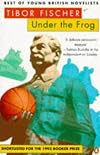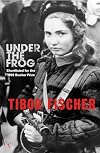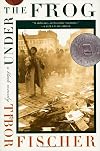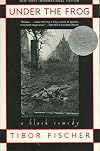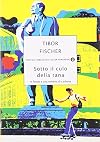
Under the Frog
by Tibor Fischer
On This Page
Description
Shortlisted for the Booker Prize, "Under the Frog "follows the adventures of two young Hungarian basketball players through the turbulent years between the end of World War II and the anti-Soviet uprising of 1956. In this spirited indictment of totalitarianism, the two improbable heroes, Pataki and Gyuri, travel the length and breadth of Hungary in an epic quest for food, lodging, and female companionship.Tags
Recommendations




































Member Reviews
Had I known that Fischer has become an apologist for Viktor Orban, I would have thought twice about buying this book, but I think it deserved its Booker shortlisting, as it is well written and very funny in places.
The book is a picaresque journey though the Hungary of Fischer's parents from the end of the war to the 1956 revolution and its aftermath. The main protagonist is Gyuri Fischer, who is a member of a successful basketball team whose success owes much more to his talented friend Pataki. Gyuri's opportunities are limited by his class, though his former bookmaker father is now broke.
Fischer likes using unusual words for comic effect - the words I looked up while reading this included lucubrate, mulierosity, pinguid, stultiloquence show more and valetudinarian. show less
The book is a picaresque journey though the Hungary of Fischer's parents from the end of the war to the 1956 revolution and its aftermath. The main protagonist is Gyuri Fischer, who is a member of a successful basketball team whose success owes much more to his talented friend Pataki. Gyuri's opportunities are limited by his class, though his former bookmaker father is now broke.
Fischer likes using unusual words for comic effect - the words I looked up while reading this included lucubrate, mulierosity, pinguid, stultiloquence show more and valetudinarian. show less
A mad romp with a serious message, Under the Frog is the story of the education, in one way or another, of young Hungarian basketballer Gyuri in the years between the end of the Second World War and the 1956 Uprising.
One of my top five desert island books, this is funny and clever but wears its intellegence lightly. The characters are engaging and read like young men anywhere, which makes it all the more brutal when the state intrudes into their lives. Fischer handles the climate of paranoia deftly without the overwhelming seriousness that might kill the narrative, and handles love, learning and employment for the main focus characters with a skill that he has struggled to reproduce since.
One of my top five desert island books, this is funny and clever but wears its intellegence lightly. The characters are engaging and read like young men anywhere, which makes it all the more brutal when the state intrudes into their lives. Fischer handles the climate of paranoia deftly without the overwhelming seriousness that might kill the narrative, and handles love, learning and employment for the main focus characters with a skill that he has struggled to reproduce since.
Perversely funny and inevitably sad story of the period leading up to the Hungarian revolution of 1956. Starts out with a naked basketball team on tour, takes in an eating competition that could have come out of Marquez, and whistles through other absurdist adventures before ending on the barricades.
A marvellous read; full of witty remarks and asides, a fast paced tale of Hungary 1944-1956 and one young man, Gyuri and his friends. This is an intelligent and well thought through novel; it made me laugh out loud and then sob. Because of the subject matter the humour is often black and involve awful situations, but Tibor Fischer writes sympathetically about Hungary and so is not offensive.
Life in Hungary under the Communists was like living under the frog, in a shithole, according to Gyuri and his friends. Gyuri's foremost goals are dodging the Army and getting out of Hungary. He is class-x which is a political handicap so things are more difficult for him, but joining the Army's basketball team gave him small privileges, as well as freeing him from becoming cannon fodder. From 1944 when the Germans occupied Hungary, to October 1956 during the Revolution, we get acquainted with the rather banal life of this young man whose preoccupations were centered around his libido, but who seems to be rather less charming than his playing colleagues, failing to make a conquest every time. Between basketball practice and chasing show more girls, he hatches absurd childish plans of getting out of the country. Slowly, however, he begins to be confronted with reality, and he even gets an idea of how the system works, how the hated secret police operated, not through any effort or interest on his part, but of simply being in the right place at the right time. The book culminates in the heady days of the revolution, and we see Gyuri grow up at last, albeit in a painful way.
The book is meant to be funny and serious at the same time, and there are a number of laugh out loud scenes, especially concerning the antics of the basketball buddies who behaved like young men everywhere. This recipe, however, quickly becomes monotonous -- there is nothing so offputting as young men in their mid to late-20s still behaving as if they were 13. The number of words that this book drove me to consult the dictionary was staggering for the number of pages it has. It was interesting to encounter words unfamiliar to me the first few times, but this kept on until the very last line. I found this rather brattish display by the author, not unlike the story's main character, quite irritating. To have cassandraing, sesquipedalian, collops, aposiopesis appear within 4 pages of each other was too much acrobatics, in my opinion. The story starts on a high note, drops significantly for most of the narrative, then picks up again when the revolution begins. It's a feeble attempt, however, at a comic approach to the subject of growing up in a Communist East Europe. It all seems to ring a false note. The book reminded me of Joseph Sckvorecky's The Swell Season which, however, is a far worthwhile read, the author's own experience lending it authenticity and pathos. show less
The book is meant to be funny and serious at the same time, and there are a number of laugh out loud scenes, especially concerning the antics of the basketball buddies who behaved like young men everywhere. This recipe, however, quickly becomes monotonous -- there is nothing so offputting as young men in their mid to late-20s still behaving as if they were 13. The number of words that this book drove me to consult the dictionary was staggering for the number of pages it has. It was interesting to encounter words unfamiliar to me the first few times, but this kept on until the very last line. I found this rather brattish display by the author, not unlike the story's main character, quite irritating. To have cassandraing, sesquipedalian, collops, aposiopesis appear within 4 pages of each other was too much acrobatics, in my opinion. The story starts on a high note, drops significantly for most of the narrative, then picks up again when the revolution begins. It's a feeble attempt, however, at a comic approach to the subject of growing up in a Communist East Europe. It all seems to ring a false note. The book reminded me of Joseph Sckvorecky's The Swell Season which, however, is a far worthwhile read, the author's own experience lending it authenticity and pathos. show less
Part war story, part sport story, and part young men behaving badly/honorably. With out a doubt, THE best book I've ever picked up in an air port. Man, can this guy write.
Fabulous characters, wicked dialog, and a sometimes goofy plot in the middle of one of europe's most serious episodes. I recomend this as one that EVERYONE should read. In fact, since reading it the first time, I've given at least a half dozen copies away as gifts.
Fabulous characters, wicked dialog, and a sometimes goofy plot in the middle of one of europe's most serious episodes. I recomend this as one that EVERYONE should read. In fact, since reading it the first time, I've given at least a half dozen copies away as gifts.
The story is a little disjointed at times and may require an outside source to make sense of the politics for a typical western reader, but this book is very funny and readable.
Members
- Recently Added By
Lists

Booker Prize
491 works; 62 members

Man Booker Prize Longlist 1993
6 works; 2 members

Booker Prize Shortlist: Titles Not Yet Read
161 works; 4 members
Author Information

21+ Works 2,484 Members
Tibor Fischer was born in Stockport, England, in 1959, the son of Hungarian basketball champions. He is a journalist, TV documentarian, & author of three novels, "Under the Frog" (a Booker Prize finalist), "The Thought Gang," & "The Collector Collector." (Bowker Author Biography)
Some Editions
Awards and Honors
Awards
Notable Lists
Common Knowledge
- Canonical title*
- Under the Frog
- Original publication date
- 1992
- People/Characters
- Gyuri; Pataki; Jadwiga
- Important places
- Hungary
- Important events
- Hungarian Revolution of 1956
- Dedication
- For all those who fought. (Not just in '56 Not just in Hungary.)
- First words
- It was true that at the age of twenty-five he had never left the country, that he had never got more than three days' march from his birthplace, no more than a day and a half of horse and carting or one long afternoon's locom... (show all)oting.
*Some information comes from Common Knowledge in other languages. Click "Edit" for more information.
Classifications
Statistics
- Members
- 676
- Popularity
- 42,218
- Reviews
- 12
- Rating
- (3.90)
- Languages
- 8 — English, Finnish, French, German, Hungarian, Italian, Portuguese, Spanish
- Media
- Paper, Audiobook
- ISBNs
- 22
- ASINs
- 4