On This Page
Description
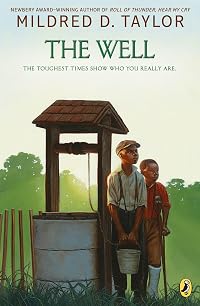
In Mississippi in the early 1900s ten-year-old David Logan's family generously shares their well water with both white and black neighbors in an atmosphere of potential racial violence.Tags
Recommendations





Member Reviews
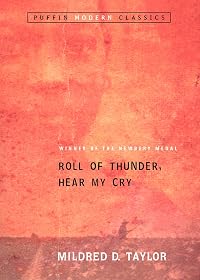
Those who have read [b:Roll of Thunder, Hear My Cry|310459|Roll of Thunder, Hear My Cry (Logans, #4)|Mildred D. Taylor|https://images.gr-assets.com/books/1388345167s/310459.jpg|1165554] will recognize David Logan as the father of Cassie and her brothers. In this short novel, David is ten years old and his brother Hammer is fourteen. It's 1910 in Mississippi, a summer of drought, and the well on the Logans' land is the only one that hasn't run dry. The Logans are willing to share water with black and white alike, but their generosity isn't appreciated by everyone.
I consider Roll of Thunder to be one of the best middle-grade books ever. Ms. Taylor's voice not only captures the spirit of her young protagonist but also crafts some lovely show more prose. She writes with a sort of effortless assurance, a quiet wisdom that doesn't try to be profound; it simply is. Her characters are real people, struggling against their inner selves as well as one another, making mistakes and making me root for them to grow strong and true. The Well is exactly what I would expect from a short novel by this author.
In less than a hundred pages, Taylor portrays racism with not just honesty but intimacy, layering her depiction with the stories of Ma Rachel and David's father in addition to David's own experience. David and Hammer react as individuals, each of them hurt and humiliated but processing and expressing these emotions in different ways (reflecting their different responses as adults in Taylor's other works). Every scene of this story peels back another layer of racism's reality, of the fight for one's dignity as a person to be acknowledged by those with power and agency. David's parents expect him to know how to behave in front of white people; but just as strongly, they remind him that he has worth whether it is acknowledged by others or not.
The storytelling craft is strong, weaving unspoken layers that a very young reader might not pick up on. For example, the scene between Caroline Logan and the sheriff (in which she tries to keep Hammer out of jail after he knocks down a white boy) is a subtly complex interplay between a civilian and a law officer, but also between a black woman and a white man in the turn-of-the-century South. Though Caroline knows that deference is her only option, she also knows how to make necessary appeasement work for her. For a moment, there's almost a sense that, with her people-smarts and her unquestionable dignity, Caroline is winning the day.
The story offers no happy ending. The Simms family, who resent the Logans for being black and yet having more land, more water--they don't suddenly admit to their prejudice and ask forgiveness. This is a children's book, but it is tough and unflinching and therefore moving, no matter the age of the reader. All of which make this a worthy installment of the Logan family saga. I loved getting a glimpse into David's heart, seeing him and Hammer as boys. I love this fictional family, and someday I hope to read all of Taylor's work. show less
I consider Roll of Thunder to be one of the best middle-grade books ever. Ms. Taylor's voice not only captures the spirit of her young protagonist but also crafts some lovely show more prose. She writes with a sort of effortless assurance, a quiet wisdom that doesn't try to be profound; it simply is. Her characters are real people, struggling against their inner selves as well as one another, making mistakes and making me root for them to grow strong and true. The Well is exactly what I would expect from a short novel by this author.
In less than a hundred pages, Taylor portrays racism with not just honesty but intimacy, layering her depiction with the stories of Ma Rachel and David's father in addition to David's own experience. David and Hammer react as individuals, each of them hurt and humiliated but processing and expressing these emotions in different ways (reflecting their different responses as adults in Taylor's other works). Every scene of this story peels back another layer of racism's reality, of the fight for one's dignity as a person to be acknowledged by those with power and agency. David's parents expect him to know how to behave in front of white people; but just as strongly, they remind him that he has worth whether it is acknowledged by others or not.
The storytelling craft is strong, weaving unspoken layers that a very young reader might not pick up on. For example, the scene between Caroline Logan and the sheriff (in which she tries to keep Hammer out of jail after he knocks down a white boy) is a subtly complex interplay between a civilian and a law officer, but also between a black woman and a white man in the turn-of-the-century South. Though Caroline knows that deference is her only option, she also knows how to make necessary appeasement work for her. For a moment, there's almost a sense that, with her people-smarts and her unquestionable dignity, Caroline is winning the day.
The story offers no happy ending. The Simms family, who resent the Logans for being black and yet having more land, more water--they don't suddenly admit to their prejudice and ask forgiveness. This is a children's book, but it is tough and unflinching and therefore moving, no matter the age of the reader. All of which make this a worthy installment of the Logan family saga. I loved getting a glimpse into David's heart, seeing him and Hammer as boys. I love this fictional family, and someday I hope to read all of Taylor's work. show less
Another too brief glimpse into the incredibly racist past that was the unfortunate reality for so many people of color. I liked this one better than the previous one I read because we got to see more of the main characters and how they behaved and what they believed in. Ma Rachel's character was especially sad even though we didn't get to see much of her.
This one also had the element of terrifying danger that again, was the sad reality up until not too long ago.
This one also had the element of terrifying danger that again, was the sad reality up until not too long ago.
The Well is another short-form book about the Logans, like The Friendship or The Song of the Trees, but unlike those, The Well jumps back a generation to when Papa and Uncle Hammer were boys. If you wanted to dismantle this story into a discussion of all the subtle societal interlayering of different power structures and emotional bonds, or use this as a launching point to talk about the difference between portrayals of oppression and portrayals of resistance, you absolutely could. Taylor's books are deep, subtle, and intricate, and The Well is no exception.
But you know what? Let's just forget all that for now. Because it's also a very fine story.
It's drought-time, and all the wells have run dry except for the Logans'. Black folk and show more white folk alike are coming to Ma (Big Ma of the previous books) for water. Not to put too fine a point on it, whites having to come hat-in-hand to blacks for water in the Jim Crow south isn't exactly an easy and low-potential-for-trouble situation. And if you thought Uncle Hammer was a hothead in the Cassie books, you should see him at thirteen. You also get the backstory about Charlie Simms' antipathy for the Logans: if ever Jeremy wanted to injure and rebell against his father, befriending the Logan kids was the exact way to do it.
As with all her books, Taylor pulls no punches, neither prettifying the social dynamics of Jim Crow, nor creating deus ex machina victories for her characters. Instead, she shows smart, determined people in near-impossible situations, acting to preserve their dignity and natural--if not societal--rights. show less
But you know what? Let's just forget all that for now. Because it's also a very fine story.
It's drought-time, and all the wells have run dry except for the Logans'. Black folk and show more white folk alike are coming to Ma (Big Ma of the previous books) for water. Not to put too fine a point on it, whites having to come hat-in-hand to blacks for water in the Jim Crow south isn't exactly an easy and low-potential-for-trouble situation. And if you thought Uncle Hammer was a hothead in the Cassie books, you should see him at thirteen. You also get the backstory about Charlie Simms' antipathy for the Logans: if ever Jeremy wanted to injure and rebell against his father, befriending the Logan kids was the exact way to do it.
As with all her books, Taylor pulls no punches, neither prettifying the social dynamics of Jim Crow, nor creating deus ex machina victories for her characters. Instead, she shows smart, determined people in near-impossible situations, acting to preserve their dignity and natural--if not societal--rights. show less
David Logan tells the story of when his family's well was the only one in their area of Mississippi that hadn't dried up during a drought in the early days of the 20th century. David's family is black, and they freely give water from their well to blacks and whites as well - whoever needs it. But one white family, the Simms, are racist to the core, and their two sons stir up trouble with David and his hot-headed older brother, Hammer. When there was trouble between blacks and whites in those days, (especially in the deep South), the blacks would always come out on the losing side, no matter who was in the right or wrong. But in the last few pages of the book, a surprise comes along that changes the way the community sees the Logans and show more the Simms.
This short novella shoots like an arrow through the tale, with no wandering or side stories at all. show less
This short novella shoots like an arrow through the tale, with no wandering or side stories at all. show less
I thought this was a great, thought provoking book. I liked this book because of the language and the characterization of Mama. The language of the story was a large contributor to the overall tone and emotions that were established. The author writes, " Y'all know my daddy was a white man. My sister and me, we were born slaves to him." You read the writing of the story in your head and you can almost hear the characters saying it. The language helped the reader connect to the time period and the context with which this book is written. I also loved the characterization of Mama. Mama was written as an extremely accepting and gracious woman. She wanted to share the water on her well because "the lord done blessed us with it." She didn't show more care if the people that came to get their water would not return the favor. Mama only cared about doing what she thought was right, and I think that is a great lesson to teach to the reader. The messages I took from this book are to be accepting of one another and to never allow someone to treat you as though you are less than them. show less
I liked this book for a couple of reasons. First, I liked characters and felt that they were well developed. The first sentence of the book was Charlie Simms was always mean, and that’s the truth of it. Throughout the story, there were constant acts by Charlie Simms that showed just how mean he was. He lied on Hammer and David and caused them to get whipped and they had to work on their land for the summer. He cut up and put dead animals in the only well that everyone in the area was using causing everyone to suffer, whites and blacks. He also constantly taunted Hammer without let up. I also liked the book because it pushed it readers to think about tough issues and broadens perspectives. The book dealt with many issues such as show more prejudice, pride, and human dignity. Hammer’s pride wouldn't just let him let things go. After he got in trouble for beating up Charlie Simms who was a white boy, he just couldn't take the punishment and let it be. He had to do something to make him pay and Charlie’s pride wouldn't allow him to let things go either. After Hammer pushed him down, one would think that it was over and done but no he had to poison the only water well that actually had water in it. Had either one of these boys had just let it be the whole town would not have had to suffer. The big idea of this story to me is sometimes it’s just best to let things go. show less
The Well: David’s Story
By Mildred D. Taylor (1998)
I liked The Well: David’s Story by Mildred D. Taylor for two reasons. First, I liked the symbolism in the book. Specifically, the well is a reoccurring symbol in the book, and Taylor does an excellent job of emphasizing the importance of it. Basically, the well is what erupted the tension between the Logan’s and the Simms’s. Second, I liked how Taylor created an accurate picture of the racism that occurred in the early 1900’s. For example, Charlie, white, torments Hammer because he is black; thus, Taylor does not dismiss the racial tension. Overall, the “big idea” of The Well: David’s Story is to exemplify the racism that occurred in the early 1900’s, and the cruelties show more that existed because of it. show less
By Mildred D. Taylor (1998)
I liked The Well: David’s Story by Mildred D. Taylor for two reasons. First, I liked the symbolism in the book. Specifically, the well is a reoccurring symbol in the book, and Taylor does an excellent job of emphasizing the importance of it. Basically, the well is what erupted the tension between the Logan’s and the Simms’s. Second, I liked how Taylor created an accurate picture of the racism that occurred in the early 1900’s. For example, Charlie, white, torments Hammer because he is black; thus, Taylor does not dismiss the racial tension. Overall, the “big idea” of The Well: David’s Story is to exemplify the racism that occurred in the early 1900’s, and the cruelties show more that existed because of it. show less
Members
- Recently Added By
Lists

Female Author
1,234 works; 66 members

Historical Fiction
889 works; 91 members

Books Read in 2015
3,299 works; 129 members
Author Information

33+ Works 25,796 Members
Mildred D. Taylor was born in Jackson, Mississippi on September 13, 1943 and grew up in Toledo, Ohio. She received a Bachelor's degree in Education from the University of Toledo in 1965 and then spent two years in the Peace Corp teaching English and History in Ethiopia. She received a Master's degree in Journalism from the University of Colorado. show more During this time, she joined the Black Student Alliance and assisted in creating the black studies program at the university. After graduation and before becoming a full-time author, she worked for the Black Education Program as a study skills director. Using her personal experiences and family stories she heard while growing up, Taylor has created several historical fiction books that offer realistic portraits of African-American families in the mid-1900s. Her novel Roll of Thunder, Hear My Cry won the Newbery Award in 1977 and was made into a television movie in 1978. The Well: David's Story received the 1997 Jason Award. She has also received the Boston Globe-Horn Book Award, the Jane Addams Book Award, the Coretta Scott King Award, and the Christopher Award multiple times. She currently lives in Colorado. (Bowker Author Biography) show less
Awards and Honors
Awards
Series

Work Relationships
Is contained in
Common Knowledge
- Original publication date
- 1995
Classifications
- Genres
- Kids, Fiction and Literature, Children's Books
- DDC/MDS
- 813.54 — Literature & rhetoric American literature in English American fiction in English 1900-1999 1945-1999
- LCC
- PZ7 .T21723 .W — Language and Literature Fiction and juvenile belles lettres Fiction and juvenile belles lettres Juvenile belles lettres
- BISAC
Statistics
- Members
- 1,247
- Popularity
- 19,821
- Reviews
- 21
- Rating
- (3.90)
- Languages
- English, German
- Media
- Paper, Audiobook, Ebook
- ISBNs
- 20
- ASINs
- 7