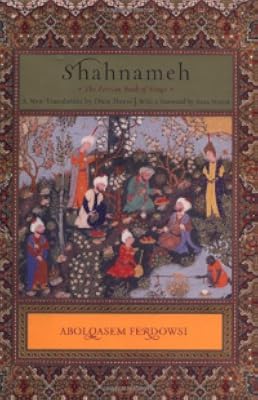
Shahnameh: The Persian Book of Kings
by Ferdowsi
On This Page
Description
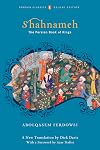
"Shahnameh: The Persian Book of Kings" is the timeless masterpiece by the Persian poet Ferdowsi. The epic poem, believed to have been written between 977 and 1010 AD, tells of the mythological and historical past of Persia from the creation of the world up until the Islamic conquest of Iran in the seventh century. The "Shahnameh" is a captivating story of an ancient world and details much of early Persia's history, culture, and Zoroastrian religion. The poem, consisting of over 50,000 show more couplets, or two-line verses, is a work of great importance in Persian culture and helped shape the development of the modern Persian language. The poem is regarded as the national epic and symbol of Iran and is celebrated in many areas that were once a part of the ancient Persian empire, such as Afghanistan, Turkey, Armenia, and Georgia. The lyrical account of Persian history in "Shahnameh" has had a profound influence on Persian literature and the work is referenced in the timeless love poems of Rumi and Hafiz. "Shahnameh" endures as an important historical record of an ancient people and a beautiful and poetic celebration of the Persian culture. This edition includes a biographical afterword and follows the translation of James Atkinson. show lessTags
Recommendations














Member Reviews
Helen Zimmern, you were friends with Nietzsche and you did a decent job translating this INCREDIBLE WORK OF EPIC GENIUS (from the German, or direct from Farsi? I haven't been able to find out). So I am sorry to say that it is on your head that I hang the evident absurdity of stinting this FOUNDATIONAL WRITING for what Goethe considered one of the four main branches of world lit. Why does anyone do prose translations of poetic works? You wouldn't do a poetic translation of Herodotus, or an instruction-manual translation of the Decameron, or a constrained-writing translation of Finnegan's Wake that only uses the letter "e" (although I'd read the latter, in the spirit of twisted tribute to Joyce and Christian Bök). So I can only imagine show more that you did this out of laziness and greed for gold, Helen Zimmern; and not only that, you left out the whole fourth, "historical" cycle of this legendarium, with the Sassanids and Alexander the Great and, at the end, the Arab invasion and the end of the old Zoroastrian Iran and the descent into night. And one might say that's not a big deal, that they always abridge Don Quixote and Genji and whatnot, but I think in this case it really makes a difference.
Because as much as this is foundational and goes back right to the beginning of man and heroes wrestling Satan and all (and how amazing and Kull-the-Conqueror is it that the adversaries in the earlier, mythic and heroic cycles which we are provided with here have SNAKE BLOOD and are descended from ZOHAK THE SNAKE-MAN?), it's also a secondary epic. Right? Like, it doesn't matter if the Persians had a prior epic to which this is referring and playing off. Because they had a tradition. They had two thousand years of the Avesta, and they had Ahura Mazda/Ormuzd, and they had the ferment of the Middle East, and by the time Ferdowsi is writing they actually have the Qur'an too, although I like the way he plays it--nothing that'll actually have the year 1010 equivalent of the Revolutionary Guard knocking on your door, but an epic that in its refusal to do obeisance to Muhammad PBUH, reaches back to that pristine heroic past--and in this case, says, "these are the stories we would have written then, if we hadn't been thundering around the world righting wrongs and kicking the crap out of the Turks and just generally being as heartbreakingly beautiful as it's possible to be, partying a little too hard perhaps, but by God we were men." And yes, it wears its nationalism a bit more front and centre than most national epics do, but can you wonder? This is the proud history of a subjugated people. And when you remember that, it makes the triumphalism first toothless, then touching, then sad. Ferdowsi wrote this using only words of "pure" Indo-Iranian etymology, excising all the Semitic Arabic terms that had infiltrated the language with conquest and Islam, and in the process, so I read, he basically created the standard Persian language. And this is where Zimmern does a great job, actually, with her archaic phrasing and her "welkin" and "guerdon".
A great people at their lowest point, struggling to remember what made them great. That's what this is, and it's so much more affecting for that than, like, the Iliad--and so much more modern, in that we like our heroes flawed. And here they become increasingly flawed their clouds of glory increasingly attenuated, their propensity to backbite and stab in the dark increasingly dangerous with each passing cycle, until the Pehliva Rustem (usually Rostam, so I understand) has a fulltime job just keeping the Shah Kai Kaious out of trouble (saying volumes in itself about the Iran's historical leadership problem) and chastising the dastardly Afrasiyab (who always gets away at the last minute, just like Dr. Claw) and trying to keep his own honour bright, and in--again--a distinctively modern way, getting tired of all the bullshit, and sometimes guessing wrong and killing the wrong dude, but not rending his heart about it and dashing himself from a cliff--getting up again the next day and slaying another pile of Turks, because for mouths to be fed peace has to reign. And at the end of it all, in a bathetic move too daring not only for the Bible or Homer but even for tertiary/quaternary epics like The Silmarillion or whatever, he dies on the back of his warhorse Rakush, by falling in--a pit of spikes. Oh indignity, but then, there is even more glory in the legend that doesn't rely on the crutch of a glorious death.
And there is so much human folly--I forget which shah it is now that decides he can fly to the moon by making a chair with four spears and sticking four slabs of meat on the ends of the spears and letting four giant eagles sink their claws into that and take wing, but the silliness of it and the (immediate) end he meets are like a michievously mocking take on Icarus, form the perspective of a guy who evidently thinks that if the politicians and bureaucrats had been able to lay aside their doofy schemes and leave the nation in the hands of Ormuzd and its warriors, then they wouldn't be in the prostrate position they were at the time of writing. And the superlatives heaped on Iran's warriors ("our boys") and the bloodlust ("support the troops") are a bit much, but you can understand where it comes from.
I think if I had been able to read the historical sections there would have been a lot more to say on this theme, but since Zimmern didn't feel obligated to include them, I can lay this aside with blood astir and leave it with a 4.5, knowing that it's unfair, as a sort of covenant to come back to it one day and read the whole thing, in verse, and say more. show less
Because as much as this is foundational and goes back right to the beginning of man and heroes wrestling Satan and all (and how amazing and Kull-the-Conqueror is it that the adversaries in the earlier, mythic and heroic cycles which we are provided with here have SNAKE BLOOD and are descended from ZOHAK THE SNAKE-MAN?), it's also a secondary epic. Right? Like, it doesn't matter if the Persians had a prior epic to which this is referring and playing off. Because they had a tradition. They had two thousand years of the Avesta, and they had Ahura Mazda/Ormuzd, and they had the ferment of the Middle East, and by the time Ferdowsi is writing they actually have the Qur'an too, although I like the way he plays it--nothing that'll actually have the year 1010 equivalent of the Revolutionary Guard knocking on your door, but an epic that in its refusal to do obeisance to Muhammad PBUH, reaches back to that pristine heroic past--and in this case, says, "these are the stories we would have written then, if we hadn't been thundering around the world righting wrongs and kicking the crap out of the Turks and just generally being as heartbreakingly beautiful as it's possible to be, partying a little too hard perhaps, but by God we were men." And yes, it wears its nationalism a bit more front and centre than most national epics do, but can you wonder? This is the proud history of a subjugated people. And when you remember that, it makes the triumphalism first toothless, then touching, then sad. Ferdowsi wrote this using only words of "pure" Indo-Iranian etymology, excising all the Semitic Arabic terms that had infiltrated the language with conquest and Islam, and in the process, so I read, he basically created the standard Persian language. And this is where Zimmern does a great job, actually, with her archaic phrasing and her "welkin" and "guerdon".
A great people at their lowest point, struggling to remember what made them great. That's what this is, and it's so much more affecting for that than, like, the Iliad--and so much more modern, in that we like our heroes flawed. And here they become increasingly flawed their clouds of glory increasingly attenuated, their propensity to backbite and stab in the dark increasingly dangerous with each passing cycle, until the Pehliva Rustem (usually Rostam, so I understand) has a fulltime job just keeping the Shah Kai Kaious out of trouble (saying volumes in itself about the Iran's historical leadership problem) and chastising the dastardly Afrasiyab (who always gets away at the last minute, just like Dr. Claw) and trying to keep his own honour bright, and in--again--a distinctively modern way, getting tired of all the bullshit, and sometimes guessing wrong and killing the wrong dude, but not rending his heart about it and dashing himself from a cliff--getting up again the next day and slaying another pile of Turks, because for mouths to be fed peace has to reign. And at the end of it all, in a bathetic move too daring not only for the Bible or Homer but even for tertiary/quaternary epics like The Silmarillion or whatever, he dies on the back of his warhorse Rakush, by falling in--a pit of spikes. Oh indignity, but then, there is even more glory in the legend that doesn't rely on the crutch of a glorious death.
And there is so much human folly--I forget which shah it is now that decides he can fly to the moon by making a chair with four spears and sticking four slabs of meat on the ends of the spears and letting four giant eagles sink their claws into that and take wing, but the silliness of it and the (immediate) end he meets are like a michievously mocking take on Icarus, form the perspective of a guy who evidently thinks that if the politicians and bureaucrats had been able to lay aside their doofy schemes and leave the nation in the hands of Ormuzd and its warriors, then they wouldn't be in the prostrate position they were at the time of writing. And the superlatives heaped on Iran's warriors ("our boys") and the bloodlust ("support the troops") are a bit much, but you can understand where it comes from.
I think if I had been able to read the historical sections there would have been a lot more to say on this theme, but since Zimmern didn't feel obligated to include them, I can lay this aside with blood astir and leave it with a 4.5, knowing that it's unfair, as a sort of covenant to come back to it one day and read the whole thing, in verse, and say more. show less
Loved it. It's got so many more women than I expected and they get to do stuff and not be anonymous.
I have not read other translations so I don't know how this compares, but here Davis has put The Shahnameh into ordinary modern English. It's accessible and engaging and now I know why a thousand year old (secular) book is regularly quoted and referenced by so many people.
I have not read other translations so I don't know how this compares, but here Davis has put The Shahnameh into ordinary modern English. It's accessible and engaging and now I know why a thousand year old (secular) book is regularly quoted and referenced by so many people.
A great national epic. REad this many years ago, and was rivetted. The story of Rustam and Sohrab reverberates through much of the Matiere de Bretagne, I think--how did it get there? Crusades? The book evokes a world whose physicality is the same as ours but whose manner of manifesting it is so different . . . should you need a long vacation from your life and all its ways, read this.
A truly incredible production of artistic mastery--both in prose (from the original verse) and in visual art. Reading the "making of" essay included in back of the book heightened the appeal of the work that much more. This is an essential for every home library.
What Nöldeke called the iranische Nationalepos (the Iranian national epic), Ferdowsi's Shahnameh ('King-book') is the basis of Iranian identity. Based on an older prose translation of an earlier Middle Persian King-book but recomposed by Ferdowsi into verse, the Shahnameh in over 50,000 lines tells both the tale of the mythical past of Iran and its pre-Islamic history from Alexander till the fall of the Sasanian emperors, whose exploits are recast into an epic romance. The middle section, the heroic age, contains the most celebrated part of the epic, the tale of the exploits of Rustum (the foundation, amongst many other things, for Matthew Arnold's Rustum and Sohreb: an Episode).
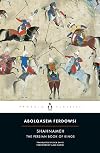
Dick Davis' book here is the most complete one-volume show more translation in English. His translation is prose; on occasion, however, he moves to a verse translation to reflect specific lyrical passages. His translation is considerably less condensed than most other English translations; still, in 928 pages the translator cannot do magic and so is forced to considerably abridge the text. Sadly, this means a particularly harsh trimming to the Sasanian period, so the historian wishing to read about, for example, Peroz and his wars with the White Huns in AD 469 and AD 484 (one of the better-known episodes due to Procopius' report in Greek and al-Tabari's account in Arabic) must look elsewhere, in the complete verse translation of the Warner brothers.
As to the edition of Davis' translation, I strongly urge the reader to obtain the Viking hard-back rather than the Penguin paperback. For a book of this size, the hard cover is worth looking out for. There is also a three-volume edition from Mage (an Iranian-American press for whom Davis first did the translation in parts), profusely-illustrated with miniatures from manuscripts and so forth that may be to many people's taste; it is, unfortunately, prohibitively expensive at almost four hundred dollars. show less
Dick Davis' book here is the most complete one-volume show more translation in English. His translation is prose; on occasion, however, he moves to a verse translation to reflect specific lyrical passages. His translation is considerably less condensed than most other English translations; still, in 928 pages the translator cannot do magic and so is forced to considerably abridge the text. Sadly, this means a particularly harsh trimming to the Sasanian period, so the historian wishing to read about, for example, Peroz and his wars with the White Huns in AD 469 and AD 484 (one of the better-known episodes due to Procopius' report in Greek and al-Tabari's account in Arabic) must look elsewhere, in the complete verse translation of the Warner brothers.
As to the edition of Davis' translation, I strongly urge the reader to obtain the Viking hard-back rather than the Penguin paperback. For a book of this size, the hard cover is worth looking out for. There is also a three-volume edition from Mage (an Iranian-American press for whom Davis first did the translation in parts), profusely-illustrated with miniatures from manuscripts and so forth that may be to many people's taste; it is, unfortunately, prohibitively expensive at almost four hundred dollars. show less
Beautiful fun. The text is the least of it.
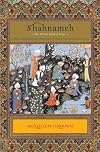
Abu al-Qasem Ferdowsi (940-1020 CE), one of Iran's greatest poets, versified the ancient legends of the Persian Book of Kings (Shahnameh) in verse over one thousand years ago. It is the longest poem written by a single poet. A combination of myth and history told over a series of 50,000 elegant couplets, Ferdowsi dedicated thirty-three years of his life to writing the Shahnameh and intended it to protect the Persian collective memory and its language amid a turbulent sea of cultural storms. This celebrated work traces the storied history of the Iranian people, beginning with the origin myths of civilization and ending with the Arab Conquest of Iran in the seventh century. Featuring a preface by editor and Guggenheim fellow Hamid show more Rahmanian and an introduction by Lloyd Llewellyn-Jones, chair of ancient history at Cardiff University, this lush translation by Ahmad Sadri renders the tale in highly accessible yet atmospheric prose for contemporary audiences. Under Sadri's deft hand, legendary adventures of superhuman heroes, encounters with magical creatures, and heart-wrenching love stories come alive off the page, capturing readers' imaginations. To this day, people of all ages in Persianate societies can recite lines of Shahnameh by heart. The book continues to be read in family gatherings and performed by professional reciters in the teahouses of Tajikistan, Iran, and Afghanistan. The bedrock of Iranian nationhood and a literary masterpiece, this beloved epic holds the promise of cultural conservation--and celebration--within its every page. show less
Members
- Recently Added By
Lists

Classics you know you should have read but probably haven't
421 works; 409 members

Middle East Fiction
179 works; 16 members

Greatest Books, allegedly
484 works; 9 members

Philip Ward's Lifetime Reading Plan
592 works; 22 members

New Lifetime Reading Plan by Fadiman and Major
225 works; 5 members

Books in the Bibliography of Humans: A Monstrous History by Surekha Davies
346 works; 1 member

In Our Time books
4,934 works; 2 members
Author Information

91+ Works 1,485 Members
Some Editions
Awards and Honors
Notable Lists
Series
Belongs to Publisher Series
Work Relationships
Contains
Has as a study
Common Knowledge
- Canonical title
- Shahnameh: The Persian Book of Kings
- Original title
- شاهنامه
- Original publication date
- 980-1010 [1010] (original Persian) (original Persian); 1905-1925 [1925] (full English translation ∙ Arthur George Warner and Edmond Warner) (full English translation ∙ Arthur George Warner and Edmond Warner); 1967 (partial English translation ∙ Reuben Levy) (partial English translation ∙ Reuben Levy); 2006 (partial English translation ∙ Dick Davis) (partial English translation ∙ Dick Davis)
- People/Characters
- Rostam; Sohrab; Zāl; Rakhsh; Alexander the Great
- Important places
- Persia
- Disambiguation notice
- This is the Davis translation omnibus of The Lion and the Throne, Fathers and Sons, and The Sunset of Empire. Please do not combine with other selection of the Shahnameh.
This is the Sadri adaptation, please do not combine with other selections of the Shahnameh.
This is the Zimmerman translated selection of the Shahnameh, please do not combine with other selections of the Shahnameh.
Classifications
- Genres
- Poetry, Fiction and Literature
- DDC/MDS
- 891.5511 — Literature & rhetoric Literatures of other languages East Indo-European and Celtic literatures Iranian literatures Modern Persian / Farsi literature (8th century CE to present) Persian poetry ca. 1000–1389
- LCC
- PK6456 .A13 .D3813 — Language and Literature Indo-Iranian languages and literatures Indo-Iranian philology and literature Iranian philology and literature New Persian Literature Individual authors or works Firdaws i_
- BISAC
Statistics
- Members
- 944
- Popularity
- 28,233
- Reviews
- 8
- Rating
- (4.25)
- Languages
- 7 — English, French, Hungarian, Farsi/Persian, Russian, Spanish, Turkish
- Media
- Paper, Audiobook, Ebook
- ISBNs
- 26
- ASINs
- 11