
Azar Nafisi
Author of Reading Lolita in Tehran: A Memoir in Books
About the Author
AZAR NAFISI is a visiting professor and the director of the Dialogue Project at the Foreign Policy Institute of Johns Hopkins University. She has taught Western literature at the University of Tehran, the Free Islamic University, and the University of Allameh Tabatabai in Iran. In 1994 she won a show more teaching fellowship from Oxford University, and in 1997 she and her family left Iran for America. She has written for The New York Times, The Washington Post, The Wall Street Journal, and The New Republic and has appeared on radio and television programs. Azar's book, Reading Lolita in Tehran, was published in 2003 to wide acclaim. (Bowker Author Biography) show less
Image credit: Azar Nafisi, at 24th edition of Letterature Festival Internazionale in Rome. Rome (Italy). July 16th, 2025
Works by Azar Nafisi
Nafisi, Azar Archive 1 copy
Associated Works
Light the Dark: Writers on Creativity, Inspiration, and the Artistic Process (2017) — Contributor — 165 copies, 5 reviews
My Sister, Guard Your Veil; My Brother, Guard Your Eyes: Uncensored Iranian Voices (2006) — Contributor — 112 copies, 3 reviews
Tagged
Common Knowledge
- Other names
- آذر نفیسی
- Birthdate
- 1955-12-01
- Gender
- female
- Education
- University of Oklahoma (PhD | English and American literature)
- Occupations
- lecturer in English Literature
writer - Organizations
- Tehran University
Allameh Tabataba'i University (ATU), Tehran
Paul H. Nitze School of Advanced International Studies
Board of Trustees of Freedom House - Awards and honors
- Persian Golden Lioness Award
- Relationships
- Nafisi, Ahmad (father)
Nafisi, Nezhat (mother)
Naderi, Bijan (husband) - Nationality
- Iran
USA (naturalized) (2008) - Birthplace
- Tehran, Persia
- Places of residence
- Tehran, Iran
Lancaster, Lancashire, England, UK
Switzerland
Baltimore, Maryland, USA
Members
Reviews
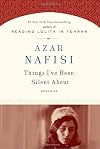
This is the second book I've read by this author, who also wrote Reading Lolita in Tehran. Though both books are nonfiction about her life in Iran, this one is much broader in scope than the first. Things I've Been Silent About focuses much more on her personal life, particularly her relationship with her parents. Written in roughly chronological order from before her parents were married through the early 2000s, the narrative covers many years in Iran and the U.S. with a very personal focus show more on historical and political events going on in the background. For those memories that seem particularly poignant, she lapses into the present tense taking the reader into the moment with her. Her memoirs are often sad, but beautifully written. Here is a sample of her writing, from the prologue when she discusses the meaning of the title: "There are so many different forms of silence: the silence that tyrannical states force on their citizens, stealing their memories, rewriting their histories, and imposing on them a state-sanctioned identity. Or the silence of witnesses who choose to ignore or not speak the truth, and of victims who at times become complicit in the crimes committed against them. Then there are the silences we indulge in about ourselves, our personal mythologies, the stories we impose upon our real lives" (xxi). This book speaks of all these types of silences. Highly recommended. show less
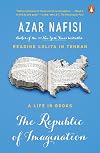
I read Reading Lolita in Tehran before LibraryThing existed, which explains why it isn't in my library. I'll add it as I have just finished the sequel: The Republic of the Imagination: America in Three Books. I remember liking the first one, if you can like a story of increasing repression in a totalitarian regime. The sequel includes a few flashbacks to Azar Nafisi's time in Iran during the Revolution but mostly takes place as she settles in the United States, specifically in Washington, show more DC, a place that becomes her home with its history and politics and bookstores like Kramerbooks and Politics and Prose. It is books and the sharing of books with friends that form the foundation of this memoir, just as with her first.
She choose Huckleberry Finn, Babbitt and The Heart Is a Lonely Hunter although the chapters about the last one are title Carson after the author Carson McCullers and speak more widely to Southern fiction. Nafisi has mastered the ability to weave literary criticism into her personal narrative and we learn about her friends and her life away from Iran. And, she has sparked a desire to explore these classic novels for the first time or again...I read a lot of them in college and graduate school but that was multiple decades ago at this point.
One things fascinated me about Nafisi: why she stayed in Iran for 18 years after the revolution. She was punished for not wearing the veil by being expelled from the university, then after resuming some teaching, she was not allowed to resign. Yet, she met with young women to read banned books every Thursday morning for several years and perhaps that small bit of protest was why she stayed. We have had calls for book burnings in several places in Virginia and not, as you might think, out in the hinterlands. These are communities along the Eastern corridor between Richmond and DC that have a mix of urban, suburban and rural spots. Perhaps the best protest might be public readings of the books on the list: they are many of the old ones but also new ones that celebrate diversity. show less
She choose Huckleberry Finn, Babbitt and The Heart Is a Lonely Hunter although the chapters about the last one are title Carson after the author Carson McCullers and speak more widely to Southern fiction. Nafisi has mastered the ability to weave literary criticism into her personal narrative and we learn about her friends and her life away from Iran. And, she has sparked a desire to explore these classic novels for the first time or again...I read a lot of them in college and graduate school but that was multiple decades ago at this point.
One things fascinated me about Nafisi: why she stayed in Iran for 18 years after the revolution. She was punished for not wearing the veil by being expelled from the university, then after resuming some teaching, she was not allowed to resign. Yet, she met with young women to read banned books every Thursday morning for several years and perhaps that small bit of protest was why she stayed. We have had calls for book burnings in several places in Virginia and not, as you might think, out in the hinterlands. These are communities along the Eastern corridor between Richmond and DC that have a mix of urban, suburban and rural spots. Perhaps the best protest might be public readings of the books on the list: they are many of the old ones but also new ones that celebrate diversity. show less
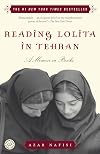
This is not always an easy book to read or to like. Its episodic, it jumps around, at times the narrator inserts herself so thoroughly into the foreground that she's all you can see. The match between the lives of women in the revolutionary republic of Iran and such hoary classics as Pride and Prejudice, Daisy Miller, The Great Gatsby sometimes seems tenuous and odd. At times Nafisi makes pronouncements that don't seem to me to follow from the tale she was telling.
But I think its actually show more the things that make it difficult that also make it rewarding. This is what it says it is; A Memoir. Its not a polished and orderly explication of the political and social history of modern Iran. Its a very personal evocation of one woman's jumbled, confusing, contradictory, and difficult experience of a painful time that she survived in part through studying great literature with other women. At the time of this writing I don't think she had yet entirely made sense of that experience and so it takes some work on the reader's part to try to comprehend the confusion.
In the end I failed to entirely create order out of the chaos but honestly I think it would be less of a book if I had succeeded. How do you make sense of life in a country in which the movie censor is blind, in which proctors monitor a concert to be certain no one including the musicians, shows too much enthusiasm. How can you make sense of a place in which some people are executed for some minor infraction, some simply vanish for reasons unknown, while others escape punishment entirely. But this is your homeland, a place you loved, had great hopes for and eventually find it necessary to leave.
To make a polished orderly story out of this would I think be dishonest to the experience. So somehow the jumble and the confusion and the strange connections all work for me. I don't feel I read a textbook about Iran I feel that I met one Iranian woman. Flawed in places but interesting and challenging and something I walk away from still thinking hard. show less
But I think its actually show more the things that make it difficult that also make it rewarding. This is what it says it is; A Memoir. Its not a polished and orderly explication of the political and social history of modern Iran. Its a very personal evocation of one woman's jumbled, confusing, contradictory, and difficult experience of a painful time that she survived in part through studying great literature with other women. At the time of this writing I don't think she had yet entirely made sense of that experience and so it takes some work on the reader's part to try to comprehend the confusion.
In the end I failed to entirely create order out of the chaos but honestly I think it would be less of a book if I had succeeded. How do you make sense of life in a country in which the movie censor is blind, in which proctors monitor a concert to be certain no one including the musicians, shows too much enthusiasm. How can you make sense of a place in which some people are executed for some minor infraction, some simply vanish for reasons unknown, while others escape punishment entirely. But this is your homeland, a place you loved, had great hopes for and eventually find it necessary to leave.
To make a polished orderly story out of this would I think be dishonest to the experience. So somehow the jumble and the confusion and the strange connections all work for me. I don't feel I read a textbook about Iran I feel that I met one Iranian woman. Flawed in places but interesting and challenging and something I walk away from still thinking hard. show less
Lists
Unread books (1)
Female Author (1)
VBL YA (1)
Women's Stories (1)
Bibliomemoirs (2)
Women in Islam (1)
On Books (1)
Awards


You May Also Like


Associated Authors
Statistics
- Works
- 11
- Also by
- 5
- Members
- 15,428
- Popularity
- #1,471
- Rating
- 3.6
- Reviews
- 336
- ISBNs
- 123
- Languages
- 15
- Favorited
- 16


