The Prince / Leviathan
by Niccolò Machiavelli (Author), Thomas Hobbes (Author)
On This Page
Description
From praise for the 1965 edition: Allan Gilbert is unquestionably the most accurate and reliable translator of Machiavelli into English; the publication of this edition is an altogether happy occasion. Students of the history of political thought owe a particular debt of gratitude to Allan Gilbert."--Dante Germino, The Journal of Politics "A most remarkable achievement."--Felix Gilbert, Renaissance QuarterlyTags
Recommendations





















Member Reviews
This is a book that has been sitting on the shelf of my set of Great Books of the Western World since before I started college. That and the fact that it was written in the 1500's surely qualify it as a TOME. It is a very short book which made great changes in the thinking about political statecraft. His book is a frank discussion of the use of immoral means to achieve the goals of The Prince.
For Machiavelli the sole goal of the Prince was to obtain power and hold it. Using historical models he sets out the most effective means to attain this end. The nobles and the people are the two forces that hold political power in the State as he sees it. Machiavelli goes into detail about how to deal with each of these. The nobles have their own show more bases of power and act in their pursuit of their own interests. For this reason it is important for the Prince that they fear him rather than love him.
In his discussion on fortresses he makes the statement that the best fortress is the love of the people. A state that is prosperous and ruled fairly is the best way to achieve the love of the people. The Prince must also cultivate the love of the people through great achievements building a charisma that draws them to him.
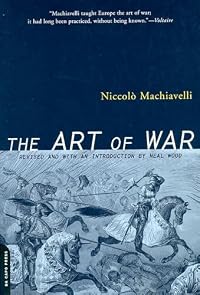
The art of war is a very important part of Machiavelli's discussion. Mercenaries are the most dangerous troops to use. They fight for their own reasons and are only loyal to the Prince as long as he is able to pay them. Auxiliary troops drawn from the people are more likely to remain loyal as long as their love for the Prince is constant.
Machiavelli's ideas inaugurated modern politics and statecraft. His was original and unencumbered by the ideas of the past. He established new rules for the practice of statecraft. He was excoriated for his immorality but his ideas quickly gained precedence. Last year I read The Thirty Years War. Many of the principles set forth by Machiavelli appeared in the actions of the rulers in that war. They used mercenaries to a great extent and were often ruined by them. Morality was absent in their dealings with each other. They practiced the code of attaining power that Machiavelli established.
Edit | More show less
For Machiavelli the sole goal of the Prince was to obtain power and hold it. Using historical models he sets out the most effective means to attain this end. The nobles and the people are the two forces that hold political power in the State as he sees it. Machiavelli goes into detail about how to deal with each of these. The nobles have their own show more bases of power and act in their pursuit of their own interests. For this reason it is important for the Prince that they fear him rather than love him.
In his discussion on fortresses he makes the statement that the best fortress is the love of the people. A state that is prosperous and ruled fairly is the best way to achieve the love of the people. The Prince must also cultivate the love of the people through great achievements building a charisma that draws them to him.
The art of war is a very important part of Machiavelli's discussion. Mercenaries are the most dangerous troops to use. They fight for their own reasons and are only loyal to the Prince as long as he is able to pay them. Auxiliary troops drawn from the people are more likely to remain loyal as long as their love for the Prince is constant.
Machiavelli's ideas inaugurated modern politics and statecraft. His was original and unencumbered by the ideas of the past. He established new rules for the practice of statecraft. He was excoriated for his immorality but his ideas quickly gained precedence. Last year I read The Thirty Years War. Many of the principles set forth by Machiavelli appeared in the actions of the rulers in that war. They used mercenaries to a great extent and were often ruined by them. Morality was absent in their dealings with each other. They practiced the code of attaining power that Machiavelli established.
Edit | More show less
Ratings
Members
- Recently Added By
Author Information

Niccolo Machiavelli was born on May 3, 1469 in Florence, Italy. He was a political philosopher, statesman, and court advisor. Starting out as a clerk, he quickly rose in the ranks because he understood balance of power issues involved in many of his diplomatic missions. His political pursuits quickly ended after he was imprisoned by the Medici show more family. He is best known for The Prince, his guide to power attainment and cutthroat leadership. He also wrote poetry and plays, including a comedy named Mandragola. He died on June 21, 1527 at the age of 58. (Bowker Author Biography) show less

Thomas Hobbes was born in Malmesbury, the son of a wayward country vicar. He was educated at Magdalen Hall, Oxford, and was supported during his long life by the wealthy Cavendish family, the Earls of Devonshire. Traveling widely, he met many of the leading intellectuals of the day, including Francis Bacon, Galileo Galilei, and Rene Descartes. As show more a philosopher and political theorist, Hobbes established---along with, but independently of, Descartes---early modern modes of thought in reaction to the scholasticism that characterized the seventeenth century. Because of his ideas, he was constantly in dispute with scientists and theologians, and many of his works were banned. His writings on psychology raised the possibility (later realized) that psychology could become a natural science, but his theory of politics is his most enduring achievement. In brief, his theory states that the problem of establishing order in society requires a sovereign to whom people owe loyalty and who in turn has duties toward his or her subjects. His prose masterpiece Leviathan (1651) is regarded as a major contribution to the theory of the state. (Bowker Author Biography) show less
Some Editions
Series
Belongs to Publisher Series
Work Relationships
Contains
Common Knowledge
- Canonical title
- The Prince / Leviathan
- Original title
- The Prince
- Original publication date
- Machiavelli: 1532; Hobbes: 1651
- Last words
- (Click to show. Warning: May contain spoilers.)For such truth as opposeth no man's profit nor pleasure is to all men welcome.
Classifications
- Genres
- Philosophy, Nonfiction, Politics and Government, History
- DDC/MDS
- 320.1 — Society, government, & culture Political science Types of Government The State
- LCC
- AC1 .G72 — General Works Collections. Series. Collected works Collections. Series. Collected works Collections of monographs, essays, etc. American and English
Statistics
- Members
- 390
- Popularity
- 79,724
- Reviews
- 1
- Rating
- (4.00)
- Languages
- English, Greek
- Media
- Paper
- ISBNs
- 1
- ASINs
- 25