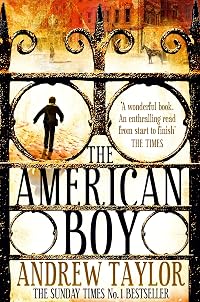
The American Boy
by Andrew Taylor
On This Page
Description
Interweaving real and fictional elements, The American Boy is a major new literary historical crime novel in the tradition of An Instance of the Fingerpost and Possession. England 1819: Thomas Shield, a new master at a school just outside London, is tutor to a young American boy and the boy's sensitive best friend, Charles Frant. Drawn to Frant's beautiful, unhappy mother, Thomas becomes caught up in her family's twisted intrigues. Then a brutal crime is committed, with consequences that show more threaten to destroy Thomas and all that he has come to hold dear. Despite his efforts, Shield is caught up in a deadly tangle of sex, money, murder and lies - a tangle that grips him tighter even as he tries to escape from it. And what of the strange American child, at the heart of these macabre events, yet mysterious - what is the secret of the boy named Edgar Allen Poe? show lessTags
Recommendations


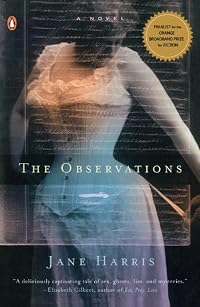
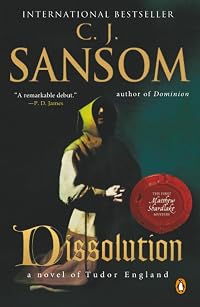
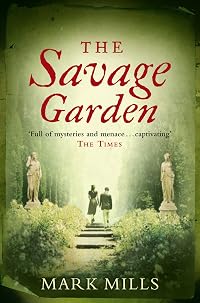
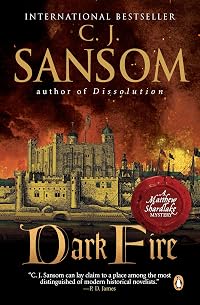









Member Reviews
I picked this up from the swap shelves of the Pacific Resort in the Cook Islands while on holidays at Christmas with nothing to read.
It is a hybrid of historical and crime fiction that is incredibly atmospheric of nineteenth century London. It catches the feeling of Georgian England very skilfully. It has some similarities with the works of Charles Dickens, yet without the sentimentality of that author. It also stands up favourably to comparison with Wilkie Collins.
Edgar Allan Poe is the eponymous boy. Although crucial to the plot, he is not one of the major characters as his father is.
A highly intelligent, literate and adult piece of historical fiction with a pleasingly sophisticated plot that is very difficult to put down. I’ll show more certainly be looking for more by this author. show less
It is a hybrid of historical and crime fiction that is incredibly atmospheric of nineteenth century London. It catches the feeling of Georgian England very skilfully. It has some similarities with the works of Charles Dickens, yet without the sentimentality of that author. It also stands up favourably to comparison with Wilkie Collins.
Edgar Allan Poe is the eponymous boy. Although crucial to the plot, he is not one of the major characters as his father is.
A highly intelligent, literate and adult piece of historical fiction with a pleasingly sophisticated plot that is very difficult to put down. I’ll show more certainly be looking for more by this author. show less
The American Boy is a pre-Victorian murder mystery set in 1819-20 but, amazingly, was written in the twenty-first century. It was inspired by the author's interest in the brief period that Edgar Allan Poe spent in England while still a young boy. Building on this real event and some of the real characters, such as Edgar's foster father John Allan and his natural father David Poe, Andrew Taylor spins a mystery out of this moment in the famous author's life. The result is a very satisfying mystery with a central character, Thomas Shields, who is a school teacher but becomes quite by accident an amateur sleuth as the mystery of several intertwined families, two murders, a banking scandal, and the identity of the victim of one of the crimes show more draws Shields gradually deeper into its depths. As a school teacher in a small school he has two students, Edgar Allan and Charles Frant, who become mutual friends and in whom he takes an interest as they are bullied by some bigger boys. Shields is somewhat impoverished and thus dependent on his "betters" with certain consequences for the story. He inhabits a sort of never-land somewhere in between the Parents of his students and their servants. Since he is living in their households for much of the story as tutor to Edgar and his friend Charles Frant this existence becomes somewhat oppressive for Shields. It is further complicated by his attraction to the mother of Charles. Murder, unacceptable love, questions of identity and missing money -- just the stuff of great mysteries. The best part of this novel is the pre-Victorian setting as Andrew Taylor effectively recreates the world of England in the last days of the reign of King George III. Told in the first person by Thomas Shield through his journal the story covers only nine months time but there is what becomes a tidal wave of events and plot twists before Shields' narrative is complete.
I was unfamiliar with Andrew Taylor when I discovered this book, intrigued by the connection with Poe. What I found was a master of mystery whose ability to create a believable labyrinthine plot keeps the reader guessing almost until the last page. show less
I was unfamiliar with Andrew Taylor when I discovered this book, intrigued by the connection with Poe. What I found was a master of mystery whose ability to create a believable labyrinthine plot keeps the reader guessing almost until the last page. show less
Den amerikanske pojken är en stort upplagd, underhållande och välskriven roman i en berättarstil som påminner om både Charles Dickens och Edgar Allan Poes. Persongalleriet är stort och det är en fördel om man inte behöver lägga boken ifrån sig alltför länge. Risken finns då att man tappar bort sig. För övrigt är det svårt att släppa boken, man är ivrig att få reda vad som ligger bakom de märkliga händelser som drabbar berättarpersonen Thomas Shield. En mycket läsvärd bok!
Nice period mystery with a Austinesque romance thrown in to add depth. Yes - some bits strain credulity, but I was willing to set aside my usual cynicism because of the author's skill at pacing his tale. Get so tired of the condescension of mystery writers, throwing out obvious clues and then expecting us to be surprised at the end. Like magicians hoping that when they pull the handkerchief from the hat we'll forget that we saw him slip it in there at the beginning of the trick. Taylor's gift is to acknowledge each clue along the way and STILL keep you wondering, which requires actual narrative skill - not just trickery and manipulation. A couple of tips, however: young Edgar Allen Poe is a minor, minor character, so if your sole show more interest in the book is as a Poephile, don't bother. Also don't bother with the appendixes, which are unnecessary and strain credulity - I have to think a better editor would have forced Taylor to leave them out entirely. show less
Set in Regency London and the Home Counties, The American Boy does an admirable job of recreating an authentic period novel. Tom Shields, the protagonist, suffers a breakdown and gets into trouble after being injured at Waterloo and suffering the heartache of being romantically jilted. Helped by his aunt to get a position after his fall from grace, he takes an opening as a master at a boys' boarding school and his life begins to return to an even keel. But when a new boy Frant joins the school, Shields becomes embroiled in the treacherous world of his rich banking family as the dark underworld of their wealth emerges.
This is a novel I've gone past on my TBR shelf for many years now, and I'm really glad I settled myself to read it at show more last. The American boy of the title refers to a young Edgar Allen Poe, friend of the schoolboy Frant. Although he appears very little in the novel, it is circumstances directly connected to him which contrive to bring about the dark events of the rest of the novel. Taylor was inspired by the real life mystery leading up to Edgar Allen Poe's death, when he was found delirious in the street wearing clothes that were not his own and shouting for an unknown 'Reynolds' on his deathbed. As Poe, unusual for that period, had spent much of his childhood in London before returning to America, Taylor sought to create a historical novel based around a fictional mystery from the early years of his life.
Poe is weaved into the fabric of 'The American Boy' by a fairly tenuous link, but needed or not Taylor has doubtlessly created a very enjoyable historical crime / fiction novel. Some references at the back of the book cite it as a modern day Wilkie Collins, and although that sets the bar very high I think it's fair praise on many levels. Taylor clearly researched the period setting meticulously, such that it feels entirely authentic to the early 1800s, and throughout he builds a great tale of tension and suspense. My one criticism is that it feels 100+ pages too long; despite really enjoying it my enthusiasm waned a little in the middle as the plot felt like it treaded water. By the end it became apparent why Taylor had wanted to build in a number of plot elements which seemed incidental in this section, but still - a shortening of these would have helped keep the tension tighter.
Overall, an enjoyable read, and certainly one to look out for if you enjoy historical fiction.
4 stars - high quality period drama. show less
This is a novel I've gone past on my TBR shelf for many years now, and I'm really glad I settled myself to read it at show more last. The American boy of the title refers to a young Edgar Allen Poe, friend of the schoolboy Frant. Although he appears very little in the novel, it is circumstances directly connected to him which contrive to bring about the dark events of the rest of the novel. Taylor was inspired by the real life mystery leading up to Edgar Allen Poe's death, when he was found delirious in the street wearing clothes that were not his own and shouting for an unknown 'Reynolds' on his deathbed. As Poe, unusual for that period, had spent much of his childhood in London before returning to America, Taylor sought to create a historical novel based around a fictional mystery from the early years of his life.
Poe is weaved into the fabric of 'The American Boy' by a fairly tenuous link, but needed or not Taylor has doubtlessly created a very enjoyable historical crime / fiction novel. Some references at the back of the book cite it as a modern day Wilkie Collins, and although that sets the bar very high I think it's fair praise on many levels. Taylor clearly researched the period setting meticulously, such that it feels entirely authentic to the early 1800s, and throughout he builds a great tale of tension and suspense. My one criticism is that it feels 100+ pages too long; despite really enjoying it my enthusiasm waned a little in the middle as the plot felt like it treaded water. By the end it became apparent why Taylor had wanted to build in a number of plot elements which seemed incidental in this section, but still - a shortening of these would have helped keep the tension tighter.
Overall, an enjoyable read, and certainly one to look out for if you enjoy historical fiction.
4 stars - high quality period drama. show less
If anything, the words 'Short-listed by Richard & Judy's Book Club 2005' almost made me return the paperback to the shelf. I have talk-show (even refined and revered talk-show) snobbery. But I glanced at the back cover and spotted the tail end of the Telegraph review '...quiet corner to continue your acquaintance with it.' A book you can have an acquaintanceship with? That, I thought, doesn't come along often.
I'm so very grateful that I was persuaded to read it. I might have to start paying attention to Richard & Judy's other book selections on the strength of this. It's one of the best things I have turned my attention to in a long time, all the better for being just a shade different from everything else. It's an historical fiction, a show more murder-mystery, loosely based around events surrounding Edgar Allan Poe's childhood, but not quite aspiring to 'based on a true story'hood. If anything, the vast scope of fiction works in the book's favour. It is a story, and the presence of a handful of historically genuine figures a mere curiosity that improves the flavour of the novel.
It is a nice coincidence that I have been slating Tess of the d'Urbervilles recently... the ordinary hero of this story, the tutor of young Edgar Allan and his friend Charlie, one Thomas Shield, is as much a victim of circumstance, malign intent and passivity as the vacant Tess, yet more richly drawn and enlivened with an education, mindfulness, nicety and simple likability. He is aware that his feelings for two women of the same household is inappropriate and likely to embroil him deeper than he cares to go in the entanglements of their lives, yet makes no excuses nor apologises for his desires. His absent affection for his charges is enough to secure our view of him as a worthy narrator, and his humbling changes of fortune find us sympathetic rather than impatient.
Nor is he the only worthwhile character. The ladies are treated with the tyrannous oversight and objectifying of the time, yet retain character and dignity. The villains are human and the narrator's friendly refuges few enough to make them prized even to the reader.
There is an element of humour that freshens the book delightfully, without obstructing the mannerly narration, and an occasional gem of a phrase that simply made me smile. 'We moved apart and re-arranged our limbs and our feelings' I particularly remember, but I also enjoyed his interaction with the various children he encountered. It's an elegant and fitting read, despite the distinct advancing of a plot.
The slightest flaw lies with the ending ... not the narrator's ending, which would have been wholly satisfying, but what seems to be a tying up of loose-ends. The problem with this being that there really aren't any and the last few pages are more or less redundant, and at worst unnecessarily undermining of our trust in the narrator that got us there. This conclusion is at least brief, and not jarring in style, but slightly disappointing for all that.
I'm giving this book 9.5/10, a score that means nothing to anyone. If you enjoy du Maurier, the Brontes, Dickens, (yes, alright, Hardy) and perhaps Poe himself, this is certainly for you. If you haven't delved into the world of historical fiction, on the basis that it's nothing but nancing gits and ball gowns, this would be an excellent opportunity to dispel these illusions. It's fantastically readable, the romance at all times overshadowed by murder, money, deceit and duty, and Edgar Allan Poe is in it. And Edgar Allan Poe is so, like, OMGgoth. show less
I'm so very grateful that I was persuaded to read it. I might have to start paying attention to Richard & Judy's other book selections on the strength of this. It's one of the best things I have turned my attention to in a long time, all the better for being just a shade different from everything else. It's an historical fiction, a show more murder-mystery, loosely based around events surrounding Edgar Allan Poe's childhood, but not quite aspiring to 'based on a true story'hood. If anything, the vast scope of fiction works in the book's favour. It is a story, and the presence of a handful of historically genuine figures a mere curiosity that improves the flavour of the novel.
It is a nice coincidence that I have been slating Tess of the d'Urbervilles recently... the ordinary hero of this story, the tutor of young Edgar Allan and his friend Charlie, one Thomas Shield, is as much a victim of circumstance, malign intent and passivity as the vacant Tess, yet more richly drawn and enlivened with an education, mindfulness, nicety and simple likability. He is aware that his feelings for two women of the same household is inappropriate and likely to embroil him deeper than he cares to go in the entanglements of their lives, yet makes no excuses nor apologises for his desires. His absent affection for his charges is enough to secure our view of him as a worthy narrator, and his humbling changes of fortune find us sympathetic rather than impatient.
Nor is he the only worthwhile character. The ladies are treated with the tyrannous oversight and objectifying of the time, yet retain character and dignity. The villains are human and the narrator's friendly refuges few enough to make them prized even to the reader.
There is an element of humour that freshens the book delightfully, without obstructing the mannerly narration, and an occasional gem of a phrase that simply made me smile. 'We moved apart and re-arranged our limbs and our feelings' I particularly remember, but I also enjoyed his interaction with the various children he encountered. It's an elegant and fitting read, despite the distinct advancing of a plot.
The slightest flaw lies with the ending ... not the narrator's ending, which would have been wholly satisfying, but what seems to be a tying up of loose-ends. The problem with this being that there really aren't any and the last few pages are more or less redundant, and at worst unnecessarily undermining of our trust in the narrator that got us there. This conclusion is at least brief, and not jarring in style, but slightly disappointing for all that.
I'm giving this book 9.5/10, a score that means nothing to anyone. If you enjoy du Maurier, the Brontes, Dickens, (yes, alright, Hardy) and perhaps Poe himself, this is certainly for you. If you haven't delved into the world of historical fiction, on the basis that it's nothing but nancing gits and ball gowns, this would be an excellent opportunity to dispel these illusions. It's fantastically readable, the romance at all times overshadowed by murder, money, deceit and duty, and Edgar Allan Poe is in it. And Edgar Allan Poe is so, like, OMGgoth. show less
This book reads as a 19th century novel of the kind that Wilkie Collins could have written: its language and tone are largely authentic, and like many books of the period, there is a large cast of characters from all walks of life. Thomas Shield, a schoolmaster with a troubled past is the narrator, and he introduces us to the wealthy Frants and Carswells, whose lives he becomes intimately involved with. There's the young Edgar Allan Poe too, though I'm not sure how important his part really is, despite his presence in the book's title. Murder and skullduggery take place both in London's Dickensian streets, and in rural Gloucestershire . The fast-paced action and the short chapters make the book an atmospheric page-turner, and while it's show more not a great book, it's a very good read. show less
Members
- Recently Added By
Lists

Books Read in 2008
336 works; 8 members

MysteryCAT: Historical Crime
27 works; 7 members
Best Mysteries With a Historical Setting
292 works; 160 members

Books Read in 2024
4,727 works; 128 members
Author Information

54+ Works 6,098 Members
Some Editions
Awards and Honors
Awards
Series
Belongs to Publisher Series
Goldmann (46080)
Work Relationships
Is contained in
Common Knowledge
- Canonical title
- The American Boy
- Original title
- The American Boy
- Alternate titles
- An Unpardonable Crime
- Original publication date
- 2003
- People/Characters
- Edgar Allan Poe (then Edgar Allan); Thomas Shield; Mr. Bransby; Edward Dansey; George Wavenhoe; Sophia Frant, nee Marpool (show all 17); Henry Frant; Charles Frant; Stephen Carswall; Flora Carswell; Mrs. Johnson (a connection of the Ruispidge family); George Ruispidge, Sir George; Mr. Noak; Salutation Harmwell; Mrs. Kerridge; Mr. Iverson, Jr.; Mr. Rowsell
- Important places
- London, England, UK
- Epigraph
- I would not, if I could, here or to-day, embody a record of my later years of unspeakable misery, and unpardonable crime.
From "William Wilson" by Edgar Allan Poe - Dedication
- For Sarah and William.
And, as always, for Caroline. - First words
- We owe respect to the living, Voltaire tells us in his Premiere Lettre sur Oedipe, but to the dead we owe only truth.
Classifications
Statistics
- Members
- 1,004
- Popularity
- 26,108
- Reviews
- 29
- Rating
- (3.46)
- Languages
- 10 — Danish, Dutch, English, French, German, Italian, Slovenian, Spanish, Swedish, Portuguese (Portugal)
- Media
- Paper, Audiobook, Ebook
- ISBNs
- 45
- ASINs
- 8