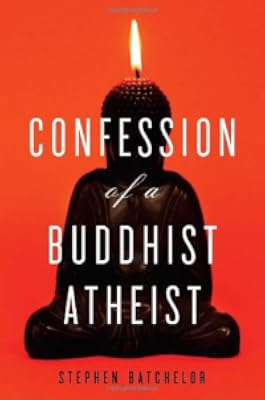
Confession of a Buddhist Atheist
by Stephen Batchelor
On This Page
Description
Does Buddhism require faith? Can an atheist or agnostic follow the Buddha's teachings without believing in reincarnation or organized religion? This is one man's confession. In his classic Buddhism Without Beliefs, Stephen Batchelor offered a profound, secular approach to the teachings of the Buddha that struck an emotional chord with Western readers. Now, with the same brilliance and boldness of thought, he paints a groundbreaking portrait of the historical Buddha-told from the author's show more unique perspective as a former Buddhist monk and modern seeker. Drawing from the original Pali Canon, the seminal collection of Buddhist discourses compiled after the Buddha's death by his followers, Batchelor shows us the Buddha as a flesh-and-blood man who looked at life in a radically new way. Batchelor also reveals the everyday challenges and doubts of his own devotional journey-from meeting the Dalai Lama in India, to training as a Zen monk in Korea, to finding his path as a lay teacher of Buddhism living in France. Both controversial and deeply personal, Stephen Batchelor's refreshingly doctrine-free, life-informed account is essential listening for anyone interested in Buddhism. show lessTags
Recommendations



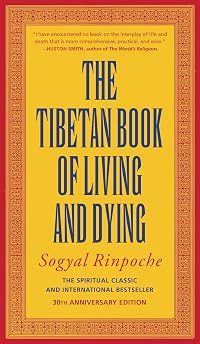
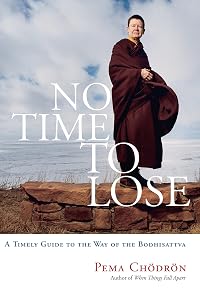
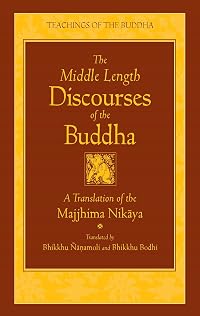
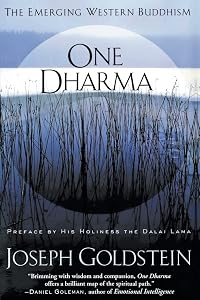


Member Recommendations

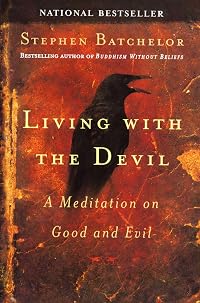
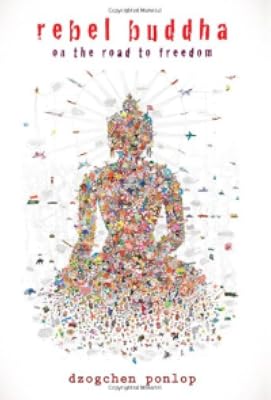
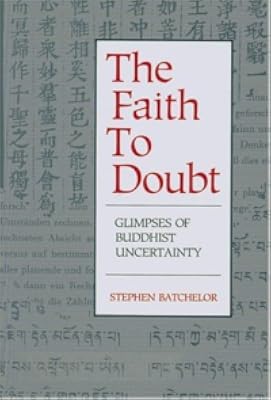
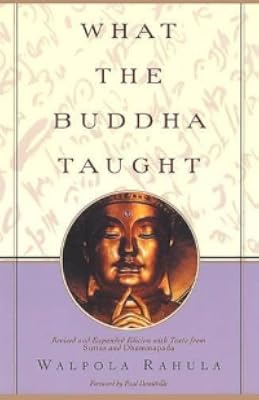
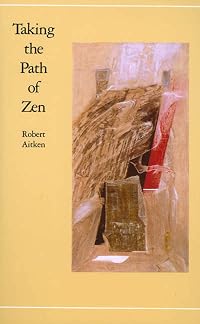
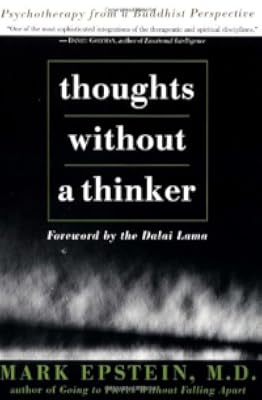
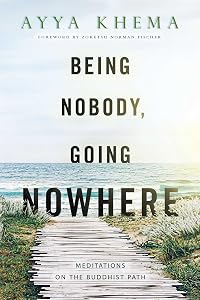
wester Both these books are about the personal journey of someone struggling to find a way to walk his own religious path when the institutions they find themselves in discourage questioning.
Member Reviews
Batchelor's Confession jumped out at me as I walked by shelves at the library -- no forethought, none of my usual checking of reviews, just an orange book, into my hand, into my car.
What I want to comment most on in this book is its parallelism to and its role for Christianity. The first touchpoint is the title: Batchelor's Confession must be intended, I imagine, as an allusion or even a Western Buddhist version of Augustine's Confessions. Augustine's book tells the story of his conversion to Christianity and it performs some theological exegesis on core Christian beliefs, provides some spiritual meditations, and talks through Augustine's own theological insights. It was written relatively early in Christian history, and it is an show more important and defining text in the Christian canon, though not for most lay practitioners. Batchelor's book is very, and surprisingly, similar, mixing autobiography with explanations of Buddhist theology, and -- though this may suggest some authorial hubris if it was intentional -- I have a sense that it is intended to play a similar formative and historical role in defining and documenting the experiences and beliefs of an early Western Buddhist. (I say this because I am convinced that Buddhism will, over the course of the next hundred years and beyond, become an increasingly common presence in the West.)
The second touchpoint is on the need for a Western re-envisioning of Buddhism. Batchelor touches on this point in the book repeatedly, at one point telling the Dalai Lama a purely historical perspective on how Buddhism adapted to each new Eastern culture it came in contact with, and the Dalai Lama thinking hard about whether this perspective was valid. After some thought, the Dalai Lama rejected it, and noted that the statues they used were statues of Indian-looking people -- he didn't see the perspective that the statues always look like some vaguely exotic version of local people that was apparent to Batchelor (and me, and, I'd hazard, many of us). I had a similar experience when a Zen abbot suggested that the Western students of Zen not feel the need to abandon their own religions, but rather to take the pieces that were useful to them from the Buddhist practices and apply them simultaneously. Underlying both of these stories is a sense that a Western mindset is different, and it will have different interpretations and needs and insights into the same scriptures than those of the source communities. The abbot's approach to this cognitive dissonance was that his core religion not change for the West, but he also would not require renunciation of the core beliefs of Western Christians, Jews, atheists, and others. Batchelor's approach to this cognitive dissonance is different -- he seems to argue that a new version of Buddhism should be developed (and is implicitly being developed), which speaks to Westerners and which Westerners can wholly adopt. I am biased in favor of Batchelor's view. I suspect that the abbot's perspective is what it is because the current period is a period of transition for Buddhism, and once there is a Western version of Buddhism that has a set of beliefs and a set of communities that are fully palatable to Western sensibilities, there will be less need to argue for the acceptability of mixing and matching Western and Buddhist perspectives.
And finally, the third touchpoint regards a radical Christian theologian and philosopher Don Cupitt, whom Batchelor calls out as being more aligned to his own beliefs than any Buddhist leader. Now, I have not (yet) read any Don Cupitt, but the impression I have is that he argues for a version of Christianity that does away with a lot of the trappings that make current Westerners uncomfortable. He believes that the current Western non-religious state is more ethical in many ways that the religious teachings, and that our beliefs and actions should be based in our actual experiences rather than beliefs in an ineffable God. To me, the idea that Batchelor (who bridges Buddhism and the West from his origins as a Buddhist), and Cupitt (who bridges the West and Buddhism from his origins as a Christian) have arrived at such similar places in their theology is meaningful, and the fact that it speaks to me and others suggests that it may speak to many others, and may be the path forward for spirituality in the only-somewhat religious and very-evidence-seeking West, which continues to shed mainstream Christians and Jews as anything more than cultural believers.
This book is part autobiography, part discussion of the role of Buddhism in the West, part discussion of the source of Batchelor's beliefs about Buddhism. For theological ideas, I got the sense that many of those ideas are more directly addressed in Batchelor's other books. For this book, I would recommend it to those who are fascinated when studying the ways in which religions make truth for their cultures and adapt to their environments, and who feel connected when studying an Augustine-style personalization about how individuals connect to their religions. There's a lot to chew on here, but for me it didn't quite hang together as much as I'd have liked. (To be fair, I never liked Augustine all that much either, though again the ideas stuck with me.) show less
What I want to comment most on in this book is its parallelism to and its role for Christianity. The first touchpoint is the title: Batchelor's Confession must be intended, I imagine, as an allusion or even a Western Buddhist version of Augustine's Confessions. Augustine's book tells the story of his conversion to Christianity and it performs some theological exegesis on core Christian beliefs, provides some spiritual meditations, and talks through Augustine's own theological insights. It was written relatively early in Christian history, and it is an show more important and defining text in the Christian canon, though not for most lay practitioners. Batchelor's book is very, and surprisingly, similar, mixing autobiography with explanations of Buddhist theology, and -- though this may suggest some authorial hubris if it was intentional -- I have a sense that it is intended to play a similar formative and historical role in defining and documenting the experiences and beliefs of an early Western Buddhist. (I say this because I am convinced that Buddhism will, over the course of the next hundred years and beyond, become an increasingly common presence in the West.)
The second touchpoint is on the need for a Western re-envisioning of Buddhism. Batchelor touches on this point in the book repeatedly, at one point telling the Dalai Lama a purely historical perspective on how Buddhism adapted to each new Eastern culture it came in contact with, and the Dalai Lama thinking hard about whether this perspective was valid. After some thought, the Dalai Lama rejected it, and noted that the statues they used were statues of Indian-looking people -- he didn't see the perspective that the statues always look like some vaguely exotic version of local people that was apparent to Batchelor (and me, and, I'd hazard, many of us). I had a similar experience when a Zen abbot suggested that the Western students of Zen not feel the need to abandon their own religions, but rather to take the pieces that were useful to them from the Buddhist practices and apply them simultaneously. Underlying both of these stories is a sense that a Western mindset is different, and it will have different interpretations and needs and insights into the same scriptures than those of the source communities. The abbot's approach to this cognitive dissonance was that his core religion not change for the West, but he also would not require renunciation of the core beliefs of Western Christians, Jews, atheists, and others. Batchelor's approach to this cognitive dissonance is different -- he seems to argue that a new version of Buddhism should be developed (and is implicitly being developed), which speaks to Westerners and which Westerners can wholly adopt. I am biased in favor of Batchelor's view. I suspect that the abbot's perspective is what it is because the current period is a period of transition for Buddhism, and once there is a Western version of Buddhism that has a set of beliefs and a set of communities that are fully palatable to Western sensibilities, there will be less need to argue for the acceptability of mixing and matching Western and Buddhist perspectives.
And finally, the third touchpoint regards a radical Christian theologian and philosopher Don Cupitt, whom Batchelor calls out as being more aligned to his own beliefs than any Buddhist leader. Now, I have not (yet) read any Don Cupitt, but the impression I have is that he argues for a version of Christianity that does away with a lot of the trappings that make current Westerners uncomfortable. He believes that the current Western non-religious state is more ethical in many ways that the religious teachings, and that our beliefs and actions should be based in our actual experiences rather than beliefs in an ineffable God. To me, the idea that Batchelor (who bridges Buddhism and the West from his origins as a Buddhist), and Cupitt (who bridges the West and Buddhism from his origins as a Christian) have arrived at such similar places in their theology is meaningful, and the fact that it speaks to me and others suggests that it may speak to many others, and may be the path forward for spirituality in the only-somewhat religious and very-evidence-seeking West, which continues to shed mainstream Christians and Jews as anything more than cultural believers.
This book is part autobiography, part discussion of the role of Buddhism in the West, part discussion of the source of Batchelor's beliefs about Buddhism. For theological ideas, I got the sense that many of those ideas are more directly addressed in Batchelor's other books. For this book, I would recommend it to those who are fascinated when studying the ways in which religions make truth for their cultures and adapt to their environments, and who feel connected when studying an Augustine-style personalization about how individuals connect to their religions. There's a lot to chew on here, but for me it didn't quite hang together as much as I'd have liked. (To be fair, I never liked Augustine all that much either, though again the ideas stuck with me.) show less
This book has much more than I thought it would. It not only deals with the life and the way of thinking of the author, but also reformulates and elaborates on the Four Noble Truths and gives a more realistic account of the Buddha's life. The book also touches on existentialism for example.
If it sounds interesting to you at all, you definitely should give it a read.
In one of Sam Harris's podcasts Joseph Goldstein talked about how in the Four Noble Truths the word suffering is essentially a mistranslation. The original word dukkha means something more like unsatisfactoriness. Since then the reformulations on the Truths in this book are the only remotely new thing I've read about Buddhism. Putting together those two just really makes this show more proto version (meaning you're really trying to get as close to the core teachings cutting trough the thousands of pages of canon) of Buddhism even more relevant in my life than before. I like telling people I'm a proto-buddhist, if not for anything else but to provoke a conversation about what that means.
I can kind of compare this to one of my favorite movies, the documentary Kumaré. The premise is that the director of the movie is of Indian descent so he can dress up and act like an Indian guru. But he was brought up in the USA and wasn't even religious so it's as fake as possible. But things that happen just go deeper and deeper into the rabbithole and it finishes as true as fake it started. This book doesn't go that far, but it starts as a simple biography but really it goes way deeper. show less
If it sounds interesting to you at all, you definitely should give it a read.
In one of Sam Harris's podcasts Joseph Goldstein talked about how in the Four Noble Truths the word suffering is essentially a mistranslation. The original word dukkha means something more like unsatisfactoriness. Since then the reformulations on the Truths in this book are the only remotely new thing I've read about Buddhism. Putting together those two just really makes this show more proto version (meaning you're really trying to get as close to the core teachings cutting trough the thousands of pages of canon) of Buddhism even more relevant in my life than before. I like telling people I'm a proto-buddhist, if not for anything else but to provoke a conversation about what that means.
I can kind of compare this to one of my favorite movies, the documentary Kumaré. The premise is that the director of the movie is of Indian descent so he can dress up and act like an Indian guru. But he was brought up in the USA and wasn't even religious so it's as fake as possible. But things that happen just go deeper and deeper into the rabbithole and it finishes as true as fake it started. This book doesn't go that far, but it starts as a simple biography but really it goes way deeper. show less
A book of three journeys: a reconstruction of Gotama's journey across India as he taught; a travelogue as the writer retraces those steps; a memoir of Batchelor's development as a Buddhist practitioner. Learned, insightful, honest and profound - this former monk, now lay-teacher - handles the complexity of the structure with considerable skill, and presents his personal philosophy with great compassion. Highly recommended if the development of religious thought interests you - whatever your faith. My only misgiving is the title: I can't help think that 'Athiest' was the publisher's idea, to ride the current Dawkins bandwagon and get a quote from Hitchens on the back cover. "Confession of a Secular Buddhist" would set a better tone.
This is about four books in one-- it is a autobiography of a monk turned lay Buddhist meditation teacher, it is a telling of the historical Buddha's life, it is a travel guide to the "holy land" of Buddhism, it is a discussion of a methodology for creating a secular Buddhism.
The autobiography was pleasant to read, it is a good story. The story of the historical Buddha's life as reconstructed from the Pali texts using, of all things, a reference dictionary of names, to reassble the jumbled story line in the pali cannon. The historical Buddha lived in a "Game of Thrones"-like world with rival kings, kingdoms, everyong trying to get favor of the king, including Gautama with surprises and back stabbing along the way. This is the most human show more story of the Buddhas life and has disloged all others I've read in my preferred way to think about Gotama.
I say Batchelor presents a methodology because the book is light on specific advice with respect to practices (outside of applying the methodology of substracting out brahmanism, hindism from Buddhism and applying doubt and scepticism), this is a mild criticism because what does fill the book is good content.
The entire book is readable and light reading, unlike Batchelors more serious earlier existential books. show less
The autobiography was pleasant to read, it is a good story. The story of the historical Buddha's life as reconstructed from the Pali texts using, of all things, a reference dictionary of names, to reassble the jumbled story line in the pali cannon. The historical Buddha lived in a "Game of Thrones"-like world with rival kings, kingdoms, everyong trying to get favor of the king, including Gautama with surprises and back stabbing along the way. This is the most human show more story of the Buddhas life and has disloged all others I've read in my preferred way to think about Gotama.
I say Batchelor presents a methodology because the book is light on specific advice with respect to practices (outside of applying the methodology of substracting out brahmanism, hindism from Buddhism and applying doubt and scepticism), this is a mild criticism because what does fill the book is good content.
The entire book is readable and light reading, unlike Batchelors more serious earlier existential books. show less
Written with the same brilliance and boldness that made Buddhism Without Beliefs a classic in its field, Confession of a Buddhist Atheist is Stephen Batchelor’s account of his journey through Buddhism, which culminates in a groundbreaking new portrait of the historical Buddha.
Stephen Batchelor grew up outside London and came of age in the 1960s. Like other seekers of his time, instead of going to college he set off to explore the world. Settling in India, he eventually became a Buddhist monk in Dharamsala, the Tibetan capital-in-exile, and entered the inner circle of monks around the Dalai Lama. He later moved to a monastery in South Korea to pursue intensive training in Zen Buddhism. Yet the more Batchelor read about the Buddha, the show more more he came to believe that the way Buddhism was being taught and practiced was at odds with the actual teachings of the Buddha himself.
Charting his journey from hippie to monk to lay practitioner, teacher, and interpreter of Buddhist thought, Batchelor reconstructs the historical Buddha’s life, locating him within the social and political context of his world. In examining the ancient texts of the Pali Canon, the earliest record of the Buddha’s life and teachings, Batchelor argues that the Buddha was a man who looked at human life in a radically new way for his time, more interested in the question of how human beings should live in this world than in notions of karma and the afterlife. According to Batchelor, the outlook of the Buddha was far removed from the piety and religiosity that has come to define much of Buddhism as we know it today. show less
Stephen Batchelor grew up outside London and came of age in the 1960s. Like other seekers of his time, instead of going to college he set off to explore the world. Settling in India, he eventually became a Buddhist monk in Dharamsala, the Tibetan capital-in-exile, and entered the inner circle of monks around the Dalai Lama. He later moved to a monastery in South Korea to pursue intensive training in Zen Buddhism. Yet the more Batchelor read about the Buddha, the show more more he came to believe that the way Buddhism was being taught and practiced was at odds with the actual teachings of the Buddha himself.
Charting his journey from hippie to monk to lay practitioner, teacher, and interpreter of Buddhist thought, Batchelor reconstructs the historical Buddha’s life, locating him within the social and political context of his world. In examining the ancient texts of the Pali Canon, the earliest record of the Buddha’s life and teachings, Batchelor argues that the Buddha was a man who looked at human life in a radically new way for his time, more interested in the question of how human beings should live in this world than in notions of karma and the afterlife. According to Batchelor, the outlook of the Buddha was far removed from the piety and religiosity that has come to define much of Buddhism as we know it today. show less
Unreadable due to the involvement of complex schools of Buddhist thought traditions, the author lays out his version of Buddhist salvation which necessarily entails a life long battle between different Buddhas. In the end, Buddhism relies on the cult of personality, choosing one teacher over another. Quoting another "To reject organized religion in favor of a nebulous and eclectic "spirituality" is not a satisfactory solution either...Without a rigorous, self-critical discourse. one risks lapsing into pious platitudes and unexamined generalizations. The point is not to abandon all institutions and dogmas but to fins a way to live with them more ironically, to appreciate them for what they are...rather than timeless entitles that have to show more be ruthlessly defended or forcibly imposed. "Religion today," says Don Cupitt, "has become belief less. There is nothing out there there to believe in or to hope for. Religion therefore has to become an immediate and deeply felt way of relating yourself to life in general and your life in particular."
If you can skim through the 251 pages, this is worth your time.
Good Bibliography, Index show less
If you can skim through the 251 pages, this is worth your time.
Good Bibliography, Index show less
A mixture of memoir, thoughts about the present state of Buddhism, and an imaginative reconstruction of the Buddha's life based on Pali sources. In other words, packs a huge range ofthought-provoking material into less than 300 pages.
Members
- Recently Added By
Lists

Buddhism, books there in
23 works; 4 members

1970s Narratives
40 works; 6 members
Author Information

19+ Works 3,958 Members
A former Buddhist monk, Stephen Batchelor has written several books attempting to make Buddhist accessible and understandable to the Western reader. These books include The Awakening of the West: The Encounter of Buddhist and Western Culture, and Buddhism Without Beliefs: A Contemporary Guide to Awakening. (Bowker Author Biography)
Common Knowledge
- Canonical title*
- Bekenntnisse eines ungläubigen Buddhisten. Eine spirituelle Suche
- Original publication date
- 2010
- Important places
- India; South Korea; Switzerland; England, UK
- Blurbers
- Hitchens, Christopher
*Some information comes from Common Knowledge in other languages. Click "Edit" for more information.
Classifications
- Genres
- Religion & Spirituality, Nonfiction, Biography & Memoir, General Nonfiction, Philosophy
- DDC/MDS
- 294.3923092 — Religion Other religions Dharmic religions Buddhism Buddhism - Branches and schools Mahayana Buddhism Tibetan Buddhism
- LCC
- BQ942 .A689 .A3 — Philosophy, Psychology and Religion Buddhism Buddhism Biography Individual Other
- BISAC
Statistics
- Members
- 537
- Popularity
- 55,301
- Reviews
- 16
- Rating
- (3.77)
- Languages
- 6 — Dutch, English, French, German, Italian, Portuguese
- Media
- Paper, Audiobook, Ebook
- ISBNs
- 10
- ASINs
- 4