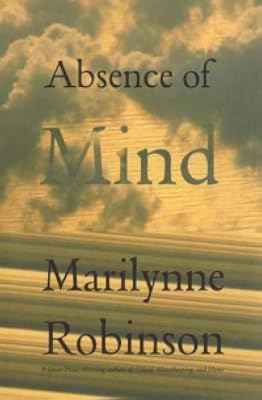
Absence of Mind: The Dispelling of Inwardness from the Modern Myth of the Self
by Marilynne Robinson
On This Page
Description
In this ambitious book, acclaimed writer Marilynne Robinson applies her astute intellect to some of the most vexing topics in the history of human thought-science, religion, and consciousness. Crafted with the same care and insight as her award-winning novels, Absence of Mind challenges postmodern atheists who crusade against religion under the banner of science. In Robinson's view, scientific reasoning does not denote a sense of logical infallibility, as thinkers like Richard Dawkins might show more suggest. Instead, in its purest form, science represents a search for answers. It engages the problem of knowledge, an aspect of the mystery of consciousness, rather than providing a simple and final model of reality.By defending the importance of individual reflection, Robinson celebrates the power and variety of human consciousness in the tradition of William James. She explores the nature of subjectivity and considers the culture in which Sigmund Freud was situated and its influence on his model of self and civilization.? Through keen interpretations of language, emotion, science, and poetry, Absence of Mind restores human consciousness to its central place in the religion-science debate. show lessTags
Recommendations























Member Reviews
This book is the first I’ve read in a long time that I believe anyone could profit by reading. The four essays it contains originated as the Dwight Harrington Terry lectures at Yale University. This series of conferences has already been the occasion for some of my other favorite books, Paul Tillich’s Courage to Be and Terry Eagleton’s Reason, Faith, and Evolution. Robinson, a noted novelist, here grapples with the question of what it means to be human. Even more, she pushes back at the wave of what she terms parascientific literature by asking what it says about us that we pose this and similar questions so persistently. To her, it is clear that the notion of “mind,” so frequently dismissed in scientific materialism—to say show more nothing of the concept “soul”—cannot so easily be dispensed with. I found the third lecture, which treats Freud in the context of his time and place, especially insightful, but admired all of the lectures. They are closely-argued; the language is admittedly challenging, yet lucid throughout. Would that others engaged in the quest for an updated, post-positivist metaphysics were equally eloquent. show less
This is a hard book to rate for me... On the one hand, it calls for a humility that is lacking in 'parascience' (or scientism, or perhaps New Atheism, or maybe simply positivism.) Great. Yes.
On the other hand, Ms. Robinson clearly misunderstands or misrepresents some of the arguments and claims of e.g. evolutionary psychology, neuroscience, etc. More annoyingly for me personally, though a minor part of the book, is the author's use of quantum uncertainty and entanglement. If I could never see another philosophical/pop-science/religious/New Age piece misuse QM... I don't even know... I would give up my left arm. But that is a minor portion of the lecture/book. In any case, "Not great. No."
And then the argument for "I" as evidenced by show more long history and culture and civilization... but what of the long traditions in e.g. Buddhism and Hinduism that specifically speak to the illusion of the "I"?
This is a somewhat interesting contribution to a long argument and has some solid points about the need for greater humility and understanding amongst "parascientists." But in other respects, the book reveals Ms. Robinson's somewhat weak grasp of the arguments and counter-counter-arguments to her own counter-arguments. show less
On the other hand, Ms. Robinson clearly misunderstands or misrepresents some of the arguments and claims of e.g. evolutionary psychology, neuroscience, etc. More annoyingly for me personally, though a minor part of the book, is the author's use of quantum uncertainty and entanglement. If I could never see another philosophical/pop-science/religious/New Age piece misuse QM... I don't even know... I would give up my left arm. But that is a minor portion of the lecture/book. In any case, "Not great. No."
And then the argument for "I" as evidenced by show more long history and culture and civilization... but what of the long traditions in e.g. Buddhism and Hinduism that specifically speak to the illusion of the "I"?
This is a somewhat interesting contribution to a long argument and has some solid points about the need for greater humility and understanding amongst "parascientists." But in other respects, the book reveals Ms. Robinson's somewhat weak grasp of the arguments and counter-counter-arguments to her own counter-arguments. show less
Eh. A rambling, less coherent extension of the essay 'Darwinism' in her "Death of Adam," this one deals with what Robinson calls 'parascience,' essentially, the kind of populist journalism written by Dennet, Dawkins, Pinker and their ilk, with the 'problem' of altruism for their dogma, and with Freud. The argument here is weaker than in 'Darwinism,' and simultaneously more polemical, which means people are going to give this one star on the basis that Robinson is a crazy religious nut-bag who doesn't understand science, or five stars on the basis that she is a crazy religious nut-bag who rejects science. That she isn't, and doesn't, won't deter those reviewers.
The basic approach here is: many modern theories use supposedly scientific show more claims to make social-scientific claims; the scientific claims are often mistaken and the social-scientific claims are almost always ludicrously reductionist (people are not, in fact, ants). Instead, we need a model of intellectual inquiry which grants to human beings a special kind of rich experience that we can call, say, 'mind' or 'culture' or 'art' or any of those big words. Parascientific attempts to 'explain' this experience are very bad, which should be obvious to anyone who has a facebook account and has friends who constantly link those 'scientific' experiments proving, for instance, that men in relationships lie to themselves about how attractive they find women, based on the assumption that all men find all women who are at a certain stage of their menstrual cycle attractive (and ignoring, for instance, the possibility that *not* all men find all women at that stage attractive). Maybe being in a relationship is something valuable that men want to hold onto more than they want to bang hot chix?
But nobody needs a hundred and fifty pages to make that argument, and the great one liners and beautiful sentences that you'll find in "Death of Adam" are sorely missing here, and her inability to understand German philosophy from Fichte through Nietzsche to Freud is on greater display. Too bad. show less
The basic approach here is: many modern theories use supposedly scientific show more claims to make social-scientific claims; the scientific claims are often mistaken and the social-scientific claims are almost always ludicrously reductionist (people are not, in fact, ants). Instead, we need a model of intellectual inquiry which grants to human beings a special kind of rich experience that we can call, say, 'mind' or 'culture' or 'art' or any of those big words. Parascientific attempts to 'explain' this experience are very bad, which should be obvious to anyone who has a facebook account and has friends who constantly link those 'scientific' experiments proving, for instance, that men in relationships lie to themselves about how attractive they find women, based on the assumption that all men find all women who are at a certain stage of their menstrual cycle attractive (and ignoring, for instance, the possibility that *not* all men find all women at that stage attractive). Maybe being in a relationship is something valuable that men want to hold onto more than they want to bang hot chix?
But nobody needs a hundred and fifty pages to make that argument, and the great one liners and beautiful sentences that you'll find in "Death of Adam" are sorely missing here, and her inability to understand German philosophy from Fichte through Nietzsche to Freud is on greater display. Too bad. show less
Summary: The text of Robinson’s 2010 Dwight Harrington Terry Foundation Lectures on Religion in the Light of Science and Philosophy, challenging “parascientific” explanations reducing the mind to nothing more than the physical brain.
The idea of the mind has been under assault from those who would contend our “minds” are nothing more than the physical processes making up the extensive neural network of our brains. In this collection of four essays, the text of Marilynne Robinson’s 2010 Dwight Harrington Terry Foundation Lectures on Religion in the Light of Science and Philosophy, she challenges this notion. She does not oppose the work of neuroscientists, but rather those like Daniel Dennett, who in the garb of science, make show more metaphysical conclusions about the existence of the mind, or rather the absence of such apart from the physical substrate of the brain. She calls this “parascience,” an intellectual argument operating alongside and apart from real scientific research.
Her first essay “On Human Nature” notes the modern assumption of a threshold, before which explanations of human nature were benighted, compared to the enlightened explanations of the likes of Bertrand Russell and Daniel Dennett, who “explain away” the mind and traditional religion.
“The Strange History of Altruism” challenges the assumption that evolutionary forces protecting gene pools explain altruistic behavior and the disregard of counterfactual evidence.
The third essay, “The Freudian Self,” takes on the suspicion of the mind in Freud, that the mind is not to be trusted due to subconscious processes. She looks at the intellectual milieu surrounding Freud and how this shaped his ideas.
The final essay, “Thinking Again,” celebrates our sense of self-awareness, that mechanistic explanations dismiss. She writes in introducing her discussion:
“Then there is the odd privilege of existence as a coherent self, the ability to speak the word ‘I’ and mean by it a richly individual history of experience, perception, and thought. For the religious, the sense of the soul may have as a final redoubt, not as an argument but as experience, that haunting I who wakes in the night wondering where time has gone, the I we waken to, sharply aware that we have been unfaithful to ourselves, that a life lived otherwise would have acknowledged a yearning more our own than any of the daylit motives whose behests we answer to so diligently” (p. 110).
Each of these essays are densely argued, invoking the various shapers of the modern mind, challenging the “authorities” who reduce mind to materialistic explanations.
Essentially, Robinson is saying, “not so fast.” At the same time, her argument also has a bit of a feel of a “mind of the gaps,” the mind not yet explained by physical processes. I would not want to see another version of the evolution-creation battle of the last 150 years in the field of neuroscience. Might there be an approach of humility, of genuine listening that refuses to dismiss both the powerful experience of our self-awareness, our consciousness, and the powerful advances of neuroscience in understanding the physical substrates of many of our “mental experiences”? Physical explanations of other phenomena have only increased for believing persons their joy in the Creator. Could not more holistic physical explanations of the mind also increase our wonder, even as we understand how that wonder is wired into us?
Robinson challenges the reductionistic materialism of parascience. I would also want her to speak against the denials of real advances in scientific understanding. I hope we can develop both a robust materiality and a robust spirituality, neither of which are at war with the other. Perhaps what we need is a sequel to these lectures titled “Presence of Mind,” for it seems that this is what we require in the present time. show less
The idea of the mind has been under assault from those who would contend our “minds” are nothing more than the physical processes making up the extensive neural network of our brains. In this collection of four essays, the text of Marilynne Robinson’s 2010 Dwight Harrington Terry Foundation Lectures on Religion in the Light of Science and Philosophy, she challenges this notion. She does not oppose the work of neuroscientists, but rather those like Daniel Dennett, who in the garb of science, make show more metaphysical conclusions about the existence of the mind, or rather the absence of such apart from the physical substrate of the brain. She calls this “parascience,” an intellectual argument operating alongside and apart from real scientific research.
Her first essay “On Human Nature” notes the modern assumption of a threshold, before which explanations of human nature were benighted, compared to the enlightened explanations of the likes of Bertrand Russell and Daniel Dennett, who “explain away” the mind and traditional religion.
“The Strange History of Altruism” challenges the assumption that evolutionary forces protecting gene pools explain altruistic behavior and the disregard of counterfactual evidence.
The third essay, “The Freudian Self,” takes on the suspicion of the mind in Freud, that the mind is not to be trusted due to subconscious processes. She looks at the intellectual milieu surrounding Freud and how this shaped his ideas.
The final essay, “Thinking Again,” celebrates our sense of self-awareness, that mechanistic explanations dismiss. She writes in introducing her discussion:
“Then there is the odd privilege of existence as a coherent self, the ability to speak the word ‘I’ and mean by it a richly individual history of experience, perception, and thought. For the religious, the sense of the soul may have as a final redoubt, not as an argument but as experience, that haunting I who wakes in the night wondering where time has gone, the I we waken to, sharply aware that we have been unfaithful to ourselves, that a life lived otherwise would have acknowledged a yearning more our own than any of the daylit motives whose behests we answer to so diligently” (p. 110).
Each of these essays are densely argued, invoking the various shapers of the modern mind, challenging the “authorities” who reduce mind to materialistic explanations.
Essentially, Robinson is saying, “not so fast.” At the same time, her argument also has a bit of a feel of a “mind of the gaps,” the mind not yet explained by physical processes. I would not want to see another version of the evolution-creation battle of the last 150 years in the field of neuroscience. Might there be an approach of humility, of genuine listening that refuses to dismiss both the powerful experience of our self-awareness, our consciousness, and the powerful advances of neuroscience in understanding the physical substrates of many of our “mental experiences”? Physical explanations of other phenomena have only increased for believing persons their joy in the Creator. Could not more holistic physical explanations of the mind also increase our wonder, even as we understand how that wonder is wired into us?
Robinson challenges the reductionistic materialism of parascience. I would also want her to speak against the denials of real advances in scientific understanding. I hope we can develop both a robust materiality and a robust spirituality, neither of which are at war with the other. Perhaps what we need is a sequel to these lectures titled “Presence of Mind,” for it seems that this is what we require in the present time. show less
Reading this, I felt the author had left half the work to me. In a rambling set of lectures, she ranged over not always connected pieces of the history of ideas. The showdown between science (or para-science, as she calls it) and theology becomes the clear overall subject after a while, as does her (ideological?) preference for the latter. But she seems uneasy about being too clear about all this. Can Robinson the lifetime Presbyterian really merge seamlessly with Robinson the intellectual? She appears to have what I can only only tremblingly call psychological problems sorting it out. Why doesn't she come right out and deliver a single suitably sharpened argument on A vs. B? So, bottom line, few stars for clarity, but at least a couple show more for including interesting references and quotations along the way. show less
Time and again I found myself admiring Robinson's sharp logic and sharper words. This is an intelligent believer's response to the arguments against an inner self made by Dawkins, Wilson et alia. An excellent book all around, wherever one stands on the tension between religion and science, spirit and matter, soul and body.
Robinson's combative and formal tone was by far my favorite aspect of this collection. I found it a tad strange she didn't address phenomenology as it would've strengthened her argument but overall these are a compelling reason to consider the mystery of the human experience. A mystery to be explored but a mystery nonetheless.
Members
- Recently Added By
Lists

Books Read in 2020
4,379 works; 124 members

Books Read in 2025
4,128 works; 98 members

Recommendations by Tim Keller
50 works; 1 member
Author Information

21+ Works 32,543 Members
Marilynne Robinson's first novel, Housekeeping, won the Hemingway Foundation/PEN Award. Her other novels include Mother Country and Lila. Gilead won the 2005 Pulitzer Prize for Fiction and the National Book Critics Circle Award and Home won the Orange Prize and the Los Angeles Times Book Prize. Her nonfiction books include When I Was a Child I show more Read Books, Absence of Mind, and The Death of Adam. She was the recipient of a 2012 National Humanities Medal, awarded by President Barack Obama. She received the Library of Congress Prize for American Fiction in 2016. She has been named the winner of the Richard C Holbrooke Distinguished Achievement Award as part of the 2016 Dayton Literary Peace Prize. She was included on Time magazine's annual list of the 100 most influential people in the world. (Bowker Author Biography) show less
Awards and Honors
Distinctions
Series
Belongs to Publisher Series
Terry Lectures (2009)
Common Knowledge
- Canonical title
- Absence of Mind: The Dispelling of Inwardness from the Modern Myth of the Self
- Original title
- Absence of Mind: The Dispelling of Inwardness from the Modern Myth of the Self
- Original publication date
- 2010
- People/Characters
- Sigmund Freud
- First words
- INTRODUCTION
These essays examine one side in the venerable controversy called the conflict between science and religion, in order to question the legitimacy of the claim its exponents make to speak with the authority ... (show all)of science and in order to raise questions about the quality of thought that lies behind it.
1 On Human Nature
The mind, whatever else it is, is a constant of everyone's experience, and, in more and other ways than we know, the creator of the reality that we live within, that we live by and for ... (show all)and despite, and that, often enough, we die from. - Last words
- (Click to show. Warning: May contain spoilers.)If my metaphor only suggests the possibility that our
species is more than an optimized ape, that something terrible
and glorious befell us, a change gradualism could not
predict-if this is merely another fable, it might at least encourage
an imagination of humankind large enough to acknowledge
some small fragment of the mystery we are. - Original language
- English
Classifications
- Genres
- Philosophy, Religion & Spirituality, Nonfiction, General Nonfiction
- DDC/MDS
- 201.65 — Religion The Bible & Christianity Religious mythology, general classes of religion, interreligious relations and attitudes, social theology Religions and secular disciplines Religion and science
- LCC
- BL241 .R58 — Philosophy, Psychology and Religion Religions. Mythology. Rationalism Religions. Mythology. Rationalism Natural theology Religion and science
- BISAC
Statistics
- Members
- 477
- Popularity
- 63,341
- Reviews
- 11
- Rating
- (3.65)
- Languages
- Danish, English, Portuguese, Spanish
- Media
- Paper, Ebook
- ISBNs
- 6
- ASINs
- 3