Me and Kaminski
by Daniel Kehlmann
On This Page
Description
From internationally best-selling author Daniel Kehlmann comes this provocative and wickedly funny novel about two unpredictable men, one an artist and the other a journalist, who embark on an unexpected adventure with uproarious results. Sebastian Zollner's failure as a journalist is matched only by his personal failures. Searching for redemption in the eyes of his peers, he heads off into the mountains to interview the eccentric, legendary painter Manuel Kaminski with the hope of writing show more his biography. Going blind and living in seclusion with his daughter, Kaminski could be working on his next masterpiece or easing into his final days. His artistic reputation hinges on any number of factors, but most prominently on a definitive biography. With edgy wit and intelligence, Kehlmann dives into the question of what is "truth" in our celebrity-crazed times and embraces the energy and humanity that lie beneath the pretensions of the art and journalistic worlds. show lessTags
Recommendations























Member Reviews
Me and Kaminski (2003) is a sophisticated satire by Austrian author Daniel Kehlmann. It's about a young biographer, Sebastian, who interviews a "famous" but old and near-death painter, Kaminski, so that Sebastian can publish an authoritative biography and - he hopes - become famous and wealthy. We quickly discover Sebastian is a hollow narcissist who cares only for himself ("Me" is first in the title) and gradually come to realize that Kaminski is even worse! Both use charm and guile to get their ways so the two together make for comedy. The trickster, Sebastian, becomes the tricked, by Kaminski, who gets Sebastian to drive him around, pay for things etc. The humor here is that among writers, biographers have a reputation as ambulance show more chasers and grave diggers, it's what hack writers do who can't do anything else, so we laugh at the comeuppance and turning of tables. Yet is Kaminski also a hack painter? His "fame" rests mainly on a few letters of recommendation and not his paintings which never sold well. Even the people in his village aren't sure who he is. It raises questions of authenticity, what is really important in life, the pretensions of the art world, image versus substance.
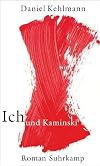
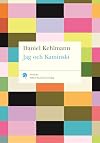
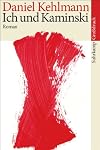
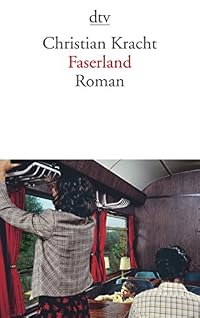
Overall I enjoyed the novel but it's probably not for everyone, it will take some thinking and appreciation. It's carefully written, not much is by accident, for example the hitchhiker, Karl Ludwig, infers that a painting is the work of the devil, and likewise it's hard to escape the Faustian nature of the story, is Kaminski really the devil who had made a bargain with Sebastian? There is more of this type of symbolism for those who wish to find depth beyond the surface story, it rewards contemplation which is the mark of good piece of art. Of course, that is the same thing the novel is about: like Kaminski's painting of mirrors facing mirrors, the novel is evaluating art while we the reader are evaluating the novel as art! In this 110 page book the word "mirror" is used 31 times, it's a reflection of a reflection. The American/UK book covers don't reflect it but the original German cover shows a mirror on the cover, it's unfortunate the American/UK publishers missed this central theme. show less
Overall I enjoyed the novel but it's probably not for everyone, it will take some thinking and appreciation. It's carefully written, not much is by accident, for example the hitchhiker, Karl Ludwig, infers that a painting is the work of the devil, and likewise it's hard to escape the Faustian nature of the story, is Kaminski really the devil who had made a bargain with Sebastian? There is more of this type of symbolism for those who wish to find depth beyond the surface story, it rewards contemplation which is the mark of good piece of art. Of course, that is the same thing the novel is about: like Kaminski's painting of mirrors facing mirrors, the novel is evaluating art while we the reader are evaluating the novel as art! In this 110 page book the word "mirror" is used 31 times, it's a reflection of a reflection. The American/UK book covers don't reflect it but the original German cover shows a mirror on the cover, it's unfortunate the American/UK publishers missed this central theme. show less
Is it enlightenment that Sebastian Zöllner achieves at the close of this short novel? Based on what we know of this narrator protagonist, I’m inclined to read it instead as an ironic parody of the Zen parable Kaminski had told him earlier. After all, enlightenment was not his goal in pursuing the reclusive Kaminski.
Manuel Kaminski is a painter, briefly famous (Picasso bought one of his works), now nearly forgotten. Zöllner is an art critic on the make. He’s not interested in art but in reputation—his own primarily, but that of others to the extent they can magnify his. He has garnered a commission to write Kaminski’s biography and, if all goes well, hopes it will appear soon after the old man dies. This doesn’t make him show more unusual in his field, as an absurd and acerbic account of the naked self-promotion and vapid pretension on display at a vernissage reveals.
Kaminski is long past caring for all this, although he, too, was more ambitious than talented in his youth. He no longer paints; he is blind (or claims to be). A blind painter? Why not? Beethoven continued to compose after becoming deaf. At one point, Sebastian watches Kaminski doodle on a notepad as what seemed like an aimless spiral takes on aspects of a face. The eye, it seems, is a dispensable element in the link between imagination and hand.
After I closed the book, countless other stories came to mind (what could be more postmodern than that?). Kaminski uses Sebastian to achieve a reunion with the love of his youth; this recalled Lotte Kestner’s visit to the aged Goethe, as recounted in Thomas Mann’s Lotte in Weimar. She had been the inspiration for The Sorrows of the Young Werther, Goethe’s early reputation-making success. The obstacle-laden trip north to achieve this reminded me of Dante, especially Purgatorio, with Kaminski as Virgil. Near the end of the trip, Sebastian sees Elke, his Beatrice, but she cares as little for him as the real-life Beatrice did for Dante.
This is the second novel I’ve read in succession with an unlikable protagonist, but Sebastian makes Charity Royall of Edith Wharton’s Summer seem the embodiment of charm by comparison. It takes a masterful artist to create such a character and make us care in the end. Wharton succeeded; I admired the way Charity developed. With Sebastian, Kehlmann presents a character whose oblivious lack of the most elementary social grace amuses (at times) but whose self-centeredness struck me as incurable, despite his awareness of the expansive sky and the waves on the closing page of the book. Nevertheless, an entertaining read. show less
Manuel Kaminski is a painter, briefly famous (Picasso bought one of his works), now nearly forgotten. Zöllner is an art critic on the make. He’s not interested in art but in reputation—his own primarily, but that of others to the extent they can magnify his. He has garnered a commission to write Kaminski’s biography and, if all goes well, hopes it will appear soon after the old man dies. This doesn’t make him show more unusual in his field, as an absurd and acerbic account of the naked self-promotion and vapid pretension on display at a vernissage reveals.
Kaminski is long past caring for all this, although he, too, was more ambitious than talented in his youth. He no longer paints; he is blind (or claims to be). A blind painter? Why not? Beethoven continued to compose after becoming deaf. At one point, Sebastian watches Kaminski doodle on a notepad as what seemed like an aimless spiral takes on aspects of a face. The eye, it seems, is a dispensable element in the link between imagination and hand.
After I closed the book, countless other stories came to mind (what could be more postmodern than that?). Kaminski uses Sebastian to achieve a reunion with the love of his youth; this recalled Lotte Kestner’s visit to the aged Goethe, as recounted in Thomas Mann’s Lotte in Weimar. She had been the inspiration for The Sorrows of the Young Werther, Goethe’s early reputation-making success. The obstacle-laden trip north to achieve this reminded me of Dante, especially Purgatorio, with Kaminski as Virgil. Near the end of the trip, Sebastian sees Elke, his Beatrice, but she cares as little for him as the real-life Beatrice did for Dante.
This is the second novel I’ve read in succession with an unlikable protagonist, but Sebastian makes Charity Royall of Edith Wharton’s Summer seem the embodiment of charm by comparison. It takes a masterful artist to create such a character and make us care in the end. Wharton succeeded; I admired the way Charity developed. With Sebastian, Kehlmann presents a character whose oblivious lack of the most elementary social grace amuses (at times) but whose self-centeredness struck me as incurable, despite his awareness of the expansive sky and the waves on the closing page of the book. Nevertheless, an entertaining read. show less
Sebastian Zöllner tiene un plan: convertirse en el biógrafo del gran pintor Manuel Kaminski, y esperar su pronta muerte para saltar a la fama con su biografía. Pero las cosas nunca salen como uno espera, ¿verdad? La novela empieza con Sebastian acudiendo a una entrevista con Kaminski, que vive en una casita en los Alpes, en plena montaña. Sebastian es un personaje despreciable, mezquino, egoista, narcisista y egocéntrico a más no poder (el título, 'Yo y Kaminski', lo dice todo). Sin embargo, con el transcurrir de sus peripecias te va cayendo mejor. Es una sensación extraña. El personaje, la novela en sí, te hace reir por momentos pero te deja al mismo tiempo un sentimiento de frialdad, frialdad que va desapareciendo según show more vas leyendo, hasta convertirse en una sensación de apego y soledad.
Daniel Kehlmann, joven escritor alemán y considerado todo un genio en su país, ha construído una novela que raya a gran altura en ciertos momentos, con unos diálogos, lo mejor del libro, brillantes e inteligentes. También realiza una crítica mordaz e irónica sobre el mundo del arte, reflexionando al mismo tiempo sobre las relaciones humanas. Dentro de un tiempo, espero leer la gran obra maestra de Kehlmann. show less
Daniel Kehlmann, joven escritor alemán y considerado todo un genio en su país, ha construído una novela que raya a gran altura en ciertos momentos, con unos diálogos, lo mejor del libro, brillantes e inteligentes. También realiza una crítica mordaz e irónica sobre el mundo del arte, reflexionando al mismo tiempo sobre las relaciones humanas. Dentro de un tiempo, espero leer la gran obra maestra de Kehlmann. show less
Zöllner, az újságíró felbaktat a hegyre Kaminskihez, a felkapott vak festőhöz (aki vagy azért lett felkapott, mert megvakult, vagy… hááát, mondjuk valószínűleg nem a felkapottság miatt vakult meg…), hogy közösen dolgozzanak annak önéletrajzán. Ismerős alaphelyzet, de Kehlmann ezt a szimpla mester-tanítvány alaphelyzetet fondorlatosan kiforgatja azzal, hogy elbeszélője, Zöllner a világirodalom egyik legtenyérbemászóbb, leggerinctelenebb, legegoistább* elbeszélőinek egyike (és ezzel mintha maga sem lenne tisztában) – ezen tulajdonságaival pedig úgy magára húzza az olvasó figyelmét és indulatát, hogy teljesen el is lopja a show-t Kaminskitól, a kötet elméleti központjától. Lám, egy show more senki is beárnyékolhat egy zsenit – gratulálunk, Herr Zöllner.
Akad bőségesen jel arra, hogy ez egy ifjúkori zsenge – a kötet rövidségéhez képest túlságosan elnyúlik az, amit bevezetésnek tekinthetünk, így maga a road movie (Zöllner és Kaminski közös utazása a festő múltja felé, vagyis a „lényeg”) sajátosan befejezetlennek tűnt. Meg aztán az újságíró figuráját is lehetett volna vékonyabb ecsettel festeni… Mindazonáltal élveztem – egy szemtelenül tehetséges író megoldása egy képzeletbeli vizsgafeladatra a kreatívírás-tanfolyamon: „Alakíts ki az olvasóban erős viszonyulást egy szereplődhöz, aztán változtasd meg azt. Terjedelem: max. 200 oldal.”
* Már a cím is: Én és Kaminski, nem pedig Kaminski és én. show less
Akad bőségesen jel arra, hogy ez egy ifjúkori zsenge – a kötet rövidségéhez képest túlságosan elnyúlik az, amit bevezetésnek tekinthetünk, így maga a road movie (Zöllner és Kaminski közös utazása a festő múltja felé, vagyis a „lényeg”) sajátosan befejezetlennek tűnt. Meg aztán az újságíró figuráját is lehetett volna vékonyabb ecsettel festeni… Mindazonáltal élveztem – egy szemtelenül tehetséges író megoldása egy képzeletbeli vizsgafeladatra a kreatívírás-tanfolyamon: „Alakíts ki az olvasóban erős viszonyulást egy szereplődhöz, aztán változtasd meg azt. Terjedelem: max. 200 oldal.”
* Már a cím is: Én és Kaminski, nem pedig Kaminski és én. show less
Enjoyable satire, with a splendidly unlikeable narrator, but it feels a bit rough around the edges if you've already read the much more sophisticated Die Vermessung der Welt. Still, there are plenty of interesting ambiguities, and Kehlmann shows us, just as in the later novel, that he's not afraid to have his bit of fun with some of the sacred icons of high culture. More Kingsley than Martin, though: anywhere but Germany it would seem strangely old-fashioned.
A clever and satirical novel about two characters, neither of which are very likeable. The biographer was often at best clumsy and often rude. The elderly painter was manipulative, perhaps why he had made a name for himself. A great story.
Great writing though I struggled with the story. I find it hard when you really don't like the central character - anti-hero, sure, but just a kind of guy you would swerve. In old money you would feel an urge to punch him.
It's short and redemption of a soryt arrives so give it a go.
It's short and redemption of a soryt arrives so give it a go.
Members
- Recently Added By
Author Information

Daniel Kehlmann was born on January 13, 1975 in Munich. He is a German language author. His work Die Vermessung der Welt (translated into English by Carol Brown Janeway as Measuring the World, 2006) is the best selling novel in the German language since Patrick Süskind's Perfume was released in 1985. In 1997 Kehlmann completed his first novel, show more Beerholms Vorstellung, while still a student. He also wrote numerous reviews and essays while at university. In 2001, Kehlmann held the guest lectureship of poetics at the Johannes Gutenberg University of Mainz. In the winter term of 2005/6 Kehlmann held the lectureship of poetics at the FH Wiesbaden, and in 2006/7 he held the lectureship for poetics at the university of Göttingen. Daniel Kehlmann is a member of the Mainzer Akademie der Wissenschaften und der Literatur. In 2015 he made the Independent Foreign Fiction Prize shortlist with his title, F. (Bowker Author Biography) show less
Some Editions
Awards and Honors
Awards
Series
Belongs to Publisher Series
Common Knowledge
- Canonical title
- Me and Kaminski
- Original title
- Ich und Kaminski
- Original publication date
- 2003
- People/Characters
- Sebastian Zöllner; Manuel Kaminski; Dominik Silva; Miriam Kaminski; Elke; Therese
- Important places
- Germany
- Related movies
- Ich und Kaminski (2015 | IMDb)
- Original language*
- saksa
*Some information comes from Common Knowledge in other languages. Click "Edit" for more information.
Classifications
- Genres
- Fiction and Literature, General Fiction
- DDC/MDS
- 833.914 — Literature & rhetoric German & related literatures German fiction 1900- 1900-1990 1945-1990
- LCC
- PT2671 .E32 .I3413 — Language and Literature German, Dutch and Scandinavian literatures German literature Individual authors or works 1961-2000
- BISAC
Statistics
- Members
- 463
- Popularity
- 65,546
- Reviews
- 14
- Rating
- (3.49)
- Languages
- 16 — Czech, Danish, Dutch, English, Estonian, Finnish, French, German, Hungarian, Italian, Norwegian (Bokmål), Romanian, Croatian, Spanish, Swedish, Turkish
- Media
- Paper, Audiobook, Ebook
- ISBNs
- 32
- ASINs
- 4