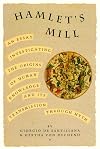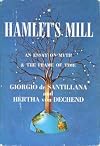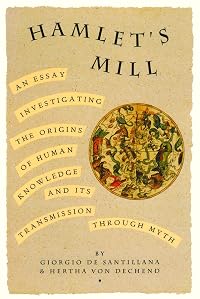
Hamlet's Mill: An Essay Investigating the Origins of Human Knowledge and Its Transmission Through Myth
by Giorgio De Santillana, Hertha von Dechend
On This Page
Description
Ever since the Greeks coined the language we commonly use for scientific description, mythology and science have developed separately. But what came before the Greeks? What if we could prove that all myths have one common origin in a celestial cosmology? What if the gods, the places they lived, and what they did are but ciphers for celestial activity, a language for the perpetuation of complex astronomical data? Drawing on scientific data, historical and literary sources, the authors argue show more that our myths are the remains of a preliterate astronomy, an exacting science whose power and accuracy were suppressed and then forgotten by an emergent Greco-Roman world view. This fascinating book throws into doubt the self-congratulatory assumptions of Western science about the unfolding development and transmission of knowledge. This is a truly seminal and original thesis, a book that should be read by anyone interested in science, myth, and the interactions between the two. show lessTags
Recommendations

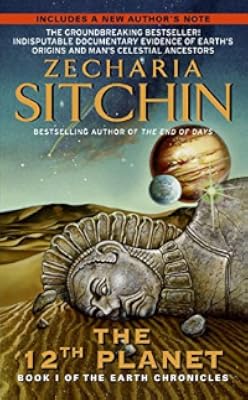
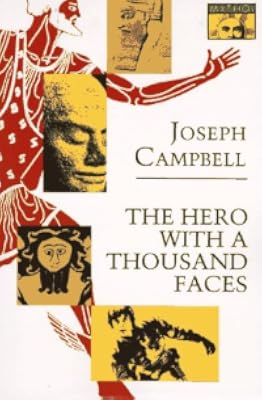
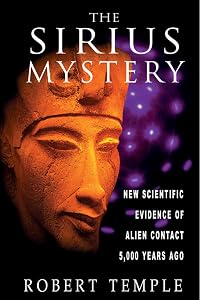
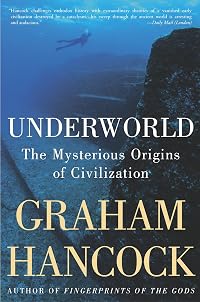






Member Recommendations
Member Reviews
A very comprehensive view of world myth with the aim of demonstrating that seemingly nonsensical tales are actually encoded with knowledge of the procession of the equinoxes and other astronomical lore. I understand why Hamlet was dragged in, though I think it is a bit of a stretch. Interesting but very long and lots of footnotes.
This is a book that reminds me of the mythological discourses by Joseph Campbell. It is an anthropological detective story that traces the origins of myths throughout the world and finds common elements in their origins. One finding is that the geography of myth is not that of the earth but rather is celestial. For anyone who is familiar with Greek mythology this is not a surprise, but we find here again that mythological language transcends cultural and geographic boundaries. The author explores myths unfamiliar and familiar. For example he discusses the Epic of Gilgamesh in "The Adventure and the Quest". In it he finds connections with myths from India to Greece and beyond linking the symbols to constellations in the sky. The chapter show more concludes with a reference to knowledge:
"The notion of fire, in various forms, has been one of the recurring themes of this essay. Gilgamesh, like Prometheus, is intimately associated with it. The principle of fire, and the means of producing or acquiring it are best approached through them." (p 316)
The essence of human knowledge seems bound up in these mythological origins. A difficult read, but worth persevering, Hamlet's Mill should be of interest to all who are interested in the origins of man's mind and his images of the world. show less
"The notion of fire, in various forms, has been one of the recurring themes of this essay. Gilgamesh, like Prometheus, is intimately associated with it. The principle of fire, and the means of producing or acquiring it are best approached through them." (p 316)
The essence of human knowledge seems bound up in these mythological origins. A difficult read, but worth persevering, Hamlet's Mill should be of interest to all who are interested in the origins of man's mind and his images of the world. show less
Fascinating, if somewhat dizzyingly presented and unsystematic. The project is to show that mythic ideas about cyclical time, world ages, their characteristics and dominant players, were actually based in close observation of the heavens and the complex apparent movements of planets and constellations, and particularly the precession of the equinoxes. Since the whole universe was thought to be ruled by the same living, volitional forces, it was by no means a simple “primitive” or childlike fantasy that what happened in the sky was related to what happened on earth in describable ways.
The authors’ point is not to dismiss the modern scientific method but to say that there is a tendency to look at the history of human knowledge in a show more reductively linear way, from less to more sophistication and mastery of complexity, and that such a view actually runs counter to the evidence provided even by what little we have of these early cosmologies.
For folklore fans, the stories themselves are from a treasure trove of not-the-usual-suspects sources: Guyana, Peru, India, Persia, Africa, Northwest and Plains Indians, as well as the Norse and Greco-Roman standbys. show less
The authors’ point is not to dismiss the modern scientific method but to say that there is a tendency to look at the history of human knowledge in a show more reductively linear way, from less to more sophistication and mastery of complexity, and that such a view actually runs counter to the evidence provided even by what little we have of these early cosmologies.
For folklore fans, the stories themselves are from a treasure trove of not-the-usual-suspects sources: Guyana, Peru, India, Persia, Africa, Northwest and Plains Indians, as well as the Norse and Greco-Roman standbys. show less
Fascinating and almost hypnotising in its treatment of mythology but the theory it proposes is rather meaningless. Let's say you're right and the ancients were super smart and had knowledge that was since lost. You've shown there is no way to recover it beyond knowledge we already have and can recognise fragments of in the myths. In my opinion all this is completely unsubstantiated, seeing patterns in toast, like bible code. Still fascinating, shame about how obtuse the writing is. Would read more.
This extraordinary book is subtitled: "An Essay Investigating the Origins of Human Knowledge and its Transmission Through Myth".
This is what the book is about, more or less, but it is hard to tell. This essay is both virtually unreadable and amazingly erudite. There is scarcely any document more than 1000 years old that these scholars have not read. What we get is a digested compendium of their knowledge.
From a welter of literary reference an astonishing thesis slowly emerges. It may have helped if the authors had explicitly advanced it at some point, but they give no sign of wishing to make any kind of case at all, merely letting their knowledge speak for itself.
The major lesson we learn here is that vast swathes of ancient literature show more displayed an obsession with an astronomical phenomenon known as the precession of the equinoxes.
There is not space here to explain precession and my thoughts on why the ancients found it so important are speculative. However, their interest in this matter convinces me that their scientific knowledge was vastly more advanced than most are prepared to credit.
Fascinating stuff if you can bear it. Best skimmed through quickly and dipped into randomly later. show less
This is what the book is about, more or less, but it is hard to tell. This essay is both virtually unreadable and amazingly erudite. There is scarcely any document more than 1000 years old that these scholars have not read. What we get is a digested compendium of their knowledge.
From a welter of literary reference an astonishing thesis slowly emerges. It may have helped if the authors had explicitly advanced it at some point, but they give no sign of wishing to make any kind of case at all, merely letting their knowledge speak for itself.
The major lesson we learn here is that vast swathes of ancient literature show more displayed an obsession with an astronomical phenomenon known as the precession of the equinoxes.
There is not space here to explain precession and my thoughts on why the ancients found it so important are speculative. However, their interest in this matter convinces me that their scientific knowledge was vastly more advanced than most are prepared to credit.
Fascinating stuff if you can bear it. Best skimmed through quickly and dipped into randomly later. show less
Molto interessante, pone i miti antichi in una nuova prospettiva con riferimenti molto ampi in una lunga serie di culture e civiltà. Le spiegazioni astronomiche avrebbero beneficiato di qualche illustrazione in più, mentre quelle presenti prima delle corpose appendici sono utili ma un po' slegate dal contesto. Inoltre le parole greche usate a più riprese senza traduzione e con l'alfabeto greco sfuggiranno a chi, come il sottoscritto, non ha fatto il liceo classico. Tuttavia è un libro che consiglio proprio per la sua capacità di spiegare e ricomprendere le leggende base della mitologia in chiave astronomica.
Amazing scholarship combined with exceptional thought and analysis make this an essential work. The book is marred however by the lack of an hypothesis as to the reasons why our ancestors went to so much pain to pass on the knowledge encoded in the myths. It uncovers many mysteries but it does not offer any answers.
Members
- Recently Added By
Author Information

20 Works 1,630 Members
3 Works 621 Members
Series
Belongs to Publisher Series
Nonpareil Books (1992)
Common Knowledge
- Canonical title
- Hamlet's Mill: An Essay Investigating the Origins of Human Knowledge and Its Transmission Through Myth
- Original title
- Hamlet's Mill: An Essay on Myth and the Frame of Time
- Original publication date
- 1969
- Canonical LCC
- BL304 .D441 1969
Classifications
- Genres
- Nonfiction, History, General Nonfiction, Philosophy, Science & Nature, Religion & Spirituality
- DDC/MDS
- 100 — Philosophy & psychology Philosophy Philosophy, parapsychology and occultism, psychology
- LCC
- BL304 .D441 — Philosophy, Psychology and Religion Religions. Mythology. Rationalism Religions. Mythology. Rationalism The myth. Comparative mythology
- BISAC
Statistics
- Members
- 611
- Popularity
- 47,820
- Reviews
- 13
- Rating
- (3.89)
- Languages
- 5 — English, German, Hungarian, Italian, Spanish
- Media
- Paper, Ebook
- ISBNs
- 12
- ASINs
- 12