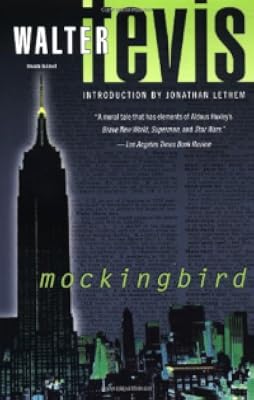
Mockingbird
by Walter Tevis
On This Page
Description
In a world where the human population has suffered devastating losses, a handful of survivors cling to what passes for life in a post-apocalyptic, dying landscape. A world where humans wander, drugged and lulled by electronic bliss. A dying world of no children and no art, where reading is forbidden. And a strange love triangle: Spofforth, who runs the world, the most perfect machine ever created, whose only wish is to die; and Paul and Mary Lou, a man and a woman whose passion for each show more other is the only hope for the future of human beings on earth. An elegiac dystopia of mankind coming to terms with its own imminent extinction, Mockingbird was nominated for a Nebula Award for Best Novel. show lessTags
Recommendations




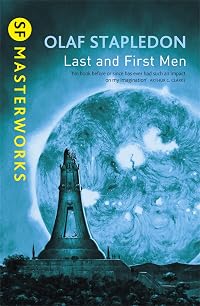
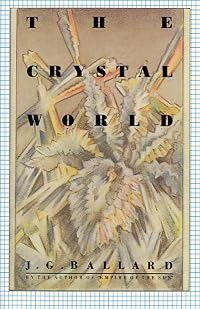
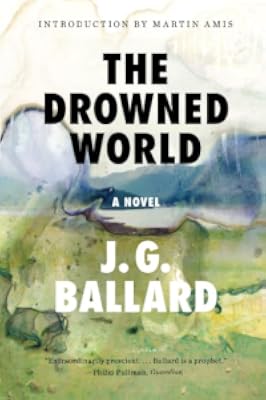

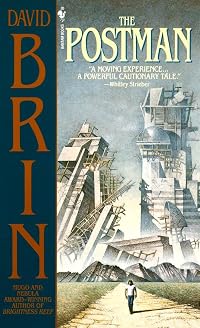

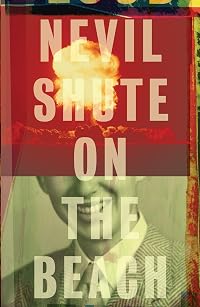
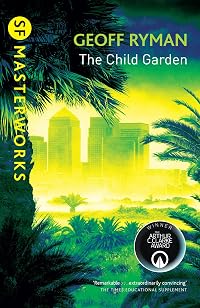

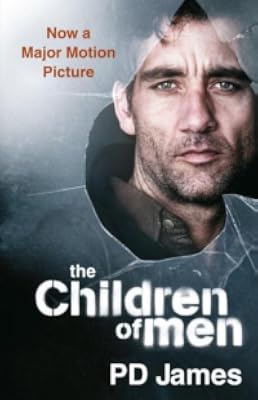
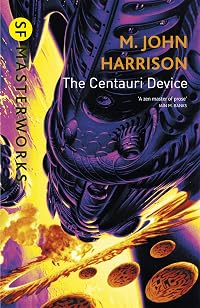







Member Recommendations
Member Reviews
Perhaps I'm losing my taste for dystopias, at least the futuristic kind. Reading the gushing reviews all over the internet makes me feel almost as isolated from society as the inhabitants of Tevis's moribund 25th century USA.
The big idea is that after the standard technological misadventures - WWIII, fallout, mass-death, global government - humankind has come to eschew all interaction and individual expression, with people retreating into their inner worlds while being fed, clothed and stupefied with fertility-inhibiting drugs by a decrepit robotocracy prone to malfunction and scarcely able to perpetuate itself. The chief symptom of this great turning-inward is that no-one can read anymore (nor does anyone want to), and so enter our show more hero, a middle-aged everyman Adam who manages to rediscover this long-suppressed art by viewing an old educational film hidden in a stash of pornos. This, and his happening upon a latter-day Eve who is the only undrugged, fertile woman left in the world, sparks a competently-plotted journey of discovery with a conclusion highly satisfying to all involved.
A couple of bits I liked: the background phenomenon of people publicly immolating themselves in threes as the ennui gets too much for them. And the best thing in the book, an uplifting conversation with a bus which seems to have driven right out of a Douglas Adams story.
So I suppose I'd have to recommend this strongly to anyone who likes this kind of thing. It's not a bad book. But there are three reasons I didn't enjoy it, and at least two of them must warrant depriving it of a star:
Firstly and perhaps most unfairly, I found it a chore to read, because most of the book is written from the perspective of people with only a basic level of (emotional and actual) literacy. So the more successful Tevis is in demonstrating the constraints of his characters, the less room there is for any dynamism in the prose. I appreciate that most people prefer a plain style, but this isn't Hemingway... it's an immersion in the painful struggle of the characters to express things that we take for granted. I got the point fairly early on and by the end felt as weary as you'd expect after several hours in the company of people with very little emotional experience and limited capacity to express it.
Second, I was pretty unconvinced by Tevis's choice of dystopia. Sure, we can always point at our modern connected media-infused over-medicated existences and say this book is prophetic, but you can find something prophetic about any SF novel. That's kind of the point, isn't it? I think where Tevis lost me was with his universal child brainwashing complexes and non-existent economy (free basics for all and no work). In general I find more plausible those scenarios born of entropy than those born of some sinister over-arching system.
Finally I suspect part of the reason I'm not so moved as Everyone Else on the Internet is because this is very much a "triumph of the human spirit" novel. I can't stand triumphs of the human spirit. I also dislike the fetishisation of reading, and though I don't think "Mockingbird" goes that far, many of its cheerleaders do. show less
The big idea is that after the standard technological misadventures - WWIII, fallout, mass-death, global government - humankind has come to eschew all interaction and individual expression, with people retreating into their inner worlds while being fed, clothed and stupefied with fertility-inhibiting drugs by a decrepit robotocracy prone to malfunction and scarcely able to perpetuate itself. The chief symptom of this great turning-inward is that no-one can read anymore (nor does anyone want to), and so enter our show more hero, a middle-aged everyman Adam who manages to rediscover this long-suppressed art by viewing an old educational film hidden in a stash of pornos. This, and his happening upon a latter-day Eve who is the only undrugged, fertile woman left in the world, sparks a competently-plotted journey of discovery with a conclusion highly satisfying to all involved.
A couple of bits I liked: the background phenomenon of people publicly immolating themselves in threes as the ennui gets too much for them. And the best thing in the book, an uplifting conversation with a bus which seems to have driven right out of a Douglas Adams story.
So I suppose I'd have to recommend this strongly to anyone who likes this kind of thing. It's not a bad book. But there are three reasons I didn't enjoy it, and at least two of them must warrant depriving it of a star:
Firstly and perhaps most unfairly, I found it a chore to read, because most of the book is written from the perspective of people with only a basic level of (emotional and actual) literacy. So the more successful Tevis is in demonstrating the constraints of his characters, the less room there is for any dynamism in the prose. I appreciate that most people prefer a plain style, but this isn't Hemingway... it's an immersion in the painful struggle of the characters to express things that we take for granted. I got the point fairly early on and by the end felt as weary as you'd expect after several hours in the company of people with very little emotional experience and limited capacity to express it.
Second, I was pretty unconvinced by Tevis's choice of dystopia. Sure, we can always point at our modern connected media-infused over-medicated existences and say this book is prophetic, but you can find something prophetic about any SF novel. That's kind of the point, isn't it? I think where Tevis lost me was with his universal child brainwashing complexes and non-existent economy (free basics for all and no work). In general I find more plausible those scenarios born of entropy than those born of some sinister over-arching system.
Finally I suspect part of the reason I'm not so moved as Everyone Else on the Internet is because this is very much a "triumph of the human spirit" novel. I can't stand triumphs of the human spirit. I also dislike the fetishisation of reading, and though I don't think "Mockingbird" goes that far, many of its cheerleaders do. show less
A simply amazing story. How have I never heard of this book before? It is a stunningly rendered character study set in the years 2466 and 2467. The last generation of humans is living out their final days in a drug-induced stupor while the robot-controlled world crumbles around them. Tevis imbues all three of his first-person narrators with wonderful depth. He even manages to flip things around at times to show Robert Spofforth, the last robot of his kind - and the individual basically running the world - as having more human qualities than the remaining humans around him.
The character we spend the most time with, and that therefore exhibits the most growth, is Paul Bentley. Bentley is a male human who has somehow, against all odds, show more taught himself to read. And that is the linchpin upon which the fate of humanity rests. It's a cool riff on the power of reading or, "the touching of other men's minds", as it is put in the book.
The third narrator is Mary Lou Boren, a human female who is a highly intelligent rebel living on the fringes of a dying society. When Paul and she meet, it is her smarts and insights that propel Paul's growing awareness in directions he had never considered. I do wish that Mary Lou had not then been relegated to a more subordinate role but, considering the other strengths of the book and that we spend the least amount of time in her head, that is a relatively small complaint.
This is the last book I will be able to fit into my 2015 reading and it turns out to be one of the best of the year.
Highly recommended. show less
The character we spend the most time with, and that therefore exhibits the most growth, is Paul Bentley. Bentley is a male human who has somehow, against all odds, show more taught himself to read. And that is the linchpin upon which the fate of humanity rests. It's a cool riff on the power of reading or, "the touching of other men's minds", as it is put in the book.
The third narrator is Mary Lou Boren, a human female who is a highly intelligent rebel living on the fringes of a dying society. When Paul and she meet, it is her smarts and insights that propel Paul's growing awareness in directions he had never considered. I do wish that Mary Lou had not then been relegated to a more subordinate role but, considering the other strengths of the book and that we spend the least amount of time in her head, that is a relatively small complaint.
This is the last book I will be able to fit into my 2015 reading and it turns out to be one of the best of the year.
Highly recommended. show less
As is inevitable when reading a 45-year old book about The Future, there are some laughably implausible predictions. But since human nature hasn't changed significantly in 10,000+ years (and arguably 10x as long), classic works still have a lot to tell us about ourselves and where we are heading. And in this particular case, the few technological fumbles are easily overlooked, and instead we get a cautionary tale built around the society in which it was written. Climate change wasn't yet a major concern, but running out of fossil fuels sure was. Computers were just being introduced to the masses, and the early implications just beginning to be pondered. The hippies of the 60's were morphing into the yuppies of the 80's. NYC had declared show more bankruptcy just a few years before, crime rates were frightening, and Reagan's anti-intellectualism was looming. And this book takes these trends (and a bunch of others) to their logical conclusion, with darkly humorous results.
While perhaps not quite at the same level, this book deserves a place in the same pantheon as the other 20th century dystopian classics: RUR, We, 1984, A Clockwork Orange, Brave New World, Fahrenheit 451, The Handmaid's Tale, etc. show less
While perhaps not quite at the same level, this book deserves a place in the same pantheon as the other 20th century dystopian classics: RUR, We, 1984, A Clockwork Orange, Brave New World, Fahrenheit 451, The Handmaid's Tale, etc. show less
Finalmente un vero distopico coi controtutti!
C'è tutto: l'analisi sociologica del distopico, il dettaglio tecnico e psicologico, c'è puzza di 1984, di Dick, di Asimov e di tantissimi riferimenti della fantascienza classica, c'è pure la love story per chi ne sente la mancanza (e non è una love story buttata li perchè fa share ma perchè DEVE esserci e io sono un ferreo sostenitore dell'odio per le storie d'amore all'interno di un libro che non è un romance xD ).
C'è tutto: l'analisi sociologica del distopico, il dettaglio tecnico e psicologico, c'è puzza di 1984, di Dick, di Asimov e di tantissimi riferimenti della fantascienza classica, c'è pure la love story per chi ne sente la mancanza (e non è una love story buttata li perchè fa share ma perchè DEVE esserci e io sono un ferreo sostenitore dell'odio per le storie d'amore all'interno di un libro che non è un romance xD ).
This past week I’ve had two guests staying while also working full time, which really cut into my reading time. Nonetheless, I made it through ‘Mockingbird’, an interesting science fiction curiosity from 1980. 451 years in the future, the few humans that remain are served by robots, high on drugs, and wholly estranged from one another. The world-building has a nice sense of the bleakly absurd, studded as it is with malfunctioning closed-loop toaster factories, contraceptive valium, and ‘thought buses’. Very nearly everyone is illiterate, a point of great significance to the plot. The main narrator, Bentley, teaches himself to read and finds that this wholly transforms his life. He encounters Mary Lou (somewhat of a Manic Pixie show more Dream Girl) and Spofforth (the most advanced robot to exist and thus essentially in charge of the world). Bentley stumbles from situation to situation, gradually becoming proactive, while the reader wonders what exactly is going on with Mary Lou and Spofforth. The structure of the book is peculiar, frankly. It isn’t plot-led, nor really character-led, rather the narrative seems to play with ideas. There is a whole series of chapters in which Bentley encounters 25th century Christianity, for example. I wasn’t really sure what to make of that section.
The treatment of anomie and atomisation was probably the most powerful element. What remains of American society appears unaware and indifferent to its downfall, as from early childhood everyone has been trained to look inward and to avoid connections with others. Tevis’ vision recalls [b:Brave New World|5129|Brave New World|Aldous Huxley|https://images.gr-assets.com/books/1433092908s/5129.jpg|3204877] in some respects, except the machines that labour has been delegated to have their own agendas, or simply do not work as they should. In fact, one interpretation is of a world in which machines have taken their revenge on humanity for being created as slaves, without humanity really noticing. I wasn’t overjoyed by the emphasis on heterosexual romantic love as fundamental to regaining humanity, however I did appreciate Mary Lou’s general ambivalence about most things. I cannot help feeling that the last couple of chapters would have been improved by her point of view. Nonetheless, the rather predictable ending is beautifully written and packs quite a punch.
I’m still unsure whether to give ‘Mockingbird’ three stars or four. On balance I think it must be three, as doesn’t examine its themes with nuance so much as muddily blur them together. The dangers of excessive individualism are well-explored, however religion, popular media, community, and mechanisation get much more erratic treatment. Perhaps the whole thing would have seemed more cohesive if I’ve read it in a fewer sittings? It might also be that it rewards re-reading. On balance, though, it struck me as an intriguing dystopia that spent too much time with its least interesting character and strung together some thought-provoking ideas in a rather loose fashion. Perhaps its relative incoherence is representative of when it was first published - on the cusp of the 1980s, when America was on the verge of a huge socioeconomic shift towards neoliberalism. show less
The treatment of anomie and atomisation was probably the most powerful element. What remains of American society appears unaware and indifferent to its downfall, as from early childhood everyone has been trained to look inward and to avoid connections with others. Tevis’ vision recalls [b:Brave New World|5129|Brave New World|Aldous Huxley|https://images.gr-assets.com/books/1433092908s/5129.jpg|3204877] in some respects, except the machines that labour has been delegated to have their own agendas, or simply do not work as they should. In fact, one interpretation is of a world in which machines have taken their revenge on humanity for being created as slaves, without humanity really noticing. I wasn’t overjoyed by the emphasis on heterosexual romantic love as fundamental to regaining humanity, however I did appreciate Mary Lou’s general ambivalence about most things. I cannot help feeling that the last couple of chapters would have been improved by her point of view. Nonetheless, the rather predictable ending is beautifully written and packs quite a punch.
I’m still unsure whether to give ‘Mockingbird’ three stars or four. On balance I think it must be three, as doesn’t examine its themes with nuance so much as muddily blur them together. The dangers of excessive individualism are well-explored, however religion, popular media, community, and mechanisation get much more erratic treatment. Perhaps the whole thing would have seemed more cohesive if I’ve read it in a fewer sittings? It might also be that it rewards re-reading. On balance, though, it struck me as an intriguing dystopia that spent too much time with its least interesting character and strung together some thought-provoking ideas in a rather loose fashion. Perhaps its relative incoherence is representative of when it was first published - on the cusp of the 1980s, when America was on the verge of a huge socioeconomic shift towards neoliberalism. show less
O futuro é um lugar sombrio no qual a população mundial está à beira da extinção; apenas os robôs tomam todas as decisões, a família foi abolida, a convivência é proibida e os poucos sobreviventes vagam pelas ruas, dopados e mantidos calmos por coquetéis de psicofármacos e antidepressivos. Trata-se de um mundo sem arte, sem livros e sem crianças, um mundo no qual as pessoas preferem ser queimadas vivas a suportar a própria existência. Nesse contexto, Sppofforth, um sofisticadíssimo andróide de última geração que almeja o suicídio e é impedido pelo software com que foi programado, é o símbolo e o guardião do status quo. Sua existência se entrelaça com a de Paul Bentley, um professor universitário que, show more acidentalmente, redescobre a leitura e os livros, os quais lhe dão a chance de aprender sobre a existência de um passado e lhe mostram a possibilidade de mudar; e com a de Mary Lou, que desde pequena, se recusa a tomar remédios, com o objetivo de manter os olhos bem abertos diante da realidade.
O imitador de homens é um romance assombroso, pleno de aflição, mas também capaz de celebrar o amor e a magia de um sonho. Uma distopia moderna acerca das inquietações da raça humana, em que a tecnologia desenfreada se transforma de recurso em perigo. show less
O imitador de homens é um romance assombroso, pleno de aflição, mas também capaz de celebrar o amor e a magia de um sonho. Uma distopia moderna acerca das inquietações da raça humana, em que a tecnologia desenfreada se transforma de recurso em perigo. show less
I chose not to read this based on an allegorical bent, and instead chose to enjoy the oh so clear voice of the Robot Who Would End Humanity. Of course, he'd do so only because it seems to be the only way to circumvent his programming to live to serve humanity, but them's the breaks, right, humans?
Lol, no, this isn't a biting satire of us like the inestimable [b:Roderick|845587|Roderick|John Sladek|https://d2arxad8u2l0g7.cloudfront.net/books/1386355505s/845587.jpg|831113], but it does have some wonderful punches built right in to the text.
First of all, don't let the whole christian reading (or non-reading) experience get us down. The later portions of the novel are full of pretty heavy-handed character surrogates of bible-thumpers minus show more the bibles, but that's just a thin veil to the real issue.
No one reads. At all. Humanity has lost the knack and is pushed along the pasture by the robots that tend them.
It first looks like a utopia, but of course it isn't, despite all the sex and drugs you might want, all your wants, satisfied. Hey... wasn't this all set up so all you proper christians can study the scripture? Ah well, human nature is what it is.
Too bad that our poor MC, an android designed to serve and make all the executive decisions happens to have no greater wish than to die. His long game is very impressive, but things don't always turn out the way it is planned. He falls in love with one of the last women.
In 1980, when this was published, marks a rush of a brand new torrent of SF focused not only on hard-hitting ideas, but great combinations of plot, characterizations, and interesting worlds. The quality is on the rise. And this one is pretty awesome when it comes to the quality. Very readable, very strong voice for the narrator.
My problem with it is pretty simple, unfortunately. I don't agree with the premises. *shrug* I don't think that we'll ever stop reading. :) Oh, and I don't think that any religion can maintain itself without it, and that's including all the help from the substandard robots. Not every robot is built quite like the MC, after all. :)
Otherwise, I loved it. :) This is my second Walter Tevis and it was kinda surprising to learn that, since I had read [b:The Man Who Fell to Earth|396329|The Man Who Fell to Earth|Walter Tevis|https://d2arxad8u2l0g7.cloudfront.net/books/1320467516s/396329.jpg|313881] years and years ago and loved it, primarily because I saw the movie with Bowie and loved it, too. :) It's odd how these things turn out. :) show less
Lol, no, this isn't a biting satire of us like the inestimable [b:Roderick|845587|Roderick|John Sladek|https://d2arxad8u2l0g7.cloudfront.net/books/1386355505s/845587.jpg|831113], but it does have some wonderful punches built right in to the text.
First of all, don't let the whole christian reading (or non-reading) experience get us down. The later portions of the novel are full of pretty heavy-handed character surrogates of bible-thumpers minus show more the bibles, but that's just a thin veil to the real issue.
No one reads. At all. Humanity has lost the knack and is pushed along the pasture by the robots that tend them.
It first looks like a utopia, but of course it isn't, despite all the sex and drugs you might want, all your wants, satisfied. Hey... wasn't this all set up so all you proper christians can study the scripture? Ah well, human nature is what it is.
Too bad that our poor MC, an android designed to serve and make all the executive decisions happens to have no greater wish than to die. His long game is very impressive, but things don't always turn out the way it is planned. He falls in love with one of the last women.
In 1980, when this was published, marks a rush of a brand new torrent of SF focused not only on hard-hitting ideas, but great combinations of plot, characterizations, and interesting worlds. The quality is on the rise. And this one is pretty awesome when it comes to the quality. Very readable, very strong voice for the narrator.
My problem with it is pretty simple, unfortunately. I don't agree with the premises. *shrug* I don't think that we'll ever stop reading. :) Oh, and I don't think that any religion can maintain itself without it, and that's including all the help from the substandard robots. Not every robot is built quite like the MC, after all. :)
Otherwise, I loved it. :) This is my second Walter Tevis and it was kinda surprising to learn that, since I had read [b:The Man Who Fell to Earth|396329|The Man Who Fell to Earth|Walter Tevis|https://d2arxad8u2l0g7.cloudfront.net/books/1320467516s/396329.jpg|313881] years and years ago and loved it, primarily because I saw the movie with Bowie and loved it, too. :) It's odd how these things turn out. :) show less
Members
- Recently Added By
Lists

Best Science Fiction Novels
816 works; 426 members

Dystopian and Apocalyptic Literature
350 works; 74 members

S.F. Masterworks (Complete)
229 works; 15 members

Books Read in 2016
4,666 works; 197 members

SF Masterworks
193 works; 8 members

Llibres que he llegit el 2025
81 works; 2 members

1980 great books
63 works; 1 member
Author Information

23+ Works 7,130 Members
Walter Tevis was an English literature professor at the University of Ohio.
Some Editions
Awards and Honors
Awards
Series
Belongs to Publisher Series
Common Knowledge
- Canonical title
- Mockingbird
- Original title
- Mockingbird
- Alternate titles*
- Solo il mimo canta al limitare del bosco
- Original publication date
- 1980-01
- People/Characters
- Robert Spofforth; Paul Bentley; Mary Lou; Annabel Swisher; Belasco; Edgar Baleen
- Important places
- New York, USA
- Epigraph
- The inner life of a human being is a vast and varied realm and does not concern itself alone with stimulating arrangements of color, form, and design. Edward Hopper
- Dedication
- For Eleanora Walker
- First words
- Walking up Fifth Avenue at midnight, Spofforth begins to whistle.
- Quotations*
- Nur die Spottdrossel singt am Rand des Waldes.
- Last words
- (Click to show. Warning: May contain spoilers.)Finally then, with his face serene, blown coldly by the furious upward wind, his chest naked and exposed, his powerful legs straight out, toes down, khaki trousers flapping above the back of his legs, his metallic brain joyful in its rush toward what it has so long ached for, Robert Spofforth, mankind's most beautiful toy, bellows into the Manhattan dawn and with mighty arms outspread takes Fifth Avenue into his shuddering embrace.
- Original language
- English
- Disambiguation notice*
- Titre d'une autre édition : L'oiseau d'Amérique
*Some information comes from Common Knowledge in other languages. Click "Edit" for more information.
Classifications
Statistics
- Members
- 1,257
- Popularity
- 19,446
- Reviews
- 49
- Rating
- (3.98)
- Languages
- 14 — Czech, Danish, Dutch, English, Finnish, French, German, Hungarian, Italian, Norwegian (Bokmål), Polish, Spanish, Turkish, Portuguese (Portugal)
- Media
- Paper, Audiobook, Ebook
- ISBNs
- 37
- ASINs
- 18