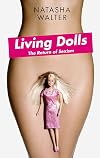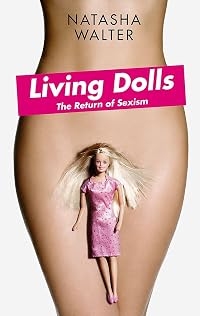
Living Dolls: The Return of Sexism
by Natasha Walter
On This Page
Description
I once believed that we only had to put in place the conditions for equality for the remnants of old-fashioned sexism in our culture to wither away. I am ready to admit that I was wrong.' Empowerment, liberation, choice. Once the watchwords of feminism, these terms have now been co-opted by a society that sells women an airbrushed, highly sexualised and increasingly narrow vision of femininity. Drawing on a wealth of research and personal interviews, Living Dolls is a straight-talking, show more passionate and important book that makes us look afresh at women and girls, at sexism and femininity - today. show lessTags
Recommendations




























Member Reviews
Pink Princesses and Pole Dancers
This book is a disturbing account of the ways in which girls and young women are being encouraged to see themselves. It also examines the way that men and boys are conditioned to view women. It includes topics such as pole dancing, prostitution, glamour modelling and lads’ mags, children’s toys and theories on differences between female and male children from a very young age. At times I found it very uncomfortable and depressing reading, but it is well worth reading for the important arguments made.
The book is divided into two halves: The New Sexism and The New Determinism
The New Sexism
Walter visits a Southend club for a Babes on the Bed night in which women compete for a modelling contract with show more Nuts, with a young woman who has broken into this career herselfmaking it clear they are expected to be willing to take their clothes off and be photographed in explicitly sexual poses. Interestingly, it is made very clear to her that some of those involved in putting the show on really would like her to leave – they are not comfortable with critical observers. Walter interviews a lot of young women involved in various parts of the “glamour” and sex industry, including stripping, modelling, pole dancing and outright prostitution. It was interesting to see the contrast between what some of those involved do and the doubts they express in interviews about their work. I was impressed by how much her interviewees were willing to say.
Walter also looks at the contrast between the popularity of a wave of recent books and films on prostitution presenting it as a respectable (and well paid) career choice, notably Belle De Jour’s writings, and some of the harsher realities such as the women trafficked and exploited from other countries, and the murder of 5 women working as prostitutes in Ipswich.
There is much to be shocked by and to think about in this part of the book. As the mother of two very young boys, I was particularly appalled by the chapter on pornography, and the account of the effect of internet porn and much wider access to it, chosen or not, including the culture among young teenagers of sending pornography to each other on mobile phones. Ugh!
The New Determinism
Walter starts the book with an account of a visit to a huge toyshop with separate floors for boys and girls, and finding herself in a sea of wall to wall pink, dominated by dolls, princess costumes and all sorts of features designed to encourage girls to model themselves on dolls. This is where the title of the book comes from. After linking the images of dolls to the images of women in various parts of the sex industry in the first half of the book, the second half is focused on the debates about nature or nurture, especially in relation to bringing up children. As a mum, I thought a lot about my own little boys when reading this, but you don’t have to be a parent or want to be to find this interesting – we were all kids once, and there is plenty here that I would argue everyone needs to think about.
This section starts with journalistic observation and anecdote and then moves on to chapters of more theoretical, analytical discussion. I was very shocked at some of the stories of casual assumptions made by children’s parents, educators and others – for example, a scene at a party where a girl in her princess dress and tiara hits a boy for not playing Pass the Parcel properly, and his running away is described as him not being very good at party games – the little girl’s aggressive, competitive attitude is totally ignored, as it doesn’t fit the parents’ theories about their children.
The theoretical sections are packed with bibliographic references – to parenting and self-help books, sociological studies and media reports - and make much more dense reading, but they are worth the effort. Again, I found plenty to be outraged by, as male and female writers and journalists from across the political spectrum conduct some highly suspect research purporting to show that differences between boys and girls are natural, and not the product of research. Depressingly, it seems that 1970s and 1980s attempts to try bringing up children in less gender stereotyped ways have been forgotten, and that most people with a view believe in genetic difference.
I was particularly interested in the interview with Marianne Grabrucker, a German lawyer who tried to bring up her daughter in a less sexist way and wrote a book about it, There’s a Good Girl (which I reviewed for my student union newspaper when it was published in the UK in 1988!). Her daughter appreciates her efforts, but a newspaper article had claimed that Grabrucker had failed to prove her theories because there are differences – Grabrucker in fact believes that her choices for her daughter were countered by other family, childcare, school, church etc.
Importantly, Walter does not confine herself to describing the various studies and theories put forward arguing in support of innate differences between girls and boys and the need to treat them differently. She is very critical of these biologically determinist theories. She also challenges the idea that these are fresh new thinking, going back in time to look at the historical theories. She even finds that in the 1920s and 1930s, different colours were used for boys and girls, but they were pink for boys and blue for girls! She points out that stereotypes themselves often affect how people behave, that girls and boys may well learn that certain behaviour is expected of them in order to fit in and be accepted. Women still earn less than men and have less status, and these new determinist theories are not just abstract, they are often the basis for arguments put forward that this is just the way things are.
Finally, Walter tries to introduce a more upbeat note into the book at the end. This is not as memorable as all the shocking stories of women in the sex industry, and the sexualisation of girls and young women from a very young age, but she describes some of the campaigns that have been set up online and offline to challenge sexism and the oppression of women. There is a Give Your Support section at the end with postal addresses, phone numbers and websites where readers can go to join in the campaigns. I plan to find out more about Pink Stinks and Women for Refugee Women (the latter organisation is not really related to the contents of this book, but it campaigns on issues close to my heart and I would like to see if I can do something more active.
I think this is an important and interesting book which more people, women and men, parents, grandparents and people who have no intention of having children should all read. Then, we should think about how we challenge stereotypes and expectations in order to create a more equal society.
I was sent a copy of this book free for review from the publisher under their "First Look" programme. show less
This book is a disturbing account of the ways in which girls and young women are being encouraged to see themselves. It also examines the way that men and boys are conditioned to view women. It includes topics such as pole dancing, prostitution, glamour modelling and lads’ mags, children’s toys and theories on differences between female and male children from a very young age. At times I found it very uncomfortable and depressing reading, but it is well worth reading for the important arguments made.
The book is divided into two halves: The New Sexism and The New Determinism
The New Sexism
Walter visits a Southend club for a Babes on the Bed night in which women compete for a modelling contract with show more Nuts, with a young woman who has broken into this career herselfmaking it clear they are expected to be willing to take their clothes off and be photographed in explicitly sexual poses. Interestingly, it is made very clear to her that some of those involved in putting the show on really would like her to leave – they are not comfortable with critical observers. Walter interviews a lot of young women involved in various parts of the “glamour” and sex industry, including stripping, modelling, pole dancing and outright prostitution. It was interesting to see the contrast between what some of those involved do and the doubts they express in interviews about their work. I was impressed by how much her interviewees were willing to say.
Walter also looks at the contrast between the popularity of a wave of recent books and films on prostitution presenting it as a respectable (and well paid) career choice, notably Belle De Jour’s writings, and some of the harsher realities such as the women trafficked and exploited from other countries, and the murder of 5 women working as prostitutes in Ipswich.
There is much to be shocked by and to think about in this part of the book. As the mother of two very young boys, I was particularly appalled by the chapter on pornography, and the account of the effect of internet porn and much wider access to it, chosen or not, including the culture among young teenagers of sending pornography to each other on mobile phones. Ugh!
The New Determinism
Walter starts the book with an account of a visit to a huge toyshop with separate floors for boys and girls, and finding herself in a sea of wall to wall pink, dominated by dolls, princess costumes and all sorts of features designed to encourage girls to model themselves on dolls. This is where the title of the book comes from. After linking the images of dolls to the images of women in various parts of the sex industry in the first half of the book, the second half is focused on the debates about nature or nurture, especially in relation to bringing up children. As a mum, I thought a lot about my own little boys when reading this, but you don’t have to be a parent or want to be to find this interesting – we were all kids once, and there is plenty here that I would argue everyone needs to think about.
This section starts with journalistic observation and anecdote and then moves on to chapters of more theoretical, analytical discussion. I was very shocked at some of the stories of casual assumptions made by children’s parents, educators and others – for example, a scene at a party where a girl in her princess dress and tiara hits a boy for not playing Pass the Parcel properly, and his running away is described as him not being very good at party games – the little girl’s aggressive, competitive attitude is totally ignored, as it doesn’t fit the parents’ theories about their children.
The theoretical sections are packed with bibliographic references – to parenting and self-help books, sociological studies and media reports - and make much more dense reading, but they are worth the effort. Again, I found plenty to be outraged by, as male and female writers and journalists from across the political spectrum conduct some highly suspect research purporting to show that differences between boys and girls are natural, and not the product of research. Depressingly, it seems that 1970s and 1980s attempts to try bringing up children in less gender stereotyped ways have been forgotten, and that most people with a view believe in genetic difference.
I was particularly interested in the interview with Marianne Grabrucker, a German lawyer who tried to bring up her daughter in a less sexist way and wrote a book about it, There’s a Good Girl (which I reviewed for my student union newspaper when it was published in the UK in 1988!). Her daughter appreciates her efforts, but a newspaper article had claimed that Grabrucker had failed to prove her theories because there are differences – Grabrucker in fact believes that her choices for her daughter were countered by other family, childcare, school, church etc.
Importantly, Walter does not confine herself to describing the various studies and theories put forward arguing in support of innate differences between girls and boys and the need to treat them differently. She is very critical of these biologically determinist theories. She also challenges the idea that these are fresh new thinking, going back in time to look at the historical theories. She even finds that in the 1920s and 1930s, different colours were used for boys and girls, but they were pink for boys and blue for girls! She points out that stereotypes themselves often affect how people behave, that girls and boys may well learn that certain behaviour is expected of them in order to fit in and be accepted. Women still earn less than men and have less status, and these new determinist theories are not just abstract, they are often the basis for arguments put forward that this is just the way things are.
Finally, Walter tries to introduce a more upbeat note into the book at the end. This is not as memorable as all the shocking stories of women in the sex industry, and the sexualisation of girls and young women from a very young age, but she describes some of the campaigns that have been set up online and offline to challenge sexism and the oppression of women. There is a Give Your Support section at the end with postal addresses, phone numbers and websites where readers can go to join in the campaigns. I plan to find out more about Pink Stinks and Women for Refugee Women (the latter organisation is not really related to the contents of this book, but it campaigns on issues close to my heart and I would like to see if I can do something more active.
I think this is an important and interesting book which more people, women and men, parents, grandparents and people who have no intention of having children should all read. Then, we should think about how we challenge stereotypes and expectations in order to create a more equal society.
I was sent a copy of this book free for review from the publisher under their "First Look" programme. show less
'Living Dolls' is clearly written, well-argued, and very depressing. Its thesis could perhaps be summed up as 'capitalism is ruining feminism'. (Interestingly, Walter herself does not specifically criticise capitalism as a system, or even the current UK manifestation thereof.) Traditional gender roles, those feminism had hoped to rid women of, are now being sold back to us with advertising slogans of liberation and empowerment. Turning oneself into a sex object for male pleasure, for instance, is described in terms of power and success, largely as a ploy to sell products. Likewise, gender differences in children are played up as genetic inevitability in order to sell increasingly fancy toys (and newspapers). Because this is always show more accompanied by the mantra of 'choice', in a market context that is, the problems it causes have often been brushed aside as inconsequential. However when women continue to earn less, experience discrimination, and suffer disproportionately from rape and violence, such tendencies merit consideration. Choice becomes meaningless within a constrained context of stereotyping, pervasive marketing, and peer pressure, all telling women they must behave in a certain way.
I can't help thinking that the current reluctance to consider gender differences as socially constructed is bound up with the rise of economics in the social sciences. I know I bring this up a lot, but the rhetoric of choice, assumed to be neutral and freely made with coercion, sounds exactly like neo-liberal economic ideology. Moreover, the timing noted by Walter fits; the rise of free markets began at the end of the 1970s and has continued since. She notes that this is the point when willingness to explain gender differences in terms of social construction declined, and biological determinism began its rise.
This creeping and dangerous influence of biological inevitability arguments is especially well explored in this book. Walter describes how the media systemically reports only scientific studies that reinforce traditional gender stereotypes, overlooking the complex, contradictory, and evolving nature of results in this area. The tone of the book is grounded in practise and appears journalistic rather than theoretical. This definitely makes it highly accessible, although I'm a social science nerd so crave a bit more theory.
The area that I would critique slightly is the discussion of sexual behaviour. Walter suggests that it is damaging for women to consistently divorce sex from emotion, although to her credit she is careful to avoid using slut-shaming language. What I felt could have improved this part was a wider critique of compulsory sexuality. Girls and women should feel that they can have as much sex, with or without emotional investment, as they wish to. Crucially, there should not be a stigma attached to not wanting sex, or wanting very little. Current culture keenly emphasises that young women as basically sex objects and that everyone ought to be having lots of sex. Like all the other issues explored in the book, this is bound up with consumerism, advertising, and the manufacture of anxieties as a means of selling things. Another area not really covered in the book is the artificial social construction of the gender binary itself; this is inferred towards the end but not explicitly stated. Of course, this isn't the main theme of the book and one cannot include everything. (I'm going to read Butler's 'Gender Trouble' soon, that'll cover it.)
Overall, I found this book to be a well-articulated indictment of how traditional gender roles have come back to haunt feminists. It made me sad for little girls growing up in a sea of pink toys, assumed to be more interested in shopping than science and maths. Biological determinism is extremely dangerous, I just hope its appropriation by multinational corporations can be overcome by the self-evident diversity of actual human beings, of whatever gender. show less
I can't help thinking that the current reluctance to consider gender differences as socially constructed is bound up with the rise of economics in the social sciences. I know I bring this up a lot, but the rhetoric of choice, assumed to be neutral and freely made with coercion, sounds exactly like neo-liberal economic ideology. Moreover, the timing noted by Walter fits; the rise of free markets began at the end of the 1970s and has continued since. She notes that this is the point when willingness to explain gender differences in terms of social construction declined, and biological determinism began its rise.
This creeping and dangerous influence of biological inevitability arguments is especially well explored in this book. Walter describes how the media systemically reports only scientific studies that reinforce traditional gender stereotypes, overlooking the complex, contradictory, and evolving nature of results in this area. The tone of the book is grounded in practise and appears journalistic rather than theoretical. This definitely makes it highly accessible, although I'm a social science nerd so crave a bit more theory.
The area that I would critique slightly is the discussion of sexual behaviour. Walter suggests that it is damaging for women to consistently divorce sex from emotion, although to her credit she is careful to avoid using slut-shaming language. What I felt could have improved this part was a wider critique of compulsory sexuality. Girls and women should feel that they can have as much sex, with or without emotional investment, as they wish to. Crucially, there should not be a stigma attached to not wanting sex, or wanting very little. Current culture keenly emphasises that young women as basically sex objects and that everyone ought to be having lots of sex. Like all the other issues explored in the book, this is bound up with consumerism, advertising, and the manufacture of anxieties as a means of selling things. Another area not really covered in the book is the artificial social construction of the gender binary itself; this is inferred towards the end but not explicitly stated. Of course, this isn't the main theme of the book and one cannot include everything. (I'm going to read Butler's 'Gender Trouble' soon, that'll cover it.)
Overall, I found this book to be a well-articulated indictment of how traditional gender roles have come back to haunt feminists. It made me sad for little girls growing up in a sea of pink toys, assumed to be more interested in shopping than science and maths. Biological determinism is extremely dangerous, I just hope its appropriation by multinational corporations can be overcome by the self-evident diversity of actual human beings, of whatever gender. show less
Reading Living Dolls I felt both encouraged and depressed: encouraged by discovering I wasn’t the only person worried about the issues Walter raises and depressed that the situation has got to the stage it has.
I was a student in the 80s when most intelligent women were feminists and many intelligent men considered themselves feminist too. There was still plenty to “fight” for but we were confident things were moving in the right direction. However I noticed a point in the nineties when something significant happened. Beauty contests had become passé and cars were no longer sold with models draped over them but then exactly that kind of behaviour re-emerged, supposedly at first, in an "ironic" way. Chris Evans displayed scantily show more dressed models on his show “for a laugh”. Men who would be embarrassed to buy the soft porn magazines that their dad had read, started reading the new glossy men’s magazines and found the content pretty similar. Soon afterwards the internet became part of everyday life which in turn enabled pornography to become part of everyday life much more effortlessly than in the past.
This developed into the society that we are living in now and which Walter describes in detail. Pornography and the sex industry have become mainstream. The airbrushed, glossy porn model with no body hair forms the image of the woman which young men expect to share their sexual experiences with. From an early age girls feel pressure to conform to that image. According to Walter, very young girls begin as pink princesses and soon gravitate to mini-skirts and pouts.
New technologies have contributed to the mainstreaming of pornography so that it is now common for young girls to pose as pole-dancers on FaceBook. Photographs can easily be taken on mobile phones, distributed around friends, shown on the internet.
Walter also suggests, using examples from interviews with young women, that young people’s experiences of sex are becoming increasingly disassociated from feelings and emotions. I wasn't convinced that this is as widespread amongst women as Walter seemed to be arguing but it does seem a psychologically convincing defence mechanism against being damaged by the culture Walter presents.
The second part of the book looks at the current acceptance of biological determinism. The old nature/nurture debate seems to have been pretty much abandoned by the media in favour of a consensus that biology is all. I found Walter’s accounts of different research into gender differences fascinating and was left with the impression that we see what we expect to see and that we reinforce gender differences from birth without realising it.
Living Dolls does not read as an academic, sociological text though class differences are acknowledged and Walter does point out that:
“the mainstreaming of the sex industry has coincided with a point in history when there is much less social mobility than in previous generations”
I found Living Dolls a well-presented and accessible read. Walter tells it as she sees it and what she sees is worrying. It is not a simplistic book however. Walter acknowledges that many individual women are in favour of our sexualised culture but argues that whilst it may work for some individuals it is not good for women as a whole.
After finishing the book, I felt motivated to read more about what feminist groups are doing these days and was encouraged to discover there are feminist activists out there protesting. Just yesterday I saw a newspaper story about a group called Feminista protesting against the re-opening of the PlayBoy club in London. I also hope educators are working with young people who are growing up today on the dangers inherent in modern technologies and the importance of respecting rather than objectifying women. show less
I was a student in the 80s when most intelligent women were feminists and many intelligent men considered themselves feminist too. There was still plenty to “fight” for but we were confident things were moving in the right direction. However I noticed a point in the nineties when something significant happened. Beauty contests had become passé and cars were no longer sold with models draped over them but then exactly that kind of behaviour re-emerged, supposedly at first, in an "ironic" way. Chris Evans displayed scantily show more dressed models on his show “for a laugh”. Men who would be embarrassed to buy the soft porn magazines that their dad had read, started reading the new glossy men’s magazines and found the content pretty similar. Soon afterwards the internet became part of everyday life which in turn enabled pornography to become part of everyday life much more effortlessly than in the past.
This developed into the society that we are living in now and which Walter describes in detail. Pornography and the sex industry have become mainstream. The airbrushed, glossy porn model with no body hair forms the image of the woman which young men expect to share their sexual experiences with. From an early age girls feel pressure to conform to that image. According to Walter, very young girls begin as pink princesses and soon gravitate to mini-skirts and pouts.
New technologies have contributed to the mainstreaming of pornography so that it is now common for young girls to pose as pole-dancers on FaceBook. Photographs can easily be taken on mobile phones, distributed around friends, shown on the internet.
Walter also suggests, using examples from interviews with young women, that young people’s experiences of sex are becoming increasingly disassociated from feelings and emotions. I wasn't convinced that this is as widespread amongst women as Walter seemed to be arguing but it does seem a psychologically convincing defence mechanism against being damaged by the culture Walter presents.
The second part of the book looks at the current acceptance of biological determinism. The old nature/nurture debate seems to have been pretty much abandoned by the media in favour of a consensus that biology is all. I found Walter’s accounts of different research into gender differences fascinating and was left with the impression that we see what we expect to see and that we reinforce gender differences from birth without realising it.
Living Dolls does not read as an academic, sociological text though class differences are acknowledged and Walter does point out that:
“the mainstreaming of the sex industry has coincided with a point in history when there is much less social mobility than in previous generations”
I found Living Dolls a well-presented and accessible read. Walter tells it as she sees it and what she sees is worrying. It is not a simplistic book however. Walter acknowledges that many individual women are in favour of our sexualised culture but argues that whilst it may work for some individuals it is not good for women as a whole.
After finishing the book, I felt motivated to read more about what feminist groups are doing these days and was encouraged to discover there are feminist activists out there protesting. Just yesterday I saw a newspaper story about a group called Feminista protesting against the re-opening of the PlayBoy club in London. I also hope educators are working with young people who are growing up today on the dangers inherent in modern technologies and the importance of respecting rather than objectifying women. show less
As a member of what is likely to be considered "Old Guard" feminism, I have been bothered by what I have see as a kind of cultural complacency when it comes to women's issues. There's a pervasion (and wrong!) assumption of equality of the sexes which hangs over our culture. Sometimes it feels like I'm in a science fiction movie where everyone is lulled into complacency and I'm the only one who can see the danger. We really would like to think that the sexes have achieved equality - oh, wouldn't it be grand! - but it's just not true. Great inroads have been made of course, but equally is far from a reality.
So, besides the fact that I snorted when I heard the subtitle of this book - "the return of sexism" - when did it ever go away? - I show more was also curious about what a younger feminist had to say. To her credit, Walters does admit that her title is a bit of a misnomer because sexism really hadn't gone away but it is now enjoying a new wave of its own.
In her book, Walter discusses:
--the mainstreaming of the sex industry and how this industry has co-opted the feminist rhetoric of "empowerment" and "liberation". A lap-dancer will tell you she feels "empowered".
--the rise of internet p0rnography; it's cultural pervasiveness and it's affect on young women. It is also noted that current p0rn is much more brutal towards women.
---a hyper-sexual culture which values in women only sexual attractiveness
---the sexualization of very young girls and also the pervasive princessness
---the assumption of equality and the myths of biological determinism (as manipulated by popular authors and a media more interested in entertainment than facts and objective journalism.
---the amazingly restrictive stereotypes...
I'm sure I've not done a very good job summarizing this. Here's an example:
To be sure, the current hypersexual culture does not impact equally on all women. There are young women following their dreams in anything from music to literature, campaigning to politics, and throughout their private lives, who have truly benefited from the work done by feminists before them. Yet so many women are hampered by this claustrophobic culture, and feel trapped and frustrated by what is going on around them. Through the glamour-modelling culture*, through the mainstreaming of pornography and the new acceptability of the sex industry, through the modishness of lap and pole-dancing, through the sexualisation of young girls, many young women are being surrounded by a culture in which they are all body and only body. In the hypersexual culture the woman who has won is the woman who foregrounds her physical perfection and silences any discomfort she may feel. This objectified woman, so often celebrated as the wife or girlfriend of the heroic male rather than the heroine of her own life, is the living doll who has replaced the liberated woman who should be making her way into the twenty-first century.
and that's just page 125 of 238. *posing nude.
She notes that we often think that we of the middle class can protect our daughters from these things, but in actuality we are all affected by these things in some way. I would have loved to read this book chapter by chapter and discussed it with a group; there's a lot in it. I don't agree with everything she says but, for the most part, she has presented her argument well and her cautionary message is a worthy read for anyone who has young daughters or who cares about the status of women in our society. show less
So, besides the fact that I snorted when I heard the subtitle of this book - "the return of sexism" - when did it ever go away? - I show more was also curious about what a younger feminist had to say. To her credit, Walters does admit that her title is a bit of a misnomer because sexism really hadn't gone away but it is now enjoying a new wave of its own.
In her book, Walter discusses:
--the mainstreaming of the sex industry and how this industry has co-opted the feminist rhetoric of "empowerment" and "liberation". A lap-dancer will tell you she feels "empowered".
--the rise of internet p0rnography; it's cultural pervasiveness and it's affect on young women. It is also noted that current p0rn is much more brutal towards women.
---a hyper-sexual culture which values in women only sexual attractiveness
---the sexualization of very young girls and also the pervasive princessness
---the assumption of equality and the myths of biological determinism (as manipulated by popular authors and a media more interested in entertainment than facts and objective journalism.
---the amazingly restrictive stereotypes...
I'm sure I've not done a very good job summarizing this. Here's an example:
To be sure, the current hypersexual culture does not impact equally on all women. There are young women following their dreams in anything from music to literature, campaigning to politics, and throughout their private lives, who have truly benefited from the work done by feminists before them. Yet so many women are hampered by this claustrophobic culture, and feel trapped and frustrated by what is going on around them. Through the glamour-modelling culture*, through the mainstreaming of pornography and the new acceptability of the sex industry, through the modishness of lap and pole-dancing, through the sexualisation of young girls, many young women are being surrounded by a culture in which they are all body and only body. In the hypersexual culture the woman who has won is the woman who foregrounds her physical perfection and silences any discomfort she may feel. This objectified woman, so often celebrated as the wife or girlfriend of the heroic male rather than the heroine of her own life, is the living doll who has replaced the liberated woman who should be making her way into the twenty-first century.
and that's just page 125 of 238. *posing nude.
She notes that we often think that we of the middle class can protect our daughters from these things, but in actuality we are all affected by these things in some way. I would have loved to read this book chapter by chapter and discussed it with a group; there's a lot in it. I don't agree with everything she says but, for the most part, she has presented her argument well and her cautionary message is a worthy read for anyone who has young daughters or who cares about the status of women in our society. show less
Over the last number of years I can't help noticing how my clothing choices have become less and less varied. That the pink in toy shops and childrens clothing stores have become more and more invasive. How strangely focused the marketing is on women wanting pink and nothing else (and sometimes substandard pink too, with a side order of guilt because of the linked breast cancer marketing stuff).
When I was growing up I was aware of some barriers to being equal, I was a bit of a tom boy and tended to be happier in a pair of trousers (how I griped about school uniform skirt and cheered when some places allowed trousers for girls) than a skirt - which is largely how I have remained.
However, this book has reminded me that there is a creeping show more sexism on it's way back. An objectification of women that's actually quite disturbing and makes me quite uncomfortable, but I'm often dismissed for voicing it. By this repeated dismissal I think is making people question their discomfort. Women, after all, have been largely eductated to "not make a fuss", so the constant reinforcement of belittling can be hard to overcome.
And many of us are tired of fighting, this reminds me that we need to keep fighting for equality and that I'm not just making a fuss for no reason. After all "If you tolerate this, then your children will be next" show less
When I was growing up I was aware of some barriers to being equal, I was a bit of a tom boy and tended to be happier in a pair of trousers (how I griped about school uniform skirt and cheered when some places allowed trousers for girls) than a skirt - which is largely how I have remained.
However, this book has reminded me that there is a creeping show more sexism on it's way back. An objectification of women that's actually quite disturbing and makes me quite uncomfortable, but I'm often dismissed for voicing it. By this repeated dismissal I think is making people question their discomfort. Women, after all, have been largely eductated to "not make a fuss", so the constant reinforcement of belittling can be hard to overcome.
And many of us are tired of fighting, this reminds me that we need to keep fighting for equality and that I'm not just making a fuss for no reason. After all "If you tolerate this, then your children will be next" show less
Being already familiar with the claims of feminism in the current age, I was not nearly as enamored of this book as I was hoping to be. I thought it might blow my mind, but there was not much here that I hadn't already been exposed to. The book ranges from the sex industry to the childhood toy industry to our myths and stereotypes about masculinity and femininity being natural.
The most interesting section to me were the sociology studies. For instance, a 1999 study that found that when men and women were given math tests and told there was a gender gap on the test or told nothing at all, the gender gap was replicated in the results. When given math tests and told there was no gender gap, the gender gap on the test disappeared. This show more indicates that women perform badly in math because they are expected to perform badly -- even by themselves -- not because there is a true gap in skills. Another study looked at facial expressions on groupmates when trained male and female leaders behaved in exactly the same way, and found that women leaders received a greater number of "disgust" faces -- an unpleasant experience that helps to explain, perhaps, why women don't go more frequently into public leadership positions.
This is a book from the UK (which I wish I'd known earlier, because that makes it even less directly relevant to my situation), and some of the assumed knowledge was also interesting to me. For instance, apparently British women get up to a year of maternity leave, whereas men get a maximum of two weeks. What crazy systems we build ourselves....
I'm assigning a low-ish star rating for its impact on me, not for the quality of information or the presentation of the book itself. This is a book well recommended for people who do believe that sexism is mostly behind us. show less
The most interesting section to me were the sociology studies. For instance, a 1999 study that found that when men and women were given math tests and told there was a gender gap on the test or told nothing at all, the gender gap was replicated in the results. When given math tests and told there was no gender gap, the gender gap on the test disappeared. This show more indicates that women perform badly in math because they are expected to perform badly -- even by themselves -- not because there is a true gap in skills. Another study looked at facial expressions on groupmates when trained male and female leaders behaved in exactly the same way, and found that women leaders received a greater number of "disgust" faces -- an unpleasant experience that helps to explain, perhaps, why women don't go more frequently into public leadership positions.
This is a book from the UK (which I wish I'd known earlier, because that makes it even less directly relevant to my situation), and some of the assumed knowledge was also interesting to me. For instance, apparently British women get up to a year of maternity leave, whereas men get a maximum of two weeks. What crazy systems we build ourselves....
I'm assigning a low-ish star rating for its impact on me, not for the quality of information or the presentation of the book itself. This is a book well recommended for people who do believe that sexism is mostly behind us. show less
I felt this was a bit dense, covering much information that I was already familiar with, but perhaps to someone not aware of the women's plight in society, or looking for an introduction to feminism, this would be a suitable starting point. There were several points made about women's liberation and their value in society at large, based on sexual appeal, and although this has meant to be freeing, has actually just constrained women in a new social role. "This objectified woman, so often celebrated as the wife or girlfriend of the heroic male rather than the heroine of her own life, is the living doll who has replaced the liberated woman who should be making her way into the twenty-first century." Exploring questions of what choice show more truly means within the context of women's daily lives, and expelling many of the myths of faulty experiments citing genetic difference, rather than environmental and societal influences in the constraints that are still placed upon women at large. show less
Members
- Recently Added By
Published Reviews
ThingScore 58
In her 1998 book, The New Feminism, Natasha Walter argued that the feminist adage the "personal is political" needed to ditch the "personal" and focus on broader political goals. Feminists shouldn't worry so much about sexual objectification, Walter said; young women didn't want to be told what to wear and who to sleep with. Walter now says that she was "entirely wrong".
added by wyvernfriend — edited by Nevov
Is it time for feminism to take itself more seriously again? A growing awareness of the continued gender stereotyping of girls and young women has convinced writer Natasha Walter that it is, she tells ANNA CAREY
added by wyvernfriend
Who took the fun out of feminism? In the frail world of Natasha Walter's Living Dolls, there's little joy in being female. Here is sexism for slow learners, chicken-soup inequality and a rather predictable commentary for a rather anxious type of chattering Londoner.
added by wyvernfriend
Lists

Books That Changed Me
157 works; 47 members

Recommend the 20 best books you've read in the last five years
2,168 works; 606 members

Non-Fiction Worth Reading
1,015 works; 254 members
Author Information

6+ Works 449 Members
Some Editions
Common Knowledge
- Original title
- Living dolls
- Original publication date
- 2010
- Dedication
- For Harriet Gugenheim, with thanks
- First words
- I didn't expect we would end up here, I thought to myself a few years ago during a visit to a toy shop in London.
- Last words
- (Click to show. Warning: May contain spoilers.)This dream tells us that rather than modelling themselves on the plastic charm of a pink and smiling doll, women can aim to realise their full and human potential.
Classifications
- Genres
- Nonfiction, Sexuality and Gender Studies, Sociology, General Nonfiction
- DDC/MDS
- 305.42 — Society, government, & culture Social sciences, sociology & anthropology Social group - Age, Gender, Ethnicity Women Social role and status of women
- LCC
- HQ1075 .W36 — Social sciences The family. Marriage, Women and Sexuality The Family. Marriage. Women Sex role
- BISAC
Statistics
- Members
- 332
- Popularity
- 95,441
- Reviews
- 9
- Rating
- (3.87)
- Languages
- English, German, Polish, Spanish
- Media
- Paper, Audiobook, Ebook
- ISBNs
- 9
- ASINs
- 3