On This Page
Description
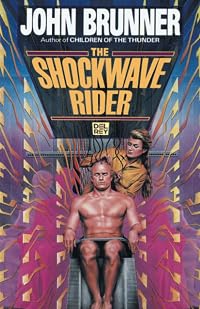
In a world drowning in data, a fugitive tries to outrun the forces that want to reprogram him, in this smart, edgy novel by a Hugo Award-winning author. Constantly shifting his identity among a population choking on information, innovation, and novelty, Nickie Haflinger is a most dangerous outlaw, yet he doesn't even appear to exist. As global society falls apart in all directions, with corporate power run amok and personal freedom surrendered to computers and bureaucrats, Haflinger is show more caught and about to be re-programmed. Now he has to try to escape once again, defy the government--and turn the tide of organizational destruction, in this visionary science fiction novel by the author of The Sheep Look Up and Stand on Zanzibar. "Brunner writes about the future as if he and the reader were already living in it." --The New York Times Book Review "When John Brunner first told me of his intention to write the book, I was fascinated--but I wondered whether he, or anyone, could bring it off. Bring it off he has, with cool brilliance. A hero with transient personalities, animals with souls, think tanks and survival communities fuse to form a future so plausibly alive it as twitched at me ever since." --Alvin Toffler, author of Future Shock "One of the most important science fiction authors. Brunner held a mirror up to reflect our foibles because he wanted to save us from ourselves." --SF Site show lessTags
Recommendations




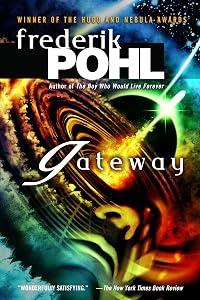


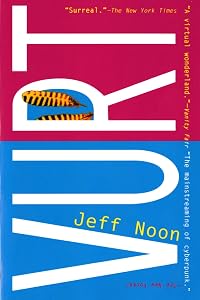

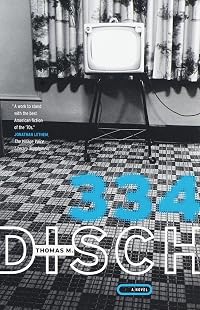


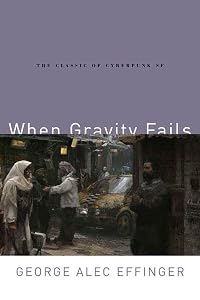










Member Recommendations
jsburbidge Similar concerns with the establishment if muctodemocracy using extended send publicly available networking.
01
freetrader A lot of the novel feels like 1984. Less grim of course. Also 1984 is mentioned at some point in the discussion.
02
Member Reviews
****.5
Inspired by Alvin Toffler's prescient Future Shock (hence the title), this seminal book is exactly the proto-cyberpunk you'd expect from a book written 50 years ago. The plot isn't fantastic and the characters not great, and of course a lot of the tech predictions didn't work out as described, but none of that matters. Because what he does get right is the rise of the Internet, social media, malware, Wikileaks, hackers, the relationship of government and media, etc. It's like Cory Doctorow and William Gibson had a baby, who went back in time to 1974 and wrote the book they would have back then.
Brunner really needs to be more well known.
Inspired by Alvin Toffler's prescient Future Shock (hence the title), this seminal book is exactly the proto-cyberpunk you'd expect from a book written 50 years ago. The plot isn't fantastic and the characters not great, and of course a lot of the tech predictions didn't work out as described, but none of that matters. Because what he does get right is the rise of the Internet, social media, malware, Wikileaks, hackers, the relationship of government and media, etc. It's like Cory Doctorow and William Gibson had a baby, who went back in time to 1974 and wrote the book they would have back then.
Brunner really needs to be more well known.
Well this was interesting but in beginning very tiresome experience. First two thirds of the book feel like watching multiple parallel movie reels projected on the same screen and overlapping in a way that can make you agitated very soon because basic plot is hidden below these overlays and it takes time for it to come up.
If you ever watched Paul Verhoeven's SF movies then these multiple story paths play the role of Vehoeven's commercial "breaks" but in a much more aggressive manner.
So first part is crazy, its like watching a movie with 100 actors and having about 1-1.5 minute dedicated to each of them. No way you can remember all of this stuff or what is actually going on.
Story is very contemporary. Through our main protagonist, Nick, show more we are given a very dystopian picture of the future. Picture that unfortunately resonates with out present. It is world where data networks (what today we call Internet) rule everything, everything is run by them (whether that should be the case or not - again same as in our present) and people are considered by powers to be [that control these very networks] as nothing more than objects providing data to mainframe systems (now popularly called clouds, but you get the gist). Information is everything and humans are treated as simple data carriers - external disks or sensors.
Nick, being trained by elite corporation, uses all he knows to evade the now de-facto full control of life executed through the data network. Destined to become one of the soulless, almost robotic operatives that form think tanks for almost every political or social problem or issue, Nick manages to identify this process of eliminating empathy or anything that does not comply with the expected behavior. He proves to be quite an actor and capable to evade the tests and finally manages to escape with the goal of living off the grid. But as he tries to evade and as he lives through multiple identities spanning few years he finally gets caught by the corporation when he finally learns what love is and lowers his guard. And corporation is ruthless, they need to see what is it that turned Nick, their prize operative, against them. And they need to know how to stop it. So they use every means at their disposal.
I wont go into the details here because it would ruin the story but again I have to say story is frighteningly reminiscent of our present.
Constant bombardment of people with useless information - everything that can be useful is made difficult to find while TV shows, commercials, reality shows akin to gladiatorial fights and opinion polls [used more to push people towards certain options then to give actual options, sort of a sinister Schroedinger's cat lab] are everywhere. It is world where nothing is lacking but still life has no meaning, people are estranged from themselves, there is no family, and only constant is continuous movement, migration from one coast to other, of people for various reasons (change is always good being the most popular one) so they cannot grow their roots. Reason is simple, constantly on the move, constantly bombarded by rubbish people get more pliable and smaller problem for the government. And if in this constant movement every place is same as the other so people feel that actually nothing is changed so they remain compliant- then all the better because people will accept anything just to avoid rustling feathers of those who control them especially when they have a hint of what awaits them if they rebel.
As I said terrible, terrible view of the future that became in great part our present.
Author also shows one other part of our present that came up in last two years - how easy it is for vengeful government to foment negative opinions using various so called spin-doctors and rob people from the very means of life (asset freezing) or even their life (through mobbing and attacks via social media) in a matter of seconds. Something that would previously take court orders is now willingly done by banks and companies so they just can be spared of any pogroms by activists - as if reasoning that if people are innocent they will survive but basically leaving them in the open to die, figuratively and literally. How easy it is to erase the person .... And how easy is for the entire population to shrug their shoulders and decide to live under the mass bubble of only one source of information.
Author blames this to the links of organized crime with high levels of government and big corporations. This is only part I disagree - it is not organized crime as a third party (in terms of mafia or something like that) but those forces in government and business that always acted above the law and are now given the ultimate means of control. These are the greatest crime organizations in history of humankind.
Book has a happy ending of sorts, at least provides a dim light at the end of the tunnel. Reason is simple, actions of few can only start the change but people need to chose it and fight for it. And how many will decide to use the information provided in a way it was intended, for knowledge? Very few unfortunately, because it is easier to track celebrities and get on with the most popular political/social idea of the moment and deal with the heretics. Because understanding and attention is to be given only to those who in the end do not affect us directly - when we feel that somebody thinks differently, even by just asking questions - today, discussion is no longer an option, one must silence every difference. In day and age of so much talk about equality world has become aggressively intolerable. As author says people are no longer looked at as individuals but as some preconceived notion of human being together with all expected beliefs and thoughts. If one does not match the mold he is very soon send to recovery institutions.
I just hope there is more than one Precipice in the world. Otherwise ..... bad, bad, bad......
Very interesting book, highly recommended.
P.S.
One of the best parts of the book is the way people try to get meaning to their lives and activities - way marketing experts and other spin-doctors get treated is one of the best kicks from the book :) show less
If you ever watched Paul Verhoeven's SF movies then these multiple story paths play the role of Vehoeven's commercial "breaks" but in a much more aggressive manner.
So first part is crazy, its like watching a movie with 100 actors and having about 1-1.5 minute dedicated to each of them. No way you can remember all of this stuff or what is actually going on.
Story is very contemporary. Through our main protagonist, Nick, show more we are given a very dystopian picture of the future. Picture that unfortunately resonates with out present. It is world where data networks (what today we call Internet) rule everything, everything is run by them (whether that should be the case or not - again same as in our present) and people are considered by powers to be [that control these very networks] as nothing more than objects providing data to mainframe systems (now popularly called clouds, but you get the gist). Information is everything and humans are treated as simple data carriers - external disks or sensors.
Nick, being trained by elite corporation, uses all he knows to evade the now de-facto full control of life executed through the data network. Destined to become one of the soulless, almost robotic operatives that form think tanks for almost every political or social problem or issue, Nick manages to identify this process of eliminating empathy or anything that does not comply with the expected behavior. He proves to be quite an actor and capable to evade the tests and finally manages to escape with the goal of living off the grid. But as he tries to evade and as he lives through multiple identities spanning few years he finally gets caught by the corporation when he finally learns what love is and lowers his guard. And corporation is ruthless, they need to see what is it that turned Nick, their prize operative, against them. And they need to know how to stop it. So they use every means at their disposal.
I wont go into the details here because it would ruin the story but again I have to say story is frighteningly reminiscent of our present.
Constant bombardment of people with useless information - everything that can be useful is made difficult to find while TV shows, commercials, reality shows akin to gladiatorial fights and opinion polls [used more to push people towards certain options then to give actual options, sort of a sinister Schroedinger's cat lab] are everywhere. It is world where nothing is lacking but still life has no meaning, people are estranged from themselves, there is no family, and only constant is continuous movement, migration from one coast to other, of people for various reasons (change is always good being the most popular one) so they cannot grow their roots. Reason is simple, constantly on the move, constantly bombarded by rubbish people get more pliable and smaller problem for the government. And if in this constant movement every place is same as the other so people feel that actually nothing is changed so they remain compliant- then all the better because people will accept anything just to avoid rustling feathers of those who control them especially when they have a hint of what awaits them if they rebel.
As I said terrible, terrible view of the future that became in great part our present.
Author also shows one other part of our present that came up in last two years - how easy it is for vengeful government to foment negative opinions using various so called spin-doctors and rob people from the very means of life (asset freezing) or even their life (through mobbing and attacks via social media) in a matter of seconds. Something that would previously take court orders is now willingly done by banks and companies so they just can be spared of any pogroms by activists - as if reasoning that if people are innocent they will survive but basically leaving them in the open to die, figuratively and literally. How easy it is to erase the person .... And how easy is for the entire population to shrug their shoulders and decide to live under the mass bubble of only one source of information.
Author blames this to the links of organized crime with high levels of government and big corporations. This is only part I disagree - it is not organized crime as a third party (in terms of mafia or something like that) but those forces in government and business that always acted above the law and are now given the ultimate means of control. These are the greatest crime organizations in history of humankind.
Book has a happy ending of sorts, at least provides a dim light at the end of the tunnel. Reason is simple, actions of few can only start the change but people need to chose it and fight for it. And how many will decide to use the information provided in a way it was intended, for knowledge? Very few unfortunately, because it is easier to track celebrities and get on with the most popular political/social idea of the moment and deal with the heretics. Because understanding and attention is to be given only to those who in the end do not affect us directly - when we feel that somebody thinks differently, even by just asking questions - today, discussion is no longer an option, one must silence every difference. In day and age of so much talk about equality world has become aggressively intolerable. As author says people are no longer looked at as individuals but as some preconceived notion of human being together with all expected beliefs and thoughts. If one does not match the mold he is very soon send to recovery institutions.
I just hope there is more than one Precipice in the world. Otherwise ..... bad, bad, bad......
Very interesting book, highly recommended.
P.S.
One of the best parts of the book is the way people try to get meaning to their lives and activities - way marketing experts and other spin-doctors get treated is one of the best kicks from the book :) show less
I suspect that many readers who pick up science fiction that's more than a couple of decades old get the urge to consider whether the author got the future "right." I'm not exactly sure that John Brunner did in "The Shockwave Rider," but that doesn't mean that his book isn't interesting for other reasons. He foresaw a data-dominated future full of constant, accelerated change, gladiatorial entertainments, ruthless tribalism, rampant consumerism, class war, and hockey fandom. Some of this did, I suppose, come to pass, but not in the way that Brunner anticipated: his computer revolution seems more analog and top-down than our current Web, though bits of "The Shockwave Rider" also seem to foreshadow Edward Snowden's paranoia-inducing show more revelations. The novel also has a few problems from the literary point of view: the book's most important female protagonist struck me as too quirky to be remotely realistic, and while the novel's plot gets a good, tense hum going in the first few chapters, it gets figuratively and literally off-tack when its main characters end up in what looks like an updated version of a Neo-Luddite hippie colony. Brunner's decision to shift around between viewpoints and include some random media artifacts in his text, however, seems appropriate: his slightly fractured style conveys the feeling of living in a very fractured society well enough.
The best reason to read "The Shockwave Rider," though, is that Brunner seems to be asking the right questions here, even if he seems to have gotten a few of the future's particulars wrong. He worries about the overstimulation that comes with modern life and the speeding-up that living in a highly computer-dependent society might entail. This hectic experience seems to unmoor many of his characters from their most basic thought processes and desires: in a way, this book is both a warning and a plea for sanity. I don't think that Brunner offers too many solutions here, per se: his off-the-grid solution seems a bit too much like a liberal-arts fantasy, but he makes a good argument that too much noise, too much change, too much speed, and too much data, too much anything, really, can be dangerous to the self. I can't call "The Shockwave Rider" a classic, but there's certainly enough here to make it worth your while. show less
The best reason to read "The Shockwave Rider," though, is that Brunner seems to be asking the right questions here, even if he seems to have gotten a few of the future's particulars wrong. He worries about the overstimulation that comes with modern life and the speeding-up that living in a highly computer-dependent society might entail. This hectic experience seems to unmoor many of his characters from their most basic thought processes and desires: in a way, this book is both a warning and a plea for sanity. I don't think that Brunner offers too many solutions here, per se: his off-the-grid solution seems a bit too much like a liberal-arts fantasy, but he makes a good argument that too much noise, too much change, too much speed, and too much data, too much anything, really, can be dangerous to the self. I can't call "The Shockwave Rider" a classic, but there's certainly enough here to make it worth your while. show less
I've previously read two John Brunner novels that both had quite a profound impact on me: [b:Stand on Zanzibar|41069|Stand on Zanzibar|John Brunner|https://i.gr-assets.com/images/S/compressed.photo.goodreads.com/books/1360613921l/41069._SY75_.jpg|2184253] (1968) and [b:The Sheep Look Up|41074|The Sheep Look Up|John Brunner|https://i.gr-assets.com/images/S/compressed.photo.goodreads.com/books/1386924437l/41074._SY75_.jpg|900514] (1972). The former is an all-time favourite sci-fi novel of mine and the latter the most devastating novel of environmental breakdown that I've ever read. What I didn't realise is that Brunner was incredibly prolific and I happened to encounter these two as they were part of the SF Masterworks series. Now that show more [b:The Shockwave Rider|41070|The Shockwave Rider|John Brunner|https://i.gr-assets.com/images/S/compressed.photo.goodreads.com/books/1386921650l/41070._SY75_.jpg|868164] is as well, the library has acquired a copy. Brunner published nearly 60 novels, most of which I expect are now out of print. Based on my own reading experience and his wikipedia page, those that are still in print were also most celebrated at first publication and all deal with social issues of great concern to the US and Europe in the 1960s/70s. In [b:Stand on Zanzibar|41069|Stand on Zanzibar|John Brunner|https://i.gr-assets.com/images/S/compressed.photo.goodreads.com/books/1360613921l/41069._SY75_.jpg|2184253], the topic is overpopulation. In [b:The Sheep Look Up|41074|The Sheep Look Up|John Brunner|https://i.gr-assets.com/images/S/compressed.photo.goodreads.com/books/1386924437l/41074._SY75_.jpg|900514], environmental disaster. And in [b:The Shockwave Rider|41070|The Shockwave Rider|John Brunner|https://i.gr-assets.com/images/S/compressed.photo.goodreads.com/books/1386921650l/41070._SY75_.jpg|868164], information technology and data overload.
In my opinion, of the three [b:The Sheep Look Up|41074|The Sheep Look Up|John Brunner|https://i.gr-assets.com/images/S/compressed.photo.goodreads.com/books/1386924437l/41074._SY75_.jpg|900514] retains the greatest relevance today, while [b:Stand on Zanzibar|41069|Stand on Zanzibar|John Brunner|https://i.gr-assets.com/images/S/compressed.photo.goodreads.com/books/1360613921l/41069._SY75_.jpg|2184253] is the best-written. Both use an original and very powerful polyphonic structure, with many characters and interjections from media. I was surprised, and a little disappointed, to find that [b:The Shockwave Rider|41070|The Shockwave Rider|John Brunner|https://i.gr-assets.com/images/S/compressed.photo.goodreads.com/books/1386921650l/41070._SY75_.jpg|868164] has a more conventional structure. I understand from friends that the collage approach is not to everyone's taste, but I love it. Given that it seemed particularly appropriate to the novel's topic, I think it could have worked well if used more here. Snippets of news reports and other information are interjected periodically, but the plot sticks close to the protagonist rather than involving a large cast.
[b:The Shockwave Rider|41070|The Shockwave Rider|John Brunner|https://i.gr-assets.com/images/S/compressed.photo.goodreads.com/books/1386921650l/41070._SY75_.jpg|868164] is set in an alternate 2010s America where everyone has access to the 'datanet' via phone booths. There is ubiquitous tracking and surveillance by technology, as well as videocalling via 'veephone'. (Another addition to my collection of names from sci-fi for proto-smart phones that are no stupider than 'smart phone'.) America has socially fractured and is mired in gang violence, while professional jobs require constant relocation and travel. There is an obvious temptation to sift the worldbuilding for prescience. The most significant element of this, in my opinion, is Brunner putting his finger on this frustration of internet access:
Really important information is not accessible and instead we are drowned in trivia and misinformation. Brunner doesn't get into the risks of the latter (try Melissa Scott's [b:The Jazz|1268279|The Jazz|Melissa Scott|https://i.gr-assets.com/images/S/compressed.photo.goodreads.com/books/1312021757l/1268279._SY75_.jpg|1257182] instead), but does sort of predict people asking Reddit AITA in the form of Delphi panels. Delphi Method is actually a qualitative methodology sometimes used in academic research, albeit one I find rather dubious. Indeed, the novel's protagonist Nickie Haflinger is an escapee from a US government attempt at hothousing intelligent kids into a Delphi panel. There are a lot of conversations, some part of Halflinger's interrogation after he's recaptured by the government, about how the American population has been controlled with 'behaviourist techniques'. In 2023, the concerns about government manipulation look simultaneously like conspiracy theory and naivety. Such centralised efforts seem unnecessary in a neoconversative world where poverty or the threat of it constrains most people. Brunner's world still has the USSR as an ideological rival to the US, but the arms race has shifted from weapons to 'wisdom'; a brain race. I didn't find that side of the world-building very satisfactory as the concept has been explored better elsewhere.
The elements around information technology are much more interesting, however. Haflinger is a hacker, indeed an early cyberpunk protagonist. He writes worms (a term that Brunner apparently coined which we still use now) via telephone that let him evade surveillance and invent new identities for himself. Switching identity is depicted as a mentally and physically taxing process. While on the run from the US government, he meets a young woman and they take refuge in a utopian community that's mostly cut off from the datanet. Haflinger then decides to use his skills to try and fix America's problems, in a dramatic fashion.
In this respect, [b:The Shockwave Rider|41070|The Shockwave Rider|John Brunner|https://i.gr-assets.com/images/S/compressed.photo.goodreads.com/books/1386921650l/41070._SY75_.jpg|868164] felt much more optimistic than the other two Brunner novels I've read. Particularly [b:The Sheep Look Up|41074|The Sheep Look Up|John Brunner|https://i.gr-assets.com/images/S/compressed.photo.goodreads.com/books/1386924437l/41074._SY75_.jpg|900514], which is truly one of the most devastating books I've read in my life and has an extremely bleak ending. Haflinger and his allies seem to prefigure the techno-utopianism that accompanied the first decades of the internet. (This now seems to have atrophied into Zuckerberg defending the right to spread holocaust denial on facebook, and similarly self-serving libertarianism.) In Haflinger's world, information wants to be free and the paradoxical solution to overload is releasing more of it. While the execution of this plotline was rather ingenious, it has been copied too many times since to have the impact it once did. Another aspect of the book that hasn't aged too well is the relationship between Haflinger and Kate. Everyone gets over him hitting her in a rage remarkably quickly, which is depressing. Although I found many of Brunner's ideas interesting, [b:The Shockwave Rider|41070|The Shockwave Rider|John Brunner|https://i.gr-assets.com/images/S/compressed.photo.goodreads.com/books/1386921650l/41070._SY75_.jpg|868164] doesn't have the impact of his polyphonic masterpieces. show less
In my opinion, of the three [b:The Sheep Look Up|41074|The Sheep Look Up|John Brunner|https://i.gr-assets.com/images/S/compressed.photo.goodreads.com/books/1386924437l/41074._SY75_.jpg|900514] retains the greatest relevance today, while [b:Stand on Zanzibar|41069|Stand on Zanzibar|John Brunner|https://i.gr-assets.com/images/S/compressed.photo.goodreads.com/books/1360613921l/41069._SY75_.jpg|2184253] is the best-written. Both use an original and very powerful polyphonic structure, with many characters and interjections from media. I was surprised, and a little disappointed, to find that [b:The Shockwave Rider|41070|The Shockwave Rider|John Brunner|https://i.gr-assets.com/images/S/compressed.photo.goodreads.com/books/1386921650l/41070._SY75_.jpg|868164] has a more conventional structure. I understand from friends that the collage approach is not to everyone's taste, but I love it. Given that it seemed particularly appropriate to the novel's topic, I think it could have worked well if used more here. Snippets of news reports and other information are interjected periodically, but the plot sticks close to the protagonist rather than involving a large cast.
[b:The Shockwave Rider|41070|The Shockwave Rider|John Brunner|https://i.gr-assets.com/images/S/compressed.photo.goodreads.com/books/1386921650l/41070._SY75_.jpg|868164] is set in an alternate 2010s America where everyone has access to the 'datanet' via phone booths. There is ubiquitous tracking and surveillance by technology, as well as videocalling via 'veephone'. (Another addition to my collection of names from sci-fi for proto-smart phones that are no stupider than 'smart phone'.) America has socially fractured and is mired in gang violence, while professional jobs require constant relocation and travel. There is an obvious temptation to sift the worldbuilding for prescience. The most significant element of this, in my opinion, is Brunner putting his finger on this frustration of internet access:
Theoretically any one of us has access to more information than ever in history, and any phone booth is a gate to it. But suppose you live next door to a poker who's suddenly elected to the state congress, and six weeks later he's had a hundred-thousand-dollar facelift for his house. Try to find out how he came by the money; you get nowhere.
Really important information is not accessible and instead we are drowned in trivia and misinformation. Brunner doesn't get into the risks of the latter (try Melissa Scott's [b:The Jazz|1268279|The Jazz|Melissa Scott|https://i.gr-assets.com/images/S/compressed.photo.goodreads.com/books/1312021757l/1268279._SY75_.jpg|1257182] instead), but does sort of predict people asking Reddit AITA in the form of Delphi panels. Delphi Method is actually a qualitative methodology sometimes used in academic research, albeit one I find rather dubious. Indeed, the novel's protagonist Nickie Haflinger is an escapee from a US government attempt at hothousing intelligent kids into a Delphi panel. There are a lot of conversations, some part of Halflinger's interrogation after he's recaptured by the government, about how the American population has been controlled with 'behaviourist techniques'. In 2023, the concerns about government manipulation look simultaneously like conspiracy theory and naivety. Such centralised efforts seem unnecessary in a neoconversative world where poverty or the threat of it constrains most people. Brunner's world still has the USSR as an ideological rival to the US, but the arms race has shifted from weapons to 'wisdom'; a brain race. I didn't find that side of the world-building very satisfactory as the concept has been explored better elsewhere.
The elements around information technology are much more interesting, however. Haflinger is a hacker, indeed an early cyberpunk protagonist. He writes worms (a term that Brunner apparently coined which we still use now) via telephone that let him evade surveillance and invent new identities for himself. Switching identity is depicted as a mentally and physically taxing process. While on the run from the US government, he meets a young woman and they take refuge in a utopian community that's mostly cut off from the datanet. Haflinger then decides to use his skills to try and fix America's problems, in a dramatic fashion.
In this respect, [b:The Shockwave Rider|41070|The Shockwave Rider|John Brunner|https://i.gr-assets.com/images/S/compressed.photo.goodreads.com/books/1386921650l/41070._SY75_.jpg|868164] felt much more optimistic than the other two Brunner novels I've read. Particularly [b:The Sheep Look Up|41074|The Sheep Look Up|John Brunner|https://i.gr-assets.com/images/S/compressed.photo.goodreads.com/books/1386924437l/41074._SY75_.jpg|900514], which is truly one of the most devastating books I've read in my life and has an extremely bleak ending. Haflinger and his allies seem to prefigure the techno-utopianism that accompanied the first decades of the internet. (This now seems to have atrophied into Zuckerberg defending the right to spread holocaust denial on facebook, and similarly self-serving libertarianism.) In Haflinger's world, information wants to be free and the paradoxical solution to overload is releasing more of it. While the execution of this plotline was rather ingenious, it has been copied too many times since to have the impact it once did. Another aspect of the book that hasn't aged too well is the relationship between Haflinger and Kate. Everyone gets over him hitting her in a rage remarkably quickly, which is depressing. Although I found many of Brunner's ideas interesting, [b:The Shockwave Rider|41070|The Shockwave Rider|John Brunner|https://i.gr-assets.com/images/S/compressed.photo.goodreads.com/books/1386921650l/41070._SY75_.jpg|868164] doesn't have the impact of his polyphonic masterpieces. show less
"Say you know something? I get nightmares now and then. About how I punch my code into the board and the signal comes back: deeveed!"
Ina said, "Me too! And I can't believe we're the only ones."
This book was written in the mid-1970s, and inspired by the concepts in Alvin Toffler's book "Future Shock", but it hasn't dated. Its themes of government conspiracy, and the population's inability to cope with the rapid range of change in the modern world are still as relevant today as they were back then, and it leaves you with plenty to think about.
Nickie Haflinger is not a likeable protagonist, however. He is extremely arrogant and excessively proud of his self-control, while actually being prone to showing off and getting himself noticed, show more which is the last thing he needs to happen. show less
Ina said, "Me too! And I can't believe we're the only ones."
This book was written in the mid-1970s, and inspired by the concepts in Alvin Toffler's book "Future Shock", but it hasn't dated. Its themes of government conspiracy, and the population's inability to cope with the rapid range of change in the modern world are still as relevant today as they were back then, and it leaves you with plenty to think about.
Nickie Haflinger is not a likeable protagonist, however. He is extremely arrogant and excessively proud of his self-control, while actually being prone to showing off and getting himself noticed, show more which is the last thing he needs to happen. show less
Well, once more Mr. Brunner, sometimes a city planner has shown us the future in advance. But in 1975, this was entertainment. The twenty-first century has made it manifest. A world of hacking computer networks for survival, of cyber war and soulless multi-nationals is navigated with some success by s survivor of a eugenics program, or a metaphor for everyman. Just in case you don't recognize this place as our world, well... I can't help you.
I recently reviewed "The Space Merchants", b3ecause I was astonished by how prescient it was of today's culture in so many ways (as well as having a sort of "Mad Men" sensibility that could either grate or entertain).
This book is better.
It makes up for its lack of "retro flair" by not having many seriously retro elements; for example, the women in it as as fully-formed characters as the men, and there are more in positions of authority/responsibility than there are proportionately in many modern books.
The aspects of modern life depicted here range from the profound: the Internet (though it's not called that); the "disposable" lifestyle where everyone is seen more as a replaceable cog in a machine than as an individual, and neither show more employees nor employers have any loyalty to each other; and the break-down in mental health and relationships that these ever-increasing pressures cause; political corruption because the Powers That Be are bought off by corporations; also bioengineering in a smaller way than is true for us. Others are more minor: the "circuses" seem to have strong similarities to reality TV; the Wii is referenced, as is by implication the Tivo etc.; and the increasing pointlessness of advertising. Even vulture capitalists are implied.
This book is heading toward 40 years old. It is still very fresh. I'm glad I re-read it once again- it had been maybe 20 years for me, and it's even more appropriate now than I recall it being then!
I would call Precipice CA utopian. If you hate utopias, that might be a problem. However, the rest of the world just seems too close to NOW to be considered dystopian... though that's a really interesting question: are we living in a dystopia?
Highly recommended. (Not as funny as "Space Merchants"... but much more recommended.) show less
This book is better.
It makes up for its lack of "retro flair" by not having many seriously retro elements; for example, the women in it as as fully-formed characters as the men, and there are more in positions of authority/responsibility than there are proportionately in many modern books.
The aspects of modern life depicted here range from the profound: the Internet (though it's not called that); the "disposable" lifestyle where everyone is seen more as a replaceable cog in a machine than as an individual, and neither show more employees nor employers have any loyalty to each other; and the break-down in mental health and relationships that these ever-increasing pressures cause; political corruption because the Powers That Be are bought off by corporations; also bioengineering in a smaller way than is true for us. Others are more minor: the "circuses" seem to have strong similarities to reality TV; the Wii is referenced, as is by implication the Tivo etc.; and the increasing pointlessness of advertising. Even vulture capitalists are implied.
This book is heading toward 40 years old. It is still very fresh. I'm glad I re-read it once again- it had been maybe 20 years for me, and it's even more appropriate now than I recall it being then!
I would call Precipice CA utopian. If you hate utopias, that might be a problem. However, the rest of the world just seems too close to NOW to be considered dystopian... though that's a really interesting question: are we living in a dystopia?
Highly recommended. (Not as funny as "Space Merchants"... but much more recommended.) show less
Members
- Recently Added By
Lists

Best Science Fiction Novels
816 works; 426 members
Survey of Classic Science Fiction
171 works; 47 members

1001 Books You Must Read Before You Die
1,448 works; 1,136 members

Bibliography for Among Others
159 works; 15 members

Best Cyberpunk
41 works; 7 members

Survey of Classic Dystopias
29 works; 4 members
Must read
30 works; 2 members

Uni
9 works; 1 member

1970s
657 works; 23 members
Future Visions
7 works; 2 members

Books Read in 2009
464 works; 11 members

SF Masterworks
193 works; 8 members
Books I Read Before The Invention Of The Internet.
144 works; 1 member

Guilty Pleasures
223 works; 86 members

The Five Books That Represent Us
391 works; 149 members
Favorite Science Fiction
457 works; 220 members
Author Information

290+ Works 24,619 Members
Legendary science fiction author John Brunner was the winner of the Hugo award and two-time winner of the British Science Fiction Award. He was perhaps the first science fiction author to predict the Internet and coined the term "worm" to descibe computer viruses. Mr. Brunner died in 1995
Some Editions
Awards and Honors
Series

Belongs to Publisher Series
Science Fiction Book Club (1063)
Artefakty (6)
Work Relationships
Is contained in
Common Knowledge
- Canonical title*
- Der Schockwellenreiter
- Original title
- The Shockwave Rider
- Original publication date
- 1975
- People/Characters
- Nickie Halflinger; Kate Lilleberg
- Important places
- Precipice; Tarnover; Lap of the Gods
- First words
- Take 'em an inch and they'll give you a hell.
- Last words
- (Click to show. Warning: May contain spoilers.)Well - how did you vote?
- Blurbers
- Toffler, Alvin
- Original language
- English
*Some information comes from Common Knowledge in other languages. Click "Edit" for more information.
Classifications
Statistics
- Members
- 1,763
- Popularity
- 12,530
- Reviews
- 31
- Rating
- (3.80)
- Languages
- 9 — Danish, English, French, German, Italian, Polish, Romanian, Spanish, Turkish
- Media
- Paper, Audiobook, Ebook
- ISBNs
- 40
- ASINs
- 14