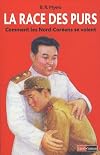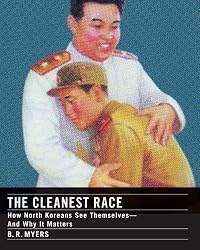
The Cleanest Race: How North Koreans See Themselves and Why It Matters
by B. R. Myers
On This Page
Description
"Here B. R. Myers, a North Korea analyst and a contributing editor of The Atlantic, presents the first full-length study of the North Korean worldview. Drawing on extensive research into the regime's domestic propaganda, including films, romance novels and other artifacts of the personality cult, Myers analyzes each of the country's official myths in turn - from the notion of Koreans' unique moral purity, to the myth of an America quaking in terror of "the Iron General." In a concise but show more groundbreaking historical section, Myers also traces the origins of this official culture back to the Japanese fascist thought in which North Korea's first idealogues were schooled."--BOOK JACKET. show lessTags
Recommendations














Member Recommendations
Member Reviews
I purchased "The Cleanest Race" after it was recommended by Christopher Hitchens, my favorite belligerent, hard-drinking, bitterly confrontational former Marxist. In it, B.R. Myers offers a consistent, and at times convincing, argument that North Korea's current dictatorship has more in common with the Japanese ultranationalists who colonized the country in the first half of the twentieth century than the Communists states that it is more commonly associated with and that a fierce, xenophobic race-consciousness is now the regime's only remaining reason for being. Myers, who claims to have researched Korean-language primary sources that other observers ignore, presents good synopses of recent Korean history, its relationships with its show more neighbors, and the national myths that motivate both its leadership and much of its population. The book also contains numerous illustrations which readers fascinated by the out-and-out weirdness of the DPRK propaganda machine will find instructive, and Myers's analyses of these seem perceptive and on-target. Casual observers of North Korea, like myself, will perhaps be less fascinated by the potshots that Myers takes at other academics, but this book's subject matter is relatively narrow, and it isn't necessarily aimed at a general audience. "The Cleanest Race" is still recommended to those who wish to understand the most repressive, and perhaps the most bizarre, government on earth a bit better. show less
The Cleanest Race is a new and much-needed assessment of North Korea and its domestic propaganda. The domestic propaganda, which focuses on race-based nationalism - namely that the Korean people are the purest and cleanest race, but their naïveté and child-like innocence requires a parental figure to lead them: that is the Kim family - is analysed and each of the regime's myths official myths are outlined.
Myers explains that North Korea is not a hard-line Stalinist bastion nor a Confucian patriarchy gone wrong, but rather a far-right, nationalist, paranoid state which draws heavily from wartime Japanese fascist thought. This therefore forces the reader to reassess North Korea on the international stage and Myers convincingly argues show more that North Korea cannot be bullied into giving up its nuclear weapons' programme. This argument alone merits its reading by anyone interested in North Korea and its affairs.
The Cleanest Race is concise but well-researched: Myers draws on numerous North Korean domestic propaganda works from art to novels to illustrate his point. This book explains for the first time how North Koreans perceive themselves vis-à-vis the rest of the world and will be an important tool in further understanding the country and its government. show less
Myers explains that North Korea is not a hard-line Stalinist bastion nor a Confucian patriarchy gone wrong, but rather a far-right, nationalist, paranoid state which draws heavily from wartime Japanese fascist thought. This therefore forces the reader to reassess North Korea on the international stage and Myers convincingly argues show more that North Korea cannot be bullied into giving up its nuclear weapons' programme. This argument alone merits its reading by anyone interested in North Korea and its affairs.
The Cleanest Race is concise but well-researched: Myers draws on numerous North Korean domestic propaganda works from art to novels to illustrate his point. This book explains for the first time how North Koreans perceive themselves vis-à-vis the rest of the world and will be an important tool in further understanding the country and its government. show less
A cultural/social analysis of North Korean myth-history and propaganda.
The underlying theme, taken from the title, is the portrayal of the Korean people as a 'clean' or 'pure' race. They are simultaneously brilliant, precious, clean, and childlike, but they are also weak and infantile. Therefore, the need the protection of their Dear Maternal Leader. They lead the eternal struggle against the contamination and corruption of other races and the American imperialists, which are described as half-Jew, half-animal. The same contempt is reserved for the Japanese, whose imperial propaganda from the 1930s is copied for Kim's image.
The Kim clan is maternal as much as it is autocratic. In contrast to other dictatorial figures, which intend to show more be a rough Fatherly figure providing guidance, the members of the Kim clan are portrayed as being nurturing, kind, and listening. Their live is not strong, but all-encompassing, like a mother's love. The state's propaganda is aimed at perpetuating this image. Their love is strong and pure, they are the archetype and the highest example of Korean-ness which North Korea has to offer. This sort of idea is comforting, despite all evidence of the government's domestic abuse.
Another contradiction is the North's portrayal of their Southern relatives. At times, they are idealists and innocent people who had the misfortune of being imprisoned by the Imperialists, and shameless whores.
An interesting look at the prism of North Korean ideas. I'd like to see what the author now thinks of Kim III's propaganda. show less
The underlying theme, taken from the title, is the portrayal of the Korean people as a 'clean' or 'pure' race. They are simultaneously brilliant, precious, clean, and childlike, but they are also weak and infantile. Therefore, the need the protection of their Dear Maternal Leader. They lead the eternal struggle against the contamination and corruption of other races and the American imperialists, which are described as half-Jew, half-animal. The same contempt is reserved for the Japanese, whose imperial propaganda from the 1930s is copied for Kim's image.
The Kim clan is maternal as much as it is autocratic. In contrast to other dictatorial figures, which intend to show more be a rough Fatherly figure providing guidance, the members of the Kim clan are portrayed as being nurturing, kind, and listening. Their live is not strong, but all-encompassing, like a mother's love. The state's propaganda is aimed at perpetuating this image. Their love is strong and pure, they are the archetype and the highest example of Korean-ness which North Korea has to offer. This sort of idea is comforting, despite all evidence of the government's domestic abuse.
Another contradiction is the North's portrayal of their Southern relatives. At times, they are idealists and innocent people who had the misfortune of being imprisoned by the Imperialists, and shameless whores.
An interesting look at the prism of North Korean ideas. I'd like to see what the author now thinks of Kim III's propaganda. show less
I'm fascinated by North Korea. Unlike most of the other stuff I've read about the DPRK, this book attempts to paint a full picture of the Text -- Myer's term for the official story of Korean history, the Kims, and their views of South Korea, the US, and the rest of the world. Myer's is very direct: North Korea is not like Stalinist Russia, the former Soviet Eastern Bloc, or Nazi Germany. It's something very distinct that can only be understood by understanding what North Koreans believe about themselves. Myer's book is very well written and very easy to absorb. Fascinating stuff.
Short, compelling read on the North Korean propaganda state. Notable claims include:
1. That the core propaganda tropes of the DPRK derive from racist nationalism made popular during Japan's dominance of the peninsula prior to WWII -- and thus state ideology should be seen more as a belligerent racial nationalism than a Marxist or Confucian ideology
2. That Juche serves, essentially, as a sham ideology: there is no doctrine, there are no implications, it's just a phrase thrown about because of course a Great Leader (Kim the Elder) in the age of Lenin and Mao has his own Great System. But there is no content here guiding any action
3. That the kind of 'double-minded' approach to official ideology one remembers from former communist show more countries is far less prevalent than one would imagine. (As one might expect when a countries experience with any form of modernity is coextensive with the existence of a modern state propaganda)
Recommended. show less
1. That the core propaganda tropes of the DPRK derive from racist nationalism made popular during Japan's dominance of the peninsula prior to WWII -- and thus state ideology should be seen more as a belligerent racial nationalism than a Marxist or Confucian ideology
2. That Juche serves, essentially, as a sham ideology: there is no doctrine, there are no implications, it's just a phrase thrown about because of course a Great Leader (Kim the Elder) in the age of Lenin and Mao has his own Great System. But there is no content here guiding any action
3. That the kind of 'double-minded' approach to official ideology one remembers from former communist show more countries is far less prevalent than one would imagine. (As one might expect when a countries experience with any form of modernity is coextensive with the existence of a modern state propaganda)
Recommended. show less
A fascinating premise rendered unpleasant to read by the author's asides. Interesting ideas, the flow of which is frequently interrupted by the Myers's compulsion to snarl at, bite, and cast aspersions upon others who have studied North Korea and its beliefs. I'd teach with it, but I don't want my students to think that this is an acceptable way to critique other academics.
Okay this book is less than 300 pages when you look at what is just text and not images or citations and it’s STILL too long.
Nothing particularly new here that you can’t find anywhere else except the author’s strange conclusions seemingly supported by the fact that they’re well educated? M’kay. Seriously some of these leaps in logic are impressive (and completely colored by western views but that rarely comes up).
Basically you could watch a piece on Fox News and get the same thing. Definitely should have checked the reviews before I bothered. Skip it.
Nothing particularly new here that you can’t find anywhere else except the author’s strange conclusions seemingly supported by the fact that they’re well educated? M’kay. Seriously some of these leaps in logic are impressive (and completely colored by western views but that rarely comes up).
Basically you could watch a piece on Fox News and get the same thing. Definitely should have checked the reviews before I bothered. Skip it.
Members
- Recently Added By
Lists

r/History Recommended Reading List
603 works; 12 members

r/AskHistorians' Recommended Books
1,068 works; 19 members
Author Information

3 Works 624 Members
Awards and Honors
Common Knowledge
- Original publication date
- 2010
Classifications
- Genres
- Nonfiction, General Nonfiction, Sociology, History
- DDC/MDS
- 303.375095193 — Society, government, & culture Social sciences, sociology & anthropology Social processes Coordination and control Social norms Propaganda
- LCC
- HN730.6 .Z9 .M66 — Social sciences Social history and conditions. Social problems. Social reform Social history and conditions. Social problems. By region or country
- BISAC
Statistics
- Members
- 313
- Popularity
- 102,085
- Reviews
- 10
- Rating
- (3.75)
- Languages
- English, French
- Media
- Paper, Ebook
- ISBNs
- 4
- ASINs
- 2