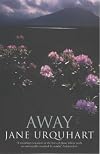
Away
by Jane Urquhart
On This Page
Description
A stunning, evocative novel set in Ireland and Canada, Away traces a family's complex and layered past. The narrative unfolds with shimmering clarity, and takes us from the harsh northern Irish coast in the 1840s to the quarantine stations at Grosse Isle and the barely hospitable land of the Canadian Shield; from the flourishing town of Port Hope to the flooded streets of Montreal; from Ottawa at the time of Confederation to a large-windowed house at the edge of a Great Lake during the show more present day. Graceful and moving, Away unites the personal and the political as it explores the most private, often darkest corners of our emotions where the things that root us to ourselves endure. Powerful, intricate, lyrical, Away is an unforgettable novel. show lessTags
Recommendations












Member Recommendations

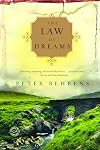
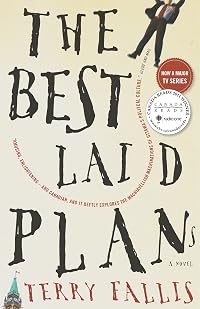
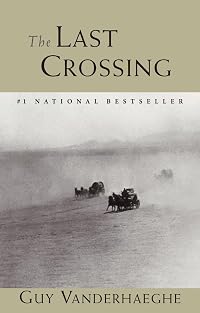
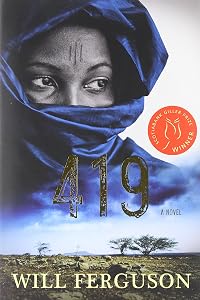
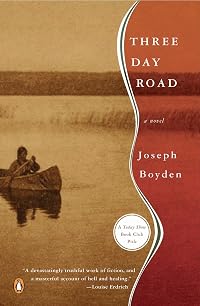
gypsysmom Also a story about Irish immigration to Canada
Member Reviews
I would say this is Jane Urquhart at her best, but then I say that about every one of her books. This is also a book I re-read every couple of years when I want to center myself -- a book where my point of convergence places me firmly in time, and out of time. There is something that is sheer poetry about every word she writes. This one in particular, feels like reading a lovely, elegiac poem to Canada, and to Ireland.
Through Urquhart's poetic vision we are introduced to 4 generations of Irish, following them from pre-famine Ireland through emigration and eventual settlement on the shores of Lake Ontario. The story begins with a love affair and ends with heartbreak: a perfect circle of life painted with an artist's eye for vision. The show more story is rich with history and mythology of both the Irish and the Canadian landscapes: landscapes of fact, of heart, and of mind. show less
Through Urquhart's poetic vision we are introduced to 4 generations of Irish, following them from pre-famine Ireland through emigration and eventual settlement on the shores of Lake Ontario. The story begins with a love affair and ends with heartbreak: a perfect circle of life painted with an artist's eye for vision. The show more story is rich with history and mythology of both the Irish and the Canadian landscapes: landscapes of fact, of heart, and of mind. show less
Away is a multi-generational novel that opens on the wind swept shores of an island on the north coast of Ireland, and closes on the wind swept shores on the north coast of Lake Ontario. This is the fifth Urquhart novel I've read, and like the others, it is lyrical and more than a little mystical. At times I thought Urquhart was pulling out the magical realism card (for example, teapots and cabbages bobbing in the sea), but then a paragraph later she explains the image rationally (for example, there had been a ship wreck, dumping the teapots and cabbages overboard). In any event, it gave the novel an other-wordly mood that I loved.
Here's the book report part of my comment section (aka summary): In prefamine Ireland, Mary pulls a show more drowning sailor from the sea. The next morning, the villagers find her asleep on the beach holding the dead body of the man, and it is unanomously decided that he was a demon lover who took away her soul (hence, the first instance of recurring theme of "away"). Mary is eventually married off to a sensible and kind school teacher, Brian. They live on the land of an estate of two eccentric bumbling brothers who add some levity to the novel, because then the potato famine hits, and things get very sad indeed. Brian, Mary and their son escape (away) to Canada, where they attempt to homestead in the rocky forest north of Lake Ontario. After giving birth to a daughter named Eileen, Mary leaves the family (away, again). After a bunch of stuff happens, the children, now grown, leave the family farm (away) and start a new life in the more hospitable shores of Lake Ontario. Eileen falls in love with a mysterious Irish immigrant named Aiden, and the relationship has many parallels with her mother's love of the drowned sailor. There is an unexpected twist at the end. There is a third character that pops up throughout the book--Eileen's granddaughter. I didn't quite see what her function was in the story and found her distracting. But I hope to read this again someday, and maybe she'll make sense the second time around.
Although I've enjoyed all the Urquhart novels I've read, this one is by far my favourite. She's one of those authors that readers either love, or just can't get into and find boring. I do find that I have to be in the mood to read her, and I have to slow down to absorb what she's saying, but when I do, I'm well rewarded. This book also has some very romantic parts--I'm not much of a romance reader, but I really enjoyed these parts.
Recommended for: If this at all sounds interesting, give it a try. Away was on the best sellers lists in Canada for several years back in the 1990s, and it is nominated for the 2013 CBC Canada Reads, so it looks like I'm not the only reader who loved it. show less
Here's the book report part of my comment section (aka summary): In prefamine Ireland, Mary pulls a show more drowning sailor from the sea. The next morning, the villagers find her asleep on the beach holding the dead body of the man, and it is unanomously decided that he was a demon lover who took away her soul (hence, the first instance of recurring theme of "away"). Mary is eventually married off to a sensible and kind school teacher, Brian. They live on the land of an estate of two eccentric bumbling brothers who add some levity to the novel, because then the potato famine hits, and things get very sad indeed. Brian, Mary and their son escape (away) to Canada, where they attempt to homestead in the rocky forest north of Lake Ontario. After giving birth to a daughter named Eileen, Mary leaves the family (away, again). After a bunch of stuff happens, the children, now grown, leave the family farm (away) and start a new life in the more hospitable shores of Lake Ontario. Eileen falls in love with a mysterious Irish immigrant named Aiden, and the relationship has many parallels with her mother's love of the drowned sailor. There is an unexpected twist at the end. There is a third character that pops up throughout the book--Eileen's granddaughter. I didn't quite see what her function was in the story and found her distracting. But I hope to read this again someday, and maybe she'll make sense the second time around.
Although I've enjoyed all the Urquhart novels I've read, this one is by far my favourite. She's one of those authors that readers either love, or just can't get into and find boring. I do find that I have to be in the mood to read her, and I have to slow down to absorb what she's saying, but when I do, I'm well rewarded. This book also has some very romantic parts--I'm not much of a romance reader, but I really enjoyed these parts.
Recommended for: If this at all sounds interesting, give it a try. Away was on the best sellers lists in Canada for several years back in the 1990s, and it is nominated for the 2013 CBC Canada Reads, so it looks like I'm not the only reader who loved it. show less
The body of this novel in its narration is as suspended as the pendulum movement of waves in a body of water, of which the book is gravitationally focused.
It speaks of a history that dates back to 1842 on an island of Rathlin, just off the northern coast of Ireland and moves as its characters move in migration to the area of the Great Lakes in Canada 140 years later. As such, it is both a book of the early politics between the English and the Irish during the Irish famine in the mid 19th century and a book of displacement and yearning, immigration, and the search for home.
But it is also a book that speaks through women of four generations whose astute power to attract men to themselves is both a gift and a family curse much blamed on show more the dangerous power of beauty found in their pale, white skin against their red, fiery hair.
It is in this beauty that captivated the township of Cleggan, Kinramer, Church Bay, Ballygill, and Ballycarry etc. towards the character, Mary Slattery O'Malley, also renamed Moira, who was believed to be sought and taken "away" by a daemon lover from the sea.
The voice of the book is often written as lyrical fantasy, the language poetic and sentimental, which exemplifies the beauty of not only the landscape of the mind, but its connection to the beauty and glory of Ireland's and Canada's natural landscapes, its rivers and its forests.
As Mary Slattery O'Malley was tied to the shores of Rathlin Island and the women in her family after her: Eileen, to the forests and willow trees near Black River; and Esther, to the surf of Loughbreeze Beach -- the nature of the land is exquisitely portrayed.
The women, though, become hosts of folklore:
Mary, in her withdrawn state and compulsion to imagine and be drawn to the spirit of her deceased beloved from the sea, removes herself both emotionally and physically from her husband and two children.
This same passion is passed down to her daughter, Eileen, whose innocence and creativity, is drawn to sleep in willow trees, to communicate with and have visions and prophecies from nature and conversations with namely a bird. The same power of compulsion drove her to sacrifice a life of material comfort and love alongside her brother, in search for her misplaced beloved, the political vagrant, Aiden Lanighan.
Though Urquhart's writing can be both beautiful and poetic in her descriptions of love and nature, even the sorrowful lament of a community struck by famine, I found the extremism in these women to be obsessive, self-indulgent, and delusional to the point of hysteria.
Personally, I would have preferred the book without its political implications or its irrational bouts of "love-sickness," but enjoyed the language of poetics and folklore told in the love of the landscape, history, and the style of recollection, that Urquhart described.
Aside from that, I found its main female characters too melancholy and over dramatic for reason. I would enjoy the novel alone for its lyrical storytelling and haunting spirituality that resides in its respect and wonder at nature. But it's not a novel I would allow myself to take too seriously. (Unfortunately, it takes more than pale white skin and red, fiery hair to seduce me...) show less
It speaks of a history that dates back to 1842 on an island of Rathlin, just off the northern coast of Ireland and moves as its characters move in migration to the area of the Great Lakes in Canada 140 years later. As such, it is both a book of the early politics between the English and the Irish during the Irish famine in the mid 19th century and a book of displacement and yearning, immigration, and the search for home.
But it is also a book that speaks through women of four generations whose astute power to attract men to themselves is both a gift and a family curse much blamed on show more the dangerous power of beauty found in their pale, white skin against their red, fiery hair.
It is in this beauty that captivated the township of Cleggan, Kinramer, Church Bay, Ballygill, and Ballycarry etc. towards the character, Mary Slattery O'Malley, also renamed Moira, who was believed to be sought and taken "away" by a daemon lover from the sea.
The voice of the book is often written as lyrical fantasy, the language poetic and sentimental, which exemplifies the beauty of not only the landscape of the mind, but its connection to the beauty and glory of Ireland's and Canada's natural landscapes, its rivers and its forests.
As Mary Slattery O'Malley was tied to the shores of Rathlin Island and the women in her family after her: Eileen, to the forests and willow trees near Black River; and Esther, to the surf of Loughbreeze Beach -- the nature of the land is exquisitely portrayed.
The women, though, become hosts of folklore:
Mary, in her withdrawn state and compulsion to imagine and be drawn to the spirit of her deceased beloved from the sea, removes herself both emotionally and physically from her husband and two children.
This same passion is passed down to her daughter, Eileen, whose innocence and creativity, is drawn to sleep in willow trees, to communicate with and have visions and prophecies from nature and conversations with namely a bird. The same power of compulsion drove her to sacrifice a life of material comfort and love alongside her brother, in search for her misplaced beloved, the political vagrant, Aiden Lanighan.
Though Urquhart's writing can be both beautiful and poetic in her descriptions of love and nature, even the sorrowful lament of a community struck by famine, I found the extremism in these women to be obsessive, self-indulgent, and delusional to the point of hysteria.
Personally, I would have preferred the book without its political implications or its irrational bouts of "love-sickness," but enjoyed the language of poetics and folklore told in the love of the landscape, history, and the style of recollection, that Urquhart described.
Aside from that, I found its main female characters too melancholy and over dramatic for reason. I would enjoy the novel alone for its lyrical storytelling and haunting spirituality that resides in its respect and wonder at nature. But it's not a novel I would allow myself to take too seriously. (Unfortunately, it takes more than pale white skin and red, fiery hair to seduce me...) show less
Although the back cover of the book states that the book is about several generations of one family, Away only really focuses on two generations: Mary, who experiences a vision when a stranger washes up on the Irish shore. To release her from her “demons,” she must marry, and with her husband Brian has two children: Liam and Eileen, on whom most of the second half of the novel focuses. From the Irish potato famine to the Canadian wilderness, this is a pretty amazing story about familial bonds.
The story is structured pretty well, and I loved the historical details. There are some truly interesting characters, too, in particular the two eccentric Sedgewick brothers, the Irish landowners who dabble in naturalism; and the mysterious show more Aiden Lanighan, with who Eileen falls in love. But particularly interesting was Eileen herself, who turns out to be much stronger and resilient than she appears at first. I especially loved how she handled her decision at the end of the book and her overall strength of purpose. It really made me interested in finding out what would happen to her. I also really enjoyed Jane Urquhart’s prose; it’s almost poetical.
However, I didn’t particular like the modern-day part of the novel that focuses on Esther; I think that it would have been much better served if the author had left it out altogether. As it was, Esther wasn’t a particularly well-rounded character or particularly interesting. show less
The story is structured pretty well, and I loved the historical details. There are some truly interesting characters, too, in particular the two eccentric Sedgewick brothers, the Irish landowners who dabble in naturalism; and the mysterious show more Aiden Lanighan, with who Eileen falls in love. But particularly interesting was Eileen herself, who turns out to be much stronger and resilient than she appears at first. I especially loved how she handled her decision at the end of the book and her overall strength of purpose. It really made me interested in finding out what would happen to her. I also really enjoyed Jane Urquhart’s prose; it’s almost poetical.
However, I didn’t particular like the modern-day part of the novel that focuses on Esther; I think that it would have been much better served if the author had left it out altogether. As it was, Esther wasn’t a particularly well-rounded character or particularly interesting. show less
This is the wonderfully imaginative story of Mary/Moira: a woman touched by finding a dying sailor on a beach surrounded by cabbages and teapots. In the terminology of her Irish community, she becomes "away" from herself. Her subsequent marriage, motherhood and emigration to Canada seem to have restored her to the real world, but her experience haunts her and the generations of women who follow her.
The story moves from Ireland, to early confederation in Canada, to modern times. It is beautifully written, as are all of Ms. Urquhart's books.
The story moves from Ireland, to early confederation in Canada, to modern times. It is beautifully written, as are all of Ms. Urquhart's books.
As always, the writing in this book was wonderful. I liked the plot line involving Moira (Mary) but when she left the narrative I felt the book lost its central character.
Mary, a young Irish girl living on an island off the north coast of Ireland, finds on her beach cabbages, silver teapots, whiskey barrels and one young sailor. She bring the sailor to the beach and tries to warm him up. He mutters the name Moira twice and then dies. After that occurrence Mary takes the name Moira and ceases to speak. She is "away" in the parlance of the locals. The parish priest appeals to his mainland friend, Brian, to come to see Moira. As the priest had hoped Brian marries Moira which, to a certain extent, causes her to return to normal behaviour. show more They have a son, Liam, but then the potato famine hits Ireland. The local English gentry decide to send 50 families, including Brian, Moira and Liam, to Canada with the promise of farming land. The land is in the bush within the Canadian Shield and can barely sustain a garden. Brian is able to get work off the farm, first on the roads and then as a school master so the family subsists. Moira gives birth to a daughter, Eileen. One day, when the baby is still very young Moira leaves the house and never returns. Liam, still young himself, must figure out how to care for the baby until his father returns. Ever after he has a very close relationship with Eileen. Years later, with both parents dead, Liam and Eileen leave the farm and head south to the shore of Lake Ontario. With money from the sale of the farm (given to him by the old landlord from Ireland) he buys a good farm and a tavern that he saw when they first landed. At the tavern Eileen falls in love with Aiden, an Irish revolutionary who can tell stories with his dancing. The reader knows from the beginning that the relationship is going to end badly but I was quite surprised by the turn of events.
This is one of the books chosen for the Canada Reads 2013 faceoff. I'll be interested to see how it does and what comments people make about it. show less
Mary, a young Irish girl living on an island off the north coast of Ireland, finds on her beach cabbages, silver teapots, whiskey barrels and one young sailor. She bring the sailor to the beach and tries to warm him up. He mutters the name Moira twice and then dies. After that occurrence Mary takes the name Moira and ceases to speak. She is "away" in the parlance of the locals. The parish priest appeals to his mainland friend, Brian, to come to see Moira. As the priest had hoped Brian marries Moira which, to a certain extent, causes her to return to normal behaviour. show more They have a son, Liam, but then the potato famine hits Ireland. The local English gentry decide to send 50 families, including Brian, Moira and Liam, to Canada with the promise of farming land. The land is in the bush within the Canadian Shield and can barely sustain a garden. Brian is able to get work off the farm, first on the roads and then as a school master so the family subsists. Moira gives birth to a daughter, Eileen. One day, when the baby is still very young Moira leaves the house and never returns. Liam, still young himself, must figure out how to care for the baby until his father returns. Ever after he has a very close relationship with Eileen. Years later, with both parents dead, Liam and Eileen leave the farm and head south to the shore of Lake Ontario. With money from the sale of the farm (given to him by the old landlord from Ireland) he buys a good farm and a tavern that he saw when they first landed. At the tavern Eileen falls in love with Aiden, an Irish revolutionary who can tell stories with his dancing. The reader knows from the beginning that the relationship is going to end badly but I was quite surprised by the turn of events.
This is one of the books chosen for the Canada Reads 2013 faceoff. I'll be interested to see how it does and what comments people make about it. show less
for me, the strength of this novel was in the middle section of the story. during this part, i was fully engaged and fell into the flow of the writing. the first and final thirds of the book, though, were just so-so for me. too many times during these sections i felt like ideas were being floated at the reader or moments of 'aren't i clever?' (through the use of language or how certain sentences were structured) were happening and it distracted me. i also didn't really feel there was a good flow in these sections and i remained detached from the story. when i read this book, back when it first came out...i was only so-so about it at that time, though more specifics are lost to me as it's been so long. i wasn't very excited to pick it show more back up as a re-read for the canada reads debates on cbc, but i was hopeful that i would like it more this time around - as with age sometimes comes broader perspectives.
given that i was reading away in context of the canada reads debates...i wonder what my re-read experience would have been like were this not the case? out of the five books in contention...this is my least favourite and pales in comparison to my favoured novel, Indian Horse. as with the other books, there are shared themes but i think they are addressed better in the other books. (the ideas of loneliness, solitude, love, religion, historical moments in canada, etc...). i also think the appeal of away will be to a smaller audience. my top three books - indian horse, Two Solitudes and February - i highly recommend to all readers. this novel and The Age of Hope i would only recommend to certain readers. show less
given that i was reading away in context of the canada reads debates...i wonder what my re-read experience would have been like were this not the case? out of the five books in contention...this is my least favourite and pales in comparison to my favoured novel, Indian Horse. as with the other books, there are shared themes but i think they are addressed better in the other books. (the ideas of loneliness, solitude, love, religion, historical moments in canada, etc...). i also think the appeal of away will be to a smaller audience. my top three books - indian horse, Two Solitudes and February - i highly recommend to all readers. this novel and The Age of Hope i would only recommend to certain readers. show less
Members
- Recently Added By
Published Reviews
ThingScore 83
Die kanadische Autorin erzählt die auf historischen Quellen basierende Geschichte von irischen Auswanderern und die Legende von den ungewöhnlich starken und schönen Frauen in einer bilderreichen Prosa und einem gehobenen poetischen Ton, mit viel Gespür für die irische und kanadische Landschaft und die irische Seele, wobei sie Stimmungen und Atmosphäre nuancenreich vermittelt. Doch wie show more gesagt, Geduld und Zeit braucht man schon für diesen etwas versponnenen und märchenhaften Roman. show less
added by Indy133
Away is a ravishing evocation of the lives of those whose souls are irrevocably touched by nature. It is also, subtly and cunningly, about female independence.
added by Nickelini
Away is simply a great novel.
added by Nickelini
Lists

The Best of Canadian Literature
235 works; 33 members
CBC Books - Canada's 100 (+ bonus 10): Which have you read?
110 works; 23 members

Female Author
1,235 works; 67 members

Books Set in Canada
80 works; 16 members

International IMPAC Dublin Literary Award
179 works; 6 members

Canada Reads Winners and Nominees
129 works; 9 members

Most Popular Books Tagged Ontario
35 works; 2 members

Myth (Reuse and Retelling)
188 works; 24 members
Canadian Historical Fiction 🇨🇦
157 works; 8 members
Author Information

20+ Works 4,041 Members
Jane Urquhart, Poet and novelist Jane Urquhart was born in a small northern Ontario mining community called Little Long Lac. She has been Writer-in-Residence at the University of Ottawa and Memorial University of Newfoundland. In 1997, she held the Presidential Writer-in-Residence Fellowship at the University of Toronto. Urquhart has published show more books of poetry whose titles include "I'm Walking in the Garden of His Imaginary Palace," "False Shuffles," and "The Little Flowers of Madame de Montespan." She has also written the novels "The Whirlpool," which was the first Canadian book to win France's Prix du Meilleur Livre Etranger (Best Foreign Book Award), "Changing Heaven," "Away," which won the 1994 Trillium Award, and "The Underpainter," which won the Governor General's Award in 1997. She has also written a collection of short fiction, "Storm Glass," and several articles and reviews. Urquhart has also received the Marian Engel Award, in 1994, for an outstanding body of prose written by a Canadian woman and was named to France's Order of Arts and Letters as a Chevalier in 1996. Her novel "Away" was also short-listed for the International IMPAC Dublin Literary Award, which is the world's largest literary prized for a single work of fiction, and in 1997, she was asked to serve on the jury for this award. (Bowker Author Biography) show less
Some Editions
Awards and Honors
Awards
Common Knowledge
- Canonical title
- Away
- Original title
- Away: a Novel
- Original publication date
- 1993
- Important places
- Ireland; Port Hope, Ontario, Canada; Montréal, Québec, Canada; Ottawa, Ontario, Canada
- Important events
- Irish Potato Famine; Assassination of Thomas D'Arcy McGee (1868)
- Epigraph
- The three most short-lived traces: the trace of a bird on a branch, the trace of a fish on a pool, and the trace of a man on a woman -- an Irish triad
- Dedication
- For my mother, Marian Quinn Carter, and my father, Walter Carter, and for the Quinn family.
In memory of my Godfather Danny Henry, my grandmother Fleda Quinn, and Thomas J. Doherty - First words
- The women of this family leaned towards the extremes.
- Last words
- (Click to show. Warning: May contain spoilers.)The scream of the machinery intensifies.
- Original language*
- Engels
*Some information comes from Common Knowledge in other languages. Click "Edit" for more information.
Classifications
Statistics
- Members
- 886
- Popularity
- 30,456
- Reviews
- 24
- Rating
- (3.74)
- Languages
- 7 — Dutch, English, French, German, Norwegian (Bokmål), Spanish, Swedish
- Media
- Paper, Audiobook, Ebook
- ISBNs
- 27
- ASINs
- 4