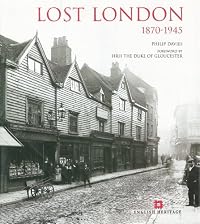
Lost London, 1870-1945
by Philip Davies
On This Page
Description
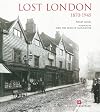
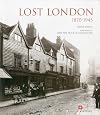
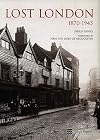
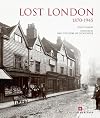
Described as a publishing phenomenon, Lost London transports the reader back in time with amazing and evocative photographs. For this revised edition another 16 pages and approximately 50 previously unpublished photographs have been addedTags
Recommendations





















Member Reviews
pretty great set of photos of London that's been demolished. good selection with a lot of ordinary streets and houses rather than just big set pieces. only real quibble I have is that it'd have been nice to have maps or more indication of where these places were, especially as so many are photos of streets which are gone. otherwise a great resource and fascinating, especially stuff like advertising boards and other ephemera and as an example of just how squalid many places were.
will note the author possibly exaggerates how bad it is that a lot of these buildings are demolished- yeah it sucks when easily refurbishable buildings are lost but so many places were unfit for human habitation pretty much, even if they looked quaint and picturesque
will note the author possibly exaggerates how bad it is that a lot of these buildings are demolished- yeah it sucks when easily refurbishable buildings are lost but so many places were unfit for human habitation pretty much, even if they looked quaint and picturesque
Unsurprisingly, Lost London contains many fascinating photos of buildings that have since vanished from London and some of the people who spent time in and around them. What truly elevates this collection, though, is the thoughtful and extremely knowledgeable commentary throughout the book. It was a real joy to read the text as well as to linger with some of the more intriguing photos.
Magnificent. In the year of 2012, the Year of London, this is simply a must-have book to buy, keep, and treasure. It's a wonderful collection of photographs of buildings long since disappeared from that city which never dies. Heartbreaking, yes, but also a way to see how London has evolved, through good and/or bad.
Many of the medieval dwellings which managed to survive the Great Fire of London in 1666 were still around by the end of the 19th century. Alas, the British Empire was also in full swing, which meant there was a rush to re-develop and spend money. Overcrowded and fetid tenements were torn down, but so were historical aristocratic mansions, all to make way for the burgeoning capital of the Victorian Age. It's quite interesting show more to realize that London was, in the mid 1800s, almost on the brink of collapse, thanks to poverty and disease and just too many bloody people. But as she always has, the great city rose and, yes, many architectural treasures were lost. However, the expansion and cleansing led to better lives for many with a new look for the city.
The real heartbreak comes with the bombing of WWII, where many of Christopher Wren's churches were destroyed. In some cases, they could have been repaired, but by this time, London had been surpassed by New York City, and the post-war Labour scuzzlebutts could only concentrate on creating ugly public housing units. Goodbye masterpieces.
For me, I first visited my favorite city in the 1980s, when it looked, by comparison to Paris and other cities, very tired and unsure of itself. Then came the 1990s and like a phoenix, London rose with a vigour previously unseen. Other cities are just cities. London is a nation.
Book Season = Year Round (visit during each season) show less
Many of the medieval dwellings which managed to survive the Great Fire of London in 1666 were still around by the end of the 19th century. Alas, the British Empire was also in full swing, which meant there was a rush to re-develop and spend money. Overcrowded and fetid tenements were torn down, but so were historical aristocratic mansions, all to make way for the burgeoning capital of the Victorian Age. It's quite interesting show more to realize that London was, in the mid 1800s, almost on the brink of collapse, thanks to poverty and disease and just too many bloody people. But as she always has, the great city rose and, yes, many architectural treasures were lost. However, the expansion and cleansing led to better lives for many with a new look for the city.
The real heartbreak comes with the bombing of WWII, where many of Christopher Wren's churches were destroyed. In some cases, they could have been repaired, but by this time, London had been surpassed by New York City, and the post-war Labour scuzzlebutts could only concentrate on creating ugly public housing units. Goodbye masterpieces.
For me, I first visited my favorite city in the 1980s, when it looked, by comparison to Paris and other cities, very tired and unsure of itself. Then came the 1990s and like a phoenix, London rose with a vigour previously unseen. Other cities are just cities. London is a nation.
Book Season = Year Round (visit during each season) show less
I would prefer a book on Elizabethan, Jacobin or Georgian London but unfortunately the Victorians destroyed most of it and put up their own stuff so I guess this will have to do.
Fascinating albeit depressing selection of old photographs of London buildings since demolished.
Ratings
Members
- Recently Added By
Author Information
9 Works 489 Members
Awards and Honors
Awards
Common Knowledge
- Canonical title
- Lost London, 1870-1945
- Original publication date
- 2009
- Important places
- London, England, UK
- Original language
- English
Classifications
- Genres
- Nonfiction, Art & Design, History, General Nonfiction
- DDC/MDS
- 942.10820222 — History & geography History of Europe England and Wales London Historical periods; Modified standard subdvisions of London 1837- 1901-1910, Edward VII
- LCC
- DA684 — History of Europe, Asia, Africa and Oceania Great Britain History of Great Britain England Local history and description London
- BISAC
Statistics
- Members
- 225
- Popularity
- 144,116
- Reviews
- 5
- Rating
- (4.62)
- Languages
- English, German
- Media
- Paper
- ISBNs
- 4
- ASINs
- 1