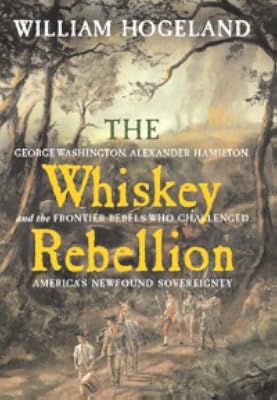
The Whiskey Rebellion: George Washington, Alexander Hamilton, and the Frontier Rebels Who Challenged America's Newfound Sovereignty
by William Hogeland
On This Page
Description
A gripping and provocative tale of violence, alcohol, and taxes, The Whiskey Rebellion pits President George Washington and Secretary of the Treasury Alexander Hamilton against angry, armed settlers across the Appalachians. Unearthing a pungent segment of early American history long ignored by historians, William Hogeland brings to startling life the rebellion that decisively contributed to the establishment of federal authority.In 1791, at the frontier headwaters of the Ohio River, gangs show more with blackened faces began to attack federal officials, beating and torturing the collectors who plagued them with the first federal tax ever laid on an American product - whiskey. In only a few years, those attacks snowballed into an organized regional movement dedicated to resisting the fledgling government's power and threatening secession, even civil war.With an unsparing look at both Hamilton and Washington - and at lesser-known, equally determined frontier leaders such as Herman Husband and Hugh Henry Brackenridge - journalist and popular historian William Hogeland offers an insightful, fast-paced account of the remarkable characters who perpetrated this forgotten revolution, and those who suppressed it. To Hamilton, the whiskey tax was key to industrial growth and could not be permitted to fail. To hard-bitten people in what was then the wild West, the tax paralyzed their economies while swelling the coffers of greedy creditors and industrialists. To President Washington, the settlers' resistance catalyzed the first-ever deployment of a huge federal army, led by the president himself, a military strike to suppress citizens who threatened American sovereignty.Daring, finely crafted, by turns funny and darkly poignant, The Whiskey Rebellion promises a surprising trip for readers unfamiliar with this primal national drama - whose climax is not the issue of mere taxation but the very meaning and purpose of the American Revolution. show lessTags
Recommendations


Member Reviews
Hogeland has written a good narrative history of the Whiskey Rebellion, based on solid primary and secondary sources. it his highly readable and entertaining. He delves deep into the long background of Western Pennsylvania and its settlers to truly show the beef they had with Hamilton's federal excise taxes. He dives deep too on Hamilton, the federal Constitution, and the Federalist desire for taxation and national regulation. The actual "rebellion" part gets comparatively few pages, because it was mainly a violent protest that fizzled out when faced with federal military pressure. The most important part of the book is the deflation of Alexander Hamilton's image, as he is the current beau ideal of Founders thanks to Ron Chernow's show more magisterial epic of a biography and Lin-Manuel Miranda's catchy insipidity of a musical. Here Hamilton is rightly shown as a schemer, a liar, a plotter, and a firm hater of the common man. He believes in over-weening federal power and his own personal military glory, for who knows what end. Even fellow Federalists John and Abigail Adams called Hamilton a possible Bonaparte, recognizing his egotistical traits. Decent maps at the beginning, but no images. Endnotes in one of those insipid styles: here's a section of text and here's the source. There is much digression in the notes, however, which is interesting if you like notes. A decent bibliography at the end. An index. show less
As a Pittsburgh transplant, I love finding new historical bits about my adopted hometown. I first heard of the Whiskey Rebellion during a tour at a local whiskey distillery, Wigle Whiskey (totally necessary product placement), which is named after one of the accused rebels. The Whiskey Rebellion is the only time in The history of the United States that a sitting president has led troops against his own citizens. Fascinating stuff.
Long story short, in order to pay our country’s debts from the Revolutionary War, Alexander Hamilton (yes, the one from the musical) lobbied for a tax on whiskey production. Unfortunately, this tax was designed to disproportionately affect small, independent stills, and not the larger corporate enterprises show more (deja vu, anyone?). Citizens of Western Pennsylvania were especially hard hit, and a (sometimes violent) grassroots resistance formed to fight the whiskey tax.
Hogeland does a good job of balancing the drier, dates-and-names portion of the tale with the utter insanity of the times. The book is definitely meant for more serious historians, but I think that even the average reader will find the subject matter fascinating. The Whiskey Rebellion is an important part of United States history, and the story has many parallels with events today. show less
Long story short, in order to pay our country’s debts from the Revolutionary War, Alexander Hamilton (yes, the one from the musical) lobbied for a tax on whiskey production. Unfortunately, this tax was designed to disproportionately affect small, independent stills, and not the larger corporate enterprises show more (deja vu, anyone?). Citizens of Western Pennsylvania were especially hard hit, and a (sometimes violent) grassroots resistance formed to fight the whiskey tax.
Hogeland does a good job of balancing the drier, dates-and-names portion of the tale with the utter insanity of the times. The book is definitely meant for more serious historians, but I think that even the average reader will find the subject matter fascinating. The Whiskey Rebellion is an important part of United States history, and the story has many parallels with events today. show less
This is a detailed look at an often-overlooked episode in the early history of the American republic, the Whiskey Rebellion.
We now take for granted the success of the new United States of America after the American War for Independence, but it was far from a foregone conclusion. Under the initial Articles of Confederation, adopted in 1781 when formal ratification by all thirteen original states was completed. The Articles contained a fatal flaw: the Congress had no power to tax and could only request funding from the states. This meant, effectively, that it could make all the decisions it wanted, but it had no power to implement them. The Congress could not manage or prevent conflicts between states, could not take effective action show more without unanimous support of the states, and was generally unable to provide any of the benefits of a national government. Because of this, the early USA was in danger of coming apart, with some states even making overtures to Britain.
The Constitutional Convention was convened to revise the Articles to correct these problems. In fact, the delegates, or important leaders among them, including James Madison and George Washington, recognized that the Articles were essentially unfixable. Creating a functional government required abandoning them and starting from scratch. The result was the US Constitution as we now know it (minus all the amendments, of course), which after ratification took effect in 1789, with George Washington elected as the first President essentially unopposed. (In fact, the Constitution would not have been ratified if Washington, truly the most respected and trusted man in the country, had not agreed to serve in that capacity.)
But that makes everything sound too simple, clean, and easy. In fact there was a significant body of political opposition to a strong central government. The Federalist Papers were written to address that opposition and get the Constitution ratified, but in the longer run, the fundamental disagreement about how the United States of America should be governed, and even how it should be understood, remained.
One of the critical powers gained under the Constitution was the power of direct taxation, so that the federal government was no longer dependent on the voluntary financial contributions of the states. Initially, that power was exercised only in tariffs on imported goods. This wasn't sufficient to deal with the debt incurred, both nationally and by the individual states, during the Revolution, however, and in 1791, at the urging of Alexander Hamilton, Congress passed an excise tax on domestically distilled whiskey.
This was far more politically explosive than we would expect today. It became a major expression of the conflict between the Federalists (Hamilton and his political allies) and the Anti-Federalists, America's first opposition political party, of which Thomas Jefferson emerged as a major leader.
It also became a major expression of the conflict between the relatively urban, developed, and prosperous coastal populations, and the rural, much less prosperous western fringes of the new country. Particularly in western Pennsylvania, where whiskey production was a source of critical extra income, the excise tax on whiskey was deeply unpopular, and provoked violent resistance. This in turn provoked, eventually, military action, led by President George Washington, to suppress the rebellion and enforce the tax.
This extremely well-written and well-researched book is, essentially, the Anti-Federalist viewpoint on that conflict. Hogeland has a very negative view of Alexander Hamilton, and does not concede or even mention the critical ways in which the assumption of the states' debt and the commitment to paying the entire debt at face value benefited the fledgling United States and continues to do so.
That said, precisely because of that viewpoint, Hogeland gives us a detailed, thoroughly researched, look at a part of early America that's often overlooked, the lives of the ordinary people outside the major population centers of the new country. It's sometimes frustrating, but a useful and interesting contribution.
Recommended.
I borrowed this book from the library. show less
We now take for granted the success of the new United States of America after the American War for Independence, but it was far from a foregone conclusion. Under the initial Articles of Confederation, adopted in 1781 when formal ratification by all thirteen original states was completed. The Articles contained a fatal flaw: the Congress had no power to tax and could only request funding from the states. This meant, effectively, that it could make all the decisions it wanted, but it had no power to implement them. The Congress could not manage or prevent conflicts between states, could not take effective action show more without unanimous support of the states, and was generally unable to provide any of the benefits of a national government. Because of this, the early USA was in danger of coming apart, with some states even making overtures to Britain.
The Constitutional Convention was convened to revise the Articles to correct these problems. In fact, the delegates, or important leaders among them, including James Madison and George Washington, recognized that the Articles were essentially unfixable. Creating a functional government required abandoning them and starting from scratch. The result was the US Constitution as we now know it (minus all the amendments, of course), which after ratification took effect in 1789, with George Washington elected as the first President essentially unopposed. (In fact, the Constitution would not have been ratified if Washington, truly the most respected and trusted man in the country, had not agreed to serve in that capacity.)
But that makes everything sound too simple, clean, and easy. In fact there was a significant body of political opposition to a strong central government. The Federalist Papers were written to address that opposition and get the Constitution ratified, but in the longer run, the fundamental disagreement about how the United States of America should be governed, and even how it should be understood, remained.
One of the critical powers gained under the Constitution was the power of direct taxation, so that the federal government was no longer dependent on the voluntary financial contributions of the states. Initially, that power was exercised only in tariffs on imported goods. This wasn't sufficient to deal with the debt incurred, both nationally and by the individual states, during the Revolution, however, and in 1791, at the urging of Alexander Hamilton, Congress passed an excise tax on domestically distilled whiskey.
This was far more politically explosive than we would expect today. It became a major expression of the conflict between the Federalists (Hamilton and his political allies) and the Anti-Federalists, America's first opposition political party, of which Thomas Jefferson emerged as a major leader.
It also became a major expression of the conflict between the relatively urban, developed, and prosperous coastal populations, and the rural, much less prosperous western fringes of the new country. Particularly in western Pennsylvania, where whiskey production was a source of critical extra income, the excise tax on whiskey was deeply unpopular, and provoked violent resistance. This in turn provoked, eventually, military action, led by President George Washington, to suppress the rebellion and enforce the tax.
This extremely well-written and well-researched book is, essentially, the Anti-Federalist viewpoint on that conflict. Hogeland has a very negative view of Alexander Hamilton, and does not concede or even mention the critical ways in which the assumption of the states' debt and the commitment to paying the entire debt at face value benefited the fledgling United States and continues to do so.
That said, precisely because of that viewpoint, Hogeland gives us a detailed, thoroughly researched, look at a part of early America that's often overlooked, the lives of the ordinary people outside the major population centers of the new country. It's sometimes frustrating, but a useful and interesting contribution.
Recommended.
I borrowed this book from the library. show less
An amazingly dense, minute-by-minute account of the Whiskey Rebellion which took place west of the Alleghenies in frontier Pittsburgh and environs. You are introduced to John Neville, Hugh Henry Brackenridge, Isaac Craig, William Finley -- very famous names in the Pittsburgh region.
What is most surprising is the view of Alexander Hamilton and his role in all this. He seemed to precipitate it by trying to raise revenue for the new nation. Unfortunately he tried to raise it by taxing whiskey, the finished product of grain distillation. Of course the grain wasn't taxed, but the farmers couldn't ship that across the mountains to the east and make any profit. They could on whiskey. Hence the rebellion. I can see now why Burr shot Hamilton; show more he would have met the same fate in western Pa.
Hamilton seemed the megalomaniac. He wanted war with France and when that didn't happen dreamed of marching toops to invade Spanish Florida and driving on to South America. William Finley wrote in 1796 that "Hamilton...deliberately provoked the rebellion in order to create an excuse for suppressing it." As you read this book you will come to the same conclusion. show less
What is most surprising is the view of Alexander Hamilton and his role in all this. He seemed to precipitate it by trying to raise revenue for the new nation. Unfortunately he tried to raise it by taxing whiskey, the finished product of grain distillation. Of course the grain wasn't taxed, but the farmers couldn't ship that across the mountains to the east and make any profit. They could on whiskey. Hence the rebellion. I can see now why Burr shot Hamilton; show more he would have met the same fate in western Pa.
Hamilton seemed the megalomaniac. He wanted war with France and when that didn't happen dreamed of marching toops to invade Spanish Florida and driving on to South America. William Finley wrote in 1796 that "Hamilton...deliberately provoked the rebellion in order to create an excuse for suppressing it." As you read this book you will come to the same conclusion. show less
”The Whiskey Rebellion”, by William Hogeland, tells the story of an 18th century rebellion of settlers in western Pennsylvania and Virginia against an excise tax on “spirits” imposed by the newly created Federal Government. Tax Collectors sent to this region to collect taxes were tarred and feathered in open hostility to the imposition of this new tax.
The Federal Government, however, needed the ability to raise operating funds, and being only twenty years old, also needed to demonstrate its effectiveness and its authority. After several failed attempts to collect the revenues owed, Alexander Hamilton, as Treasury Secretary and acting Secretary of War, convinced President Washington that the rebellion needed to be stopped before show more it expanded to the detriment of the new Country.
In some ways, this rebellion makes me think of the 2014 defiance of Nevada rancher Clive Bundy, who fails to recognize the Federal Government’s right to collect fees for use of public lands. Bundy, with the backing of some 50 armed supporters, drove Bureau of Land Management rangers away after a failed attempt to confiscate cattle illegally grazing on public land. In a similar standoff in the late 18th Century, a few individuals roused the anti-tax spirit of the locals, and defied the Federal Government, at least temporarily. In the case of the Whiskey Rebellion, President Washington ultimately authorized raising a militia force of some 13,000 troops to travel to the region to put down the rebellion. Many of the rebel leaders then fled, and a handful were arrested, without the need for a bloody battle.
The Whiskey Rebellion is an incident from the early days of our Country which typically receives only a few sentences in the history books, and Hogeland goes into great depth (perhaps too much depth) describing the event, its causes, and results. show less
The Federal Government, however, needed the ability to raise operating funds, and being only twenty years old, also needed to demonstrate its effectiveness and its authority. After several failed attempts to collect the revenues owed, Alexander Hamilton, as Treasury Secretary and acting Secretary of War, convinced President Washington that the rebellion needed to be stopped before show more it expanded to the detriment of the new Country.
In some ways, this rebellion makes me think of the 2014 defiance of Nevada rancher Clive Bundy, who fails to recognize the Federal Government’s right to collect fees for use of public lands. Bundy, with the backing of some 50 armed supporters, drove Bureau of Land Management rangers away after a failed attempt to confiscate cattle illegally grazing on public land. In a similar standoff in the late 18th Century, a few individuals roused the anti-tax spirit of the locals, and defied the Federal Government, at least temporarily. In the case of the Whiskey Rebellion, President Washington ultimately authorized raising a militia force of some 13,000 troops to travel to the region to put down the rebellion. Many of the rebel leaders then fled, and a handful were arrested, without the need for a bloody battle.
The Whiskey Rebellion is an incident from the early days of our Country which typically receives only a few sentences in the history books, and Hogeland goes into great depth (perhaps too much depth) describing the event, its causes, and results. show less
was Hamilton good for America?: Hamilton doesn't fare well in this text. Once again, I'm left wondering why He is on our Money. 'Wondering why Gallatin wasn't even given a guest appearence on one of the Lewis & Clark Nickles.
My Thanks, again to the S.F. writer L. Neil Smith for starting my questioning of Hamilton, That was over 20 years ago. The Novel was "The Probability Broach".
My Thanks, again to the S.F. writer L. Neil Smith for starting my questioning of Hamilton, That was over 20 years ago. The Novel was "The Probability Broach".
Very informative book. When I first began it, I thought it was going to be a little light. Turned out that was definetly not the case. Very good. Once again to understand where we are look to wence we came.
Members
- Recently Added By
Lists

Best U.S. History Books (1754-1828)
363 works; 17 members

Chelsea Manning's "contraband"
22 works; 2 members
Author Information

7 Works 963 Members
William Hogeland is the author of Declaration: The Nine Tumultuous Weeks When America Became Independent, May 1-July 4, 1776. His work has been published in numerous print and online periodicals, including The New York Times, The Atlantic Monthly, and Slate. He lives and writes in Brooklyn, New York.
Some Editions
Common Knowledge
- Original publication date
- 2006-04-25
- People/Characters
- Alexander Hamilton; George Washington
- Important events
- Whiskey Rebellion (1794)
Classifications
- Genres
- History, Nonfiction, General Nonfiction
- DDC/MDS
- 973.43 — History & geography History of North America United States Constitutional period (1789-1809) George Washington's 2nd term (1793-1797)
- LCC
- E315 .H64 — History of the United States United States Revolution to the Civil War, 1775/1783-1861 By period 1789-1809. Constitutional period Washington's administrations, 1789-1797
- BISAC
Statistics
- Members
- 418
- Popularity
- 73,940
- Reviews
- 9
- Rating
- (3.60)
- Languages
- English
- Media
- Paper, Audiobook, Ebook
- ISBNs
- 8
- ASINs
- 6