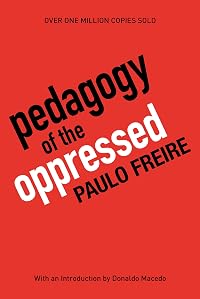
Pedagogy of the Oppressed
by Paulo Freire
On This Page
Description
First published in Portuguese in 1968, Pedagogy of the Oppressed was translated and published in English in 1970. Paulo Freire's work has helped to empower countless people throughout the world and has taken on special urgency in the United States and Western Europe, where the creation of a permanent underclass among the underprivileged and minorities in cities and urban centers is ongoing. This 50th anniversary edition includes an updated introduction by Donaldo Macedo, a new afterword by show more Ira Shor, and interviews with Marina Aparicio Barberán, Noam Chomsky, Ramon Flecha, Gustavo Fischman, Ronald David Glass, Valerie Kinloch, Peter Mayo, Peter McLaren, and Margo Okazawa-Rey to inspire a new generation of educators, students, and general audiences for years to come. show lessTags
Recommendations



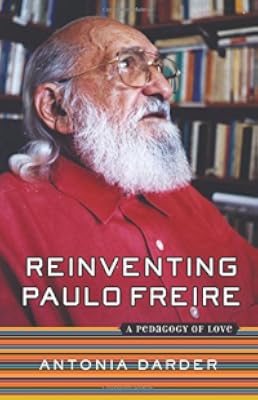

Member Recommendations

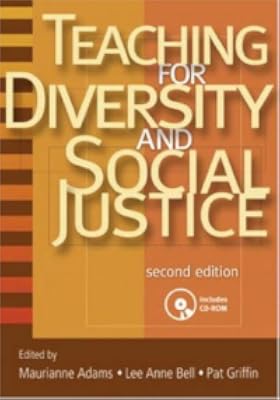
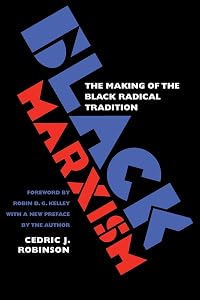
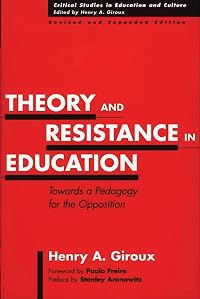
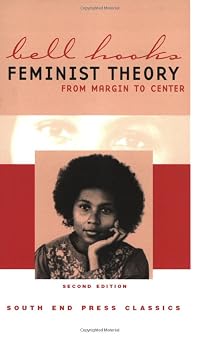
elenchus Freire and Boule cover similar aspirations and ideals among very different learning audiences. Anyone interested in pedagogy will benefit from reading both books, but those focused on the particular circumstances (community activism among the underprivileged, for Freire, or social networking technology, for Boule) would do better to stick with the one.
Member Reviews
'Pedagogy of the Oppressed' was first published nearly fifty years ago, yet read to me as a fresh, powerful, and relevant text, both on a personal and social level. On the personal front, it reminded me of how much I prefer small group teaching to lecturing. In the former case, I used to facilitate and guide critical discussions on a topic with three or four students who had written an essay about it. It was obvious in such discussions whether the students had read about the topic, whether they were interested, and what they thought. In the latter case, I talk at twenty or more students for two hours without any sense of whether they're listening, let alone learning. Freire emphasises dialogue as central to education, which I strongly show more concur with. I learn best from reading or talking, not listening. Likewise, I teach best through discussion, not lectures. It's a real pity that in the UK only Oxford and Cambridge give undergraduate students the opportunity to learn through such small group teaching. Moreover, I greatly appreciated Freire's points about 'problem-posing' education, which doesn't treat social issues as resolved. I used to genuinely enjoy discussing the flaws in housing policy, for example, with students. In short, I found Freire's angle on education inspiring, which is helpful as I'd been feeling quite jaded about academic teaching.
More importantly, though, Freire's theories around oppression and resistance have a lot of resonance in 2017. Generally, I appreciated his rejection of binary divisions (for example objective and subjective) in favour of dialectics and the constant emphasis on dialogue. This is expressed with great elegance, for instance in chapter 3:
Given the current quality of political and media debate, actual dialogue seems to be badly needed. Both in education and in culture more generally, I think there is a confusion between dialogue and debate. A debate is competitive and the aim is to win; dialogue is co-operative and all participants gain from it. The present forms taken by the media and the structures through which we interact online seem to greatly inhibit dialogue as Freire describes it; everything becomes a polarised and aggressively combative debate. I found his emphasis on dialogue inspiring, both as a teacher and a person, as well as nuanced. The role of critical thinking in dialogue was very well articulated:
More worryingly, this analysis feels very apposite to the neo-fascist resurgence currently occurring in Europe and America:
This is a wise and thought-provoking book. I think it especially significant for those from developed countries who are working, perhaps for NGOs, in the developing world. No lasting improvements can be made without partnership and dialogue, rather than those with money dictating to those without.
A further comment that rang very true at the present moment concerns making the state of the world mythical. This is especially true of neoliberal capitalism.
These myths are still alive and well, thus 'Pedagogy of the Oppressed' remains inspiring and important. It caused me to reflect on the importance of education, formal and informal, for the changing of minds individually and collectively. I read most of it on a train while very tired, though, so feel that it deserves a re-read so I can think about it in greater depth. show less
More importantly, though, Freire's theories around oppression and resistance have a lot of resonance in 2017. Generally, I appreciated his rejection of binary divisions (for example objective and subjective) in favour of dialectics and the constant emphasis on dialogue. This is expressed with great elegance, for instance in chapter 3:
Someone who cannot acknowledge himself to be mortal as everyone else still has a long way to go before he can reach the point of encounter. At the point of encounter there are neither utter ignoramuses nor perfect sages; there are only people who are attempting, together, to learn more than they now know. Dialogue further requires an intense faith in humankind, faith in their power to make and remake, to create and re-create, faith in their vocation to be more fully human (which is not the privilege of an elite, but the birthright of all).
Given the current quality of political and media debate, actual dialogue seems to be badly needed. Both in education and in culture more generally, I think there is a confusion between dialogue and debate. A debate is competitive and the aim is to win; dialogue is co-operative and all participants gain from it. The present forms taken by the media and the structures through which we interact online seem to greatly inhibit dialogue as Freire describes it; everything becomes a polarised and aggressively combative debate. I found his emphasis on dialogue inspiring, both as a teacher and a person, as well as nuanced. The role of critical thinking in dialogue was very well articulated:
Finally, true dialogue cannot exist unless the dialoguers engage in critical thinking – thinking which discerns and indivisible solidarity between the world and the people and admits of no dichotomy between them – thinking which perceives reality as a process, as transformation, rather than as a static entity – thinking which does not separate itself from action, but constantly immerses itself in temporality without fear of the risks involved. Critical thinking contrasts with naive thinking, which sees 'historical time as a weight, a stratification of the acquisitions and experiences of the past', from which the present should emerge normalised and 'well-behaved'. For the naive thinker, the important thing is accommodation to this normalised 'today'. For the critic, the important thing is the continuing transformation of reality.
More worryingly, this analysis feels very apposite to the neo-fascist resurgence currently occurring in Europe and America:
...the former oppressors do not feel liberated. On the contrary, they genuinely consider themselves to be oppressed. Conditioned by the experience of oppressing others, any situation other than their former seems to them like oppression. Formerly, they could eat, dress, wear shoes, be educated, travel, and hear Beethoven; while millions did not eat, had no clothes or shoes, neither studied nor travelled, much less listened to Beethoven. Any restriction on this way of life, in the name of the rights of the community, appears to the former oppressors as a profound violation of their individual rights – although they had no respect for the millions who suffered and died of hunger, pain, sorrow, and despair. For the oppressors, 'human beings' refers only to themselves; other people are 'things'.
This is a wise and thought-provoking book. I think it especially significant for those from developed countries who are working, perhaps for NGOs, in the developing world. No lasting improvements can be made without partnership and dialogue, rather than those with money dictating to those without.
A further comment that rang very true at the present moment concerns making the state of the world mythical. This is especially true of neoliberal capitalism.
In order to present for the consideration of the oppressed and subjugated a world of deceit designed to increase alienation and passivity, the oppressors develop a series of methods precluding any presentation of the world as a problem and showing it rather as a fixed entity, as something given – something to which people, as mere spectators, must adapt. […] It is accomplished by the oppressors' depositing myths indispensable to the preservation of the status quo: for example, the myth that the oppressive order is a 'free society'; the myth that all persons are free to work where they wish, that if they don't like their boss they can leave him and find another job; the myth that this order respects human rights and is therefore worthy of esteem; the myth that everyone who is industrious can become an entrepreneur – worse yet, the myth that the street vendor is as much an entrepreneur as the owner of a large factory...
These myths are still alive and well, thus 'Pedagogy of the Oppressed' remains inspiring and important. It caused me to reflect on the importance of education, formal and informal, for the changing of minds individually and collectively. I read most of it on a train while very tired, though, so feel that it deserves a re-read so I can think about it in greater depth. show less
Freire helped open me up further to the complexity of living in a culture of oppression and the inherent dehumanization in systems of power that want to control rather than allow people to become more critically engaged. As a person on the side of the oppressor, I need to be reminded of what I've lost in this exchange and also how much I need to reorient to think of how people must be allowed to grow into critical engagement. This verve and perspective cannot be handed out, else perpetually sustaining the system of oppression, but interdependent exchange, with an orientation to the real disparities within interpersonal and educational models.
As long as the oppressed remain unaware of the causes of their condition, they fatalistically “accept” their exploitation.
While I liked most of the content, I thought that the opressor and the oppressed are presented as too rigid categories here. Poor/rich, white/coloured, men/women, abled/disabled etc. etc. mean that most people are oppressors in one way and oppressed in another. No one is ever only one or the other.
Also, arguing for the pedagogy of the oppressed in language which the oppressed, who are routinely denied or limited in their education as part of their oppression, might not comprehend feels counterproductive.
While I liked most of the content, I thought that the opressor and the oppressed are presented as too rigid categories here. Poor/rich, white/coloured, men/women, abled/disabled etc. etc. mean that most people are oppressors in one way and oppressed in another. No one is ever only one or the other.
Also, arguing for the pedagogy of the oppressed in language which the oppressed, who are routinely denied or limited in their education as part of their oppression, might not comprehend feels counterproductive.
I stand with the overall message: indoctrinated education that focuses on creating docile wage laborers is not good for us, and we gain (some of our) freedom through what the author refers to as 'problem-posing education', i.e. dialogue, participatory action research rather than passively absorbing information. But, I do think the value proposition is flawed, as it should be centered around how such education can be directed to amassing social utility and creating a system that disables social inequality, rather than achieving an arbitrary individual freedom. It's nonetheless understandable when recognizing the climate at the time of this writing.
I note that one reviewer had a difficult time reading this -- read a bit, went away for six months, came back and read a bit, then went away again . . . then labels the book disjointed, rather than his scatter-brained -- disjointed -- approach to it being the problem.
It is actually a straightforward text, so easily read and digested in much less than a week. It should also be mandatory reading for, especially, would-be teachers, but also such "scientists" as economists and sociologists. And by those who rail against "liberation theology" without having the least clue as to what it actually is.
It should be read, that is, by everyone who can read, without regard to preexisting ideological predisposition -- it actually is possible to see show more beyond such distorting lenses. And if during the reading you don't begin critically evaluating the education you "received," then you haven't suspended your ideological warp beforehand.
Yes: the FOX-ian paranoids will hate it, as instructed by FOX, and call it names, as they are given them by FOX. But there's nothing new about the ineducable rejecting anything that smacks of the risk of learning and knowing more than they already know, which is less and less as they reject more and more of fact and reality. But those who are thoughtful will find that this book is seminal, foundational, not only as a method of pedagogy but also as a clarifying method of criticially evaluating their context and situation, and reality.
In two words: must reading. show less
It is actually a straightforward text, so easily read and digested in much less than a week. It should also be mandatory reading for, especially, would-be teachers, but also such "scientists" as economists and sociologists. And by those who rail against "liberation theology" without having the least clue as to what it actually is.
It should be read, that is, by everyone who can read, without regard to preexisting ideological predisposition -- it actually is possible to see show more beyond such distorting lenses. And if during the reading you don't begin critically evaluating the education you "received," then you haven't suspended your ideological warp beforehand.
Yes: the FOX-ian paranoids will hate it, as instructed by FOX, and call it names, as they are given them by FOX. But there's nothing new about the ineducable rejecting anything that smacks of the risk of learning and knowing more than they already know, which is less and less as they reject more and more of fact and reality. But those who are thoughtful will find that this book is seminal, foundational, not only as a method of pedagogy but also as a clarifying method of criticially evaluating their context and situation, and reality.
In two words: must reading. show less
This is not compulsively readable but still full of such important ideas it's hard to put down. There are so many ways to oppress and to be oppressed, and even in trying to help those you see as oppressed you may be contributing to their oppression. It's impact over intent. Oppressors cannot be fully human while trying to revoke the humanity of another. I think this would be a good book to come back to regularly.
I encountered Freire's ideas of critical pedagogy in a curriculum theory course and excitedly picked this up hoping to gain more practical insight. I did not realize this work is almost exclusively theoretical, with only the third chapter providing limited descriptions of educational "decodification and recodification" sessions. These, to me, were the most enlightening passages, especially the quoted dialogues from "consciousness classes". Where theory is concerned, I did not find the book nearly as approachable as many other reviewers. I found the writing style to be repetitive and overly-reliant on specific philosophical terminology when simpler language would have sufficed. In fact, I think many of the reviews here do more justice to show more the ideas than Freire's own writing! One example - Freire spends 5 pages discussing the fact that humans differ from animals due the human ability to self-reflect. What I just summarized in about 10 words comes from p. 97 of the work - "...man is the only one to treat not only his actions but his very self as the objects of his reflection; this capacity distinguishes him from the animals, which are unable to separate themselves from their activity and thus are unable to reflect upon it".
It was also hard for me not to read Friere's admiring quoting of Lenin, Marx, Mao Tse Dong, Guevara, et al. without thinking of the dark shadow history has cast on many of these thinkers. The "re-education" efforts of China and many other Communist countries relied on much of the same theoretical framework as the first two chapters of this work.
While there are many positive ideas in the work as quoted by some other reviewers, I also found many troubling passages, such as:
"Proposing as a problem, to a European peasant, the fact that he or she is a person might strike them as strange. This is not true of Latin-American peasants, whose world usually ends at the boundaries of the latifundium, whose gestures to some extent simulate those of the animal and the trees, and who often consider themselves equal to the latter" (p 174).
Overall, I rate this book "probably good for you but not enjoyable". show less
It was also hard for me not to read Friere's admiring quoting of Lenin, Marx, Mao Tse Dong, Guevara, et al. without thinking of the dark shadow history has cast on many of these thinkers. The "re-education" efforts of China and many other Communist countries relied on much of the same theoretical framework as the first two chapters of this work.
While there are many positive ideas in the work as quoted by some other reviewers, I also found many troubling passages, such as:
"Proposing as a problem, to a European peasant, the fact that he or she is a person might strike them as strange. This is not true of Latin-American peasants, whose world usually ends at the boundaries of the latifundium, whose gestures to some extent simulate those of the animal and the trees, and who often consider themselves equal to the latter" (p 174).
Overall, I rate this book "probably good for you but not enjoyable". show less
Members
- Recently Added By
Lists

LT picks: Blue Books
197 works; 44 members

Non-Fiction Worth Reading
1,015 works; 261 members

Books for Educators
164 works; 6 members

Reading list
170 works; 1 member

KW Wishlist
61 works; 1 member

Changamire's Bookshelf
19 works; 1 member

Shaykh Hamza's Book Recommendations
439 works; 3 members

Books Read in 2023
5,547 works; 145 members

Mo's Reading List
218 works; 1 member

Best Sellers / Popular 1968
237 works; 5 members

top 100
39 works; 1 member

Top-Rated Books on LibraryThing
272 works; 116 members
Author Information

149+ Works 8,569 Members
Paulo Freire (1921-1997) was one of the most significant educational thinkers of the 20th century. He is the author of Education for Critical Consciousness, Pedagogy in Process, Pedagogy of Hope, Pedagogy of the City, and Pedagogy of the Heart, all published by Bloomsbury.
Some Editions
Awards and Honors
Series
Belongs to Publisher Series
Work Relationships
Has as a student's study guide
Common Knowledge
- Canonical title
- Pedagogy of the Oppressed
- Original publication date
- 1970-11
- Dedication
- To the oppressed,
and to those who suffer with them
and fight at their side. - First words
- These pages, which introduce Pedagogy of the Oppressed, result from my observations during the last six yeats of political exhile, observations which have enriched those previously afforded by my educational activities... (show all) in Brazil.
- Last words
- (Click to show. Warning: May contain spoilers.)Only in the encounter of the people with the revolutionary leaders--in their communion, in their praxis--can theory be built.
- Original language
- Portuguese
- Canonical DDC/MDS
- 370.115
- Canonical LCC
- LB880.F73
Classifications
- Genres
- Sociology, Philosophy, General Nonfiction, Nonfiction
- DDC/MDS
- 370.115 — Society, government, & culture Education Education Theory of education; Meaning; Aim Objectives of Education Social Responsibility
- LCC
- LB880 .F73 — Education Theory and practice of education Theory and practice of education Systems of individual educators and writers
- BISAC
Statistics
- Members
- 5,166
- Popularity
- 2,658
- Reviews
- 51
- Rating
- (4.14)
- Languages
- 14 — Catalan, Chinese, Danish, Dutch, English, Finnish, French, German, Italian, Malay, Norwegian (Bokmål), Portuguese, Spanish, Swedish
- Media
- Paper, Audiobook, Ebook
- ISBNs
- 74
- ASINs
- 29