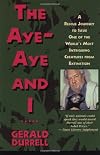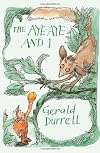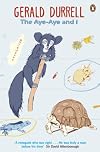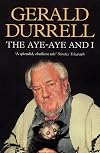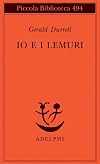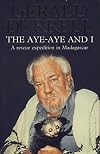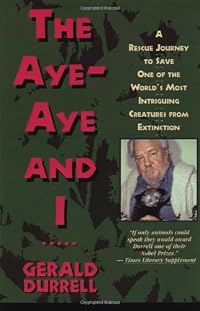
The Aye-Aye and I
by Gerald Durrell
On This Page
Description
Gerald Durrell's last book, The Aye-Aye and I records his final animal-collecting expedition, a trip to Madagascar in 1990, and his efforts to save the elusive and mythical lemuroid known as the Aye-Aye. Prompted by the country's radical deforestation, and slash-and-burn agriculture, Durrell, his wife, and their team of zoologists embark on a mission to capture and conserve the species - distinguished by its 'giant, chisel-like teeth', 'round, hypnotic eyes' and large 'spoon-like ears'. show more During the course of their journey, they encounter golden river snakes, flat-tailed tortoises, the gentle lemurs of Lac Alaotra, and the Malagasy chameleons. Durrell's exuberant descriptions of the island, its people and ecology are among his best. show lessTags
Recommendations
























Member Recommendations

Member Reviews
Listened to the audiobook primarily because it was read by Rupert Degas who is seriously good stuff it elevates the book. His timing and pitch are perfect. What might have been a bit old-fashioned humor in print was made fresh and live in voice - Degas is Durrell. The book itself is very good, I learned a lot about Madagascar and travel in a third world country, trying to follow along with Google Maps. The barren muddy hills are still there 30 years later, probably even worse now. I'd like to read something more recent and in-depth, but this peaked my interest for more Madagascar.
This is a book that simultaneously delights and depresses. On the one hand Durrell’s descriptions of Madagascar’s unique wildlife are magical. On the other hand the destructive environmental forces he describes have continued unabated in the twenty plus years since this book was published. The outlook for these marvelous creatures is nothing but bleak.
Durrell manages to educate and entertain in equal measures. The flora, the fauna, and particularly the local cultures come alive in his descriptions. It takes a rare delicate touch to convey the seriousness of his intestinal difficulties and the surprise depredations of ducklings on his testicles without descending to vulgarity.
I’ve been privileged to visit Africa on three show more occasions. Unfortunately I’m afraid that Madagascar itself will remain forever beyond my limited budget. It is small consolation to consider that the habitats he describes are probably already destroyed. show less
Durrell manages to educate and entertain in equal measures. The flora, the fauna, and particularly the local cultures come alive in his descriptions. It takes a rare delicate touch to convey the seriousness of his intestinal difficulties and the surprise depredations of ducklings on his testicles without descending to vulgarity.
I’ve been privileged to visit Africa on three show more occasions. Unfortunately I’m afraid that Madagascar itself will remain forever beyond my limited budget. It is small consolation to consider that the habitats he describes are probably already destroyed. show less
Charming little book about the last collecting trip Durrell made to bring rare, endangered animals back to his European zoo for a breeding program. His main purpose in visiting Madagascar was to find the aye-aye, a strange nocturnal lemur at risk of going extinct. They also searched for and collected snakes, endemic tortoises, gentle lemurs, a jumping rat and spiny-tailed iguanas. As always, Durrell's writing is interesting and humorous. He describes the difficulties they had navigating bad roads, finding accurate sources of information, getting local men in power to allow them access, dealing with breakdowns and scant supplies, etc. All the logistics involved in finding, feeding, and safely transporting the animals home, and trying to show more find medical care when one of the team members became ill. The descriptions of the red, pothole-strewn roads, the upright brick houses and the gentle native people are vivid. He also describes beginning attempts at conservation, the plans they made with local government to set aside wildlife refuges, do something about severe deforestation and protect the wildlife- many animals were illegally caught to be eaten or sold as pets, with no law enforcement in place. They did a lot of work to educate the local people on the true nature of the wildlife . . .
The end of the book has a sudden switch to the island of Mauritius, where Durrell and part of his team stopped on their way home from Madagascar, to check on a program they had put in place there years earlier to save some rare animals, especially the pink pigeon.... Finally, Durrell sees the newly acquired animals safe home from their trip, settled into quarantine quarters at the zoo. There is an afterward by a keeper from the zoo, who gives more details on how the animals fared after the expedition, and more information on the conservation and breeding programs set in place by Durrell.
more at the Dogear Diary show less
The end of the book has a sudden switch to the island of Mauritius, where Durrell and part of his team stopped on their way home from Madagascar, to check on a program they had put in place there years earlier to save some rare animals, especially the pink pigeon.... Finally, Durrell sees the newly acquired animals safe home from their trip, settled into quarantine quarters at the zoo. There is an afterward by a keeper from the zoo, who gives more details on how the animals fared after the expedition, and more information on the conservation and breeding programs set in place by Durrell.
more at the Dogear Diary show less
"It fondled my ear then inserted its thin finger...Finding my ear bereft of tasty grubs it uttered a 'humph' of annoyance", October 26, 2014
This review is from: The Aye-Aye and I: A Rescue Journey to Save One of the World's Most Intriguing Creatures from Extinction (Paperback)
Moderately entertaining account of the late Gerald Durrell's journey to the wilds of Madagascar in search of a few aye-ayes (an endangered species) to begin a breeding programme...not to mention 'gentle' lemurs ("anything but, as my and my keepers' scars will testify"); giant jumping rats and flat-tailed tortoises. Although I felt dubious about this to begin with, many of the animals were actually purchased from locals who would have killed or eaten them show more otherwise.
In the process, we learn something of the land and witness various amusing adventures. As the author says:
"Those of you who visit zoos and watch all sorts of exotic animals bouncing about their cages, spare a thought for the complexities that brought them there."
Not in the same league as 'My Family and Other Animals', but a pleasant-enough light read. show less
This review is from: The Aye-Aye and I: A Rescue Journey to Save One of the World's Most Intriguing Creatures from Extinction (Paperback)
Moderately entertaining account of the late Gerald Durrell's journey to the wilds of Madagascar in search of a few aye-ayes (an endangered species) to begin a breeding programme...not to mention 'gentle' lemurs ("anything but, as my and my keepers' scars will testify"); giant jumping rats and flat-tailed tortoises. Although I felt dubious about this to begin with, many of the animals were actually purchased from locals who would have killed or eaten them show more otherwise.
In the process, we learn something of the land and witness various amusing adventures. As the author says:
"Those of you who visit zoos and watch all sorts of exotic animals bouncing about their cages, spare a thought for the complexities that brought them there."
Not in the same league as 'My Family and Other Animals', but a pleasant-enough light read. show less
This is a memoir of Durrell's trip to Madagascar to collect the endangered Aye-Aye to start a captive breading program to help save the species. Durrell is a great story teller who describes a trip that involves tortoises, lemurs, flies, and snakes in addition to the elusive Aye-Aye. There is a lot of humor in this book as well as a lot of information about the country of Madagascar. Durrell does a great job of describing the obstacles that endangered animals face in Madagascar. In addition to loss of habitat, the animals must coexist with a population of humans dealing with extreme poverty and whose short term need for food makes it hard to see the bigger picture of sustainability. I would recommend this memoir to anyone with an show more interested in conservation or in the fauna of Madagascar. show less
Gerald's last trip.
It's always a shock when someone you've known of more most of your life, dies. And so it was when I heard that Gerald Durrell had passed away in '95. I'd read odd works of his over the years - mostly his earlier and hence younger novels. His most famous being his childhood memories of My Family and Other Animals. The AyeAye and I is his last work written in '93 about his last ever expedition - to Madagascar in search of some AyeAyes. Of course Gerald didn't know it was to be his last trip, so some of the descriptions are quite poignent - his observations on what the future of Madascar might be. It is also very shocking to be reading about how his various ailments prevented him doing so much that used to be his joy on show more previous trips.
The counterpoint to this is that we get to see the outcome of many of his missions from earlier books - the establishment of training courses, and previous collection trips now bear fruit and this is perhaps the highligh of the book, Gerald's ideas worked. He wasn't just some idealistic animal collector, now you can see for yourself that he has had a real impact in preserving and re-introducing some species.
As usual on expeditions to a country Gerald has a few other key species to collect and so visits various different areas interacting with the natives, and sending his various co-members out to hunt for specimens. As such part of the thrill of earlier books - the actual hands on in the jungle experiences were missing. Gerald was pretty much confined to camp. And while that provided plenty of anthropology sketches - something he is still very good at - it did detract from the joy of the book.
It is also very short - A brief mention here and there, and on to the next place. Even the TV crew which could probably have provided enough stories to fill a book on it's own, got just a chapter.
Enjoyable, but not his best.
................................................................................................................. show less
It's always a shock when someone you've known of more most of your life, dies. And so it was when I heard that Gerald Durrell had passed away in '95. I'd read odd works of his over the years - mostly his earlier and hence younger novels. His most famous being his childhood memories of My Family and Other Animals. The AyeAye and I is his last work written in '93 about his last ever expedition - to Madagascar in search of some AyeAyes. Of course Gerald didn't know it was to be his last trip, so some of the descriptions are quite poignent - his observations on what the future of Madascar might be. It is also very shocking to be reading about how his various ailments prevented him doing so much that used to be his joy on show more previous trips.
The counterpoint to this is that we get to see the outcome of many of his missions from earlier books - the establishment of training courses, and previous collection trips now bear fruit and this is perhaps the highligh of the book, Gerald's ideas worked. He wasn't just some idealistic animal collector, now you can see for yourself that he has had a real impact in preserving and re-introducing some species.
As usual on expeditions to a country Gerald has a few other key species to collect and so visits various different areas interacting with the natives, and sending his various co-members out to hunt for specimens. As such part of the thrill of earlier books - the actual hands on in the jungle experiences were missing. Gerald was pretty much confined to camp. And while that provided plenty of anthropology sketches - something he is still very good at - it did detract from the joy of the book.
It is also very short - A brief mention here and there, and on to the next place. Even the TV crew which could probably have provided enough stories to fill a book on it's own, got just a chapter.
Enjoyable, but not his best.
................................................................................................................. show less
I still love Durrell's books, even though it is hard to read the later ones, when he has gotten older and can't attack the animal collecting with quite the same vigor. It's actaully nice to read that, though, that he keeps going even when it becomes physically difficult.
Members
- Recently Added By
Lists

al.vick-wishlist-science and nature
83 works; 1 member

My Wishlist
40 works; 1 member

Books Set In Africa
81 works; 4 members

Allie's Wishlist
217 works; 2 members

Animals in the Title
498 works; 11 members

Books Read in 2024
4,623 works; 126 members
Author Information

104+ Works 21,720 Members
Gerald Durrell was born on January 7, 1925 in Jamshedpur, India to British parents. After the death of his father in 1928, the family lived in England and Europe before settling in Corfu, where he spent much of his childhood. Educated by private tutors, he became interested in natural history and amassed a private collection of dozens of creatures show more from scorpions to owls. He went on numerous wildlife expeditions and founded the Jersey Zoological Park and the Jersey Wildlife Preservation Trust with the purpose of breeding endangered species. His first book, The Overloaded Ark, was published in 1953. He wrote 37 books during his lifetime including My Family and Other Animals, The Bafut Beagles, A Zoo in My Luggage, Rosy Is My Relative, and The Mockery Bird. He received the Order of the British Empire in 1982 and was featured in the United Nations' Roll of Honor for Environmental Achievement in 1988. He died from complications related to a liver transplant on January 30, 1995 at the age of 70. (Bowker Author Biography) show less
Some Editions
Awards and Honors
Distinctions
Series
Belongs to Publisher Series
Common Knowledge
- Original publication date
- 1992
- People/Characters
- Gerald Durrell; Lee Durrell
- Important places
- Madagascar
- Dedication
- For Lee who has put up with me, is putting up with me and, hopefully, will go on putting up with me until she has to put me down.
- First words
- I once described Madagascar as looking like a badly presented omelette, lying in the Indian Ocean off Africa's eastern flank, from which it was wrenched millions of years ago.
- Quotations
- Over the years I have found that certain hotels object to your keeping a baby wart hog in your room, or fuss because you put snakes in the bath. It is a shortsighted policy which will not bring them custom, in my considered o... (show all)pinion.
- Last words
- (Click to show. Warning: May contain spoilers.)We had come full circle, but, as we all know, circles have no end.
Classifications
- Genres
- Science & Nature, Nonfiction, Travel, Biography & Memoir, General Nonfiction
- DDC/MDS
- 639.9 — Applied Science & Technology Agriculture Hunting, fishing, conservation, related technologies Conservation of biological resources
- LCC
- QL737 .P935 .D87 — Science Zoology Zoology Chordates. Vertebrates Mammals
- BISAC
Statistics
- Members
- 302
- Popularity
- 105,719
- Reviews
- 12
- Rating
- (3.74)
- Languages
- 11 — Czech, Dutch, English, Estonian, French, Hebrew, Hungarian, Italian, Latvian, Russian, Spanish
- Media
- Paper, Audiobook, Ebook
- ISBNs
- 37
- ASINs
- 6