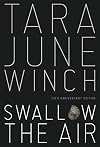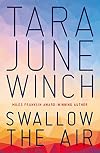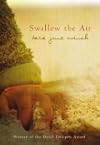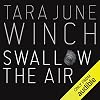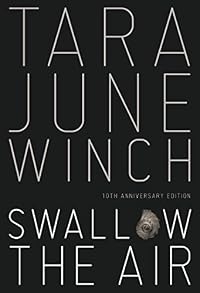
Swallow the Air
by Tara June Winch
On This Page
Description
When May's mother dies suddenly, she and her brother Billy are taken in by an aunt. However their loss leaves them both searching for their place in a world that doesn't want them. May sets off to find her father and her Aboriginal identity. HSC text.Tags
Recommendations






















Member Reviews
When May and her brother lose their mother, they find themselves separated from family ties, other than the aunt that they end up staying with. Their father has absconded and the mob that their family was part of comes from elsewhere. Growing up with a sense of rootlessness, May embarks on a series of journeys to try and find her father and her family, and understand where she belongs.
Along the way, May has some horrific experiences and major disappointments. It's a strength of this book that even these grim scenes are described in a way that preserves May's strength as a person; she does not allow herself to be crushed.
Winch's prose in this novel is extraordinary. She has a very elegant turn of phrase which livens up even mundane show more scenes, and includes several very precise, yet somewhat surprising metaphors. At times it might feel like she is trying a bit too hard, but that's understandable in a first novel by a writer who was no doubt keen to show what she could do. show less
Along the way, May has some horrific experiences and major disappointments. It's a strength of this book that even these grim scenes are described in a way that preserves May's strength as a person; she does not allow herself to be crushed.
Winch's prose in this novel is extraordinary. She has a very elegant turn of phrase which livens up even mundane show more scenes, and includes several very precise, yet somewhat surprising metaphors. At times it might feel like she is trying a bit too hard, but that's understandable in a first novel by a writer who was no doubt keen to show what she could do. show less
A bittersweet story by an Australian Indigenous woman, about a girl who loses her family and searches for her place in the world.
This fine novel consists of a cluster of short incidents from the childhood and teenage years of May Gibson, the Indigenous girl who is its narrator. Her father, more dreamed about than real, had left the family in poverty when she was small. She retained strong love for her mother, an Indigenous woman whose stories warmed her children’s hearts. But “Mum” had been so abused by her violent husband she had lost her will to live.
I remember now, my mother had been a beaten person. She wouldn’t scream at his fist, she wasn’t the kind to fight his torments. She bottled all the years, too; until one day show more all those silent screams and tears came at once. And with such force they took her away. The screams must have been so deafening, the river of tears so overflowing that the current could only steal her away. The flood breaking so high, that she had to leave us behind. We couldn’t swim either.
May and her beloved brother went to live with their aunt, a loving woman, but one vulnerable to her bottle and to abusive men. “She held her booze like a butcher’s knife, cleaving off each part of her self.” The children played in the sea and celebrated small victories, but were hemmed in by poverty and the reality of their black skin. Her brother left when she was 15, and May wandered into the slums of Sydney where she became part of an urban “mob.” She explored the city and made a few close friends, but a surrogate mother convinced her that she needed to leave before she was destroyed as so many others had been. “I knew that I had to get out of the city, get out of the boxes they put you in.” May sets out on a journey to find her mother’s people, but the novel ends with an unexpected and satisfying twist.
Tara Winch is a fine writer. Her prose is rich and descriptive, full of evocative landscapes. Her sentences have bite and power. At times her writing is close to poetry, with poetry’s lack of concern for ordinary grammar. Dreams and nightmares blur into the concrete reality of her narrative. A few explicit Indigenous words are included, but the book is never hard to read. In the hands of some writers, the plot line of the novel could be grim, but never in those of someone as attuned to beauty as Winch. She gives May fleeting times of joy, with her beloved brother, her dysfunctional aunt, the African man at the car wash, and other loving individuals she encounters. In some sense, this is a coming of age story, but not one about sexuality.
READ MORE: http://wp.me/p24OK2-1bN show less
This fine novel consists of a cluster of short incidents from the childhood and teenage years of May Gibson, the Indigenous girl who is its narrator. Her father, more dreamed about than real, had left the family in poverty when she was small. She retained strong love for her mother, an Indigenous woman whose stories warmed her children’s hearts. But “Mum” had been so abused by her violent husband she had lost her will to live.
I remember now, my mother had been a beaten person. She wouldn’t scream at his fist, she wasn’t the kind to fight his torments. She bottled all the years, too; until one day show more all those silent screams and tears came at once. And with such force they took her away. The screams must have been so deafening, the river of tears so overflowing that the current could only steal her away. The flood breaking so high, that she had to leave us behind. We couldn’t swim either.
May and her beloved brother went to live with their aunt, a loving woman, but one vulnerable to her bottle and to abusive men. “She held her booze like a butcher’s knife, cleaving off each part of her self.” The children played in the sea and celebrated small victories, but were hemmed in by poverty and the reality of their black skin. Her brother left when she was 15, and May wandered into the slums of Sydney where she became part of an urban “mob.” She explored the city and made a few close friends, but a surrogate mother convinced her that she needed to leave before she was destroyed as so many others had been. “I knew that I had to get out of the city, get out of the boxes they put you in.” May sets out on a journey to find her mother’s people, but the novel ends with an unexpected and satisfying twist.
Tara Winch is a fine writer. Her prose is rich and descriptive, full of evocative landscapes. Her sentences have bite and power. At times her writing is close to poetry, with poetry’s lack of concern for ordinary grammar. Dreams and nightmares blur into the concrete reality of her narrative. A few explicit Indigenous words are included, but the book is never hard to read. In the hands of some writers, the plot line of the novel could be grim, but never in those of someone as attuned to beauty as Winch. She gives May fleeting times of joy, with her beloved brother, her dysfunctional aunt, the African man at the car wash, and other loving individuals she encounters. In some sense, this is a coming of age story, but not one about sexuality.
READ MORE: http://wp.me/p24OK2-1bN show less
My book club has devoured some pretty large reads in the last few years, with John Irving and Peter Carey leaving their indelible mark among our ranks. So Tara June Winch’s trim novel, Swallow the Air was like a breath of fresh air for all of us.
After the loss of her mother, young May and her brother Billy are taken in by Aunty. As Billy takes his own path of destruction, May begins a search for herself, and her Aboriginal identity. With her head full of family stories, she seeks relatives in the city and country, trying to piece together what it means - this culture of hers - in today’s Australia.
Swallow the Air is a first novel from a young local (NSW South Coast) writer that has won praise around the country. My club was both show more moved and disturbed by what, at times, seemed a futile existence for aboriginals. Domestic violence, alcohol, drugs and financial struggle dogs the family. But we found humour too, and some beautiful poetic prose from what is obviously a developing, yet talented young writer.
Our discussion centred around our personal experience with Aboriginals and whether this story rang true and how typical was May’s family in today’s society. We liked the fact that the author did not idolize aboriginals or their culture, but simply made them human. Others commented that in their experiences with our first people, they found them courageous, especially the women. Heads nodded around the table as we all found this thread in the book.
It is always exciting finding a book set in your local area. Tara grew up in the Northern suburbs of the Illawarra and as you read, you can watch May scamper through her childhood on the beach at Bellambi or climb through the rainforest of the escarpment.
But what I liked most about this book is the beautiful, simple heart May sees her world with. Before the hurt, the anger and the deliverance, she has something only young children possess … an innocence that only knows unconditional love.
Winch is a real talent worth watching … maybe a female Tim Winton? Who knows, but I for one, am willing to give her the time to develop into one of our best creative writers. show less
After the loss of her mother, young May and her brother Billy are taken in by Aunty. As Billy takes his own path of destruction, May begins a search for herself, and her Aboriginal identity. With her head full of family stories, she seeks relatives in the city and country, trying to piece together what it means - this culture of hers - in today’s Australia.
Swallow the Air is a first novel from a young local (NSW South Coast) writer that has won praise around the country. My club was both show more moved and disturbed by what, at times, seemed a futile existence for aboriginals. Domestic violence, alcohol, drugs and financial struggle dogs the family. But we found humour too, and some beautiful poetic prose from what is obviously a developing, yet talented young writer.
Our discussion centred around our personal experience with Aboriginals and whether this story rang true and how typical was May’s family in today’s society. We liked the fact that the author did not idolize aboriginals or their culture, but simply made them human. Others commented that in their experiences with our first people, they found them courageous, especially the women. Heads nodded around the table as we all found this thread in the book.
It is always exciting finding a book set in your local area. Tara grew up in the Northern suburbs of the Illawarra and as you read, you can watch May scamper through her childhood on the beach at Bellambi or climb through the rainforest of the escarpment.
But what I liked most about this book is the beautiful, simple heart May sees her world with. Before the hurt, the anger and the deliverance, she has something only young children possess … an innocence that only knows unconditional love.
Winch is a real talent worth watching … maybe a female Tim Winton? Who knows, but I for one, am willing to give her the time to develop into one of our best creative writers. show less
After such a big read last month, I think we all found Tara June Winch's Swallow the Air more like a breath of fresh air!
After the loss of her mother, May begins a search for herself and her Aboriginal identity. With her head full of family stories,she seeks relatives in the city and country, trying to piece together what it means - this culture of hers, in today's Australia.
Swallow the Air is a first novel from a young local writer that has won praise around the country. Our club was both moved and disturbed by what, at times, seemed a futile existence for Aboriginals. Domestic violence, alcohol, drugs and financial struggle dogs the family. But we found humour too, and some beautiful poetic prose from what is obviously a developing, show more yet talented young writer.
Our discussion centred around our personal experiences with Aboriginals and whether this story rang true and how typical was May's family in today's society?
Denise liked the fact that the author did not idolize aboriginals or their culture, but simply made them human. Joan commented that in her experiences with our first people, she has found them courageous, especially the women. Heads nodded around the table and we all found this thread in the book.
It is always exciting finding a novel set in your local area. Tara grew up in the Northern suburbs of the Illawarra and as you read, you can watch May scamper through her childhood on the beach at Bellambi or climb through the rainforest of the escarpment.
What I liked most about this book is the beautiful, simple heart May sees her world with. Before the hurt, the anger and the deliverance, she has something only young children possess ... an innocence that knows unconditional love.
Tell Me This ... "What does the title Swallow the Air mean?"
This is a great title that could mean any number of things. Not only is it poetic, it encompasses a vast portrait of what it means to be human. But Viti had a wonderful thought that impressed everyone and, on the whole, we agreed with. On the beach May comes across a struggling stingray that is swallowing air. The sight moves her, becoming etched in her mind along with many other memories. Viti feels that stingrays's struggle out of water could be a metaphor for Aboriginal Australia struggling without their culture. They are a fish out of water, fighting to survive in a world that does not want them. We suggest you read the book and see what you think. show less
After the loss of her mother, May begins a search for herself and her Aboriginal identity. With her head full of family stories,she seeks relatives in the city and country, trying to piece together what it means - this culture of hers, in today's Australia.
Swallow the Air is a first novel from a young local writer that has won praise around the country. Our club was both moved and disturbed by what, at times, seemed a futile existence for Aboriginals. Domestic violence, alcohol, drugs and financial struggle dogs the family. But we found humour too, and some beautiful poetic prose from what is obviously a developing, show more yet talented young writer.
Our discussion centred around our personal experiences with Aboriginals and whether this story rang true and how typical was May's family in today's society?
Denise liked the fact that the author did not idolize aboriginals or their culture, but simply made them human. Joan commented that in her experiences with our first people, she has found them courageous, especially the women. Heads nodded around the table and we all found this thread in the book.
It is always exciting finding a novel set in your local area. Tara grew up in the Northern suburbs of the Illawarra and as you read, you can watch May scamper through her childhood on the beach at Bellambi or climb through the rainforest of the escarpment.
What I liked most about this book is the beautiful, simple heart May sees her world with. Before the hurt, the anger and the deliverance, she has something only young children possess ... an innocence that knows unconditional love.
Tell Me This ... "What does the title Swallow the Air mean?"
This is a great title that could mean any number of things. Not only is it poetic, it encompasses a vast portrait of what it means to be human. But Viti had a wonderful thought that impressed everyone and, on the whole, we agreed with. On the beach May comes across a struggling stingray that is swallowing air. The sight moves her, becoming etched in her mind along with many other memories. Viti feels that stingrays's struggle out of water could be a metaphor for Aboriginal Australia struggling without their culture. They are a fish out of water, fighting to survive in a world that does not want them. We suggest you read the book and see what you think. show less
A very good short novel about a young Australian - half Aboriginal - girl's search for identity told in a language thick with metaphors and similes - so much so, at times I thought her to be speaking in images (although there were a few times I thought it was a bit over the top). Winch is a very young author who will be worth watching.
Tara June Winch is a talented young indigenous writer who won the David Unaipon Award with this story of a young girl on a journey of self discovery. May gradually works out where she really needs to go, only to discover different, harder truths than she had imagined. The triumph of this story is that May does make the journey and eventually comes home.
Not a children’s story, nor suited to the fainthearted reader for its sometimes confronting content, this book is a poetic piece which demands something of the reader and displays the talent of this promising author.
Not a children’s story, nor suited to the fainthearted reader for its sometimes confronting content, this book is a poetic piece which demands something of the reader and displays the talent of this promising author.
Snapshot of life of an Indigenous teenager from Wollongong. A short audio narration (2 and a half hrs). Probably the sort of novella that will be chosen by adults for students to study. Too many similes for my taste.
Members
- Recently Added By
Lists

Best Australian Books of the 21st Century
88 works; 2 members
Author Information

6+ Works 725 Members
Awards and Honors
Classifications
Statistics
- Members
- 138
- Popularity
- 235,947
- Reviews
- 8
- Rating
- (3.75)
- Languages
- English
- Media
- Paper, Audiobook, Ebook
- ISBNs
- 17
- ASINs
- 2